
 Worksheets
GE006 Long Quiz
Total questions: 55
Worksheet time: 23mins
Characterized by highly stylized paintings, sculptures, and monumental pyramids; focused on gods, pharaohs, and the afterlife.
Mesopotamian Art
Egyptian Art
Greek Art
Roman Art
Development of naturalistic sculpture, pottery, and architecture
Mesopotamian Art
Egyptian Art
Greek Art
Roman Art
Realistic portraiture, mosaics, frescoes, and grand architecture.
Mesopotamian Art
Egyptian Art
Greek Art
Roman Art
Pointed arches, stained glass windows, flying buttresses, and highly detailed sculptures.
Byzantine Art
Romanesque Art
Gothic Art
Religious mosaics, icons, and illuminated manuscripts with gold backgrounds and spiritual themes.
Byzantine Art
Romanesque Art
Gothic Art
Exaggerated forms, elongated proportions, and emotional intensity.
Early Rennaisance
High Rennaisance
Mannerism
Baroque
Rococo
Dramatic lighting, movement, grandeur (e.g., Caravaggio, Rembrandt, Bernini).
Early Rennaisance
High Rennaisance
Mannerism
Baroque
Rococo
Perspective, realistic human forms, and classical themes (e.g., works by Masaccio, Botticelli).
Early Rennaisance
High Rennaisance
Mannerism
Baroque
Rococo
Emphasized emotion, nature, and the sublime (e.g., Delacroix, Goya, Turner).
Neoclassicism
Romanticism
Realism
Impressionism
Post-Impressionism
Emphasized personal expression and vivid colors (e.g., Van Gogh, Gauguin).
Neoclassicism
Romanticism
Realism
Impressionism
Post-Impressionism
Inspired by Greek and Roman ideals, symmetry, and order (e.g., Jacques-Louis David).
Neoclassicism
Romanticism
Realism
Impressionism
Post-Impressionism
Loose brushwork, light effects, and everyday scenes (e.g., Monet, Renoir, Degas).
Neoclassicism
Romanticism
Realism
Impressionism
Post-Impressionism
Abstracted objects into geometric shapes (e.g., Picasso, Braque).
Art Nouveau
Expressionism
Cubism
Dada
Surrealism
Dreamlike, unconscious imagery (e.g., Dalí, Magritte).
Art Nouveau
Expressionism
Cubism
Dada
Surrealism
Anti-art movement rejecting logic and tradition (e.g., Duchamp).
Art Nouveau
Expressionism
Cubism
Dada
Surrealism
He considered art an aid to philosophy in revealing truth. (The answer must be all small letters.)
(a)
He considered the judgment of beauty as the cornerstone of art, as something that can be universal despite its subjectivity. (The answer must be in all small letters.)
(a)
He believed that art is dangerous because it provides a petty replacement for the real entities that can only be attained through reason. (The answer must be in all small letters.)
(a)
Refers to the identifiable image or theme in a piece of artwork. (The answer must be in all small letters.)
(a)
It is an outcome of the artist's effort to use the elements of art and arrange them according to aesthetic principles. (The answer must be in all small letters.)
(a)
This refers to the meaning, symbolism, or representation within the artwork. It is how the artwork relates to real-life objects or ideas. (The answer must be in all small letters.)
(a)
This refers to the physical appearance of the artwork, including its shape, structure, and how it exists. It is what you see and touch, such as a sculpture’s three-dimensional shape or a painting’s colors and brushstrokes. (The answer must be in all small letters.)
(a)
This refers to the meaning, symbolism, or representation within the artwork. It is how the artwork relates to real-life objects or ideas. (The answer must be in all small letters.)
(a)
This is the defined boundary of the picture plane. (The answer must be in all small letters.)
(a)
Is an abstraction of a certain thought or feeling that produces good art based on reality or experience. (The answer must be in all small letters.)
(a)
It is the automatic response to imagination. (The answer must be in all small letters.)
(a)
The Latin term, which means skills, talent, or ability. (The answer must be in all small letters.)
(a)
It is an expression of feelings and emotions. (The answer must be in all small letters.)
(a)
It is a form of work with the use of available materials. (The answer must be in all small letters.)
(a)
A person engaged in an activity related to creating, practicing, and demonstrating art. (The answer must be in all small letters.)
(a)
A person who practices a trade or handicraft. (The answer must be in all small letters.)
(a)
An association of artisans and merchants who oversee the practice of their craft/trade in a particular territory. (The answer must be in all small letters.)
(a)
This is where the work usually happens. (The answer must be in all small letters.)
(a)
A kind of study room for contemplation that was separated from the rest. (The answer must be in all small letters.)
(a)
Considered to be the highest national recognition for individuals who contributed to the development of Philippine arts. (The answer must be in all small letters.)
(a)
The surname of the first national artist who received the Orden Ng Pambansang Alagad ng Sining. (The answer must be in all small letters.)
(a)
The smallest and most basic element. (The answer must be in all small letters.)
(a)
Define as an area that stands out from the space next to or around it due to a defined or implied boundary or because of differences of value, color, or texture. (The answer must be in all small letters.)
(a)
Refers to the surface quality, both simulated and actual, of the artwork. (The answer must be in all small letters.)
(a)
A form with width and length but no depth. (The answer must be in all small letters.)
(a)
A 3D volume that can be empty or filled with objects. (The answer must be in all small letters.)
(a)
Often referred to as formal balance, wherein both sides are equal or in proportion in terms of arrangement. (The answer must be in all small letters.)
(a)
A principle of design refers to giving special importance to one or certain parts of the design. (The answer must be in all small letters.)
(a)
A principle of design refers to the regular arrangement of repeated same elements. (The answer must be in all small letters.)
(a)
A principle of design that is created when one or more elements of design are used repeatedly to create a feeling or organized movement. (The answer must be in all small letters.)
(a)
A principle of design is an appropriate arrangement of elements of a visual to give the viewers a feeling that all the parts of the design are in harmony as a whole composition. (The answer must be in all small letters.)
(a)

The surname of the artist of "The Starry Night." (The answer must be in all small letters.)
(a)

The surname of the artist of the "Portrait of a Halberdier." (The answer must be in all small letters.)
(a)

The surname of the artist of "The Scream." (The answer must be in all small letters.)
(a)

The surname of the artist of "L.H.O.O.Q." (The answer must be in all small letters.)
(a)

The name of this artwork by Salvador Dali. (The answer must be in all small letters.)
(a)
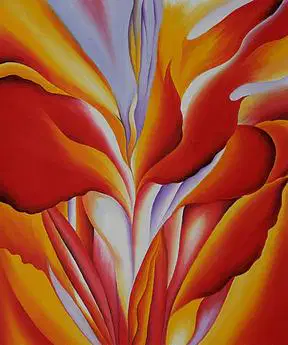
The name of this artwork by Georgia O'Keeffe. (The answer must be in all small letters.)
(a)

The name of this artwork by Pablo Picasso. (The answer must be in all small letters.)
(a)
Philosophy is derived from the Greek words “philos” or “philein” and "Sophia." What is the meaning of "philos?" (The answer must be in all small letters.)
(a)
Religion is derived from the Latin word “religare” or "religio." What is the meaning of "religare?" (The answer must be in all small letters.)
(a)

