Worksheets
Waves
Total questions: 60
Worksheet time: 2hrs 59mins

Which image represents a transverse wave?
A
B
neither
both

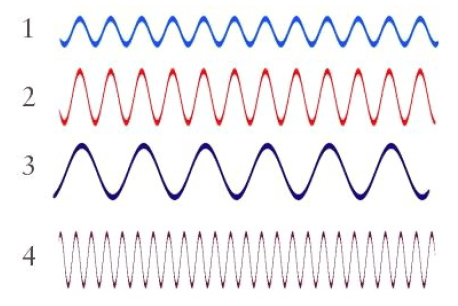
Which wave has the greatest wavelength?
1
2
3
4

What is the approximate amplitude of this wave?
1.0 cm
1.5 cm
3.0 cm
9 cm

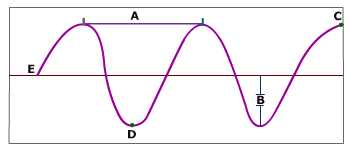
The crest of the wave is shown by which letter(s)?
A
B
E
G
H

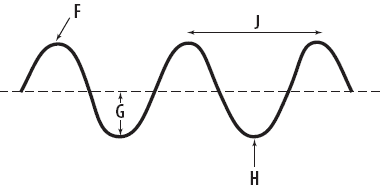
What is the approximate amplitude of the wave in the image?
1.5 cm
2 cm
3 cm
9 cm
A wavelength is the distance between which two points? (chose all that apply)
A-H
A-C
A-F
B-G
C-H

The arrow labeled B is showing which of the following?
amplitude
period
wavelength
wave speed
What is the approximate wavelength of the wave in the image?
1.5 cm
2 cm
3 cm
9 cm
Which wave has the greatest frequency?
1
2
3
4
What is the approximate wavelength of this wave?
1.0 cm
1.5 cm
3.0 cm
9 cm

What is the wavelength of the wave in the image?
1 cm
2 cm
3 cm
6 cm

What is the approximate amplitude of the wave in the image?
1.5 cm
2 cm
3 cm
9 cm
What is the approximate wavelength of the wave in the image?
1.5 cm
2 cm
3 cm
9 cm
As the frequency of a wave increases, the period _____________.
increases
decreases
stays the same

What is the wavelength of the wave in the image?
1 cm
2 cm
3 cm
9 cm
A wave with a wavelength of 2 cm has a frequency of 3 Hz. What is the wave speed?
1.5 m/s
2 m/s
5 m/s
6 m/s
A wave has a frequency of 4 Hz. What is the period of the wave?
0.25 seconds
0.5 second
1 seconds
4 seconds


What do you call the the bending of waves caused by a change in their speed as they pass from one medium to another. The bending of light as it moves from one material to another is ---
refraction
reflection
translucent
absorbed


Compared to wave A, which wave has the same wavelength but a smaller amplitude?
only B
only C
only D
both B & C
Which are properties of a mechanical wave?
can be longitudinal or transverse
can move through space
must have matter to move
carries energy

Which image represents a longitudinal wave?
A
B


Transverse waves have:
crests and troughs
troughs and rarefactions
compressions and contractions
rarefactions and crests
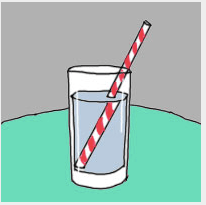
Why does the straw appear to be bent?
light is reflected
light is absorbed
light is turned
light is refracted
What do we call a material that light can travel through?
air
water
medium
pathway
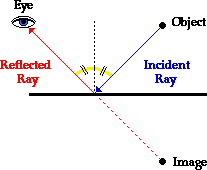
What is the angle of reflection equal to?
The angle of refraction
The angle of incidence
The angle of absorption
The angle of light

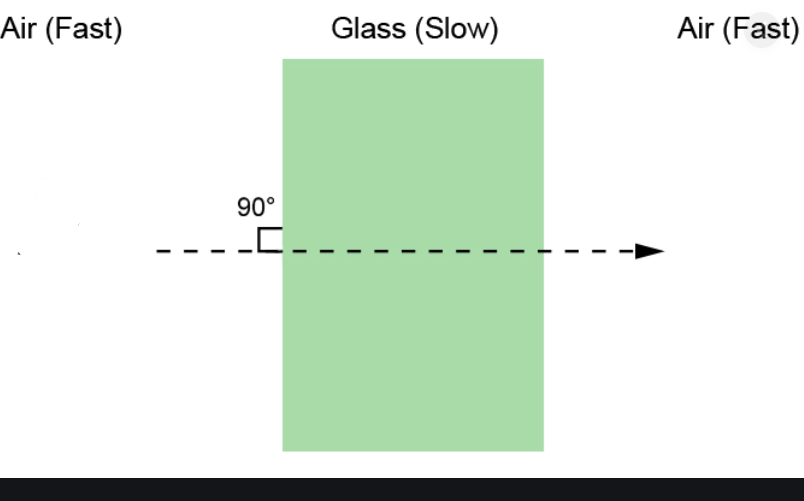
The line 90 degress through the refracting or reflecting surface is called?
Medium
Normal
Incidence
Reflection
Refraction happens because light travels _____________ in glass or water compared to air
Faster
The same
At the speed of sound
Slower
An example of total internal reflection is
Fiber Optics
Looking down at someone in a swimming pool
A camera inserted in a person's body during surgery
The 'pool' of water seen when looking into the distance on a hot day
flint glass n=1.70
barium glass n=1.60
crown glass n=1.523
water n=1.33
diamond n=2.45

Why is the spectrum of light seperated into its components of colour when white light is directed to a prism?
The different colours in the white light bend away from the normal line at different angles when entering prism
The different colours in the white light bend towards the normal line at different angles when entering prism
The different colours in the white light bend away from the normal at same speed to each other when entering prism
The different colours in the white light bend towards the normal at same speed to each other when entering prism

Which diagram represents reflection?
A
B
When light waves bend as they pass through a transparent medium we call this:
Refraction
Reflection
Absorption

Light waves bending through a prism is an example of:
Reflection
Refraction
Absorption

Light waves bouncing off of this lake is an example of:
Reflection
Refraction
Absorption
A transverse wave's oscillations move __________________ to it's energy transfer.
Parallel
Perpendicular
Horizontal
Vertical
A longitudinal wave's oscillations move ___________________________ to its energy transfer.
Perpendicular
Parallel
Horizontal
Vertical