wayground logo

Free Printable Worksheets

Font size

S
M
L
XL
Worksheets

Thermal Physics Review

Total questions: 60

Worksheet time: 1hrs 13mins

Name
Class
Date
1.
The movement of thermal energy from a warmer object to a cooler object is called:
a)
heat
b)
temperature
c)
motion
d)
momentum
2.
No more energy can be removed from matter at:
a)
its freezing point
b)
0°C
c)
absolute zero
d)
273 K
3.
When you touch something that feels cold, 
a)
heat from your hand moves into the cold substance.
b)
coldness moves from the cold substance into your hand.
c)
it melts.
d)
it freezes.
4.
The temperature of a substance increases as___.
a)
the substance expands
b)
the average kinetic energy of its particles increases
c)
the substance's volume increases
d)
the substance's mass increases
5.
The ability to do work or cause change
a)
speed
b)
job
c)
transfer
d)
energy
6.
Energy is measured in units called.....
a)
pounds
b)
meters
c)
horsepower
d)
joules
7.
The more particles an object has at a given temperature,
a)
the higher the temperature
b)
the more thermal energy it has
c)
the more degrees it has 
d)
the more Kelvins it has
8.
What  is the formula to calculate heat energy required to raise the temperature of any substance?
a)
Q=mc∆t
b)
Q=mc
c)
Q= ½mv
d)
m=QC
9.
What unit do you use to measure Thermal Energy?
a)
J/Kg ºC
b)
Kg
c)
ºC
d)
J
10.

__________ ____ is the temperature where molecular motion stops and is the lowest possible temperature.

(a)  

11.

Temperature is the average (a)   energy of the molecules.

12.

It is impossible to add cold to anything.

a)

True

b)

False

13.

What letter symbol do we use to represent heat in thermal equations?

(a)  
14.
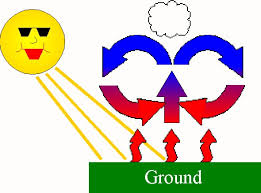
Warm air rises and the cool air sinks demonstrates this type of heat transfer. 
a)
conduction
b)
convection
c)
radiation
d)
Insolation 
15.

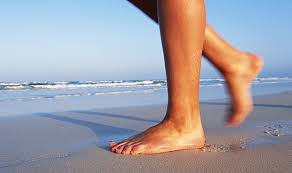
Walking on the warm sand with your bare feet demonstrates this type of heat transfer.

a)

conduction

b)

convection

c)

radiation

16.

Sun Bathing

a)

Conduction

b)

Convection

c)

Radiation

17.
What is the definition of CONDUCTION?
a)
When heat is transferred from objects like rays of light or electromagnetically.
b)
a  hot liquid or air that  expands, becomes less dense, and rises or becomes more dense, and sinks.
c)
When heat transfers from objects that are touching.
d)
When heat transfers through the heater or AC in your house.
18.

What is the definition of CONVECTION

a)

When heat transfers through the heater or AC in your house.

b)

When heat transfers from objects that are touching.

c)

a hot liquid or air that expands, becomes less dense, and rises

d)

a hot liquid or air that expands, becomes denser, and sinks

19.
What is the definition of RADIATION
a)
 hot liquid or air that  expands, becomes less dense, and rises or becomes more dense, and sinks.
b)
When heat is transferred from objects like rays of light or electromagnetically.
c)
When heat transfers from objects that are touching.
d)
When heat transfers through the heater or AC in your house.
20.

When you heat up an object, the particles in the object move _________.

a)

faster

b)

the same speed

c)

slower

21.
Poor conductors like wood and plastic are called:
a)
conductors
b)
insulators
c)
burners
22.
Molecules in cold things move more _________
than in hot things.
a)
quickly
b)
slowly
c)
happily
d)
merrily
23.
The amount of energy required to raise the temperature 1ºC for every kilogram is called____?
a)
Thermal Energy
b)
Specific Heat
c)
Temperature
d)
Kinetic Energy
24.
What is the symbol for Specific Heat
a)
Q
b)
t
c)
m
d)
C
25.
What is the SI unit for temperature?
a)
Kelvin
b)
Celcius
c)
Fahrenheit
d)
All of these
26.

What does ΔT\Delta T  represent?

a)

tf tit_{f\ }-t_i  

b)

ti tft_{i\ }-t_f  

c)

t - celsius

d)

celsius - t

27.

The unit for mass is

a)

g or Kg

b)

J

c)

J/gC

d)

°C\degree C

28.

The unit for temperature is

a)

K or °C\degree C

b)

J

c)

J/gC

d)

g or kg

29.

The unit for specific heat is

a)

J

b)

J/gC

c)

g

d)

°C\degree C

30.

If two objects have different temperatures when they come in contact, heat will flow from the warmer object to the cooler one UNTIL ____________

a)

one reaches a temperature of zero

b)

they both have an equal temperature

c)

one runs out of energy

31.

If the specific heat of water is 4.18 J/g∙°C, how much heat is required to increase the temperature of 1200 g of water from 23 °C to 39 °C?

a)

-80,256 J

b)

80.256 J

c)

80,256 J

d)

-80.256 J

32.
A sample of iron receives 50.J of heat energy that raises the temperature of the iron by 25.0°C. If iron has a specific heat of 0.10 J/g°C, what is the mass of the iron sample?  (show your work)
a)
25g
b)
30g
c)
20g
d)
50g
33.

A 0.500 kg block of zinc is heated from 295 K to 350. K. How much heat was absorbed by the zinc? c=388J/kgK)

Q=mcΔtQ=mc\Delta t  


(a)  

34.

845 J of heat are added to a 0.200 kg block of aluminum at a temperature of 312.00 K. How high will the temperature of the aluminum rise? c = 903 J/kgK

tf=Qmc+tit_f=\frac{Q}{mc}+t_i  


(a)  

35.

A 1.00 kg block of aluminum is increased in temperature by 75.0 K, how much heat energy was required? c = 903 J/kgK

Q=mcΔtQ=mc\Delta t  


(a)  

36.

A 40.0 kg block of lead is heated from -25 °C  to 200 °C . How much heat is absorbed by the lead block? c = 130 J/kgC

Q=mcΔtQ=mc\Delta t  


(a)  

37.

A .200 kg sample of water at 60.0°C is heated to water vapor at 140.0°C. How much heat was absorbed?


Q=mHvQ=mH_v   Q=mHfQ=mH_f   Q=mcΔtQ=mc\Delta t    Hv of water = 2260000 JkgKH_v\ of\ water\ =\ 2260000\ \frac{J}{kgK}   c   of water = 4180 JkgKc\ \ \ of\ water\ =\ 4180\ \frac{J}{kgK}   c   of water vapor = 1996 JkgKc\ \ \ of\ water\ vapor\ =\ 1996\ \frac{J}{kgK}  


(a)  

38.
A substance with a high specific heat:
a)
Is always extremely hot.
b)
Requires a lot of energy to become hot.
c)
Is not heavy.
d)
Does not requires a lot of energy to become hot.
39.
The second  law of thermodynamics states that entropy of a system  tends to ______________. 
a)
increase
b)
decrease
c)
stay constant
d)
fluctuate wildly
40.
The first law of thermodynamics states that energy is
a)
created
b)
destroyed
c)
conserved
d)
created and destroyed
41.

Which is an example of decreasing entropy in a closed system?

a)

Boiling water

b)

Freezing water

c)

Cells in a body coming together

d)

Ice melting

42.
Which state of H2O  has the greatest entropy?
a)
Ice
b)
Water
c)
Vapor
43.
Which statement is true about the ENTROPY?
a)
Entropy refers to DISORDER, the unusable energy that escapes a system.
b)
Entropy refers to the balance of temperature among two or more systems.
c)
Entropy refers to the average kinetic energy of the molecules.
d)
Entropy refers to the inability to destroy or create energy. 
44.
What do we call the relationship between thermal energy, heat and work?
a)
Closed System
b)
Entropy
c)
Conductors
d)
Thermodynamics
45.
How can energy be transferred from a cool object to a warm object?
a)
Work must be done
b)
Increase thermal energy
c)
Use convection
d)
Q=mTC
46.
What is the name of a device that converts thermal energy into work?
a)
Heating system
b)
Heat engine
c)
Entropy
d)
Power
47.

Which law states "Energy can neither be created nor destroyed. It can only be transformed"?

a)

Zeroth Law

b)

1st Law

c)

2nd Law

d)

3rd law

48.
If two systems are in thermal equilibrium with a third, then the two are in thermal equilibrium with each other.
a)
Zeroth Law of Thermodynamics
b)
First Law of Thermodynamics
c)
2nd Law of Thermodynamics
d)
3rd Law of Thermodynamics
49.
Which law of thermodynamics states that absolute zero cannot be reached?
a)
1st
b)
2nd
c)
3rd
d)
Zeroth
50.

Temperature at which ALL molecules stop moving.

a)

100ºC

b)

0 K

c)

0ºC

d)

32ºF

51.

What is a tool that measures the heat of chemical reactions?

a)

calorimeter

b)

calorie

c)

Styrofoam™ cup

d)

thermometer

52.

When thermal energy is decreased in a liquid, what change in state is happening?

a)

Melting

b)

Freezing

c)

Condensation

d)

Evaporation

53.

When thermal energy is decreased in a gas, what change in state is happening?

a)

Melting

b)

Freezing

c)

Evaporation

d)

Condensation

54.
Dry ice is an example of what phase change.
a)
freezing
b)
melting
c)
vaporization/boiling
d)
sublimation
55.
Water vapor (a gas) forming frost (a solid) on the windshield of a car is an example of what phase change?
a)
melting
b)
sublimation
c)
condensation
d)
deposition
56.
What does "#1" represent on the graph? 
a)
solid phase
b)
melting
c)
liquid phase
d)
boiling 
57.
What does "#4" represent on the graph? 
a)
melting 
b)
liquid phase
c)
boiling
d)
gas phase
58.
What does "#2" represent on the graph? 
a)
solid phase
b)
melting
c)
liquid phase
d)
boiling
59.
What does "#5" represent on the graph? 
a)
solid phase 
b)
melting
c)
boiling
d)
gas phase
60.
What does "#3" represent on the graph? 
a)
melting
b)
liquid phase
c)
boiling
d)
gas phase