
Font size
 Worksheets
Chpt 5 : How Populations Grow
Total questions: 17
Worksheet time: 9mins
What is the geographic range of a population?
The number of individuals in a defined area
The area inhabited by a population
The growth rate of a population
The dispersion of individuals in a population
Population density is the number of individuals that live in a defined area. True or False?
True
False
Fill in the blank: Population density is a measurement of the number of individuals living in a defined _______.
space
area
region
zone
What are the three types of geographic dispersion?
Clumped, Uniform, Random
Linear, Circular, Random
Clumped, Linear, Uniform
Random, Circular, Uniform
Fill in the blank: Growth rate > 0 indicates that the population size is _______.
growing
shrinking
stable
unknown
Fill in the blank: A population may increase in size if individuals arrive from elsewhere. This is called ________.
immigration
emigration
migration
population growth
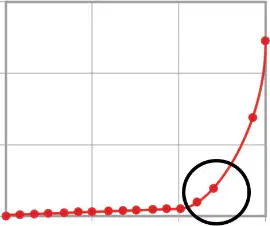
Exponential growth in populations under ideal conditions is characterized by:
a constant growth rate over time
a rapid increase in population size
a decrease in population size
fluctuations in population size
What happens during a population crash?
The population increases rapidly.
The population remains stable.
The population decreases drastically.
The population migrates to a new area.
Which of the following is a type of limiting factor?
Density-dependent
Density-independent
Both A and B
Density-dependent limiting factors operate strongly when population density reaches a certain level.
True
False
Name two examples of density-dependent limiting factors.
Competition and predation
Temperature and sunlight
Natural disasters and climate
Water availability and soil quality
Which of the following is a density-independent limiting factor?
Competition
Predation
Hurricanes
Disease
Density-independent factors affect all populations regardless of population size and density. True or False?
True
False
Under ideal conditions with unlimited resources, a population will grow __________.
negatively
slowly
logistically
exponentially
The maximum number of individuals of a particular species that a particular environment can support is:
exponential growth
logistic growth
carrying capacity
density and distribution

In the image shown above, the growth pattern of a fruit fly population would be described as _________ growth.
exponential
limited
logistic
declining
The population of adult frogs in a wetlands ecosystem has increased to 1000 individuals, which is its carrying capacity. The frogs eat flies and other small animals, and they are prey for raccoons, snakes, and a variety of large birds.
Which most likely would happen if an additional 200 adult frogs immigrated to the ecosystem?
The carrying capacity for frogs in the ecosystem would increase by 200 frogs.
The carrying capacity for frog predators in the ecosystem would increase by 200 individuals.
The frog population would experience a pattern of exponential growth.
About 200 adult frogs would die because of lack of resources, or by predation.

