
Font size
 Worksheets
Chemistry Midterm SP25
Total questions: 42
Worksheet time: 7hrs 0mins
How many different type of atoms are in the following molecule C6H12O6?
_Al +_HCl --> _H2 +_AlCl3
What percentage of the total atomic mass of carbon monoxide (CO) is composed of carbon?
29%
43%
57%
73%

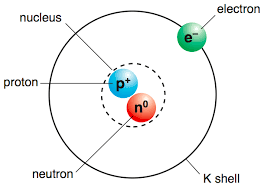
How many electrons would a neutral atom of boron have?
10.81
5
10
15
Which atom will have a +1 charge?
3 protons
4 neutrons
3 electrons
3 protons
4 neutrons
4 electrons
3 protons
4 neutrons
2 electrons
3 protons
3 neutrons
3 electrons
612C What is the 12 represent
mass number (n+p)
proton/atomic number
element symbol
number of neutrons
A neutral atom of the isotope 2612Mg would consist of
12 protons, 26 neutrons
26 protons, 12 neutrons
26 protons, 14 neutrons
12 protons, 14 neutrons

What is the mass measurement shown in grams (g)?
413.65 g
413.7 g
410 g
413.650 g
What type of reaction is the following:
BaCl2+2KI −> 2KCl + BaI2
Combination
Decomposition
Single Replacement
Double Replacement
Combustion
What type of reaction is the following:
2KI −> 2K + I2
Combination
Decomposition
Single Replacement
Double Replacement
Combustion
What type of reaction is the following:
Zn + 2HCl −> ZnCl2+H2
Combination
Decomposition
Single Replacement
Double Replacement
Combustion

Identify the type of chemical reaction
Synthesis
Decomposition
Single replacement
Double replacement
Combustion
A compound consists of 72.2% magnesium(Mg) and 27.8% nitrogen(N) by mass. What is the empirical formula? Instructions: Change the % to g, then convert to moles, divide by smallest value, the ratio becomes the empirical formula.
Molecular Formula = C2F6
Choose the correct empirical formula.
CF
C2F6
C3F
CF3
Empirical Formula = CF2
Molecular formula mass = 192 g/mol
Molecular Formula = ?
C4F8
C8F4
C3F6
C2F4
Cr3+ O2-

1s22s22p63s23p64s23d10


4.5 + 4.32 =
Organize these options into properties of ionic compounds or properties of covalent compounds
Made up a (+) metallic ions and (-) nonmetallic ions after metal transferred e- to nonmetal
Arranged in regular repeating patterns and crystals
High melting and boiling points
Can conduct electricity when dissolved in water
Made up of nonmetals sharing e-
Molecules that can be solid, liquid, or gas
Low melting and boiling point
Cannot conduct electricity when dissolved in water
Group 18 elements are called
Alkali metals
Alkaline Earth metals
Halogens
Noble gases
Transition metals
Which group has 1 valence electron (ve-)?
Alkali metals
Alkaline Earth metals
Halogens
Noble gases
Transition, Lanthanide, and Actinide metals
What is another name for the elements in group 7?
The Halogens
The Oxides
The Noble Gases
The Alkali Metals

What holds the atoms together in a covalent bond?
The attractions between the protons and neutrons.
Attractions between the shared protons.
Attractions between the shared electrons and protons.
Ionic valence electron transfer.
What is the net charge of an ionic compound?
Four
Zero
One
Eight
He gathers 20 healthy frog eggs from a nearby lake.
He puts 10 eggs in a mason jar with 500mL of clean water.
He puts the other 10 eggs in a mason jar with 490 mL of clean water and 10 mL of pesticide.
Which is the CONTROL GROUP?
How many grams are in 2 moles of carbon (C)?
12.0 grams
24.0 grams
36.0 grams
48.0 grams
How many moles of copper (II) chlorate contain 1.45x10²¹ molecules?
8.73x1044
1.20x1024
0.00241
1.45
How many moles of sodium chloride are in a 321.8 g sample?
18810 moles
3.315 x 1024 moles
5.507 moles
4.767 moles

