
 Worksheets
MMT [S2025] - Chapter 1.2 - Mechanical Processing Methods
Total questions: 60
Worksheet time: 2hrs 38mins
Mechanical processing methods (multiple correct answers)
turning
milling
planing
drilling and boring
gringing
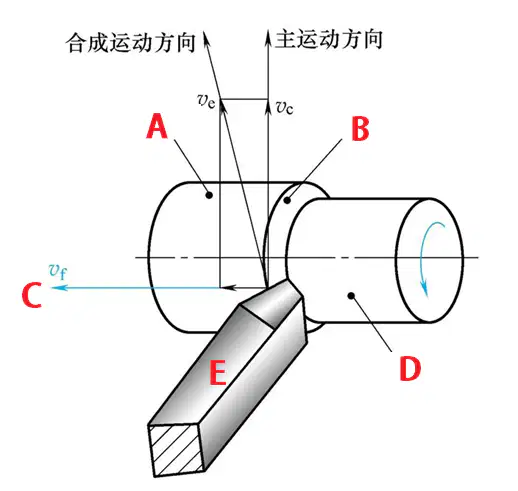
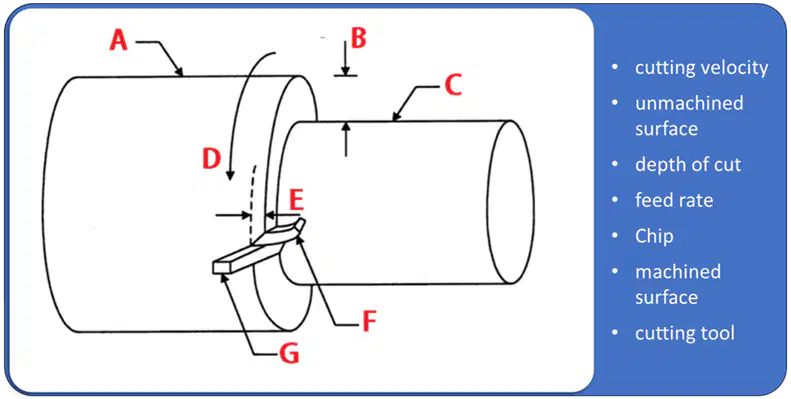
What is "A" called in the basic turning operation?
基本车削操作中的“A”是什么?
已加工表面
进给运动方向
过渡表面
待加工表面
What is "B" called in the basic turning operation?
在基本车削操作中,“B”叫什么?
已加工表面
进给运动方向
过渡表面
待加工表面
What is "C" called in the basic turning operation?
在基本车削操作中,“C”叫什么?
已加工表面
进给运动方向
过渡表面
待加工表面
What is "D" called in the basic turning operation?
基本车削操作中的“D”是什么?
已加工表面
进给运动方向
过渡表面
待加工表面
What is "E" called in the basic turning operation?
在基本车削操作中,“E”叫什么?
已加工表面
车刀
过渡表面
待加工表面
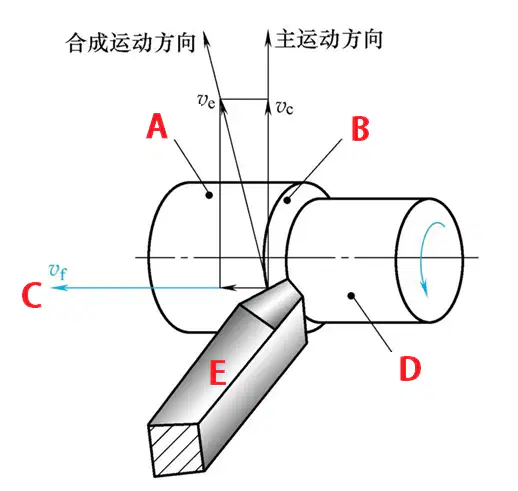
What is "A" called in the basic turning operation? Please write your answer in Chinese.
基本车削操作中的“A”是什么?请用中文写下你的答案。
(a)
What is "B" called in the basic turning operation? Please write your answer in Chinese.
在基本车削操作中,“B”叫什么?请用中文写下你的答案。
(a)
What is "C" called in the basic turning operation? Please write your answer in Chinese.
在基本车削操作中,“C”叫什么?请用中文写下你的答案。
(a)
What is "D" called in the basic turning operation? Please write your answer in Chinese.
基本车削操作中的“D”是什么?请用中文写下你的答案。
(a)
What is "E" called in the basic turning operation? Please write your answer in Chinese.
基本车削操作中的“E”是什么?请用中文写下你的答案。
(a)
What is "B" called in the basic turning operation? Please write your answer in English.
在基本车削操作中,“B”叫什么?请用英语写下你的答案。
(a)
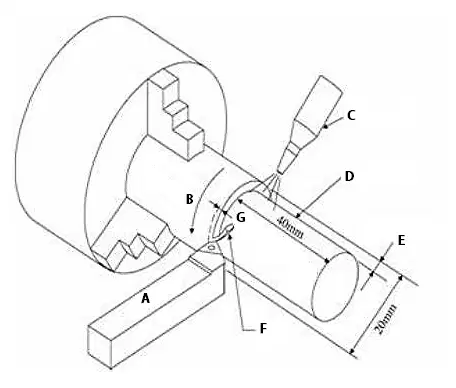
What is "C" called in the basic turning operation?
Cutting Speed
Cooling fluid
Workpiece
Cutting tool
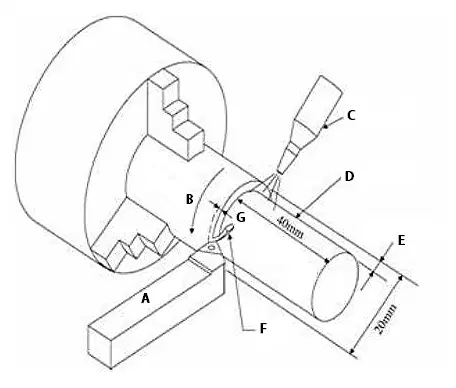
What is "B" called in the basic turning operation?
Cutting Speed
Cooling fluid
Workpiece
Cutting tool
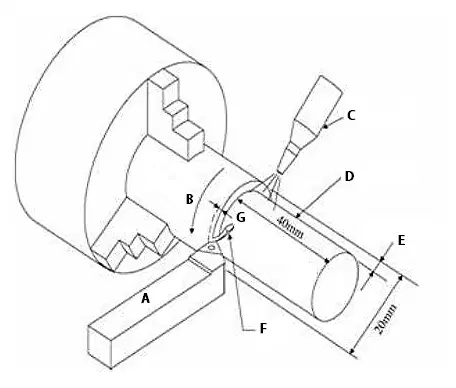
What is "A" called in the basic turning operation?
Cutting Speed
Cooling fluid
Workpiece
Cutting tool
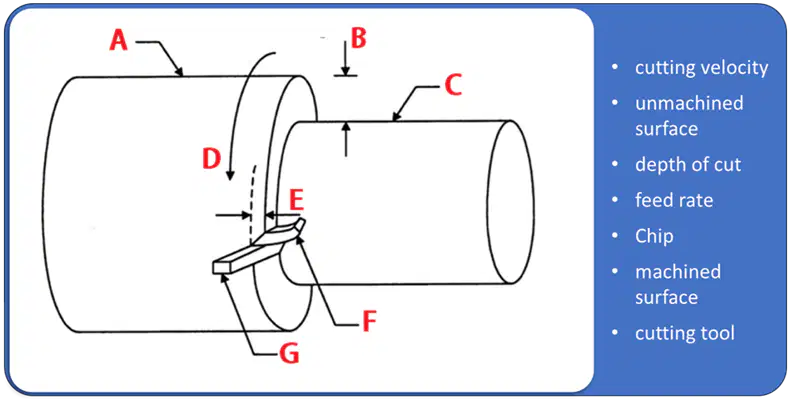
What is "A" called in the basic turning operation?
(a)

What is "B" called in the basic turning operation?
(a)
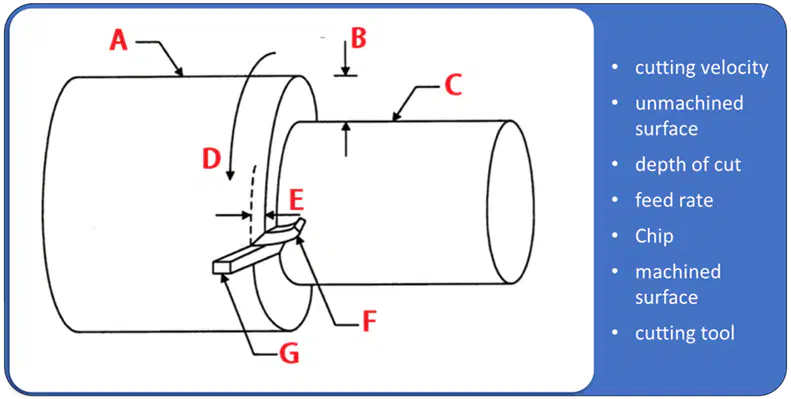
What is "C" called in the basic turning operation?
(a)
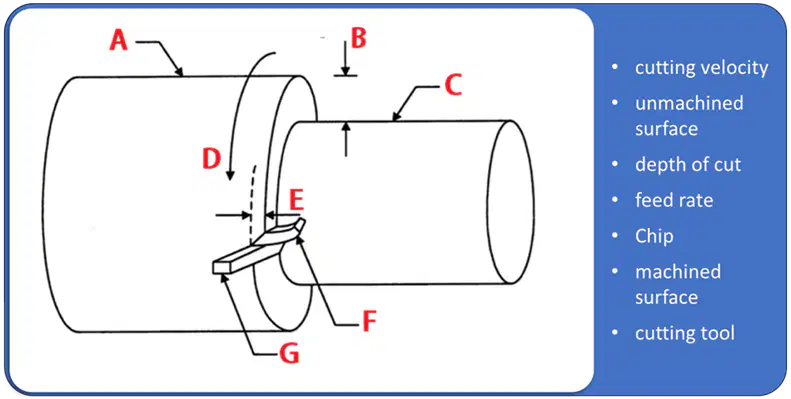
What is "D" called in the basic turning operation?
(a)
What is "E" called in the basic turning operation?
(a)

What is "F" called in the basic turning operation?
(a)
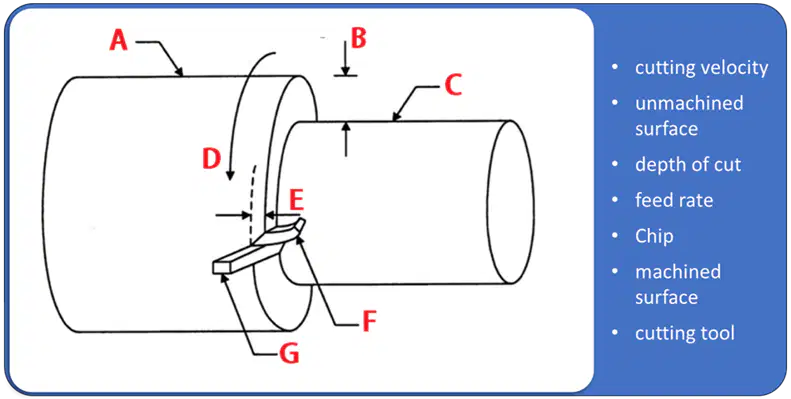
What is "G" called in the basic turning operation?
(a)

What is "A" called in the basic turning operation?
Unmachined surface
depth of cut
machined surface
cutting velocity
What is "B" called in the basic turning operation?
Workpiece
depth of cut
machined surface
cutting velocity
What is "C" called in the basic turning operation?
Workpiece
depth of cut
machined surface
cutting velocity
What is "D" called in the basic turning operation?
Workpiece
depth of cut
machined surface
cutting velocity
What is "E" called in the basic turning operation?
Workpiece
depth of cut
machined surface
feed rate
What is "F" called in the basic turning operation?
Workpiece
depth of cut
chip
feed rate
What is "G" called in the basic turning operation?
cutting tool
depth of cut
chip
feed rate
What is "G" called in the basic turning operation?
Workpiece
cutting tool
chip
feed rate
"Cutting Velocity" is denoted by:


"Depth of cut" is denoted by:
"Feed rate" is denoted by:
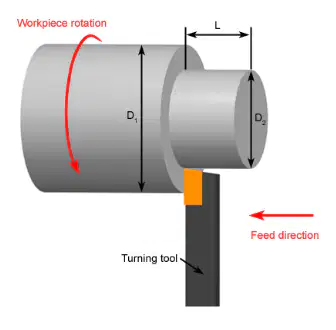
A lathe is capable of performing numerous machining operations to deliver parts with the desired features. What is the specific name for the turning process shown in the figure?
step turning
taper turning
champher turning
contour turning
spinning
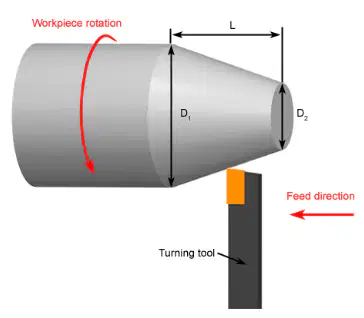
A lathe is capable of performing numerous machining operations to deliver parts with the desired features. What is the specific name for the turning process shown in the figure?
step turning
taper turning
champher turning
contour turning
spinning
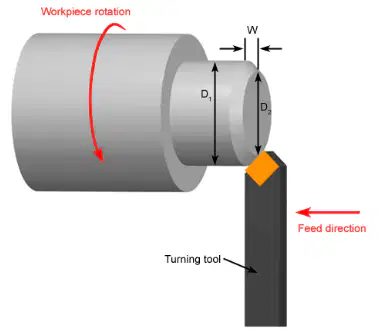
A lathe is capable of performing numerous machining operations to deliver parts with the desired features. What is the specific name for the turning process shown in the figure?
step turning
taper turning
champher turning
contour turning
spinning

A lathe is capable of performing numerous machining operations to deliver parts with the desired features. What is the specific name for the turning process shown in the figure?
step turning
taper turning
champher turning
contour turning
spinning
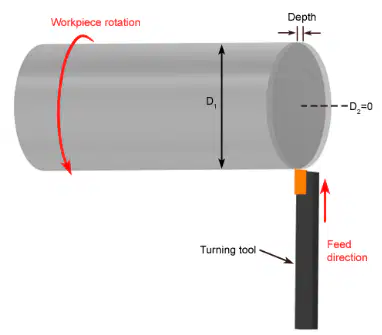
A lathe is capable of performing numerous machining operations to deliver parts with the desired features. What is the specific name for the turning process shown in the figure?
step turning
taper turning
champher turning
contour turning
facing
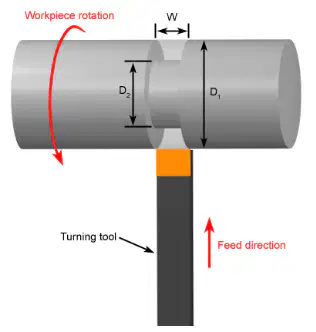
A lathe is capable of performing numerous machining operations to deliver parts with the desired features. What is the specific name for the turning process shown in the figure?
grooving
parting
threading
knurling
drilling
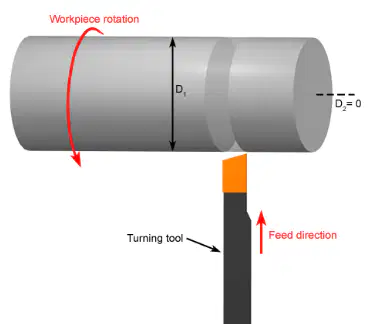
A lathe is capable of performing numerous machining operations to deliver parts with the desired features. What is the specific name for the turning process shown in the figure?
grooving
parting
threading
knurling
drilling
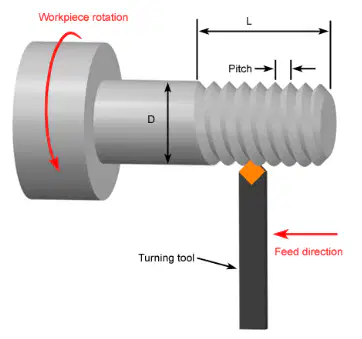
A lathe is capable of performing numerous machining operations to deliver parts with the desired features. What is the specific name for the turning process shown in the figure?
grooving
parting
threading
knurling
drilling
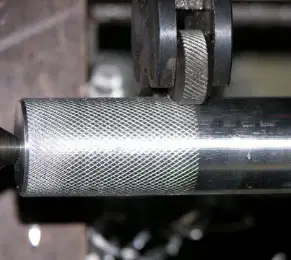
A lathe is capable of performing numerous machining operations to deliver parts with the desired features. What is the specific name for the turning process shown in the figure?
grooving
parting
threading
knurling
drilling

A lathe is capable of performing numerous machining operations to deliver parts with the desired features. What is the specific name for the turning process shown in the figure?
grooving
parting
threading
knurling
drilling
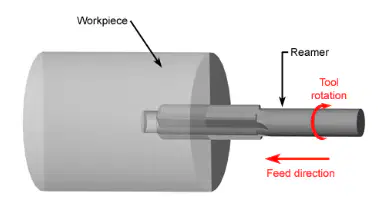
A lathe is capable of performing numerous machining operations to deliver parts with the desired features. What is the specific name for the turning process shown in the figure?
grooving
reaming
threading
knurling
drilling
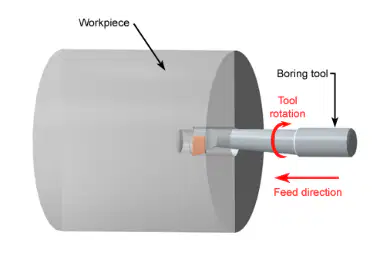
A lathe is capable of performing numerous machining operations to deliver parts with the desired features. What is the specific name for the turning process shown in the figure?
grooving
reaming
threading
knurling
boring
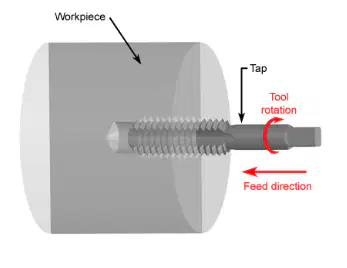
A lathe is capable of performing numerous machining operations to deliver parts with the desired features. What is the specific name for the turning process shown in the figure?
tapping
reaming
threading
knurling
boring
The productivity of turning is high, the cutting process is relatively stable, and the cutting tools are relatively simple.
TRUE ✅
FALSE ❌
During turning operation, when the tool moves along a diagonal line intersecting the axis, a cylinderical surface is formed.
TRUE ✅
FALSE ❌
During turning operation, when the tool moves along a diagonal line intersecting the axis, a conical surface is formed.
TRUE ✅
FALSE ❌
During the turning operation, when the tool moves parallel to the axis of rotation of the workpiece, it forms inner and outer cylindrical surfaces.
TRUE ✅
FALSE ❌
During the turning operation, by achieving different feed movements relative to the workpiece through the tool, different workpiece shapes can be obtained.
TRUE ✅
FALSE ❌
车削还可以加工螺纹面、端平面及偏心轴等.
TRUE ✅
FALSE ❌
What is a primary advantage of turning operations?
High cost of setup
Ability to produce cylindrical parts
Limited material compatibility
High energy consumption
Which of the following is an advantage of turning operations in terms of precision?
High surface finish and tight tolerances
Low accuracy
Inconsistent results
Limited to simple shapes
Turning operations are advantageous because they:
Require complex programming
Can be performed on a wide range of materials
Are limited to small-scale production
Have high tool wear rates
Which of the following is a benefit of turning operations in manufacturing?
Low production speed
Limited to soft materials
Versatility in producing different shapes
High material waste
Which of the following is a disadvantage of turning operations in terms of cost?
Minimal material waste
High tooling and machine maintenance costs
Low energy consumption
Low setup cost
Turning operations can be disadvantageous because they:
Require skilled operators
Produce inconsistent results
Have low material compatibility
Are suitable for mass production
Which of the following is a limitation of turning operations?
Ability to produce complex geometries
High material removal rate
Low energy consumption
Limited to external surfaces in some cases
What is a common disadvantage of turning operations?
Limited to cylindrical shapes
High production speed
Low tool wear
Limited to cylindrical shapes

