
 Worksheets
The Old Oaken Bucket
Total questions: 97
Worksheet time: 1hrs 6mins
What does the word 'recollection' mean in the context of the poem?
Memory
Childhood
Happiness
Sadness
What does the word 'infancy' refer to in the poem?
Adulthood
Babyhood
Old age
Youth
In the poem, what is a 'cataract'?
A) A small stream
B) A large waterfall or steep rapids
C) A gentle breeze
D) A rocky hill
What does 'cot' mean as used in the poem?
A) A large house
B) A small house
C) A bed
D) A garden
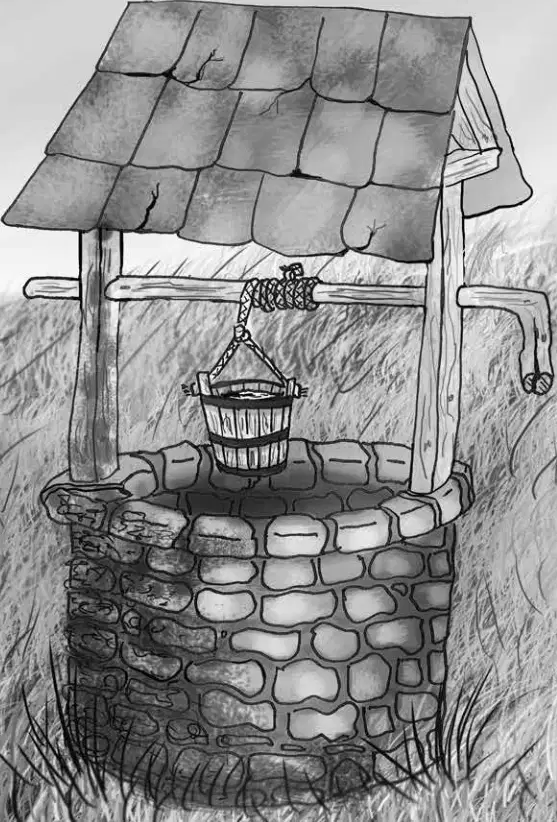
The poem excerpt about the bucket and the well conveys emotions of:
joy and happiness
sadness and nostalgia
anger and frustration
fear and anxiety
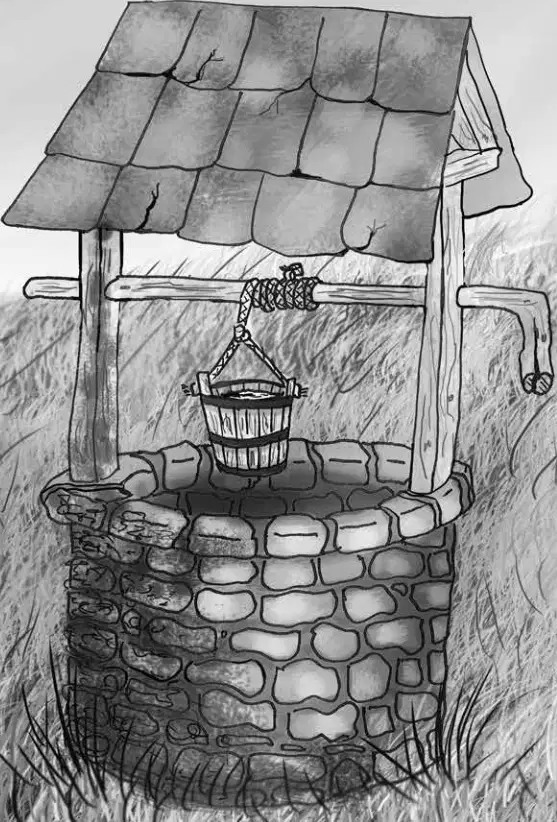
The imagery of the 'old oaken bucket' contributes to the theme of nostalgia in the poem by:
evoking memories of childhood and simpler times
highlighting the importance of nature
emphasizing the passage of time
illustrating the beauty of rural life
What does "truth overflowing" refer to?
the water in the bucket
the old wooden bucket
the stones around the well
the white pebbles in the well
In line 28, why does the speaker sigh?
The speaker is thirsty for a drink of water from the bucket.
The speaker feels tired from pulling up the bucket.
The speaker is deeply touched remembering the bucket.
The speaker wishes that the bucket was in better shape.
What is a theme of the poem?
Remembering better times can result in deep sadness.
A poor life on a farm is better than a rich one in town.
Living in the past keeps one from enjoying the present.
Good memories take on greater meaning as time passes.
How do details in the second stanza (lines 11–20) support the poem’s overall meaning?
The speaker contrasts the old bucket with memories of the beauty of nature.
The speaker lists the different features of the family farm on which he lived.
The speaker describes childhood experiences of drawing water from the well.
The speaker provides information about how to operate an old-fashioned well.
Which words from the poem express the speaker’s feelings about his youth?
A. “How dear to my heart”
B. “The cot of my father”
C. “And dripping with coolness”
D. “poised on the curb”
Which words from these lines help to create a pleasant tone?
A. “dear” and “loved”
B. “scenes” and “deep-tangled”
C. “wildwood” and “spot”
D. “view” and “knew”
Which line from the poem supports the inference that the speaker no longer lives in the place of his youth?
For often at noon, when returned from the field,
How ardent I seized it with hands that were glowing!
Not a full blushing goblet could tempt me to leave it,
And now, far removed from the loved situation,
What is the surprising way humpback whales catch fish?
Bubble net feeding
Deep diving
Surface skimming
Lunging
Humpback whales use bubbles when feeding by creating bubble nets to trap fish.
To communicate with other whales
To create bubble nets to trap fish
To scare away predators
To play and have fun
Dr. Fred Sharpe used which tool to study humpback whales?
Hydrophone
Telescope
Microscope
Binoculars
Fill in the blank: Humpback whales are known for feeding alone or in ____.
groups.
pairs.
solitude.
isolation.
True or False: The Crittercam showed that whales waved their flippers back and forth as they fed.
True
False
What did the sonar device show about the use of bubbles by humpback whales?
The sonar device showed that humpback whales use bubbles to communicate.
The sonar device showed that humpback whales use bubbles to hunt fish.
The sonar device showed that humpback whales use bubbles to navigate.
The sonar device showed that humpback whales use bubbles to play.
How did the whales use their calls and flippers to help catch their food?
By coordinating in groups to herd fish
By scaring fish into tight balls
By using echolocation to find prey
By stunning fish with loud noises
Explain how the researchers used a model of a humpback flipper in their experiment.
The researchers used a model of a humpback flipper to study its aerodynamic properties.
The researchers used a model of a humpback flipper to test its strength under pressure.
The researchers used a model of a humpback flipper to analyze its color patterns.
The researchers used a model of a humpback flipper to measure its size.
Which sentence from the selection supports the ideas that humpbacks work in groups and form lifelong relationships with other whales?
Humpback whales are known for feeding alone or in pairs.
When they spot a school of herring, the humpbacks dive into the depths and close in on the fish from below.
Whales are known to use bubbles and loud calls when they try to chase away other whales.
Over the years, the research group has seen that humpback whales often live and hunt together for years.
Which sentence from the selection shows why scientists at first thought the whales were fighting each other for food?
Most of the time, they plow through the ocean with their huge mouths open, scooping up thousands of tiny shrimplike creatures called krill.
Suddenly, all of the whales explode out of the water at once, right in the middle of the bubble-circle.
Whales are known to use bubbles and loud calls when they try to chase away other whales.
A single whale swims below the fish, carefully releasing air from its blowhole to create a wall of bubbles.
Why do scientists think that herring are afraid of light-colored objects?
They live in the dark depths of the ocean, not near the lighter surface of the water.
They swim away from the white side of the flipper model, not the dark side.
They will not swim through the bubbles that the whales create.
They behave differently in lighter tanks than they do in dark ones.
How do herring react to the bubbles the whales blow?
They very quickly swim toward them.
They avoid swimming through them.
They begin swimming next to them.
They generally ignore them.
According to paragraph 7, what do sonar devices use to find things under the water?
sound
touch
cameras
temperature
Which paragraph has evidence to support the claim, “The whales were working together”?
paragraph 4
paragraph 5
paragraph 9
paragraph 14
What does the phrase “plow through” tell about the whales?
A. They are splitting things in half.
B. They are swimming awkwardly.
C. They are moving forcefully.
D. They are making bubbles.
What did Mary do first when she went out into the garden?
She picked flowers.
She sat on a bench.
She watered the plants.
She looked around.
How did the sunshine affect the garden?
It made the garden flourish.
It had no effect on the garden.
It caused the plants to wilt.
It attracted more insects.
Read the selection from 'The Secret Garden' by Frances Hodgson Burnett. What did Ben Weatherstaff say about the earth?
The earth is a source of life.
The earth is a barren land.
The earth is full of mysteries.
The earth is a garden of weeds.
Read the selection from 'The Secret Garden' by Frances Hodgson Burnett. What did Mary smell in the garden?
Roses
Lilies
Tulips
Daisies
What did Mary ask Ben Weatherstaff about the robin?
She asked if the robin was friendly.
She asked if the robin could sing.
She asked if the robin was a pet.
She asked if the robin was always in the garden.
Mary is curious about what in the garden?
The flowers
The trees
The insects
The weather
Who does Ben Weatherstaff suggest Mary should ask about the garden?
Ben Weatherstaff
The Robin
Martha
Dickon
How does Mary feel when she sees the robin?
Happy
Sad
Angry
Indifferent
Describe the condition of the flower-bed as mentioned in the passage.
The flower-bed is lush and full of vibrant flowers.
The flower-bed is barren and devoid of any plants.
The flower-bed is overgrown with weeds.
The flower-bed is well-maintained and neatly arranged.
What kind of tone do the words in this sentence help to create?
an uncomfortable tone
an excited tone
a dull, sleepy tone
a happy, peaceful tone
Paragraph 1 describes how the change in weather has been good for Ben. Which detail from the selection shows a similar response in Mary?
Mary runs around the fountain flower garden ten times.
Mary finds Ben digging in the first kitchen-garden.
Mary sniffs the air and smells the fresh, damp earth.
Mary asks Ben about the garden where the robin lives.
Which sentence from the selection supports the idea that Mary is visiting the garden for the first time?
A. “She went into the first kitchen-garden and found Ben Weatherstaff working there with two other gardeners.”
B. “‘In th’ flower gardens out there things will be stirrin’ down below in th’ dark.’”
C. “Very soon she heard the soft rustling flight of wings again and she knew at once that the robin had come again.”
D. “‘He’s never seen a little [girl] here before, an’ he’s bent on findin’ out all about thee.’
What does flirted mean in this sentence?
waved angrily
talked in a friendly way
moved in a playful way
tweeted loudly
What is a theme of the selection?
The beauty of nature lasts only for a short time.
The outdoors can be a source of wonder and mystery.
Humans and nature are almost always in conflict.
The natural world is often a dark and unfamiliar place.
What is the meaning of the simile used in this sentence?
The robin’s feathers look like fancy red clothing.
The robin looks as soft and round as a ball of cotton.
The robin walks about on two legs like a person.
The robin’s wings look like they are made of shiny cloth.
Which detail should be included in a summary of the selection?
The flowers have been planted.
Mary finds a key in the ground.
The bird looks for a worm to eat.
Mary asks Ben about roses blooming.
How are Mary and Ben different?
What are antibiotics designed to work against?
Before antibiotics, what could happen if someone got a cut or scratch?
It would heal without any issues.
It could lead to a serious infection.
It would cause immediate death.
It would have no effect.
Who discovered penicillin?
Alexander Fleming
Marie Curie
Isaac Newton
Albert Einstein
In what decade did the widespread use of antibiotics begin?
Explain the impact of antibiotics on diseases like pneumonia and tuberculosis.
Antibiotics cure both pneumonia and tuberculosis completely.
Antibiotics have no effect on pneumonia and tuberculosis.
Antibiotics can treat pneumonia effectively but are less effective against tuberculosis.
Antibiotics worsen both pneumonia and tuberculosis.
What statement did William Stewart make shortly before 1970?
William Stewart stated that the world would soon face a global energy crisis.
William Stewart predicted the rise of digital technology.
William Stewart claimed that language would become a barrier in global communication.
William Stewart announced the discovery of a new planet.
How have antibiotics made the recovery process easier according to the passage?
By reducing the duration of illness
By increasing the severity of symptoms
By causing more side effects
By making the recovery process more complicated
What is the main concern about antibiotics mentioned in the passage?
The cost of antibiotics
The side effects of antibiotics
The overuse of antibiotics
The availability of antibiotics
Ongoing efforts are being made to address the issue of antibiotic resistance.
True
False
Which sentence from the selection supports the idea that antibiotics sometimes fail to fight an infection?
Antibiotics can help doctors cure diseases that were once very hard to treat.
People who are told to take an antibiotic for a couple of weeks might stop taking it before all of the medicine is gone.
Resistance means that antibiotics don’t always work as well as they should when they come into contact with some types of bacteria.
Research and development will allow them to keep creating new medicines.
Which statement about antibiotics is supported by the selection?
Antibiotics can cure every bacterial illness.
Bacteria multiply when treated with antibiotics.
Bacteria are resistant to all antibiotics.
Antibiotic doses must be taken fully to work well.
Based on these sentences, what does the word advancements mean?
A. expressions
B. experiments
C. changes
D. improvements
Read these sentences from the selection. “For example, a cut or a scratch could allow bacteria to get into the body. People could become very ill—not from the small wound itself but from the infection that followed. Surgery was very risky, and there was no cure for many diseases caused by bacteria.” Which claim do these sentences support?
Some antibiotics have stopped working over time.
Life before antibiotics could be dangerous.
The accidental discovery of antibiotics amazed doctors.
Most bacteria in the past did not make people sick.
Read this incomplete summary of the selection. Antibiotics, which were discovered by accident in the 1920s, fight infections caused by bacteria. Many infections that once caused serious problems are now curable by antibiotics. As time goes on, scientists work to make newer and better antibiotics to treat more illnesses. Which sentence should be added to complete the summary?
A. Alexander Fleming was the Surgeon General who said we had conquered infections.
B. Surgery, which used to be very risky, is now safer because of antibiotics.
C. Some people worry too much about developing resistance to antibiotics.
D. Although finding cures for infections is difficult, it is important work that needs to be done.
Which meaning of the word prescribe is used in paragraph 1 of the selection?
to define something as a fact
to claim something as property
to order something to be used as a cure
to turn something into a rule to be obeyed
Based on information in paragraph 6, why did the Surgeon General make the claim that he did?
More research was needed to create new antibiotics.
Many new antibiotics were proving to be successful.
Americans were unaware of the helpfulness of antibiotics.
Antibiotics had just been discovered for the first time.
What was the main reason little Willy was able to take sharp turns at full speed?
How did little Willy manage to stay on the sled when Searchlight sprang forward?
By holding tightly to the sled
By balancing carefully
By sitting down quickly
By grabbing Searchlight's fur
Why did Stone Fox start off dead last in the race?
He wanted to give others a head start.
He was not interested in winning.
He had a strategy to win.
He was late to the race.
Read the selection from 'Stone Fox' by John Reynolds Gardiner. What did Mayor Smiley say about crossing the lake?
What was the risk that prevented other racers from crossing the lake?
The lake was too deep
There were dangerous animals in the lake
The weather was too harsh
The ice was too thin
Who was in last place but picking up speed?
The person in last place was picking up speed.
The person in first place was slowing down.
The person in the middle was maintaining speed.
The person in last place was losing speed.
What did little Willy see when he approached the farmhouse?
A scarecrow
A ghost
A farmer
A dog
How did little Willy feel when he saw his grandfather?
Happy
Sad
Angry
Confused
What did Stone Fox do after little Willy saw his grandfather?
He smiled at little Willy
He helped little Willy's grandfather
He challenged little Willy to a race
He ignored little Willy
During the race, why is little Willy unafraid to cross the lake when the others are?
He thinks it is the only way he can get far enough ahead to win.
He learns that Mayor Smiley would not be afraid to take the shortcut.
His small sled with just one dog is lighter and won’t break the ice.
He can tell by looking where the lake ice is strongest and weakest.
How does the North Road out of town compare to the South Road back into town?
The North Road is quite a bit longer than the South Road.
The North Road has more sharp turns than the South Road.
The North Road crosses the lake, while the South Road does not.
The North Road has a few steep hills, while the South Road has many.
What is the difference between how Stone Fox performs at the beginning of the selection and at its end?
A. He begins slowly but picks up speed in the end.
B. He is sick in the beginning but feels better by the end.
C. He starts in last place but ends up in first place.
D. He starts in first place but loses his lead on the South Road.
Which choice from the selection best helps the reader know what “made his move” means in paragraph 26?
A. “I must finish the race. I haven’t won yet.”
B. “One by one he began to pass the other racers.”
C. “He passed the others as if they were standing still.”
D. “Until only little Willy remained.”
What does the word disqualified mean in this sentence?
A. taken back to an earlier point in the race
B. told to start the race over from the beginning
C. brought to the end of the race
D. no longer able to compete in the race
Read the sentence from the selection. “Other racers followed in hot pursuit.” Which word from the sentence helps the reader understand the meaning of the word pursuit?
other
racers
followed
hot
Which detail should be included in a summary of the selection?
Little Willy travels down Main Street.
Little Willy passes the town schoolhouse.
Little Willy speeds past Doc Smith’s house.
Little Willy sees Grandfather in the window.
What does the phrase “couldn’t think straight” mean?
A. unable to think clearly
B. unable to think happily
C. thinking before acting
D. thinking about the past
What was the significance of April 14, 1910, in Washington, D.C.?
It was the day the Titanic sank.
It was the day the Wright brothers made their first flight.
It was the day President Taft threw the first pitch at a baseball game.
It was the day the Washington Monument was completed.
Who was the president that attended the baseball game on April 14, 1910?
William Howard Taft
Theodore Roosevelt
Woodrow Wilson
Calvin Coolidge
What was the temperature during the baseball game on April 14, 1910?
50°F
60°F
70°F
80°F
How many fans attended the baseball game on April 14, 1910?
10,000
15,000
20,000
25,000
What nickname was given to the Nationals team?
The Nationals team was given the nickname 'Nats'.
The Nationals team was given the nickname 'Caps'.
The Nationals team was given the nickname 'Wizards'.
The Nationals team was given the nickname 'Redskins'.
What did President Taft do before throwing the baseball?
He gave a speech
He waved to the crowd
He adjusted his tie
He signed a document
Who caught the ball thrown by President Taft?
President Taft threw the ball.
A baseball player caught the ball.
A fan in the stands caught the ball.
The ball was not caught.
What was the prediction made by one newspaper about the game?
The newspaper predicted a win for the home team.
The newspaper predicted a draw.
The newspaper predicted a win for the away team.
The newspaper did not make any prediction.
President Taft participated in a significant event that started a famous tradition in baseball.
Throwing the first pitch on Opening Day
Singing the national anthem
Introducing the seventh-inning stretch
Wearing a baseball cap
According to the passage, who declared Taft’s pitch a 'momentous event in the history of the national game'?
What was the outcome of the game after President Taft threw the first pitch?
The home team won
The visiting team won
The game was a draw
The game was postponed
Since 1910, nearly every president has tossed out the first ball at least once to celebrate which occasion?
Independence Day
Thanksgiving
Opening Day of the baseball season
Presidents' Day
What does the word patronage mean in this sentence?
support
command
success
popularity
According to the selection, how did Taft’s pitch affect the game between the Nationals and the Athletics?
It helped Eddie Plank play better.
It encouraged the Nationals to win.
It made Walter Johnson proud.
It limited the Athletics to three hits.
How did people at the ball game respond to President Taft?
Based on details in the selection, what can the reader infer about the early 1900s?
A. Presidents regularly attended opening day in each sport.
B. Baseball was less popular than it is in modern times.
C. People dressed up in nice clothes to attend sporting events.
D. Baseball games were always played in the early evening.
What is a main idea of the selection?
Baseball is a popular sport because of President Taft.
Baseball is an American sport that has a special tradition.
An American president can change the outcome of a baseball game.
President Taft signed the baseball that he threw at the start of the game.
What does the author mean by the statement that Taft’s throw started “a famous tradition”?
A. Baseball became the country’s most popular game.
B. Taft’s pitch led to his popularity with the general public.
C. Many other presidents have followed Taft’s lead.
D. One president’s time in office was longer than any other.
What is the meaning of the phrase “score points with” as it is used in this sentence?
get money from
gain respect from
compete against
return to

