wayground logo

Free Printable Worksheets

Font size

S
M
L
XL
Worksheets

Cardiovascular System Unit Test

Total questions: 35

Worksheet time: 18mins

Name
Class
Date
1.

Which of the following is the function of the cardiovascular system?

a)
A. regulating body temperature and fluid volume
b)
B. preventing infection
c)
C. transporting hormones and wastes
d)
D. All options are functions of the cardiovascular system
2.

All of the following are formed elements of the blood except:

a)
A. plasma
b)
B. erythrocytes
c)
C. thrombocytes
d)
D. leukocytes
3.

Which of the following components of blood makes up the smallest percentage by volume?

a)
A. plasma
b)
B. erythrocytes
c)
C. thrombocytes & leukocytes
4.

An erythrocyte is more commonly known as

a)
A. a white blood cell
b)
B. a red blood cell
c)
C. a platelet
d)
D. hemoglobin
5.

Blood plasma is mostly made of

a)
A. water
b)
B. granules
c)
C. oxygen
d)
D. hemoglobin
6.

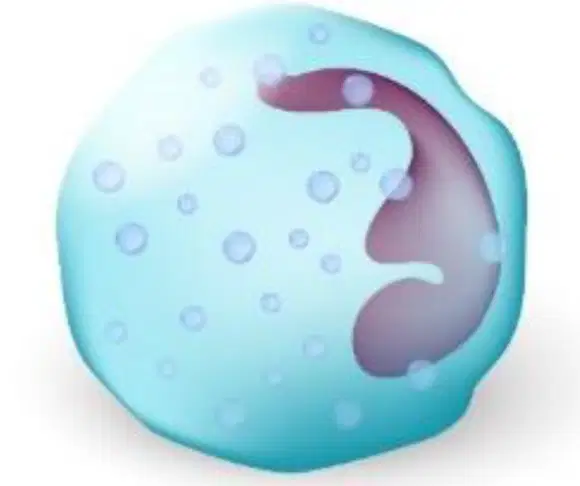
The cell shown is responsible for releasing histamines, which dilate blood vessels during an allergic attack. It is categorized asa a(n) ____ and is called a(n) ____.

a)
A. granulocyte, lymphocyte
b)
B. agranulocyte, monocyte
c)
C. granulocyte, basophil
d)
D. agranulocyte, eosinophil
7.

A single hemoglobin molecule can carry ____ oxygen molecules.

a)
A. 1
b)
B. 2
c)
C. 3
d)
D. 4
8.

Because oxygen is nonpolar,

a)
A. it must be absorbed by the lymphocytes
b)
B. it must diffuse directly into the blood
c)
C. it must be eliminated quickly
d)
d. it must be carried by hemoglobin
9.

The process of hemostasis is completed by which type of cells?

a)
A. white blood cells
b)
B. red blood cells
c)
C. platelets
d)
D. plasmas
10.

Where does hematopoiesis occur?

a)
A. it occurs in the red bone marrow of adults
b)
B. it occurs in the heart
c)
C. it occurs in the blood vessels
d)
D. it occurs in the lungs
11.

The hormone that stimulates platelet formation is

a)
A. erythropoietin
b)
B. interleukin
c)
C. thrombopoietin
12.

Which of the following is the first step of hemostasis?

a)
A. a fibrin mesh is formed
b)
B. the blood vessel contracts
c)
C. platelets are activated
13.

An individual with B+ blood would have what on their erythrocytes?

a)
A. B antigens & no Rh antigens
b)
B. B antibodies & no Rh antigens
c)
C. B antigens & Rh antigens
d)
D. B antibodies & Rh antigens
14.

A person with Type A blood needs a blood transfusion. Which blood types are safe to provide to her?

a)
A. A blood only
b)
B. A and O blood
c)
C. B and O blood
d)
D. O blood only
15.

What is the primary role of an antigen in the immune response?

a)
A. To trigger the production of antibodies
b)
B. To destroy infected cells directly
c)
C. To act as a receptor on immune cells
d)
D. To transport oxygen in the blood
16.

The pericardium around the heart is responsible for

a)
A. opening and closing the heart valves
b)
B. creating the heart beat
c)
C. reducing friction around the heart
d)
D. bringing oxygen in from the lungs
17.

The real work of the heart contractions is done by which layer?

a)
A. epicardium
b)
B. pericardium
c)
C. endocardium
d)
D. myocardium
18.

The human cardiovascular system has two loops. Which loop takes blood from the heart to the body tissues and back?

a)
A. pulmonary loop
b)
B. coronary loop
c)
C. systemic loop
d)
D. systolic loop
19.

Which type of blood vessel contains blood at the highest pressure?

a)
A. veins
b)
B. arteries
c)
C. capillaries
d)
D. shunts
20.

Blood passes from the legs into the ____ vena cava and then into the _____.

a)
A. inferior, right atrium
b)
B. inferior, left atrium
c)
C. superior, right atrium
d)
D. superior, left atrium
21.

The major blood vessel that carries oxygenated blood away from the heart is the

a)
A. vena cava
b)
B. aorta
c)
C. pulmonary artery
d)
D. pulmonary vein
22.

An abnormal clot that forms within a blood vessel and dislodges to float freely through the blood is called a(n)?

a)
A. thrombus
b)
B. embolus
c)
C. Hematoma
d)
D. Aneurysm
23.

Which of the following is the correct sequence for the intrinsic conduction system?

a)
A. SA node --> AV node --> AV bundles --> Purkinje fibers --> bundle branches
b)
B. AV node --> AV bundles --> SA node -> bundle branches --> Purkinje fibers
c)
C. AV node --> AV bundles --> Purkinje fibers --> bundle branches --> SA node
d)
D. SA node --> AV node --> AV bundles --> bundle branches -->Purkinje fibers
24.

What sound is heard when the AV valves (atrioventricular valves) close?

a)
A. The "lub" sound.
b)
B. The "dub" sound.
c)
C, The "swish" sound.
d)
D, The "click" sound.
25.

Which phase of the cardiac cycle is characterized by the contraction of the ventricles to pump blood to the lungs and the rest of the body?

a)
A. Diastole
b)
B. Systole
26.

Which is the correct formula for calculating cardiac output?

a)
A. cardiac output = stroke volume + heart rate
b)
B. cardiac output = stroke volume – heart rate
c)
C. cardiac output = stroke volume x heart rate
d)
D. cardiac output = stroke volume/heart rate
27.

What is the correct sequence of blood flow from an artery to a vein?

a)
A. Artery → Arteriole → Capillary → Venule → Vein
b)
B. Artery → Vein → Capillary → Venule → Arteriole
c)
C. Arteriole → Vein → Capillary → Artery → Venule
d)
D. Artery → Capillary → Venule → Arteriole → Vein
28.

Three tissue layers are found in these structures

a)
A. arteries only
b)
B. veins only
c)
C. arteries and veins
d)
D. capillaries
29.

Also called the cardiac pacemaker

a)
A. sinoatrial node
b)
B. valves
c)
C. auricle
d)
D. septum
30.

Externally covers the atrium

a)
A. sinoatrial node
b)
B. valves
c)
C. auricle
d)
D. septum
31.

Caused by dropping blood oxygen levels

a)
A. systole
b)
B. diastole
c)
C. positive feedback loop
d)
D. negative feedback looop
32.

The relaxation portion of the cardiac cycle

a)
A. systole
b)
B. diastole
c)
C. valves
d)
D. arterioles
33.

Divides the deoxygenated and oxygenated blood.

a)
A. auricle
b)
B. sinoatrial node
c)
C. septum
d)
D. left atrium
34.

Prevents the backflow of blood

a)
A. septum
b)
B. valves
c)
C. coronary arteries
d)
D. auricle
35.

What direction does the apex (tip) of the heart point?

a)
A. towards the left hip
b)
B. towards the right hip