
NEW
Font size
 Worksheets
Newton's Laws
Total questions: 30
Worksheet time: 18mins
Fill in the blank: Inertia is the tendency for an object to resist a change in its state of ________.
motion
rest
energy
temperature
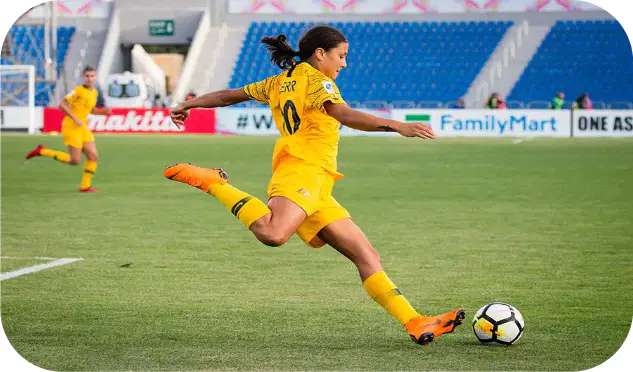
Explain how the law of inertia applies to a soccer ball when kicked.
The ball will not move until a force is applied.
The ball will continue to move in a straight line unless acted upon by another force.
The ball will stop immediately after being kicked.
The ball will change direction on its own.
Explain why it is harder to move or change the motion of an object with greater inertia.
Because greater inertia means more mass, requiring more force to change motion.
Because greater inertia means less mass, requiring less force to change motion.
Because greater inertia means more speed, requiring more force to change motion.
Because greater inertia means less speed, requiring less force to change motion.

A golf ball will continue to move at a constant velocity unless a force acts on it to slow it down. Fill in the blank: This is an example of Newton's ______ Law of Motion.
First
Second
Third
Fourth
An object at rest, will remain at rest unless:
Both forces cancel each other out
Acted on by an external force
It changes its mass
It produces more force.
What does Newton's second law of motion state?
It states that an object at rest stays at rest and an object in motion stays in motion unless acted upon by an external force.
It states that the force acting on an object is equal to the mass of that object times its acceleration.
It states that for every action, there is an equal and opposite reaction.
It states that energy cannot be created or destroyed, only transformed.

Fill in the blank: The equation for force is Force = mass x ________.
acceleration
velocity
distance
time
According to Newton's second law, what happens to an object's acceleration if the force applied to it increases?
A) It decreases
B) It remains the same
C) It increases
D) It stops
According to Newton's third law, what happens when swimmers apply a force to the starting blocks?
The blocks move forward.
The blocks apply an equal and opposite force on the feet of the swimmers.
The swimmers stop moving.
Fill in the blank: If the same force is applied to different bodies, the ______ one will have greater acceleration.
lighter
heavier
larger
smaller
In the first scenario, a swimmer applies a force of 110 N and has a mass of 55 kg. Calculate the acceleration using the formula a=mF .
2 m/s²
1 m/s²
3 m/s²
4 m/s²
In the second scenario, if the force is increased to 165 N while the mass remains 55 kg, what is the acceleration?
2 m/s²
3 m/s²
4 m/s²
5 m/s²
Newton's 3rd law of motion states that:
For every action, there is an equal and opposite reaction.
An object in motion stays in motion unless acted upon by an external force.
Force equals mass times acceleration.
Energy cannot be created or destroyed.
When two objects contact one another, they exert forces that are equal in size but ______ in direction on each other.
opposite
same
random
perpendicular
The relationship between the speed of a tennis racquet and the resultant force applied to the ball is:
Directly proportional
Inversely proportional
No relationship
Depends on the angle of impact
How does Newton's third law apply to a high jumper?
The high jumper pushes down on the ground, and the ground pushes the jumper up.
The high jumper pulls the air, and the air pulls the jumper forward.
The high jumper pushes forward, and the ground pushes the jumper backward.
The high jumper pulls the ground, and the ground pulls the jumper down.
Which of Newton's laws explains why a basketball will not leave a player's hand during a free-throw until they apply a force to it?
Inertia
Acceleration
Action-reaction
According to Newton's laws, what happens to the basketball when making a chest pass with greater force?
The greater the force applied, the greater the resultant acceleration towards a team-mate.
The basketball will move in a circular path.
The basketball will stop moving.
The basketball will move slower.
During a bounce pass, when the ball contacts the court, what type of reaction occurs according to Newton's laws?
No reaction
Equal and opposite reaction
Random reaction
What is the definition of force in biomechanics?
Force is a push or pull which can be internal or external
Force is the energy stored in an object due to its position.
Force is the resistance an object offers to a change in its state of motion.
Force is the amount of matter in an object.
What is the equation for force in biomechanics?
F = ma
F = mv
F = m/a
F = m+v
Sprinter A has more mass than sprinter B. If they both applied the same force to the blocks then acceleration would be...
Greater for sprinter A
Greater for sprinter B
The same for both
Zero
A force applied to an object will produce a change in motion (acceleration) in the direction of the applied force that is directly proportional to the size of the force. (f=___)
mass × acceleration
velocity × time
distance ÷ time
energy ÷ mass
Q1: The Law of Action and Reaction is also referred to as Newton’s Third Law of Motion.
True
False
According to Newton's First Law, a heavier ball is harder to stop because:
it has more mass and therefore more inertia.
it will move faster than a lighter ball.
it is made of a denser material.
it is rolling on a smoother surface.
Newton's Second Law states that a heavier ball requires more force to hit at the same acceleration as a lighter ball because of its higher mass.
True
False
According to Newton's Third Law, when a hockey stick applies a force on a ball, what happens?
The ball applies an equal and opposite force on the hockey stick.
The ball moves in the direction of the force.
The ball remains stationary.
The ball applies a greater force on the hockey stick.
Newton's first law states that an object at rest stays at rest and an object in motion stays in motion unless acted upon by an external force.
False
True
Which of the following is correct?
Inertia is the force that keeps an object moving in a straight line.
Inertia is the tendency of an object to accelerate when a force is applied.
Inertia is the resistance of a physical object to a change in its velocity, including changes to the object's speed or direction of motion.
Inertia is the energy required to change the state of motion of an object.
When the same force is applied to a tennis ball and a cricket ball...
The tennis ball has less mass, so it accelerates more.
The cricket ball has less mass, so it accelerates more.
Both balls have the same mass, so they accelerate equally.
The force is different because the balls are made from different materials.

