wayground logo

Free Printable Worksheets

NEW

Font size

S
M
L
XL
Worksheets

Natural Selection, Adaptation, and Evolution

Total questions: 20

Worksheet time: 15mins

Name
Class
Date
1.

Bat wings and butterfly wings are examples of

a)

homologous structures

b)

analogous structures.

c)

vestigial structures.

d)

unique structures.

2.

How would your describe multiple species of birds feeding from the same food source at the same time?

a)

competition

b)

evolution

c)

natural selection

d)

variation

3.
Darwin wrote that organisms with traits that are best suited to the environment will ________________
a)
increase in number
b)
become extinct
4.
What is this an example of?
a)
diversity of species
b)
variation
c)
vestigial structures
d)
DNA studies
5.

Bat wings and human arms are examples of

a)

homologous structures

b)

analogous structures.

c)

vestigial structures.

d)

unique structures.

6.
When all of the organisms of a species have died it is called
a)
evolution
b)
extinction
c)
adaptation
d)
natural selection
7.
Inherited trait that helps an organism survive is a(n) __________.
a)
Fossil
b)
Adaptation
c)
Ancestor
d)
Natural selection
8.
A remnant or trace of an organism from the past is called a _______.
a)
Ancestor
b)
Skeleton
c)
Fossil
d)
Imprints
9.

A pelvis on a whale is an example of /an

a)

homologous structure.

b)

analogous structure.

c)

vestigial structure.

d)

mystery structure.

10.

Which layer is most likely the oldest?

a)

1

b)

2

c)

3

d)

4

11.

Shark fins and dolphin fins are examples of

a)

homologous structures.

b)

analogous structures.

c)

vestigial structures.

d)

mystery structures.

12.
Which term refers to the process by which individuals that are better suited to the environment survive and reproduce therefore passing down their genes to their offspring? 
a)
Evolution 
b)
Variation 
c)
Adaptation
d)
Natural Selection 
13.

The differences among a species, like different colors or stripes, are called

a)

genes.

b)

variations.

c)

traits.

d)

theories.

14.
What is a change in an organism that allows for it to survive in its environment?
a)
homologous
b)
vestigial
c)
variation
d)
adaptation
15.
What is another name for natural selection?
a)
survival of the smartest
b)
survival of the fastest
c)
survival of the biggest
d)
survival of the fittest
16.
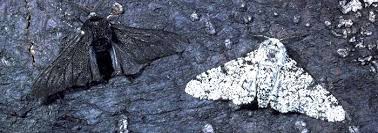
Predict which moth would increase in population
a)
light 
b)
dark
17.

Tail bones on a human is an example of a

a)

homologous structure.

b)

analogous structure.

c)

vestigial structure.

d)

mystery structure.

18.
This scientist developed the theory of evolution as he studied the finches.
a)
Charles Darwin
b)
Isaac Newton
c)
Albert Einstein
d)
Marie Curie
19.

Human arms and arms on an octopus are examples of

a)

homologous structures.

b)

analogous structures.

c)

vestigial structures.

d)

mystery structures.

20.
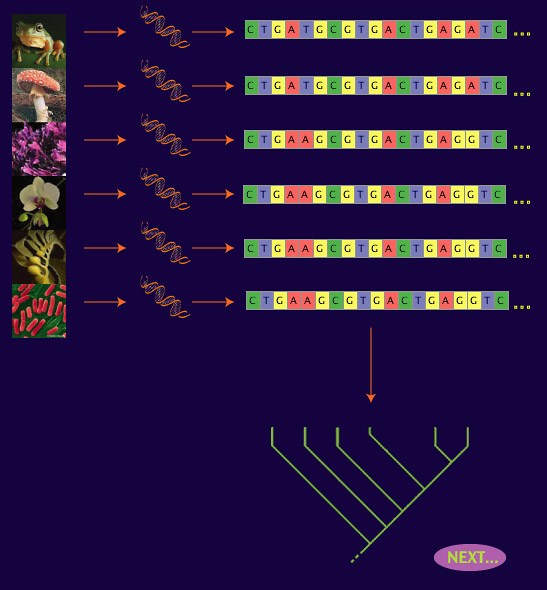
Two organisms that are closely related would have
a)
very similar DNA sequence
b)
exactly the same DNA sequences
c)
no proteins in common
d)
completely different DNA sequence