
 Worksheets
Chapter 5 Study Guide
Total questions: 21
Worksheet time: 21mins
What are the two most important factors in calculating your credit score?
Payment History and types of accounts
Amounts owed and length of credit history
Payment history and total debt
Length of credit history and new credit inquiries
Heather realized she has taken out too much debt and it has started to negatively impact her ability to budget. She has decided to pay off this debt in full as soon as possible. All of the following would be beneficial strategies EXCEPT...
Applying for another credit card to use in case she runs out of cash paying off her debt
Making more than the minimum required payment on her debt
Taking extra shifts at work to increase her income
Reducing spending by canceling some of her streaming subscriptions

Which of the following statements about credit scores does this bar graph support?
Credit scores tend to drop as you grow older because you are more likely to miss a payment at some point
It is more difficult for young people to borrow because they have less payment history for a lender to rely upon.
When young people borrow, they are likely to have lower interest rates because their credit scores are lower.
It is easier for young people to get loans at lower interest rates because they are likely to have never been late on a payment.
All of the following would show up on a credit report EXCEPT...
Salary of your current job
Payment history of your car loan
Credit card payment history
Student loan activity
Which of the following methods of getting your credit score would involve paying a fee?
Checking your credit card or loan statement
Talking to a non-profit counselor
Checking creditkarma.com
Getting a score from myFICO.com
Your friend confides in you that he has a low credit score. What is the single best way for him to improve his score?
Cancel his credit cards
Make on-time payments
Get a car loan
Check his credit score
Melvin is 19 years old and wants to begin establishing a credit history. Which action should he take to meet that goal?
Always say "credit" when asked "credit or debit?" at the store.
Ask his parents to cosign a credit card or add him as an authorized user on their credit card.
Any time he borrows money from a friend or family member, be sure to pay it back promptly.
Take out some private student loans, even though he doesn't need them because he has grants and scholarships.

Frank and Jasmere are each shopping for a new car for themselves. Each will need a $20,000 loan that they will pay back over a five year period. Frank has a credit score of 730 and Jasmere has a score of 600. Which of the following statements is TRUE?
Over the five year period, Jasmere and Frank will pay the same amount for the car loan
Frank's monthly payment on the auto loan will be about $100 more than Jasmere's payment
Jasmere's monthly payment on the loan will be about $100 more than Frank's payment
Lenders are not allowed to charge people different interest rates based on their credit scores
You have a credit card that you use regularly for small purchases with the goal of improving your credit score. Which strategy would have the GREATEST positive impact?
Use less than 30% of the credit limit and pay it off in full every month by the due date
Always carry a balance from month to month
Regardless of how much your balance is, make the minimum payment required on your credit card every month by the due date
Put the credit card in a drawer instead and don't ever use it
What strategy should you use to pay off multiple sources of debt if you want to pay the lowest amount of interest over time?
Snowball method
Make minimum payments
Avalanche method
Consolidate multiple debts into one new loan
Who tracks all of your credit information?
Credit reporting agencies (Equifax, Experian and TransUnion)
Federal government
Consumer Financial Protection Board (CFPB)
Lenders
Which of the following things should you have ready when contacting a credit reporting agency to report an error on your credit report?
Your preferred payment method to pay for fixing the error
A list of all of your financial accounts and balances
An explanation of the mistake and any evidence you have supporting your claim
References from a non-family member vouching for your creditworthiness
You find an error on your credit report: Your credit card account indicates that you are 60 days late on your payment but you have bank records indicating that you have always made on-time payments. What should you do FIRST?
Contact the credit card company to have them fix it
Contact the credit reporting agency
Wait a few weeks to see if it gets resolved
Call the police to report possible identity theft
Which of the following could have a NEGATIVE impact on your credit score if done in a short period of time?
Paying your bills on-time
Paying down balances on your credit card accounts
Decreasing your utilization of credit
Applying for multiple credit cards
Which best describes the Debt Snowball method for paying off debt?
Only make payments on your smallest debt first, then move on to your second smallest debt, and so on
Once your debt "snowballs" out of control, hire a certified credit counselor to help get your finances back on track
Make the monthly minimum payments on all your debts, and then put any extra cash toward the debt with the highest balance
Make the monthly minimum payments on all your debts, and then put any extra cash toward the debt with the lowest balance
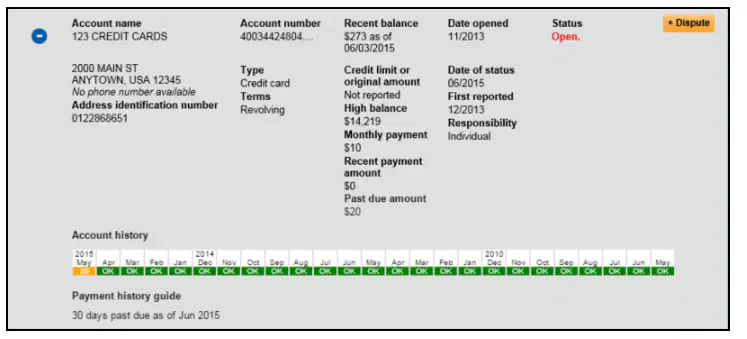
Review this partial credit report, and then choose the response below that accurately depicts the information on the report.
The borrower paid a $30 fee in February 2015
This borrower was never late with any of their credit payments
This borrower's most recent payment was $30
This borrower was 30 days late on their May 2015 payment
How can your credit score impact your financial well-being?
Only consumers with high scores are approved for credit
Consumers with low scores get lower interest rates on loans than those with high scores
Your credit score can determine whether you are approved for a loan and what the interest rate on that loan will be
It generally has no impact on your financial situation
Your credit score is based on the following five factors, but they are not weighted equally. Fill in how much each factor is weighted, so they total 100%.
Payment History =
How much you owe =
Length of Credit History =
Credit Mix (Types of Credit) =
New credit =
The relationship between your credit report and your credit score is:
Provide two reasons why it is important to start establishing credit history as early as possible.
Greg wants to figure his credit utilization using the formula (credit balance/credit limit)x100. He has two credit cards. One with a balance of $350 and another with a balance of $2200. His credit limit combined on both cards is $4000. What is his utilization percentage?

