
Font size
 Worksheets
Earth's Rotation and Moon's Motion
Total questions: 23
Worksheet time: 12mins
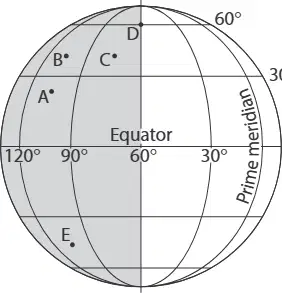
The latitude and longitude of which location are closest to those of New York State?
A
B
C
D
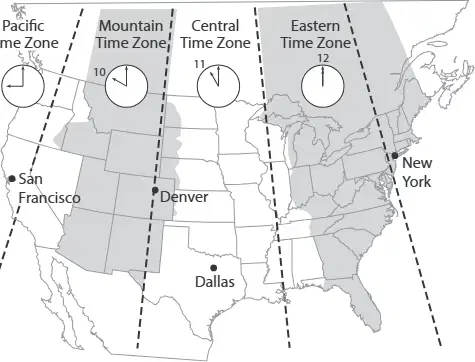
The dashed boundaries between time zones are how many degrees of longitude apart?
10°
15°
23 1/2°
24°
The revolution of the moon around Earth results in __.
phases of the moon
solar eclipses
tides
all of the above
The moon's rotation period is the same as its __.
revolution period
orbit period
phase period
eclipse period
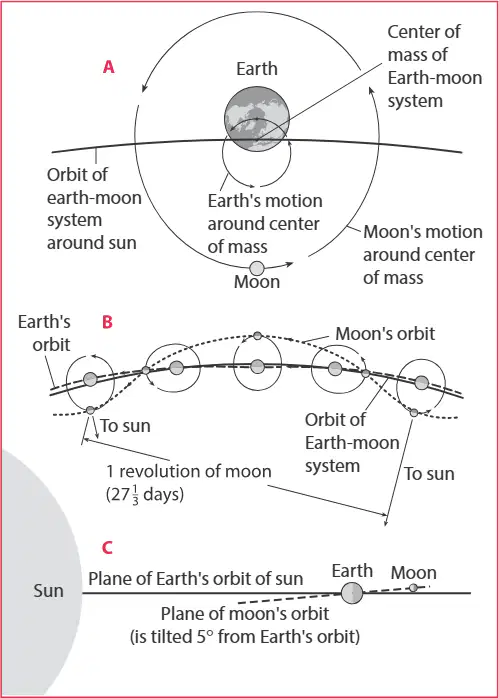
The moon's orbit is tilted ____ degrees from Earth's orbital plane of the sun.
3
5
7
9
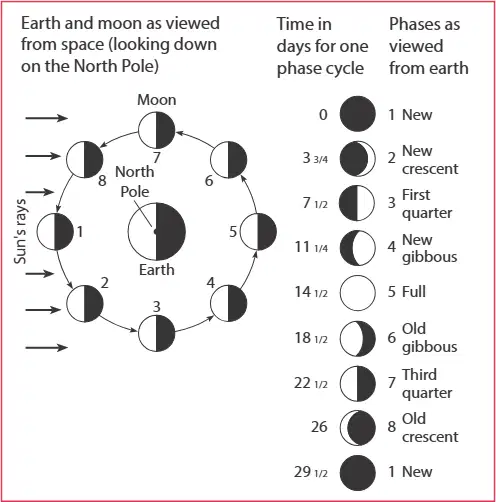
What is the phase of the moon when it is not visible from Earth?
New moon
Full moon
First quarter
Last quarter
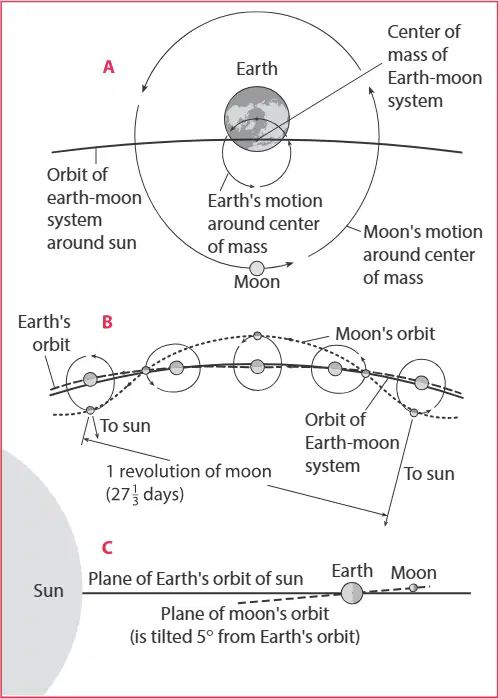
How many days does it take for the moon to complete one revolution around Earth?
27 1/3 days
29 1/2 days
30 days
31 days
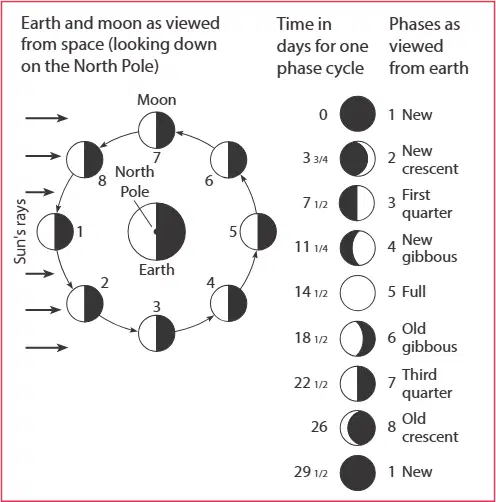
Which phase of the moon occurs approximately 14 days after the new moon?
New crescent
First quarter
Full moon
Old crescent
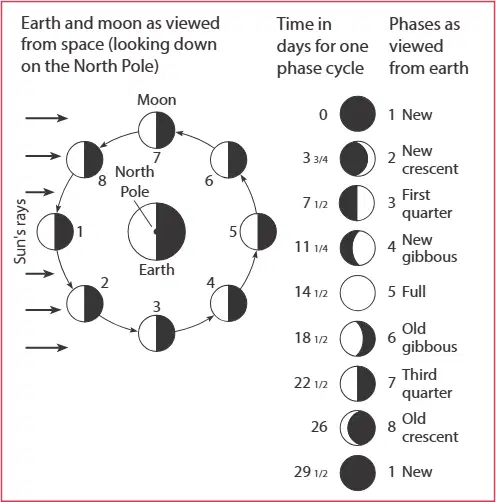
What is the phase of the moon when it is halfway between full and new?
New crescent
First quarter
Last quarter
Old crescent
What is the main cause of tides on Earth?
The Earth's rotation
The sun's gravity
The moon's gravity
Ocean currents
A solar eclipse can only be observed at one location on Earth for up to how many minutes?
5 minutes
7 1/2 minutes
10 minutes
15 minutes
What is the duration of a total lunar eclipse?
50 minutes
75 minutes
100 minutes
125 minutes
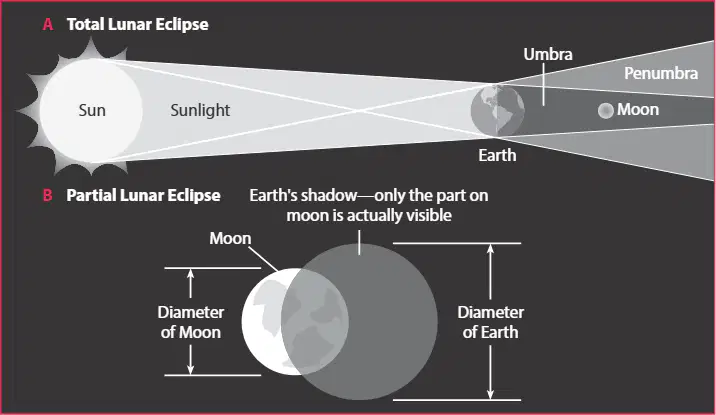
During a total lunar eclipse, the moon is completely covered by Earth's shadow, known as the ______.
umbra
penumbra
corona
antumbra
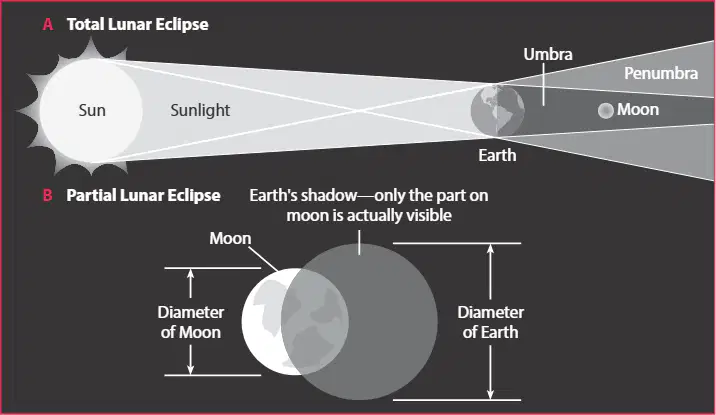
In a partial lunar eclipse, only part of the moon is visible because it is partly in Earth's shadow. This shadow is called the ______.
umbra
penumbra
corona
antumbra
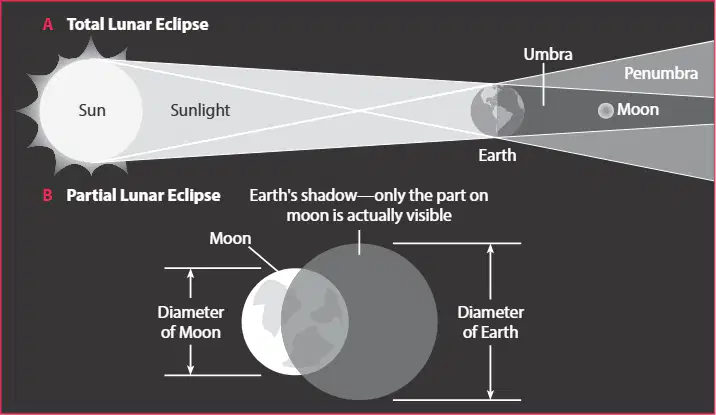
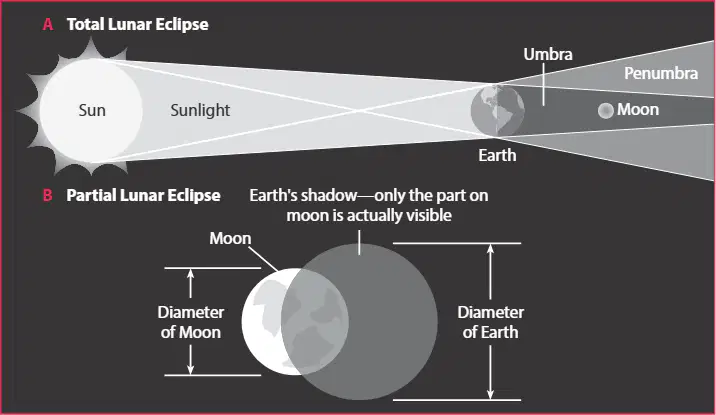
What is the term for the darkest part of the shadow during an eclipse?
Umbra
Penumbra
Corona
Antumbra
What is the phase of the moon during a solar eclipse?
New Moon
Full Moon
First Quarter
Last Quarter
With respect to the diagram, which statement is true?
No eclipse could occur.
A lunar eclipse might occur.
A partial solar eclipse might occur.
A total solar eclipse might occur.
If the moon were to move closer to Earth, the gravitational pull on the Earth would (1) increase (2) decrease (3) remain the same.
increase
decrease
remain the same
Which of the following events occurs during a solar eclipse?
The moon passes between the Earth and the sun.
The Earth passes between the sun and the moon.
The sun passes between the Earth and the moon.
The moon and sun are on opposite sides of the Earth.
If a full moon occurs on November 1, the next full moon phase will occur about
November 22
November 30
December 6
Dcember 13
In the open ocean, a bulge of water two to three feet high that follows the moon’s movement around Earth is a
tide
tsunami
wind wave
surface ocean current
A high tide occurs at Boston on a certain day at 3 p.m. The next high tide may be expected to occur at
9:26 p.m. the same day
3:26 a.m. the following day
9:52 a.m. the following day
3:52 p.m. the following day
During which event does our moon receive the least amount of sunlight?
a Jupiter eclipse
an Earth eclipse
a solar eclipse
a lunar eclipse

