
NEW
Font size
 Worksheets
Animal Science: Goats
Total questions: 40
Worksheet time: 20mins
What is the genus and species of goats?
Capra
Bos
Ovis
Equus
What is the term used for baby goats under a year of age?
Kid
Doe
Buck
Weather
What is the term for a female goat that has had kid(s)?
A) Kid
B) Doe
C) Buck
D) Weather
What is the term for an intact male goat?
A) Kid
B) Doe
C) Buck
D) Weather
What is the term for a castrated male goat?
A) Kid
B) Doe
C) Buck
D) Weather
Fill in the blank: Often gender may be associated with baby goats, using the terms ______ for male baby goats and doeling for female baby goats.
buckling
kid
billy
nanny
What is goat meat referred to as?
chevon
beef
pork
mutton
Which country is the largest consumer of goat meat?
China
India
Nigeria
Australia
Goat meat is a very popular type of what kind of meat?
White meat
Red meat
Fish
Poultry
How do the size of fat globules in goat milk compare to those found in cows milk?
richer taste
There is no perceptible difference
smaller
larger
Goat milk is whiter than ________.
whole cow milk.
skimmed milk.
almond milk.
soy milk.
Ture or False: Goats milk can be used just like cows milk when drinking, cooking with, or baking with it, but cannot be used for making cheese or ice cream?
true
false
What type of fiber do Angora goats produce?
Wool
Mohair
Cotton
Silk
How often are Mohair goats shorn each year?
Once
Twice
Three times
Four times
The most common color for an Angora goat is _______.
white
black
brown
gray
Why is a wethered male Angora goat considered the most valuable?
Produces more milk
Produces more fiber
Lives longer
Eats less
Fiber goats must be kept dry because they are more susceptible to _______.
pneumonia
heat stroke
dehydration
frostbite
Where did the Boer goat originate?
Australia
South Africa
India
Brazil
What is the primary use of the Boer goat?
Dairy
Wool
Meat
Companion
The Boer goat is known for what characteristic in crossbreeding programs?
High milk production
Rapid growth rate
Wool quality
Disease resistance
The typical color and physical characteristics of the Boer goat are:
White body with a red head, muscular build, and drooping ears
Black body with white spots, slender build, and erect ears
Brown body with black stripes, lean build, and short ears
Grey body with a white face, stocky build, and long ears
Where did the Kiko goat originate?
Sweden
Spain
New Zealand
France
True or False: The Kiko goat is known for being a hardy breed and an aggressive forager.
true
false
What color and conformation is considered the standard for the Kiko goat?
white, well muscled, hardy breed
Any color, tall, astute breed with pendulous ears
cream, erect ears, horns, angular build compared to other meat goats
moon spot pattern, small stature, thin built, quicky attitude
Where did the Nubian goat originate?
United States
Germany
Canada
England
What is the primary use of the Nubian goat?
dual purpose, emphasis on meat production
dual purpose, emphasis on hide (leather) production
dairy only
dual purpose, emphasis on dairy production
The Anglo Nubian is an all-purpose goat, useful for meat, milk, and hide production. True or False?
True
False
What is the average butter fat content of the Anglo Nubian goat?
3.5%
4.5%
5.5%
6.5%
The appearance of the Anglo Nubian goat is characterized by:
Long, pendulous ears and a Roman nose, tall, aristocratic breed
Short, erect ears and no horns, a polled breed
Curly fur, drooping ears, a tall, lean breed
Spotted coat, erect ears, and short legs
Where did the Alpine goat breed originate?
France
Switzerland
Italy
Mexico
What is the primary use of the Alpine goat breed?
meat
hide (leather)
dairy
fiber
Fill in the blank: __________________ is recognized as the leading dairy goat breed for milk production, often referred to as the 'Holstein' of the dairy goat world.
The Alpine goat
The Nubian goat
The Saanen goat
The Boer goat
Where did the Angora goat originate?
Turkey
India
Australia
Brazil
What is the primary use of the Angora goat?
Milk
Meat
Fiber
Companionship
The average Angora goat in the U.S. shears approximately ____ pounds of mohair per shearing.
5.3
4.0
6.5
7.2
How often are Angora goats usually sheared each year?
Once
Twice
Three times
Four times
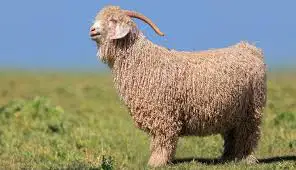
ID the breed:
boer
angora
nubian
kiko

ID the breed:
boer
alpine
spanish
nubian
If we were to compare the nubian goat to a dairy cow with its milk fat content, which breed would it be most similar to?
holstein
ayrshire
milking shorthorn
jersey
We know the Boer goat does well in crossbreeding programs, and that the does are not the most attentive mothers, given that, which breed are we likely to cross them with, since the does are good, attentive mothers?
alpine
angora
nubian
kiko

