Wayground logo

Free Printable Worksheets

Font size

S
M
L
XL
Worksheets

Properties of Water and Cohesion

Total questions: 39

Worksheet time: 59mins

Name
Class
Date
1.

Surface tension is the property of water in which...

a)

water molecules at the surface tend to stick together.

b)

water spills easily.

c)

water tends to be see-through.

2.

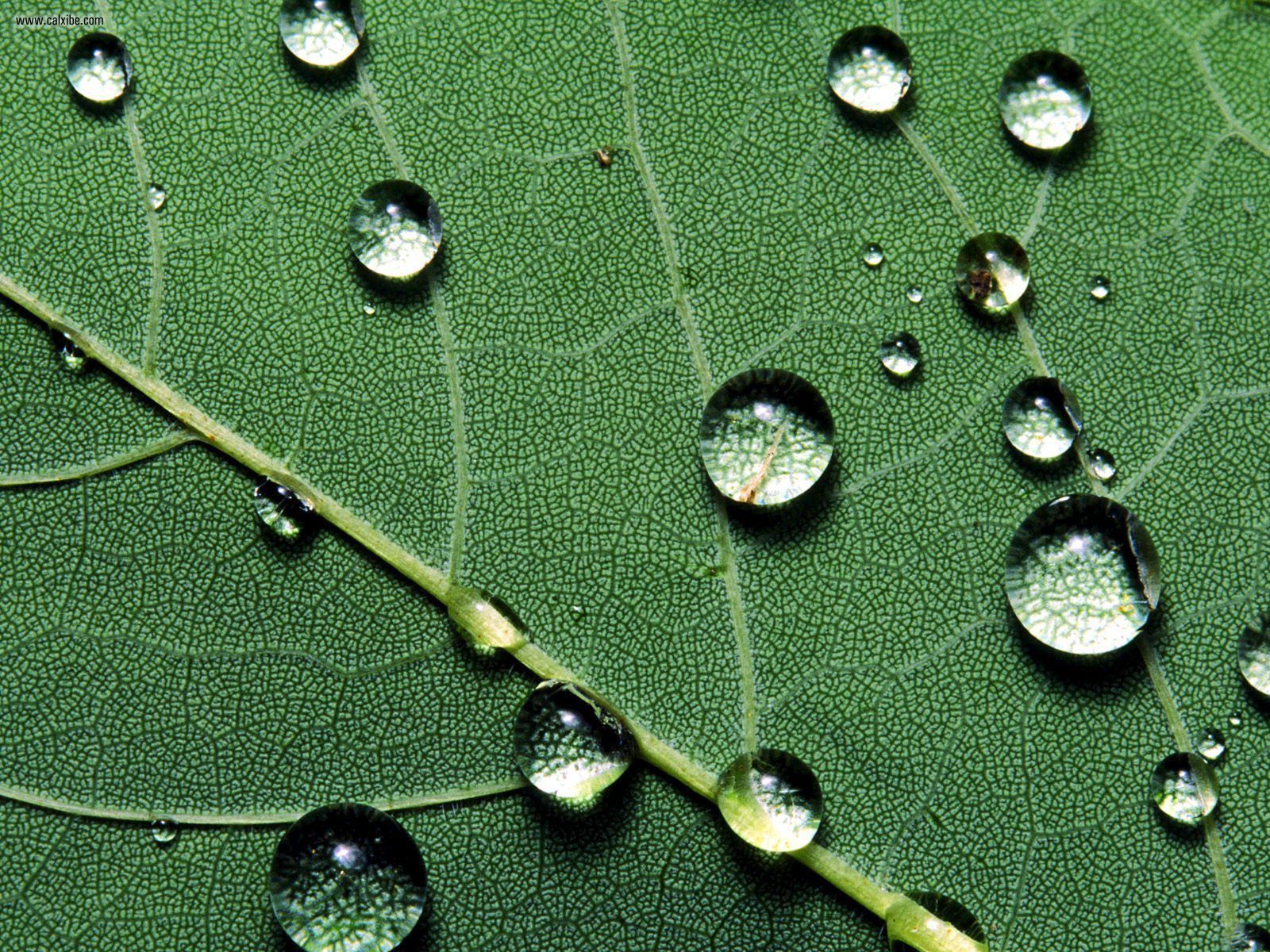
Refer to the picture of water sticking to a leaf; this is occurring because of:

a)

Adhesion

b)

Cohesion

3.

Describe COHESION.

a)

Water molecules attracted to other substances.

b)

Water molecules climbing upwards against the force of gravity.

c)

Water molecules dissolving many substances because of its polarity.

d)

Water molecules attracted to other water molecules.

4.
What two elements make up water?
a)
Helium and oxygen
b)
Hydrogen and oxygen
c)
helium and carbon
d)
oxygen and carbon
5.
What word describes when water is attracted to other substances?
a)
cohesion
b)
adhesion
c)
capillary action
d)
surface tension
6.
Attractions between water molecules are called
a)
Covalent bonds
b)
Ionic bonds
c)
Polar bonds
d)
Hydrogen bonds
7.
tendency of molecules of the same kind to stick to one another
a)
cohesion
b)
adhesion
c)
solution
d)
polar molecule
8.
molecule in which opposite ends have opposite electric charges
a)
cohesion
b)
polar molecule
c)
hydrogen bond
d)
solution
9.
Which end of the water molecule has a slightly positive charge?
a)
the oxygen end
b)
the hydrogen end
c)
both ends are slightly positive
d)
neither end is positive
10.
Water droplets take a spherical shape (as pictured) because of ____________
a)
adhesion
b)
cohesion
c)
capillary action
d)
solubility
11.
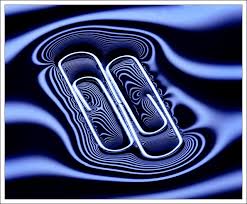
Which characteristic of water will allow a paperclip to remain floating on water when the paperclip is gently placed on top of the water?
a)
adhesion
b)
surface tension
c)
solvent properties
d)
nonpolar
12.
What is adhesion?
a)
Water's ability to stick to itself
b)
Water's ability to stick to other substances
c)
The strength of the cohesion of all the water molecules combined
d)
Tape, glue and other adhesives
13.

A water strider can skate along the top of a pond because:

a)

covalent bonds result in water adhesion (surface tension)

b)

cohesion allows strong hydrogen bonds in water to form below the surface (surface tension)

c)

water striders have adapted to take advantage of water cohesion

d)

water striders are afraid of water and avoid it
14.
The tightness across the surface of water that enables paper clips to float is ____________.
a)
adhesion
b)
capillary action
c)
surface tension
d)
polarity
15.

Water sticking to the paper clips is called -

a)
adhesion
b)

cohesion

c)
surface tension
d)
polarity
16.

What types of objects are supported by surface tension in water?

a)

small objects

b)

large objects

c)

fast objects

d)

no objects will be supported

17.

Why does water heat heat up and cool down VERY SLOWLY?

a)

High Specific Heat

b)

Low Specific Heat

c)

It's solid

d)

It's always cold

18.
Water makes up approximately 60% of the human body and plays a vital role in regulating body temperature. Which property of water makes it good at regulating temperature?
a)
Water is a good solvent.
b)
Water exhibits strong cohesion.
c)
. Water has an unusual crystalline structure.
d)
Water has a high capacity for heat.
19.
Large bodies of water, such as lakes and oceans, do not quickly fluctuate in temperature. What is the reason for this phenomenon?
a)
Water is an acid.
b)
Water is a versatile solvent.
c)
Water has a high heat capacity.
d)
 Water acts as a buffer.
20.

Capillary action is the result of

a)

adhesion

b)

cohesion

c)

change in matter (heat of fusion)

d)

both adhesion and cohesion

21.
Why does ice float?
a)
As water freezes, it expands and its density decreases.
b)
As water freezes, it takes up more hydrogen from the atmosphere, causing it to have a greater buoyancy.
c)
As water freezes, air becomes trapped between the hydrogen bonds of water molecules.
d)
As water freezes, it takes up more oxygen from the atmosphere, causing it to have a greater buoyancy.
22.
What property of water allows it to be such a versatile solvent that it is often called the "universal solvent?"
a)
Purity
b)

Polarity

c)
High heat capacity
d)
Expansion upon freezing
23.
Which end of the water molecule has a slightly positive charge?
a)
the oxygen end
b)
the hydrogen end
c)
both ends are slightly positive
d)
neither end is positive
24.
Water has a much higher specific heat than most other covalent compounds. What do you predict might happen if water had a low specific heat instead?
a)
Flooding would occur and animals would be forced to migrate
b)
 Harmful organisms living in water would reproduce at a rapid rate
c)
Organisms that are sensitive to changes in temperature would die
d)
Plants would not have enough water to effectively carry out photosynthesis
25.
A high specific heat means...
a)
It heats up quickly with energy added
b)
It requires more energy to change temperature
26.

Which of the following best explains why the sand at the beach is hotter than the water?

a)

Sand has a higher specific heat than water, requiring more energy to heat up than water.

b)

Sand has a lower specific heat than water, requiring less energy to heat up than water.

c)

Sand has a greater mass than water.

d)

Water has a greater mass than sand.

27.

Match the following

a)

universal solvent

1.

dissolves MANY things

b)

high heat capacity

2.

doesn't change temp. quickly

c)

high heat of vaporization

3.

loses lots of heat as it evaporates

d)

shows capillarity

4.

moves up thin tubes without using energy

28.

Which of these is most likely to help with homeostasis in living organisms? (choose 2)

a)

capillary action

b)

high specific heat

c)

high heat of vaporization

d)

polarity of the molecule

29.

Sweating helps us with homeostasis because as sweat evaporates

a)

we increase surface tension which cools us down

b)

the water seeps into our pores and we cool down

c)

a lot of heat is carried away and we cool down

30.

This picture shows the polarity of water because

a)

hydrogen holds the shared electrons closer and becomes negative

b)

oxygen holds the shared electrons closer and becomes negative

31.

Since water can dissolve many different materials, it is called a __________.

a)

Universal liquid

b)

Universal solvent

c)

Universal Dissolvent

d)

Universal Chemical

32.

Refer to the picture; this is occurring because of:

a)

Cohesion

b)

Adhesion

c)

Capillary action

d)

Surface tension

33.

Ice floats because

a)

It's really cold

b)

It is shaped like a square

c)

less dense than liquid water

d)

more dense than liquid water

34.

The substance that does the dissolving is called the

a)

solvent

b)

solute

c)

solution

35.

The substance that is being dissolved is called the

a)

solvent

b)

solute

c)

solution

36.

An example of a solution is

a)

pebbles and water

b)

sand and water

c)

oil and water

d)

salt and water

37.

Which is the solute in this solution? Kool-aid mix and water.

a)

Kool-aid mix

b)

water

38.

Which is the solute in this solution? Tea and honey.

a)

tea

b)

honey

39.

Which is the solvent in this solution? Ramen noodles, packet of flavoring, and hot water

a)

Ramen noodles

b)

Hot water

c)

packet of flavoring