
Font size
 Worksheets
Cells Test Review
Total questions: 60
Worksheet time: 3600secs
Which of the following is an example of a eukaryotic organism?
Bacteria
Archaea
Fungi
Cyanobacteria
What is the main difference between unicellular and multicellular organisms?
Unicellular organisms have multiple cells.
Multicellular organisms consist of a single cell.
Unicellular organisms consist of a single cell.
Multicellular organisms do not have specialized cells.
Which of the following organisms is an example of a unicellular organism?
Human
Amoeba
Dog
Tree
What is a characteristic of autotrophic organisms?
They consume other organisms for energy.
They produce their own food through photosynthesis or chemosynthesis.
They rely on other organisms for food.
They are always multicellular.
Which of the following is a characteristic of heterotrophic organisms?
They produce their own food.
They consume other organisms for energy.
They are always unicellular.
They perform photosynthesis.
Which of the following best describes the cell structure of eukaryotic organisms?
They have a simple cell structure without organelles.
They have a complex cell structure with membrane-bound organelles.
They lack a cell membrane.
They are always unicellular.
Why are multicellular organisms able to perform more complex functions than unicellular organisms?
They have fewer cells to manage.
They have specialized cells that perform different functions.
They do not require energy.
They are smaller in size.
Which of the following processes is used by autotrophic organisms to produce food?
Respiration
Photosynthesis
Fermentation
Digestion
What is a common feature of all prokaryotic organisms?
They have a nucleus.
They are multicellular.
They lack membrane-bound organelles.
They perform photosynthesis.
Which of the following is a characteristic of eukaryotic cells?
They lack a nucleus.
They have a cell wall made of peptidoglycan.
They have a nucleus and membrane-bound organelles.
They are always autotrophic.
How do heterotrophic organisms obtain energy?
By producing their own food through photosynthesis.
By consuming other organisms or organic matter.
By absorbing sunlight directly.
By converting inorganic substances into food.
Which of the following is an example of a multicellular organism?
Bacteria
Yeast
Human
Amoeba
Which of the following statements is true about prokaryotic cells?
They have a complex internal structure.
They have a nucleus.
They are generally smaller than eukaryotic cells.
They have multiple chromosomes.
What is a distinguishing feature of eukaryotic cells compared to prokaryotic cells?
Eukaryotic cells lack a cell membrane.
Eukaryotic cells have a nucleus.
Eukaryotic cells are always unicellular.
Eukaryotic cells have circular DNA.
Which of the following is a reason why multicellular organisms can grow larger than unicellular organisms?
They have a single cell that grows indefinitely.
They have specialized cells that can perform different functions.
They do not require energy.
They are less complex.
How do heterotrophic organisms impact the food chain?
They produce their own food and provide energy for other organisms.
They decompose organic matter and recycle nutrients.
They consume other organisms and transfer energy through the food chain.
They compete with autotrophs for sunlight.
What is a common feature of all eukaryotic organisms?
They are always unicellular.
They have a cell wall made of peptidoglycan.
They have a nucleus and membrane-bound organelles.
They lack a cell membrane.
How do autotrophic organisms differ from heterotrophic organisms in terms of energy acquisition?
Autotrophs consume other organisms for energy.
Autotrophs produce their own food using sunlight or chemical energy.
Autotrophs rely on other organisms for food.
Autotrophs decompose organic matter.
Which of the following is a characteristic of both prokaryotic and eukaryotic cells?
A. Both lack a nucleus
Both undergo meiosis
Both contain mitochondria
Both contain genetic material
Which characteristics do both Prokaryotic and Eukaryotic cells have?
Nucleus
DNA
Ribosomes
Cell Membrane

Bacteria is what kind of cell?
Eukaryotic
Prokaryotic
Match the following.
Unicellular
A living thing with only one cell.
Multicellular
A living thing composed of many cells.
Autotroph
A living thing that can make its own food using another source of energy.
Heterotroph
A living thing that must eat to get food to create energy.
Biology
The study of living things.

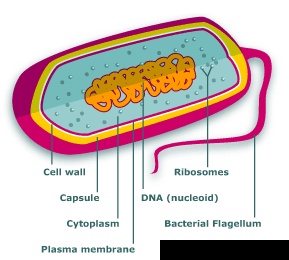
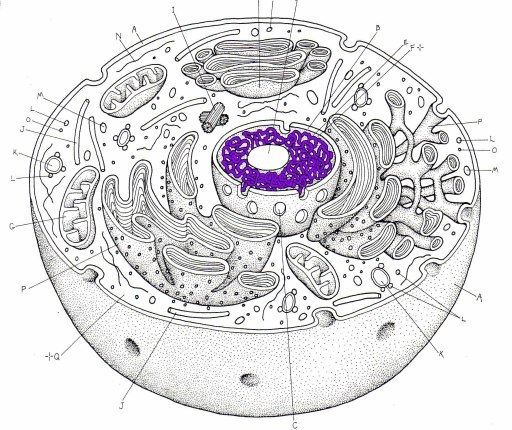
Unicellular organisms need fewer resources and some can live in harsh conditions.
True
False
Multicellular organisms are larger, more efficient, and have a longer lifespan than unicellular organisms.
True
False
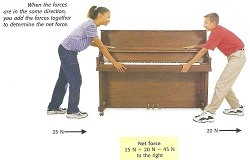
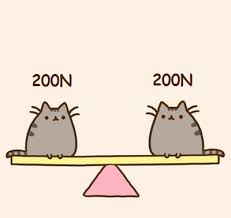
What state of matter is an ice cube?
Solid
Liquid
Gas
Plasma
What state of matter is the air we breathe?
Solid
Liquid
Gas
Plasma
What state of matter is motor oil?
Solid
Liquid
Gas
Plasma
Placing liquid water in the freezer will result in what phase change?
Condensation
Freezing
Ionization
Vaporization
Gas to liquid:
evaporation
condensation
melting
freezing
Liquid to solid:
evaporation
melting
boiling
freezing
What happens to dew as it evaporates in the sun?
It loses heat and becomes a gas
It gains heat and becomes a gas
It loses heat and becomes a liquid
It gains heat and becomes a liquid
Which of these has the most potential energy?


Which passenger has the most potential energy?
A
B
C
D

When does a yo-yo have the most potential energy?
when it is at its highest point
when it is at its lowest point
when it is moving between its highest and lowest point
when it is moving at its top speed
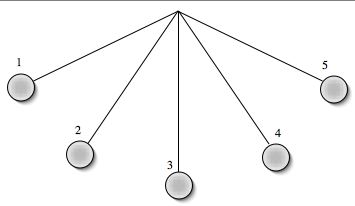
When a pendulum swings, at which point is kinetic energy highest?
1
2
3
4
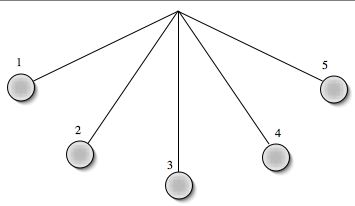
When a pendulum swings, at which point is potential energy at its greatest?
1
2
3
4

Where would this baseball have the least amount of kinetic energy?
W
X
Y
Z
Where would this baseball have the greatest amount of kinetic energy?
W
X
Y
Z

What is the name of this part of a transverse wave?
(a)

What is the name of this wave measurement?
(a)

What is the name of this wave part?
(a)

What is the name of this wave measurement?
(a)
How is energy transferred through longitudinal waves?
Particles move side to side, away from the starting point.
Particles move perpendicular to the wave motion.
Particles must be transmitted through a vacuum.
Particles move parallel to the wave motion.
How is energy transferred through transverse waves?
Movement of particles perpendicular to the direction of the wave
Giving off light in the direction of the wave
Giving off sound in the direction of the wave
Movement of particles parallel to the direction of the wave

