
NEW
Font size
S
M
L
XL
 Worksheets
Heat Transfer Practice
Total questions: 60
Worksheet time: 49mins
Name
Class
Date
1.
What is the definition of CONDUCTION?
a)
When heat is transferred from objects like rays of light or electromagnetically.
b)
a hot liquid or air that expands, becomes less dense, and rises or becomes more dense, and sinks.
c)
When heat transfers from objects that are touching.
d)
When heat transfers through the heater or AC in your house.
2.
What kind of heat transfer happens when the sun is heating your body?
a)
Conduction
b)
Radiation
c)
Convection
d)
Density
3.
What heat transfer happens when you burn your hand by touching a fire?
a)
Radiation
b)
Conduction
c)
Convectio
d)
I don't know!!!!!!!!!!!
4.
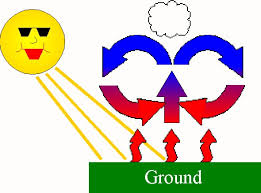
Warm air rises and the cool air sinks demonstrates this type of heat transfer.
a)
conduction
b)
convection
c)
radiation
d)
Insolation
5.
Ironing a shirt is an example of...
a)
condensation
b)
conduction
c)
convection
d)
radiation
6.

Johnny accidentally grabbed the handle of the hot pot.
a)
conduction
b)
convection
c)
radiation
7.
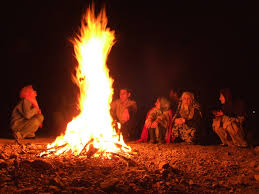
A group of friends gather around a fire to stay warm.
a)
conduction
b)
convection
c)
radiation
8.
Transfer of thermal energy through "space"
a)
conduction
b)
convection
c)
radiation
9.

The way the heat is moving from the hot coffee is called...
a)
convection
b)
radiation
c)
insulation
d)
conduction
10.
Conduction occurs in...
a)
solids
b)
liquids
c)
gases
11.
Heat would best be transferred by conduction between
a)
a candle and the air.
b)
an oven and a glass dish.
c)
a stove and a copper pot.
d)
water and a wooden spoon
12.

A toaster toasting bread is an example of
a)
condensation
b)
conductio
c)
convection
d)
radiation
13.

What happens when ice cubes melt in a glass?
a)
Heat travels from the ice to the warmer water.
b)
No energy is transferred.
c)
Heat is transferred from the warmer water to the ice cubes.
d)
The water warms up due to the humidity
14.
A huge rock at the state park gets hot during the day. The rock was warmed from the Sun by
a)
conduction
b)
convection
c)
radiation
15.
Weather systems in the Earth's atmosphere are due to
a)
conduction
b)
convection
c)
radiation
16.
After cooking an egg in boiling water, you cool the egg by putting it into a bowl of cold water. Which of the following explains the egg's cooling process?
a)
Temperature is transferred from the egg to the water.
b)
Energy is transferred from the water to the egg.
c)
Energy is transferred from the egg to the water.
d)
Cold moves from the water into the egg.
17.
Why do we wear sweaters in cold weather?
a)
To keep cold out.
b)
To generate heat.
c)
To reduce heat loss.
d)
All of the above.
18.
If you put a metal spoon and a wooden spoon into a pot of boiling water, one will become too hot to touch. Why?
a)
Metals conduct heat better than wood.
b)
Wood conducts heat better than metals.
c)
Metals pull in heat because heat is attracted to metals.
d)
Wood isn't as strong as metals.
19.
As water in a freezer turns into ice,
a)
the water absorbs energy from the air in the freezer.
b)
the water absorbs the coldness from the air in the freezer.
c)
the freezer air absorbs heat from the water.
d)
the water neither absorbs nor releases energy.
20.
Molecules in cold things move more _________
than in hot things.
than in hot things.
a)
quickly
b)
slowly
c)
happily
d)
merrily
21.
The transfer of heat by currents through liquids of gases is called
a)
Perspiration
b)
Radiation
c)
Conduction
d)
Convection
22.
What is the definition of CONVECTION
a)
When heat transfers through waves.
b)
When heat transfers from objects that are touching.
c)
a hot liquid or air that expands, becomes less dense, and rises or becomes more dense, and sinks.
d)
Heat traveling from the sun
23.
Which of the following is an example of convection?
a)
A hair dryer is drying up your hair.
b)
When the AC or heater changes the temperature.
c)
When a car engine turns hot after being turned on.
d)
When you are making soup and the water is rising and lowering.
24.

This is a lava lamp. When the light bulb heats the wax, the wax rises. When the wax cools, it falls. This cycle of rising/falling is an example of:
a)
Conduction.
b)
Convection.
c)
Radiation.
25.

Walking on the warm sand sand with your bare feet demonstrates this type of heat transfer.
a)
conduction
b)
convection
c)
radiation
26.

The Gulf Stream is a current that brings warm ocean water from the south to the north. What type of heat transfer is this?
a)
conduction
b)
convection
c)
radiation
d)
Insolation
27.

The candle will slowly heat the metal and transfer the heat directly to the mans hand.
a)
conduction
b)
convection
c)
radiation
28.
Transfer of thermal energy through "flow"
a)
conduction
b)
convection
c)
radiation
29.
Transfer of thermal energy through "touch"
a)
conduction
b)
convection
c)
radiation
30.
How many kinds of heat transfer are there?
a)
1
b)
2
c)
3
d)
4 or more
31.
In heat transfer, heat always flows from the _______________ substance to the _______________ substance.
a)
Hotter to colder
b)
Colder to hotter
c)
Hotter to hotter
d)
Colder to colder
32.
The type of heat transfer that happens through direct contact of molecules or particles with each other is ___________________.
a)
Convection
b)
Conduction
c)
Radiation
d)
insulation.
33.
The kind of heat transfer that travels through space in electromagnetic waves is ______________________.
a)
insulation.
b)
Radiation
c)
Conduction
d)
Convection
34.
___________________ is the type of heat transfer that occurs in fluids, such as warm air rising and cold air sinking; creating wind.
a)
Convection
b)
Conduction
c)
Radiation
d)
insulation.
35.
Which statement is true?
a)
The quicker a molecule moves, the colder it is.
b)
The slower a molecule moves, the warmer it is.
c)
The quicker a molecule moves, the warmer it is
d)
The movement on molecule don�t affect its temperature
36.
When you use a microwave, what is the main way that heat is transferred?
a)
Convection
b)
Conduction
c)
Radiation
d)
insulation.
37.
If magma increases in temperature (get hot) what will happen?
a)
It moves down (sinks)
b)
It moves up (rises)
38.
Which of the following is needed for convection to happen?
a)
Fluid/s
b)
Light in the form or rays
c)
Electromagnetic waves
d)
Fire
39.
Transfer of thermal energy through "flow" of liquids and gases
a)
conduction
b)
convection
c)
radiation
40.
Transfer of thermal energy through "touch"
a)
conduction
b)
convection
c)
radiation
41.
Transfer of thermal energy through "space"
a)
conduction
b)
convection
c)
radiation
42.
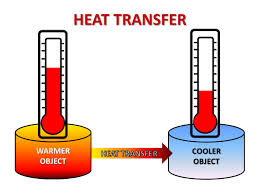
Heat transfers from an area of ____temperature to an area of ___ temperature.
a)
high to low
b)
low to high
c)
high to high
d)
It can travel high to low and low to high.
43.
The cycle that powers the ocean currents, weather, and tectonic plates it called
a)
conduction current
b)
radiation
c)
condition current
d)
convection current
44.
Convection can be described as
a)
The process of heat sinking
b)
The process of heat transferring from one object to another
c)
The process of plants making food from the sun
d)
The process of heat rising
45.
In convection, WARM air
a)
Rises
b)
Sinks
46.
In convection, COOL air
a)
Rises
b)
Sinks
47.
Heat is the movement of ______.
a)
radiation
b)
thermal energy
c)
cold
d)
fire
48.
What does temperature measure?
a)
Heat
b)
ºC
c)
Kinetic Energy
d)
Thermal Energy
49.

What would be the effect on the particles if more heat is supplied to the system?
a)
They would slow down
b)
They would stop moving
c)
They would speed up
d)
There would be no effect
50.
Does convection happen in the ocean?
a)
yes
b)
no
51.
Does convection happen in the atmosphere?
a)
yes
b)
no
52.

The heat from a hot burner to a pot is transferred by ______.
a)
convection
b)
insulation
c)
radiation
d)
conduction
53.

6. What is the name of this tool?
a)
Scale
b)
Thermostat
c)
Thermometer
54.
5. Heat is....
a)
How hot something is.
b)
How cold something is.
c)
The measure of how much energy moved from one place to another.
55.
4. Energy will always flow or move from...
a)
An area of low temperature to an area of high temperature
b)
An area of high temperature to an area of low temperature
c)
atoms to molecules
56.
2. What is conduction?
a)
When energy moves from one place to another through contact
b)
When energy moves in circular patterns
c)
When atoms break apart
57.
In a swimming pool, water near the surface is slightly warmer. The warm water rises because of
a)
conduction
b)
convection
c)
radiation
58.
A huge rock at the state park gets hot during the day. The rock was warmed from the Sun by
a)
conduction
b)
convection
c)
radiation
59.
A house burns down. The vinyl siding of the house next door warps due to
a)
conduction
b)
convection
c)
radiation
60.
The metal skewer gets so hot that you drop your marshmallow into the campfire because of
a)
conduction
b)
convection
c)
radiation
Reset

