
 Worksheets
Earth
Total questions: 63
Worksheet time: 2hrs 41mins

Qual foi a teoria criada por Alfred Wegener?
Teoria da Expansão dos Fundos Oceânicos
Teoria da Tectónica de Placas
Teoria do Big Bang
Teoria da Deriva Continental

Qual é o nome do oceano que rodeava a Pangeia?
Laurásia
Pantalassa
Gondwana
Mar Mediterrâneo
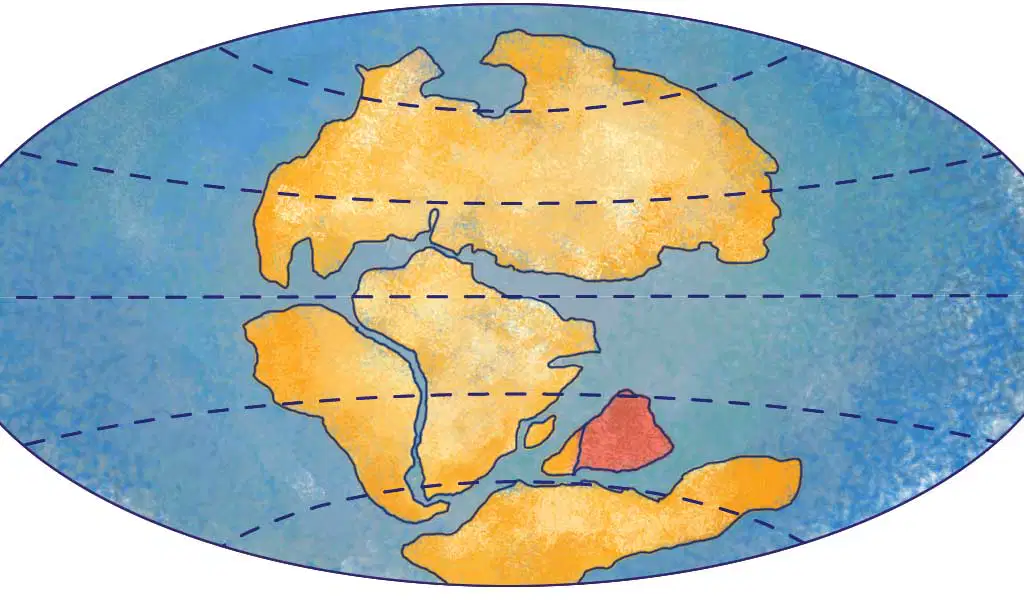
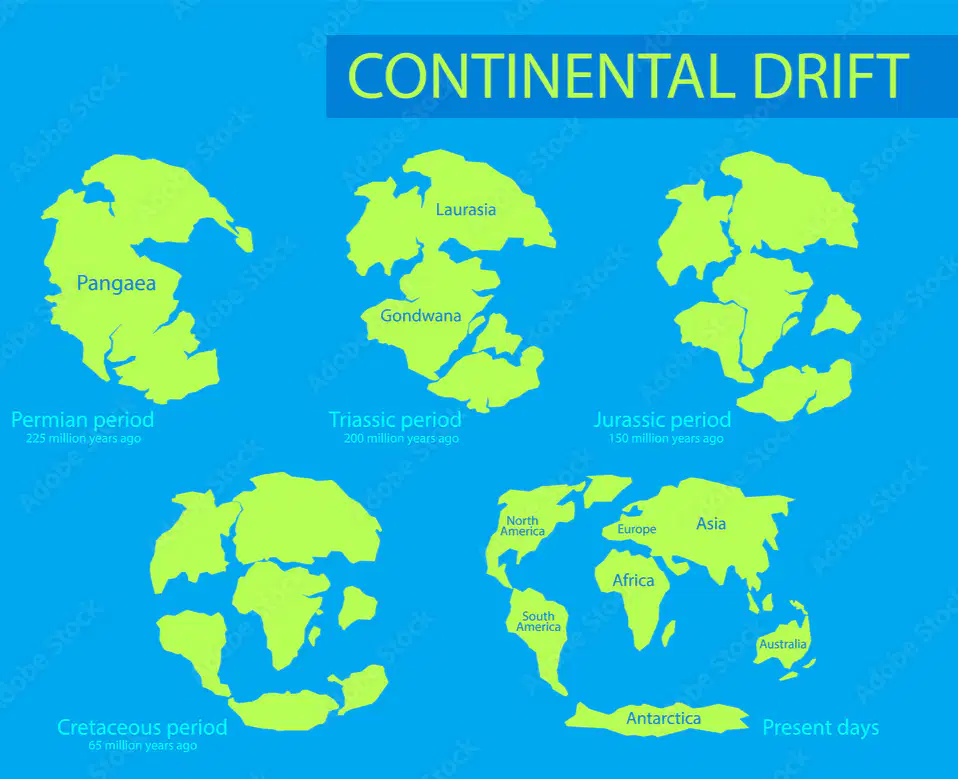
Há 200 Ma, a Pangeia fragmentou-se, dando origem aos continentes...
Vaalbara e Gondwana
Laurásia e Gondwana
Pantalassa e Rodínia
Laurásia e Rodínia
Quais foram os argumentos a favor da Teoria da Deriva Continental, dados por Wegener?
Morfológicos, litológicos, paleoclimáticos e paleontológicos
Paleoclimáticos, paleontológicos, sismológicos e meteorológicos
Vulcanológicos, morfológicos, paleontológicos e geológicos
Paleoclimáticos, morfológicos, paleomagnéticos e vulcanológicos
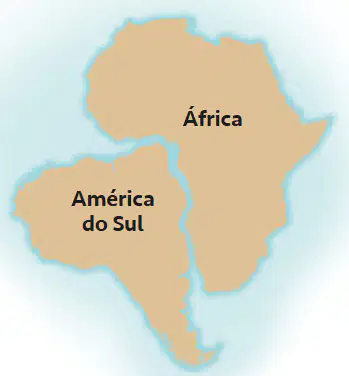
"Verifica-se um encaixe evidente entre as costas atlânticas de África e da América do Sul, como se fossem peças de um puzzle".
Identifica o tipo de argumento da teoria da deriva continental.
Vulcanológico
Morfológico
Geológico
Paleoclimático
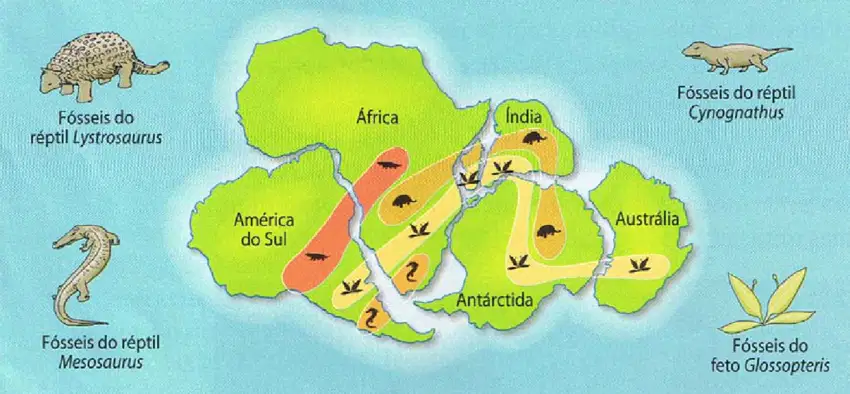
"Foram encontrados fósseis de Glossopteris (um feto de grandes dimensões) na Antártida e na Austrália".
Identifica o tipo de argumento da teoria da deriva continental.
Paleoclimático
Morfológico
Litológico
Paleontológico
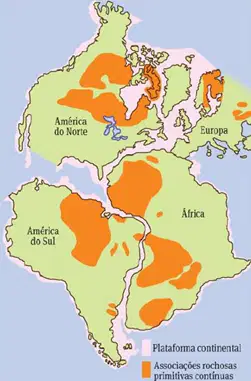
"As rochas dos montes Apalaches, na América do Norte, apresentam a mesma idade e composição que as rochas das Highlands (Terras Altas) da Escócia, na Europa".
Identifica o tipo de argumento da teoria da deriva continental.
Meteorológico
Sismológico
Paleontológico
Litológico
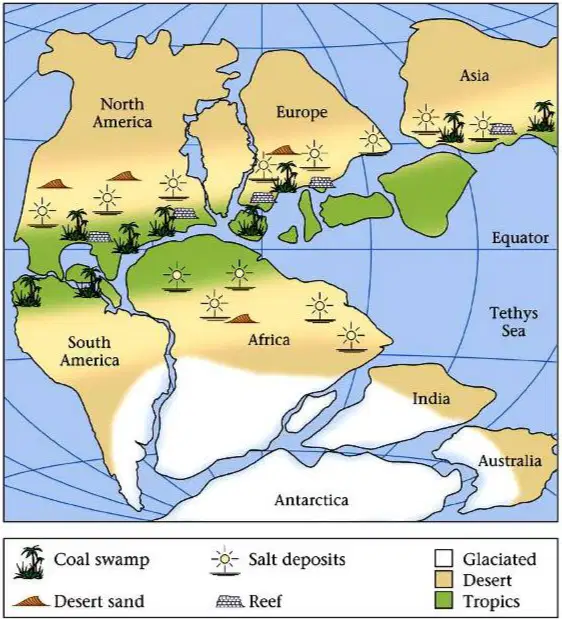
"Em locais como a Gronelândia, atualmente muito fria, foram encontrados depósitos de carvão, característicos de climas tropicais".
Identifica o tipo de argumento da teoria da deriva continental.
Paleontológico
Paleoclimático
Sismológico
Paleomagnético
Qual foi o motivo pelo qual a hipótese de Wegener foi rejeitada?
Porque os cientistas da época já tinham provado que os continentes eram fixos.
Porque não havia um registo fóssil suficientemente extenso para sustentar a hipótese de Wegener.
Porque Wegener não conseguiu explicar, de forma plausível, quais eram os mecanismos responsáveis pelo movimento dos continentes.
Porque Wegener não apresentou nenhuma evidência para fundamentar a sua hipótese.
Porque é que a hipótese de Wegener é considerada importante, apesar de ter sido rejeitada?
Porque Wegener provou que o movimento dos continentes ocorre devido à
força de rotação da Terra e à atração do Sol e da Lua.
Porque Wegener provou que os continentes nunca mudaram de posição.
Porque Wegener era um geólogo reconhecido na comunidade científica.
Porque contribuiu para o desenvolvimento de teorias posteriores na área da Geologia.
What type of scientist was Wegener?
climate scientist
geologist
paleontologist
archaeologist
What troubled Wegener about coal being found deep beneath the tundra in Siberia?
Coal forms in tropical areas, not in cold areas like Siberia
Coal forms in cold areas, not tropical areas like Siberia.
Coal forms from ancient animals found in the tropics.
Coal forms from ancient animals found in Siberia
What troubled Wegener about glaciers being found in unexpected locations?
Glacier evidence was found in places that were too hot for ice.
Glacier evidence was found in places that were too cold for glaciers.
Glaciers leave behind rock deposits as they move.
Glaciers leave deep scratches in the rocks.
Which mountain range in North America shares identical fossils of plants and animals with those found in Europe?
the Appalachians
the Rockies
the Sierra Nevadas
the Pennines
At age 26, what daredevil feat did Alfred and his brother attempt?
a hot air balloon record
record-long stay in the Greenland
record-long dog sledding
flying to Greenland
How many YEARS AGO did Alfred work on his continental drift theory? (DO SOME MATH!!)
109
1913
1960
110
What did Alfred’s The Origin of Continents and Oceans propose about how mountains formed?
by crashing into each other and folding the Earth up
by two continents moving away from each other
by one continent sinking below another continent
by one continent sliding past another continent
How did geologists feel about Wegener's theory?
They ridiculed him and did not accept his theory.
They were thrilled with him for finding the answers.
They accepted only a part of his theory.
They did not agree, but welcomed his work.
After WWII, what was discovered in the oceans that supported his theory?
mountains in the middle of the ocean
fossils of plants
a crater from a meteorite impact
fossils of animals
"it appeared that the floor of the ocean was pulling apart, and magma from deep in the Earth was oozing up to form mountains."
What type of boundary is described above?
divergent
convergent
transform
subduction
What year did Wegener die?
1931
1913
1947
1960
Did Wegener live to see his theory of continental drift accepted?
no
yes
Where is Wegener buried?
Greenland
Antarctica
the Pacific
the Atlantic
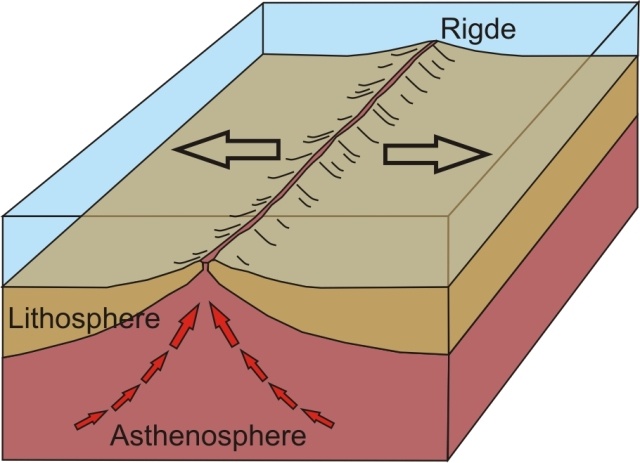

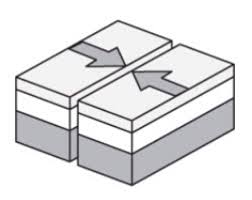


New oceanic crust (sea floor) is created at this boundary.
Divergent Oceanic
Divergent Continental
Convergent Oceanic
Transform

Oceanic crust (sea floor) is destroyed at this boundary.
Convergent Oceanic
Divergent Oceanic
Convergent Continental-Continental
Divergent Continental
Circular currents in the mantle caused by the magma being heated by the core off the Earth.
convection currents
lava
magma
hot air
Tectonic plates are chunks of which physical layer of the Earth?
outer core
lithosphere
asthenosphere
mesosphere
Tectonic plates are constantly moving on top of which physical layer of the Earth?
outer core
lithosphere
asthenosphere
mesosphere
Where is crust destroyed?
convergent boundaries at their subduction zones
divergent boundaries
transform boundaries
inside of volcanoes
Where is crust created?
subduction zones
transform boundaries
divergent boundaries
convergent boundaries
Which boundary CANNOT create volcanoes?
subduction zones
transform boundaries
convergent boundaries
divergent boundaries
What happens within the asthenosphere that is responsible for the movement of the plates?
convection currents
convergent currents
connection currents
ocean currents
What happens at a transform boundary?
the plates move away from each other, creating a mid ocean ridge
they aren't dense enough to subduct, so they fold into each other, creating a mountain range
the oceanic plate subducts underneath the continental plate because it is much denser, creating an ocean trench and a volcanic arc
the plates slide past each other, creating a fault line and causing earth quakes
What happens at a divergent boundary between a two continental tectonic plates?
the plates move away from each other, creating a rift valley
the oceanic plate subducts underneath the continental plate because it is much denser, creating an ocean trench and a volcanic arc
they aren't dense enough to subduct, so they fold into each other, creating a mountain range
the plates move away from each other, creating a mid ocean ridge
What happens at a divergent boundary between a two oceanic tectonic plates?
the plates move away from each other, creating a rift valley
the oceanic plate subducts underneath the continental plate because it is much denser, creating an ocean trench and a volcanic arc
they aren't dense enough to subduct, so they fold into each other, creating a mountain range
the plates move away from each other, creating a mid ocean ridge
What happens at a convergent boundary between a two oceanic tectonic plates?
the older, denser plate subducts underneath the younger, less dense plate, creating an ocean trench and a volcanic island arc
the oceanic plate subducts underneath the continental plate because it is much denser, creating an ocean trench and a volcanic arc
they aren't dense enough to subduct, so they fold into each other, creating a mountain range
the plates move away from each other, creating a mid ocean ridge
What happens at a convergent boundary between a continental tectonic plate and an oceanic tectonic plate?
the older, denser plate subducts underneath the younger, less dense plate, creating an ocean trench and a volcanic island arc
the oceanic plate subducts underneath the continental plate because it is much denser, creating an ocean trench and a volcanic arc
they aren't dense enough to subduct, so they fold into each other, creating a mountain range
the plates move away from each other, creating a mid ocean ridge
What happens at a convergent boundary between two continental tectonic plates?
the older, denser plate subducts underneath the younger, less dense plate, creating an ocean trench and a volcanic island arc
the oceanic plate subducts underneath the continental plate because it is much denser, creating an ocean trench and a volcanic arc
they aren't dense enough to subduct, so they fold into each other, creating a mountain range
the plates move away from each other, creating a mid ocean ridge
Which of these is NOT a piece of evidence that Wegner had to support his hypothesis?
the same fossils found on the coasts of Africa & South America
the continents fitting together like puzzle pieces when lined up by their continental slopes
Wegner witnessed the plates moving in real time
ancient mountain ranges connecting when continents are lined up beside each other

Which boundary is represented by the picture?
Convergent - oceanic to continental
Convergent- continental to continental
Transform
Divergent
Which of the following is being represented by the letter "A"?
mid ocean ridge
ocean trench
mountain range
rift valley
Which of the following is being represented by the letter "B"?
convection currents
ocean trench
subduction zone
rift valley
Which of the following is being represented by the letter "C"?
volcanic arc
ocean trench
subduction zone
rift valley

Which boundary is represented by the picture?
convergent
divergent
transform
Which of the following is being represented by the letter "A"?
the location of convection currents
the mid ocean ridge
ocean trench
Which of the following is being represented by the letter "B"?
the location of convection currents
the mid ocean ridge
ocean trench
What two elements made up the earliest atmosphere? (Stage 1)
Nitrogen and Oxygen
Carbon Dioxide and Oxygen
Hydrogen and Helium
Water Vapor and Oxygen
What produced oxygen within the early stages of our modern atmosphere?
Plants
Volcanos
Galactic Debris
cyanobacteria/blue-green algae
What happened to our initial atmosphere because it was light gases of hydrogen and helium?
It drifted off into space
The gases combined to form oxygen
We've always had the same atmosphere
None of the above
How do we know about the early existence of the Earth atmosphere?
ice cores in Greenland and antarctica, plus Rock formation
the dinosaurs wrote it in caves
we really have no clue
In order for the oceans to form on Earth, what had to happen?
Earth had to heat up and water had to evaporate
Earth had to remain constant temperature
More Volcanoes had to erupt
Earth's surface had to cool down and allowed condensation to occur
Which layer of the atmosphere has weather, is the densest, and has the most pressure?
troposphere
stratosphere
mesosphere
thermosphere

The atmosphere is divided into five layers based upon the property of ____________.
density
color
age
temperature

