
 Worksheets
HS20 - Unit 5 - Respiratory System Quiz
Total questions: 77
Worksheet time: 49mins
What is another name for the respiratory system?
Circulatory system
Digestive system
Pulmonary system
Nervous system
What is the primary function of the respiratory system?
To digest food
To bring oxygen to cells and remove carbon dioxide
To circulate blood
To produce hormones
Into how many parts is the pulmonary system divided?
One
Two
Three
Four
What are the small "hair" like structures on cells inside the nose and throat called?
Cilia
Villi
Papillae
Follicles
What is the function of the cilia in the nose?
To produce mucus
To filter out dust and pathogens
To produce sound
To digest food
Where is the nasopharynx located?
At the back of the throat
Above the soft palate at the back of the mouth
In the lungs
In the stomach
What is another name for the larynx?
Windpipe
Voice box
Food pipe
Sinus
What do the thick cords in the larynx do?
Filter air
Produce sound by vibrating
Digest food
Circulate blood
What happens when the cords in the larynx are thicker?
The sound is higher
The sound is deeper
The sound is softer
The sound is louder
What keeps the trachea open?
Muscle fibers
Cartilage rings
Bone structures
Blood vessels
What are cilia responsible for in the trachea?
Absorbing nutrients
Producing mucus
Brushing mucus and debris out of the lungs
Transporting oxygen
What is included in the lower respiratory system?
Heart and liver
Trachea, lungs, ribs, and diaphragm
Stomach and intestines
Brain and spinal cord
How many lobes does the right lung have?
1
2
3
4
What surrounds the alveoli?
Cartilage
Capillaries
Muscles
Nerves
What is the function of the ribs?
To digest food
To protect the lungs
To pump blood
To filter air
What is the thoracic cavity responsible for?
Digesting food
Creating an airtight space for breathing
Pumping blood
Filtering waste
How many lobes does the left lung have?
1
2
3
4
What happens in the alveoli?
Digestion of food
Exchange of oxygen and carbon dioxide
Pumping of blood
Production of hormones
What reduces friction against the lungs?
Muscle fibers
Pleural membrane
Bone structures
Blood vessels
What is a common infection of the upper respiratory system?
Asthma
Emphysema
Upper respiratory infection (URI)
Pneumonia
What is a characteristic of influenza compared to a URI?
It only affects the respiratory system.
It often affects the digestive system as well.
It causes hair loss.
It improves digestion.
What condition is characterized by the muscles surrounding the bronchi overreacting to stimuli?
Emphysema
Asthma
Pneumonia
Influenza
What is a common condition of the elderly affecting the diaphragm?
Asthma
Emphysema
Pneumonia
Influenza
What is a consequence of CO2 buildup in emphysema?
Improved lung function
Enhanced memory
Confusion and dementia-like symptoms
Increased energy levels
What is the role of pathogens in the pulmonary system?
They improve respiratory function.
They cause infections.
They strengthen the diaphragm.
They enhance lung capacity.
What is a common symptom of a severe URI?
Hair growth
Nausea
Improved vision
Increased appetite
What is a common symptom of pneumonia?
Improved breathing
Trouble getting enough air
Increased energy
Enhanced lung function
What is the primary function of the diaphragm?
To aid in digestion
To assist in breathing
To regulate heart rate
To improve circulation
What is a common cause of upper respiratory infections?
Bacteria
Viruses
Fungi
Parasites
What is a common symptom of influenza?
Enhanced appetite
Upset stomach
Improved sleep
Increased strength
What is the primary function of alveoli in the lungs?
To produce mucus
To exchange oxygen and carbon dioxide
To filter blood
To store air
What is a common symptom of bronchitis?
Enhanced vision
Increased appetite
Improved lung function
Persistent cough
What structure prevents food from entering the trachea?
Bronchi
Diaphragm
Epiglottis
Larynx
What is the role of the diaphragm in breathing?
To produce mucus
To contract and expand the thoracic cavity
To store oxygen
To filter air
What is the function of mucus in the respiratory system?
To digest food
To produce sound
To trap dust and pathogens
To transport oxygen
What is the primary function of the bronchi?
To carry air to the lungs
To exchange gases
To produce hormones
To filter blood
What is the primary function of the bronchi in the respiratory system?
To exchange gases
To transport air to the lungs
To filter air
To produce mucus
What is a common cause of pneumonia?
Fungal infection
Viral infection
Bacterial infection
Parasitic infection

Gas exchange takes place in structures called:
Alveoli
Pulmonary Phalanges
Uvula
VanDer Moof Sacs

Gas exchange in the lungs happened primarily by the process of:
Diffusion
Endocytosis
Apoptosis
Mycellium

The tube that leads into the lungs is called the:
Pharynx
Larynx
Pulmonary Phalanges
Trachea

The diaphragm contracts during
Inhalation
Exhalation

Accessory muscles for breathing are the:
Diaphragm
Intercostal Muscles
Sartorius
Rhomboid

Air is drawn into the lungs because:
of the contraction of the diaphragm
of the expansion of the thoracic cavity
of the relaxation of the diaphragm
of the reduction of the thoracic cavity

The brain knows we need to breathe faster by monintoring the amount of _____ in blood.
CO2
O2
Glucose
Lactic Acid
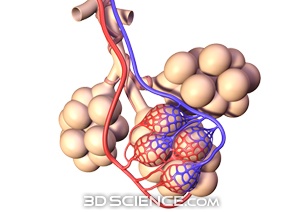
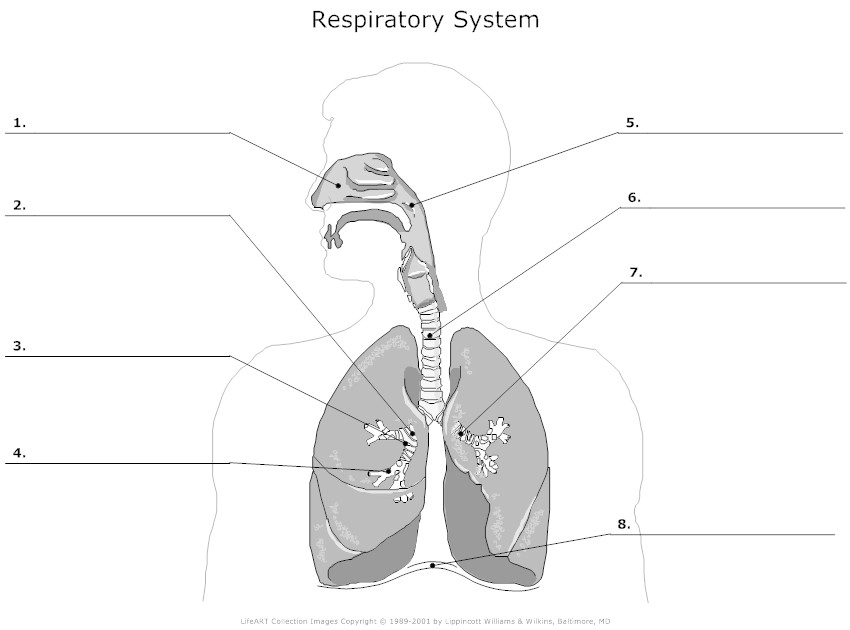
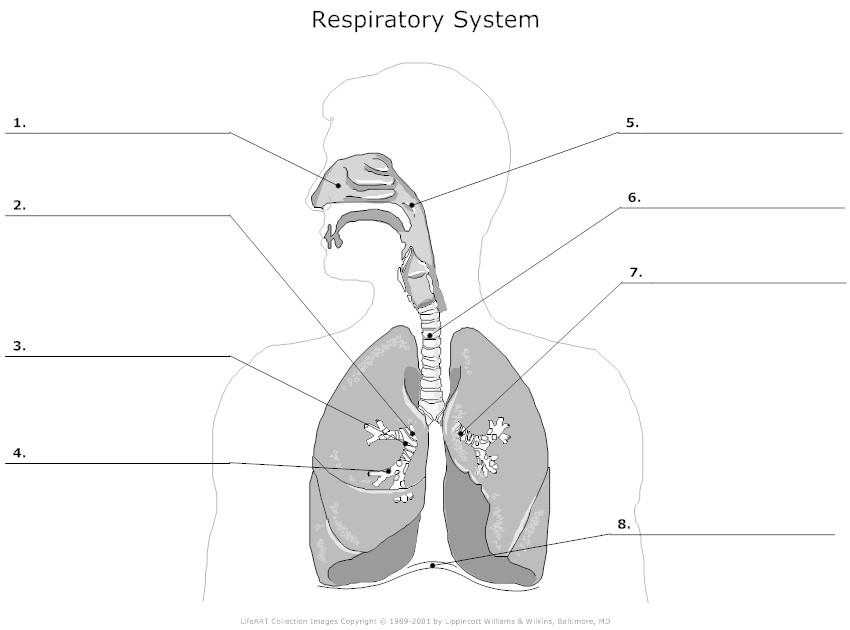
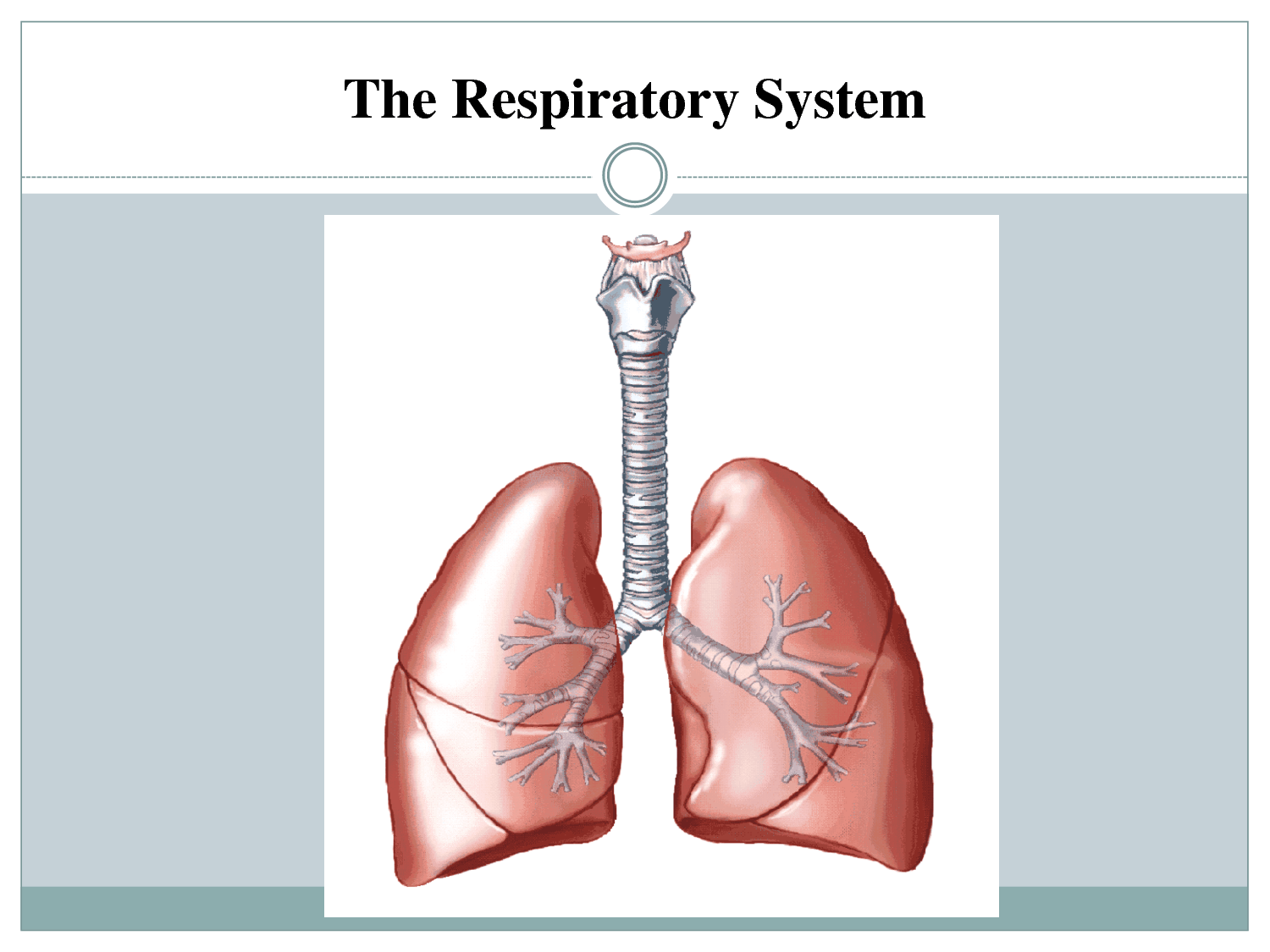
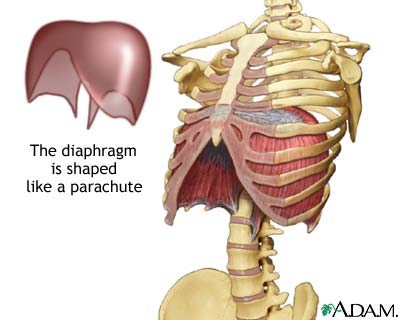
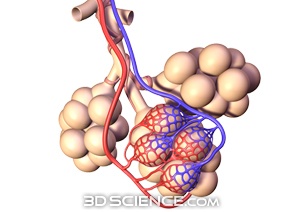
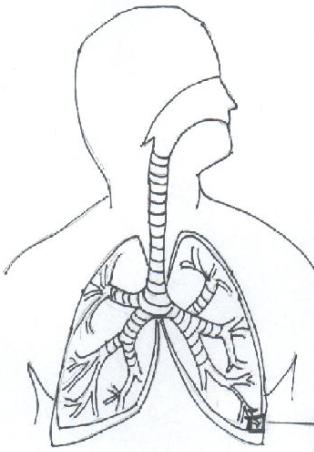
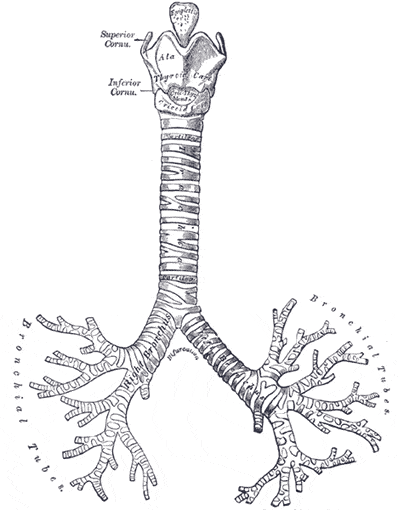

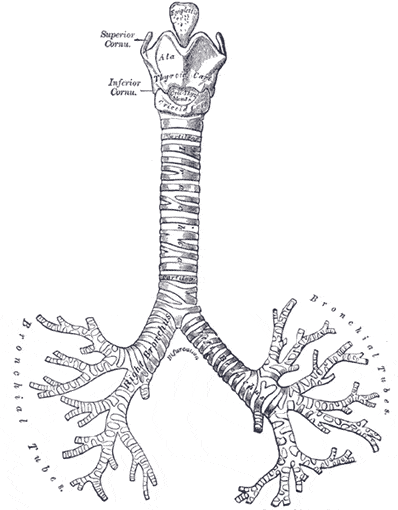

1. larynx
2. nasal cavity
3. pharynx
4. trachea
Which of the following is the correct order that air would flow during inhalation.

What is the protein that carries oxygen in blood?
Hemogoblin
Harry Pote
Respiratory System
Estrogen
In what body cavity are the lungs located?
abdominal
pelvic
thoracic
dorsal
The thin, moist, slippery membrane that covers the lungs is.
alveoli
pleura
surfactant
sinus
Joe blows into a spirometer and relaxes his diaphragm. This process is:
aspiration
exhalation
inhalation
sound production
Blood transported from the cardiovascular system to cells and tissues in order for gases to the exchanged is:
Aspiration
External respirations
Internal respiration
Perspiration

Organ that contains alveoli, bronchioles, and bronchi.
Diffuse
Kidney
Drake
Lungs

