
 Worksheets
Functions Review 7.1-7.10
Total questions: 215
Worksheet time: 9hrs 55mins
F.WU1
Kindly select all functions that are true
f(x)=x+2
f(3)=5
g(x)=2x
g(4)=8
h(x)=x2
h(3)=6
t(v)=v3
t(2)=6
t(v)=v3
t(2)=8

Kindly confirm that these insights are mastered or copied into your notes by typing "Done"
(a)
F.1
What makes a relationship a function?
Each input having one output
Each input having multiple outputs
Each output having multiple inputs
Each output having only one input
F.2
The function g(d) is defined as g(d) = 49−d2
Find the value of g(5)
(a)
F.3
Kindly evaluate the function:
t(y) = 18+6y
t(-18) =
(a)
F.4
Kindly evaluate the function:
k(t)=13t−2
k(3) =
(a)
F.5
Kindly evaluate the function:
k(t)=10t−19
k(-7) =
(a)
F.6
Kindly evaluate the function:
h(t)=−20+11t
h(11)=
(a)

Kindly confirm that these insights are mastered or copied into your notes by typing "Done"
(a)
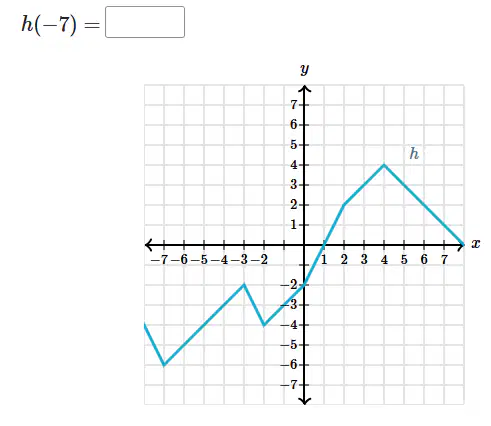
F.7
Evaluate the function given its graph
(a)
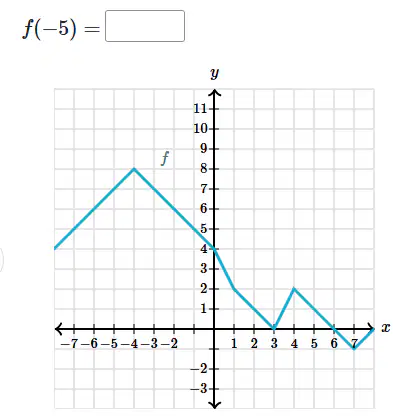
F.7a
Evaluate the function given its graph
(a)
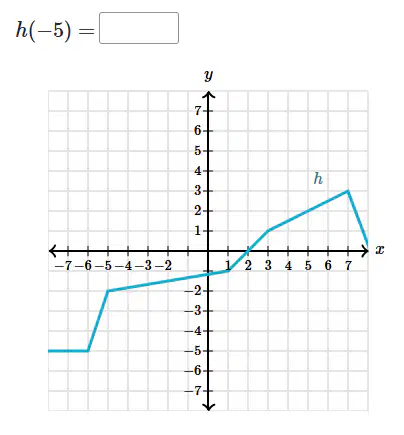
F.7b
Evaluate the function given its graph
(a)
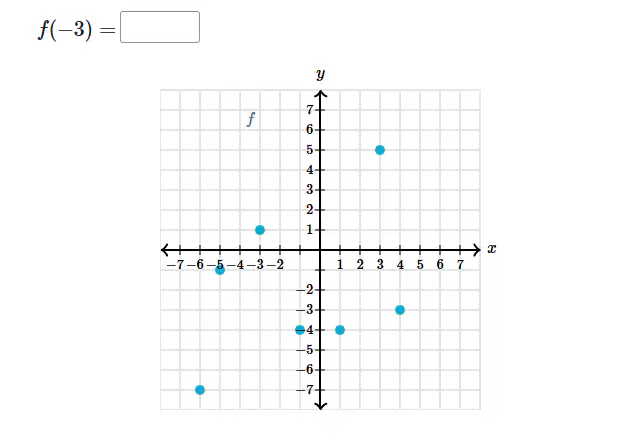
F.8
Evaluate the function given its graph
(a)

F.8a
Evaluate the function given its graph
(a)
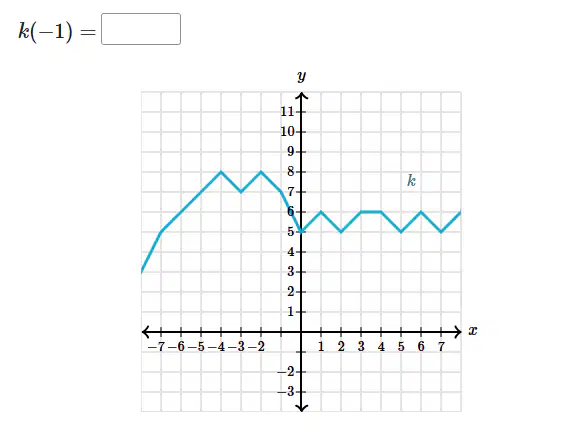
F.9
Evaluate the function given its graph
(a)
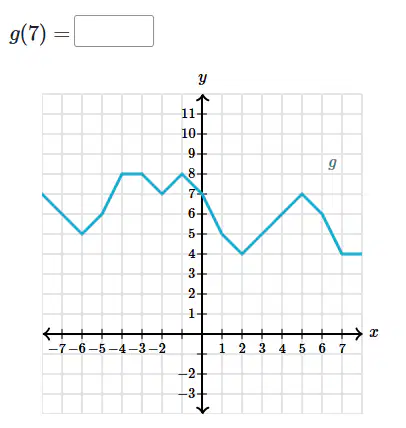
F.9a
Evaluate the function given its graph
(a)
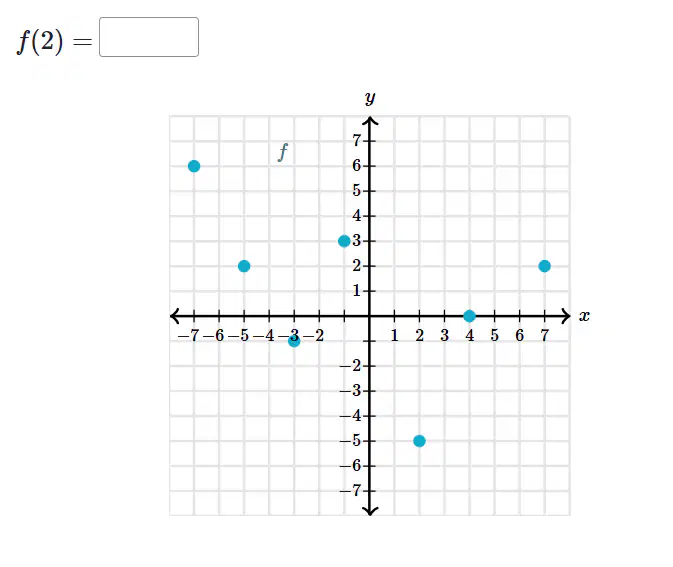
F.10
Evaluate the function given its graph
(a)
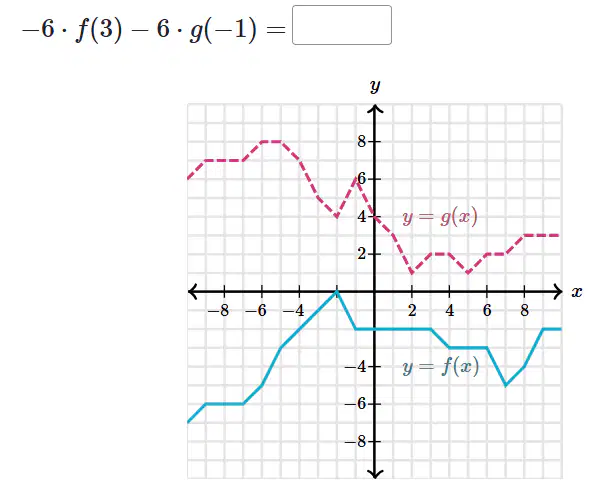
F.11
Evaluate the function given its graph
(a)
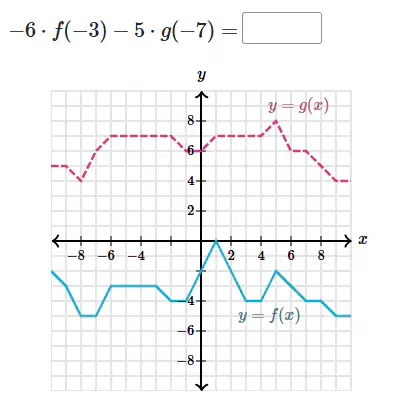
F.11a
Evaluate the function given its graph
(a)

F.11b
Evaluate the function given its graph
(a)

F.11c
Evaluate the function given its graph
(a)
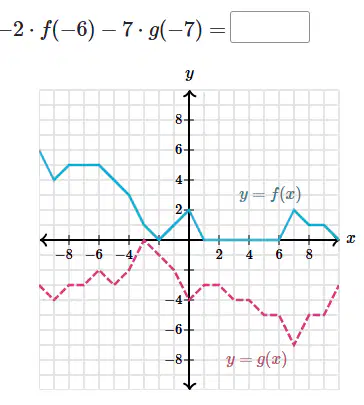
F.11d
Evaluate the function given its graph
(a)
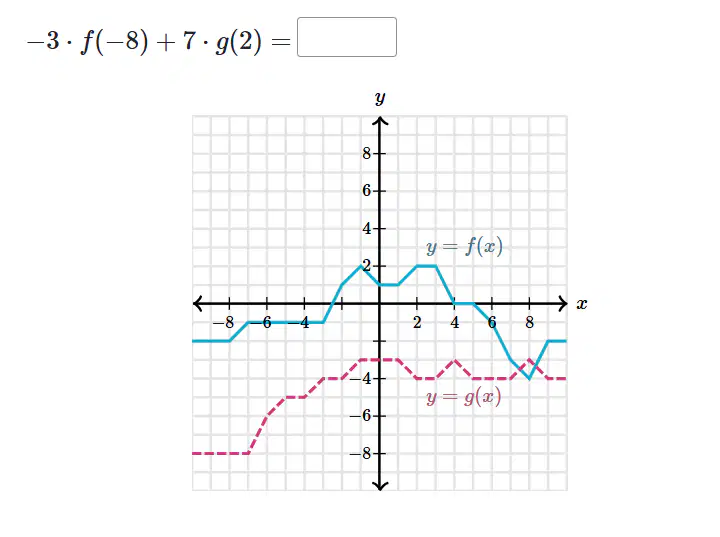
F.12
Evaluate the function given its graph
(a)
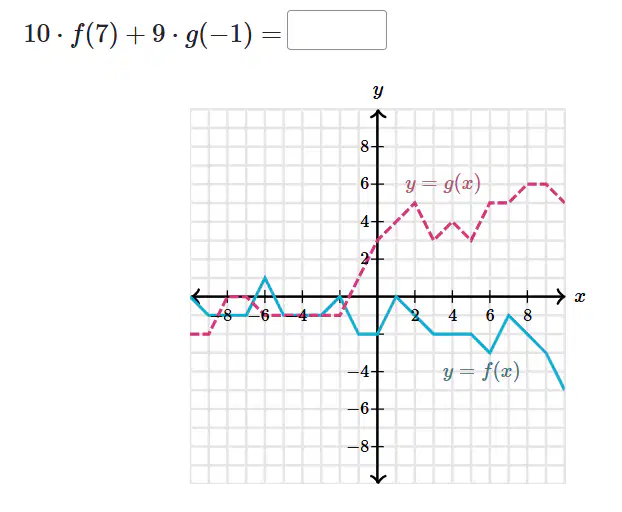
F.13
Evaluate the function given its graph
(a)

F.14
Evaluate the function given its graph
(a)
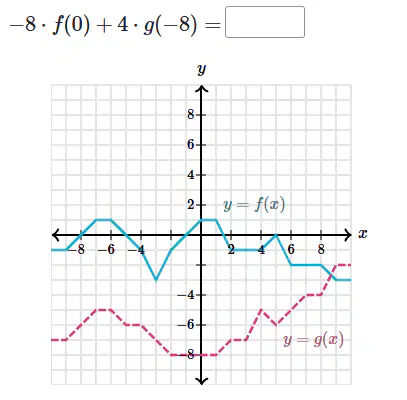
F.14a
Evaluate the function given its graph
(a)

F.14c
Evaluate the function given its graph
(a)
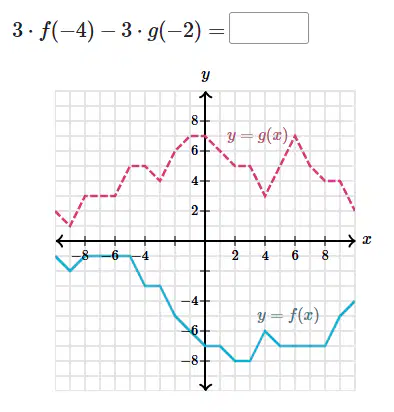
F.14d
Evaluate the function given its graph
(a)

7.1.1
Is the following a function?
Yes, this is a function.
No, it's not a function.
Can't be determined with this information.
7.1.2
Which of the following is NOT a function?


7.1.3
Which of the following is a function?


7.1.4
Is this a function or not a function?

7.1.5
Is this is a function or not a function?

7.1.6
Is the relation a function? Why.

7.1.7
7.1.8

7.1.9
7.1.10
Which of the following is a function?


7.1.11
Function
Not a function
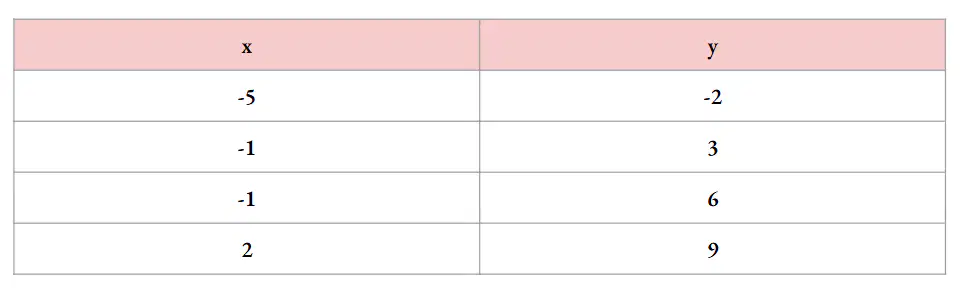
7.1.12
Function
Not a function
7.1.13
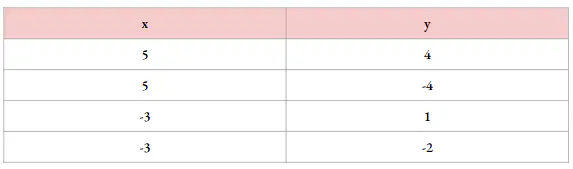
Function
Not a function
7.1.14
Which set of ordered pairs is a function?
{(9,5), (10,5), (9,-5), (10,-5)}
{(3,4), (4,-3), (7,4), (3, 8)}
{(6,-5), (7, -3), (8, -1), (9, 1)}
{(2, -2), (5, 9), (5, -7), (1, 4)}
7.1.15
What is the definition of function?

7.1.16
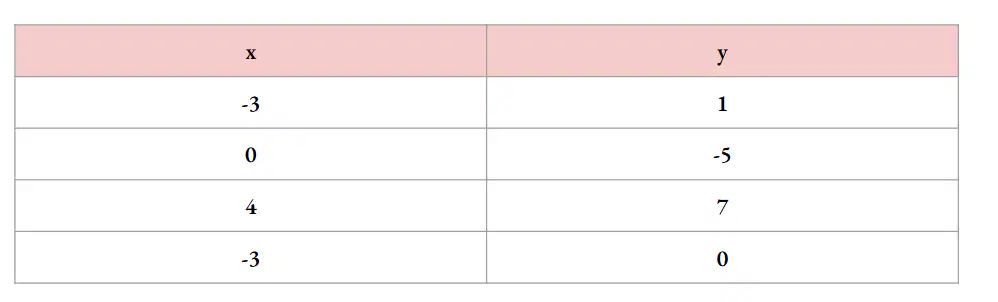
Which of these tables represent a function?

7.1.17
Does the mapping of these points represent a function? (Note: the left oval represents your x values and the right oval represents your y values)
Function
Not a Function

7.1.18
Which is a function?
A
B
C
D
7.1.19
With functions, all of the x values are called what?
Inputs
Range
Relation
Function
7.1.20
With functions, all of the y-values are called what?
Domain
Outputs
Relation
Function

7.1.21

f(x) = -2?

What is the value of x when f(x) = 16?
x = 4 only
x = 4 and x = 8
x = 16
Not on the graph
F.WU2
Find the variable value that makes the equation true:
-2t+5=9
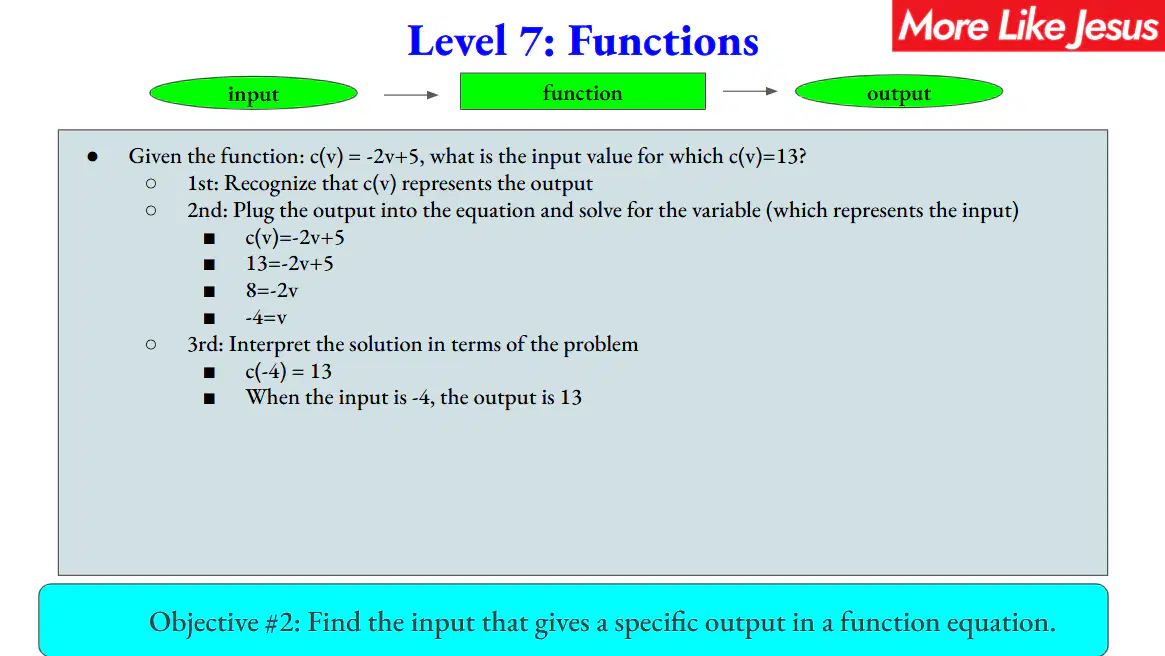
Kindly confirm that these insights are mastered or copied into your notes by typing "Done"
(a)
F.2.2
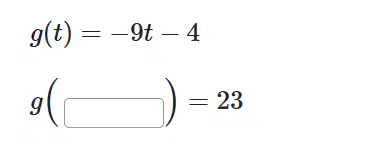
Kindly evaluate
(a)
F.2.2a
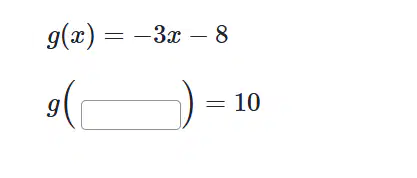
Kindly evaluate
(a)
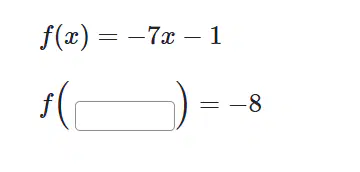
F.2.2b
Kindly evaluate
(a)
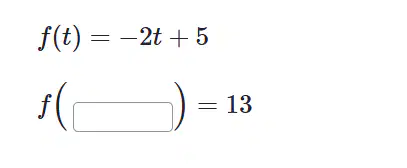
F.2.2c
Kindly evaluate
(a)
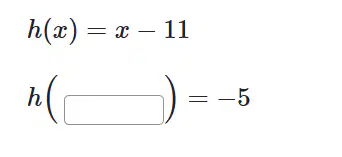
F.2.2d
Kindly evaluate
(a)
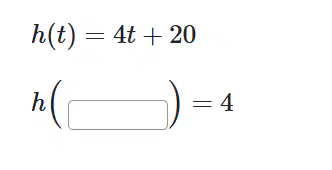
F.2.3
Kindly evaluate
(a)
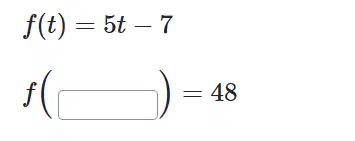
F.2.3a
Kindly evaluate
(a)
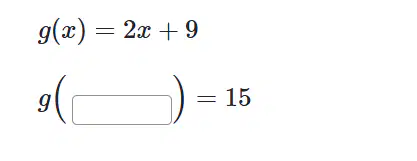
F.2.3b
Kindly evaluate
(a)

F.2.3c
Kindly evaluate
(a)

F.2.3d
Kindly evaluate
(a)
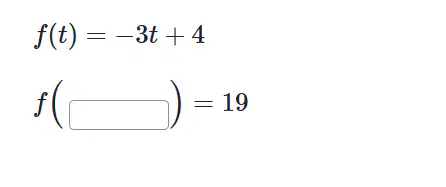
F.2.4
Kindly evaluate
(a)
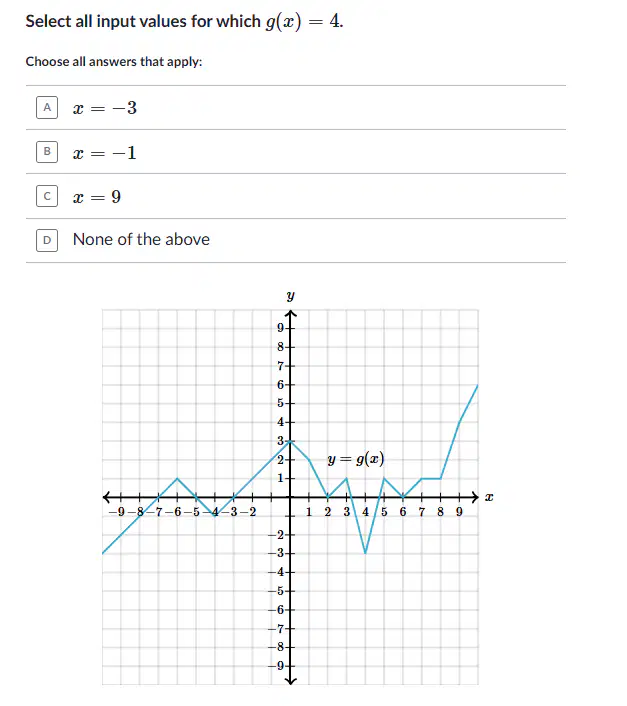
F.2.5
Kindly evaluate
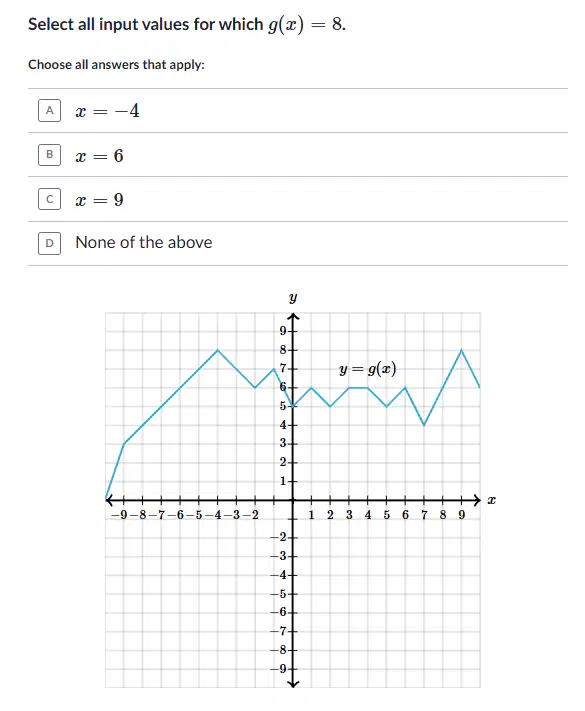
x=-3
x=-1
x=9
None of these

F.2.5a
Kindly evaluate
A
B
C
D

F.2.5b
Kindly evaluate
(a)
F.2.5c
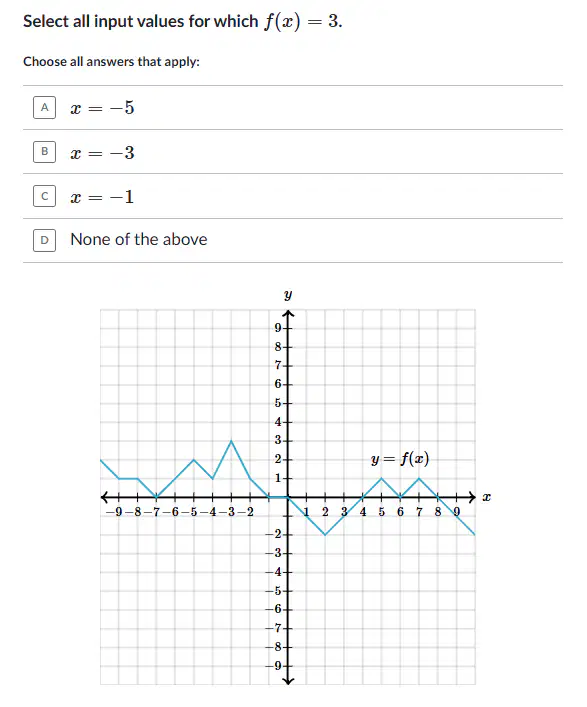
Kindly evaluate
A
B
C
D

F.2.5d
Kindly evaluate
(a)
F.2.5e
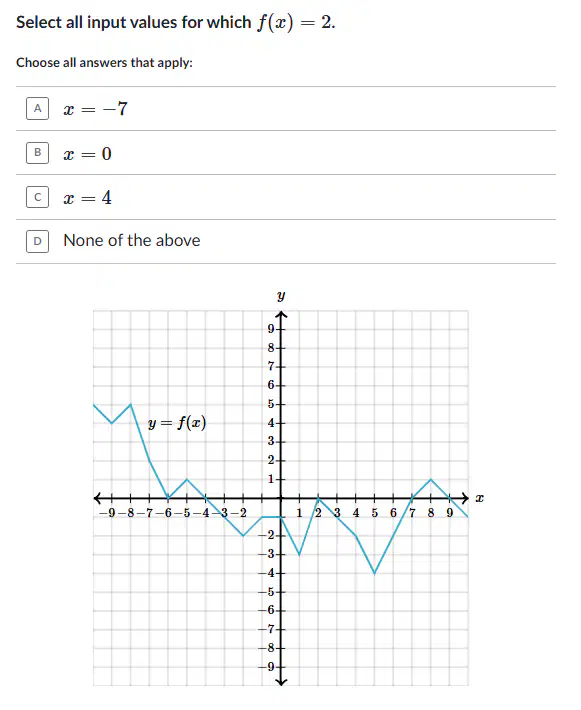
Kindly evaluate
A
B
C
D
F.2.5g
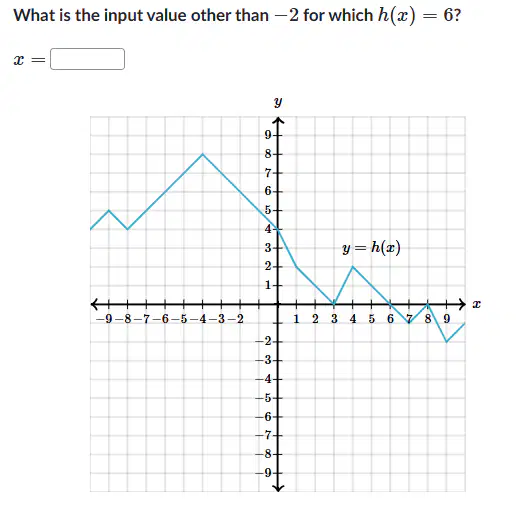
Kindly evaluate
A
B
C
D
F.2.5f
Kindly evaluate
(a)
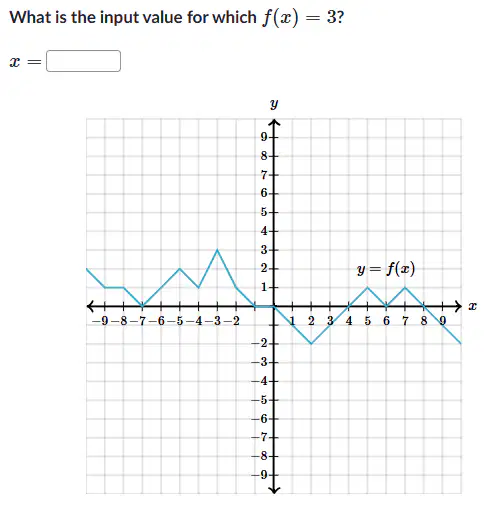
F.2.5h
Kindly evaluate
(a)
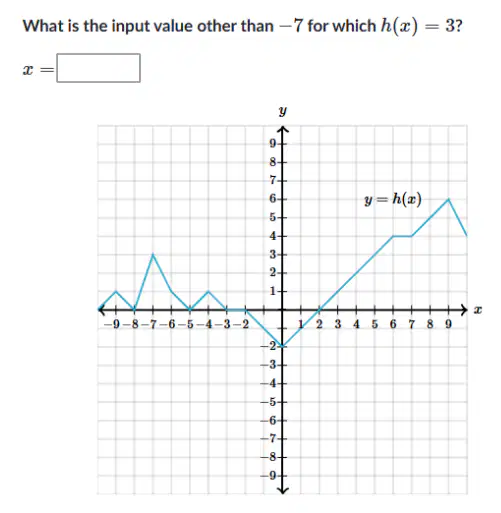
F.2.6
Kindly evaluate
(a)

F.2.7
Kindly evaluate
x=0
x=4
x=6
None of these
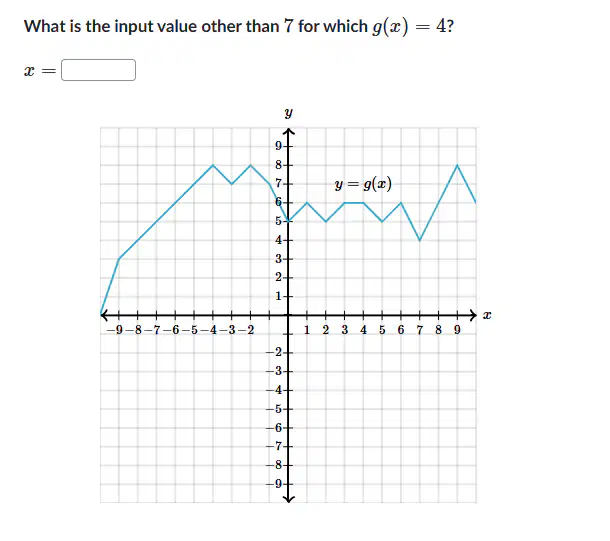
F.2.8
Kindly evaluate
(a)
Kindly confirm that these insights are mastered or copied into your notes by typing "Done"
(a)
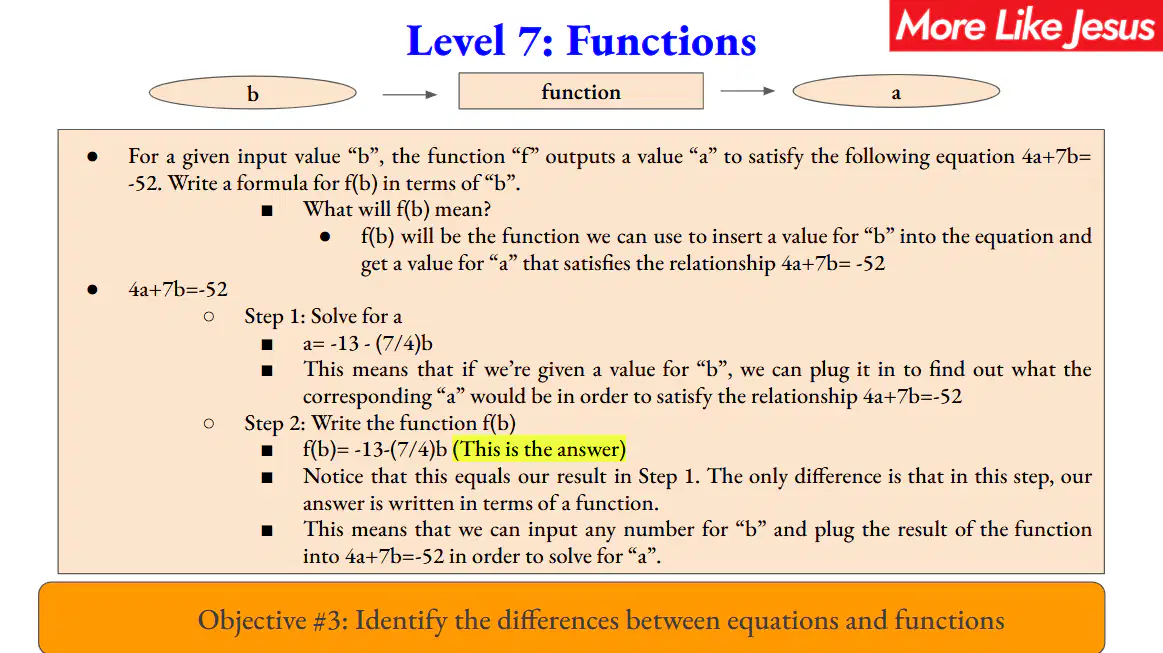
Kindly confirm that these insights are mastered or copied into your notes by typing "Done"
(a)

F.3.1
(a)

F.3.1a
(a)

F.3.1b
(a)
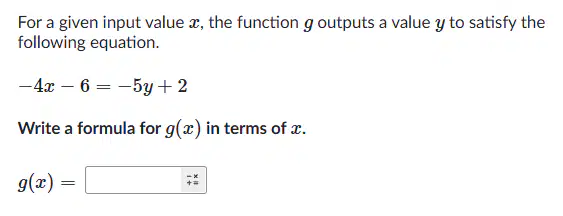
F.3.1c
(a)
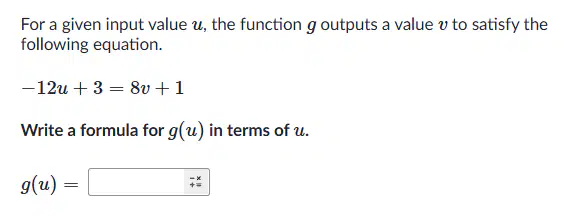
F.3.1d
(a)
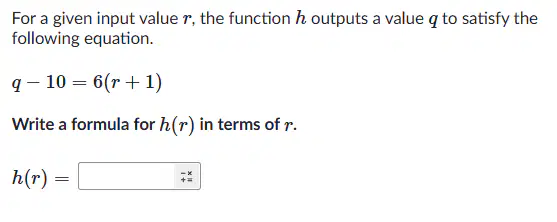
F.3.1e
(a)
F.3.1f
(a)
F.3.1g
(a)
F.3.1h
(a)
F.3.2
(a)
F.3.3
(a)
F.3.4
(a)
F.4.1
A
B
C
F.4.2


B

C
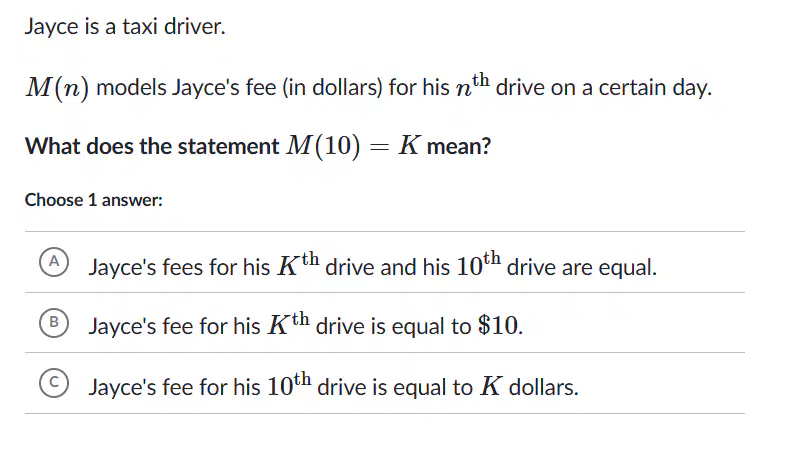
F.4.3
A
B
C

F.4.4
A
B
C
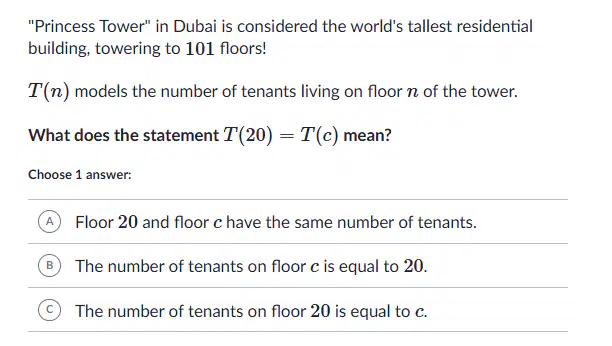
F.4.5
A
B
C
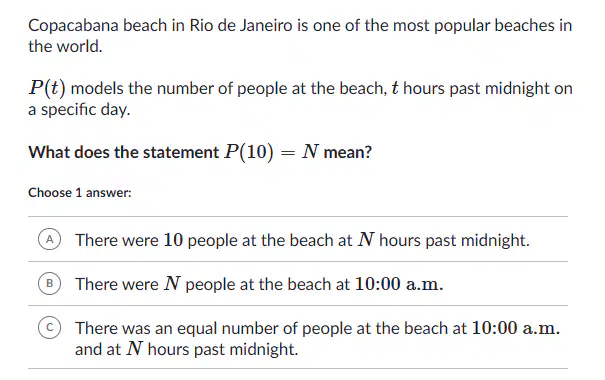
F.4.6
A
B
C
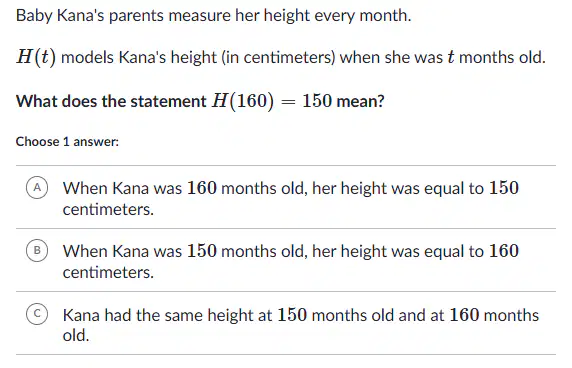
F.4.7
A
B
C
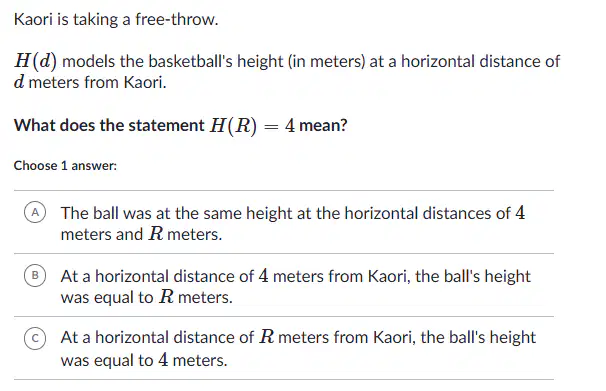
F.4.8
A
B
C
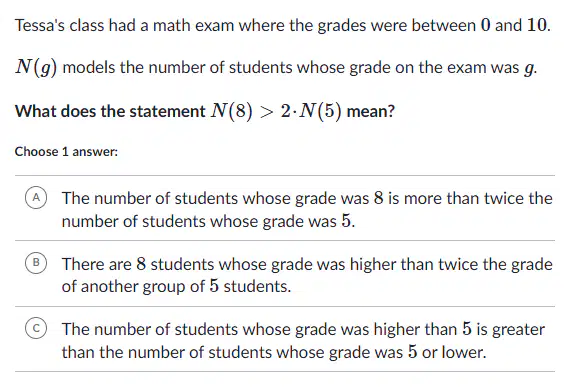
F.4.9
A
B
C
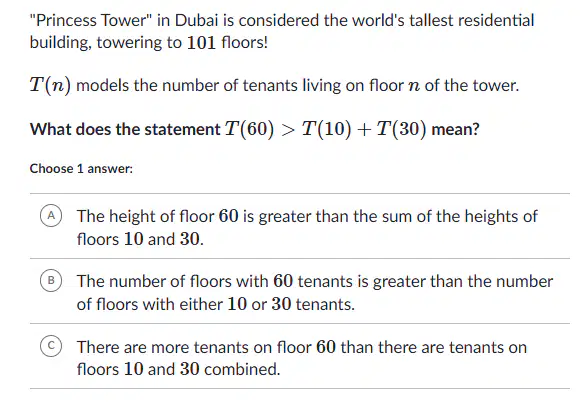
F.4.10
A
B
C
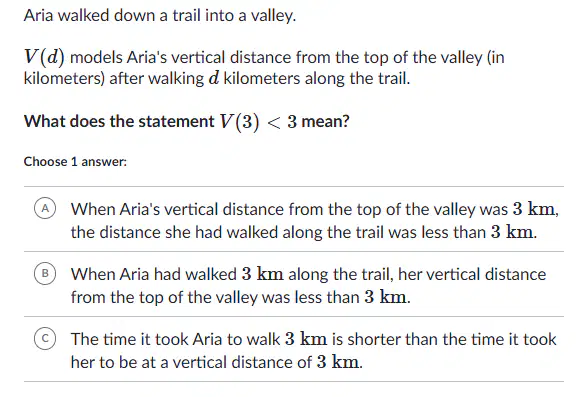
F.4.11
A
B
C
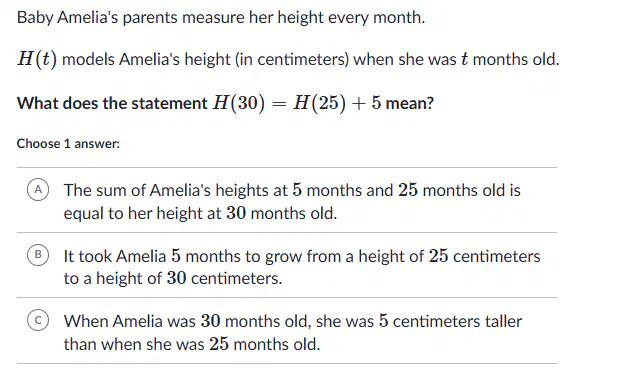
F.4.12
A
B
C
F.5.WU
Select all the inequalities that are true
−5<−3
2≤2
0>1
4≥5
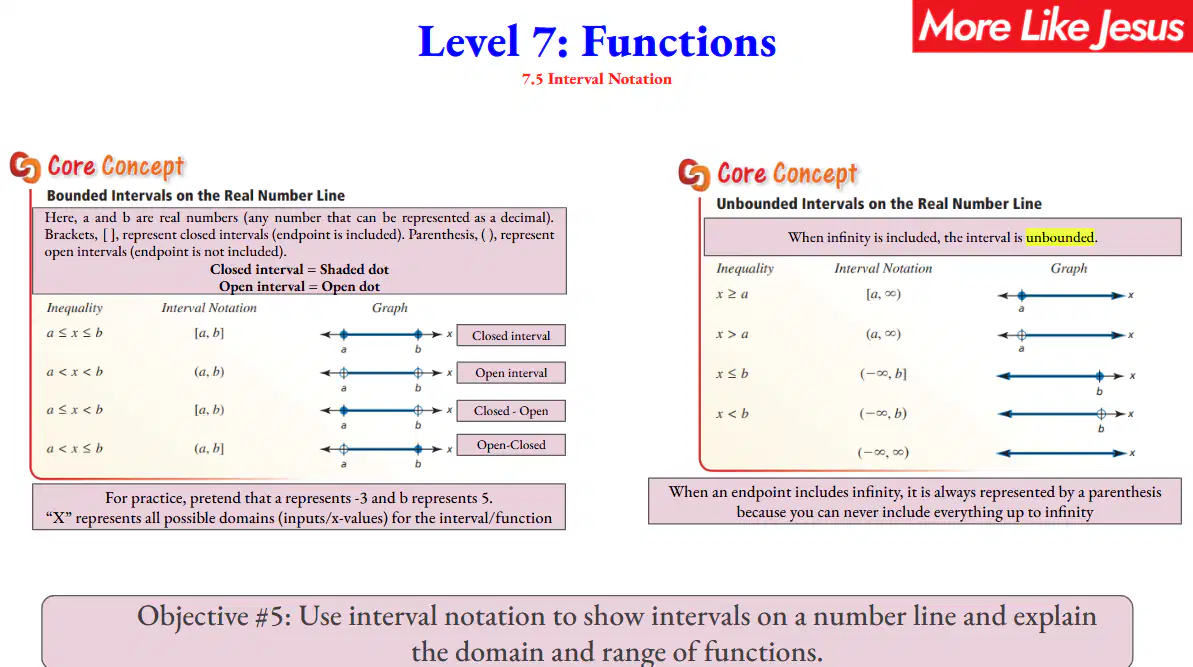
F.5.Notes
Kindly confirm that these insights are mastered or copied into your notes by typing "Goku"
(a)
F.5.a
Write the following in interval notation.
x < 8
(-∞, 8)
F.5.b
Can you use the symbols [ or ]
with infinity?

F.5.c
What interval notation does the number line graph represent?
[-5, ∞)
F.5.d
When you graph an inequality, you use a closed dot when you use which symbols?
≤ , ≥
>,=
<,=
<,>
≤ , =
F.5.e
Would you use a closed or open circle to graph x < 3?
F.5.f
Write the following in interval notation.
x ≥ 100
[100, ∞)
F.5.g
Write this in interval notation.
x>−9
(-9, ∞)
F.5.h
Write this in interval notation.
x≤6
(-∞, 6]
F.5.i
Convert this interval notation to inequality notation.
x≤0
(−∞,∞)
(−∞,0]
(−∞,0)
(0,−∞)
[0,−∞)
F.5.j
Express the following in Interval Notation
-8 ≤ x < 8
[-8, 8]
[-8,8)
(-8, 8]
(-8, 8)
(8, -8]
F.5.k
Write the following in interval notation
-7 ≤ x < 8
(-7, 8)
[-7, 8)
[-7, 8]
(-7, 8]
(8, -7]
F.5.L
Write the following in interval notation
x < 8
F.5.m
Write the following in interval notation
x < 3 or x ≥ 5
U = "or" in interval notation
(3, -∞) U (∞, 5]
[-∞, 3) U [5, ∞]
(-∞, 3) U [5, ∞)
(3, -∞] U [∞, 5]
(3, -∞] U [5, ∞]

F.5.n
Look at the Graph. Write the inequality in interval notation.

F.5.o
Look at the picture. Which number line corresponds to [-2, 5]?

F.5.p
Look at the picture. Which graph best represents the solution set (-∞, -2) U (5, ∞)?

F.5.q
What is the range of the graph?
[-7, 5)
(-3, 1]
[-3, 1)
(-7, 5]

F.5.r
What is the range?
(0, ∞)
[0, ∞)
(−∞, ∞)
None of the answer choices
[0, ∞]

F.5.s
What is the domain?
[-2, 3]
[-2, 3)
(-2, 3]
[-3, 4]
(-3, 4]
F.5.T
What is the range?
[-3, 4]
(-3, 4)
(-3, 4]
(-2, 3]
[4, -3]

F.5.U
What is the domain?
(−∞, −3]
[3, −∞)
(−∞,3]
(−∞,∞)
None of the answer choices
F.5.V
What is the range?
(−∞, −3]
[3, −∞)
(−∞,3]
None of the answer choices
[−3, ∞)

F.5.W
What is the domain?
(a)
F.5.X
What is the range?
(a)

F.5.Y
What is the domain?
(∞,−2]
[−2, ∞)
[-2,3]
(−∞, −2]
None of the answer choices
F.5.Z
What is the domain?
(∞, −2]
[−2, ∞)
(-2, 3)
[-2, 3]
None of the answer choices

F.5.Z1
What is the domain?
(-8, 4]
(-8,-3) U [-1, 4]
[-8,-3) U [-1, 4]
(-8,-4] U [-1, 4]
(-2, 6]
F.5.Z2
What is the range?
(-2, 6] U[1,4]
(-8, 2] U (3, 6]
(-8,-3) U [-1, 4]
(-2, 6]
None of the answer choices
F.5.Z3
Express the following in Interval Notation
-9 < x ≤ -4
F.5.Z4
Write the following in interval notation
x < 8
F.5.Z5
Look at the Graph. Write the inequality in interval notation.
F.5.Z6
Which of the following numbers is not in the interval (3, 9]?
3
3.14
7
9
F.5.Z7
When graphing an inequality, you use an open dot when you use which symbol?
<, >
≤, ≥
>, ≥
<, ≤
F.5.Z8
Express the following in Interval Notation
-9 < x < -8.5
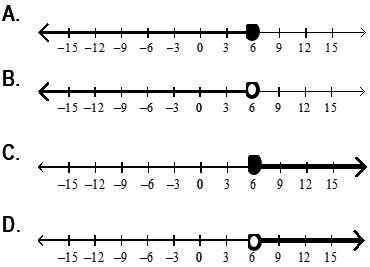
F.5.Z9
Pick the correct letter for:
6 > x
F.5.Z10
Which is the closest to " [ a, b) "
All values between a and b, including both a and b
All values between a and b, excluding both a and b
All values between a and b, including a, but excluding b
All values between a and b, including b, but excluding a
F.5.Z11
Why do we not use closed parentheses/brackets for positive and negative infinity?
Infinity is an idea/concept and not an actual number, so it can't be included
False, we do in fact use closed parentheses/brackets for positive and negative infinity
Huh?
???
F.5.Z12
Express the following interval in Set notation:
(-7, 15]

F.5.Z13
What inequality is graphed?
2 < x < 4
2 ≤ x ≤ 4
x > 2 or x < 4
x ≥ 2 or x ≤ 4
F.5.Z14
Write the inequality in interval notation. x > -1

F.5.Z15
Pick the correct inequality.

F.5.Z16
Which graph matches the inequality
4 > x
A
B
C
D
F.5.Z17
Write the following in interval notation
x > 6 and x ≤ 10
F.5.Z18
Write the following in interval notation
x ≥ 100
(0, 100]
(∞, 100]
[100, ∞)
(∞, 100)
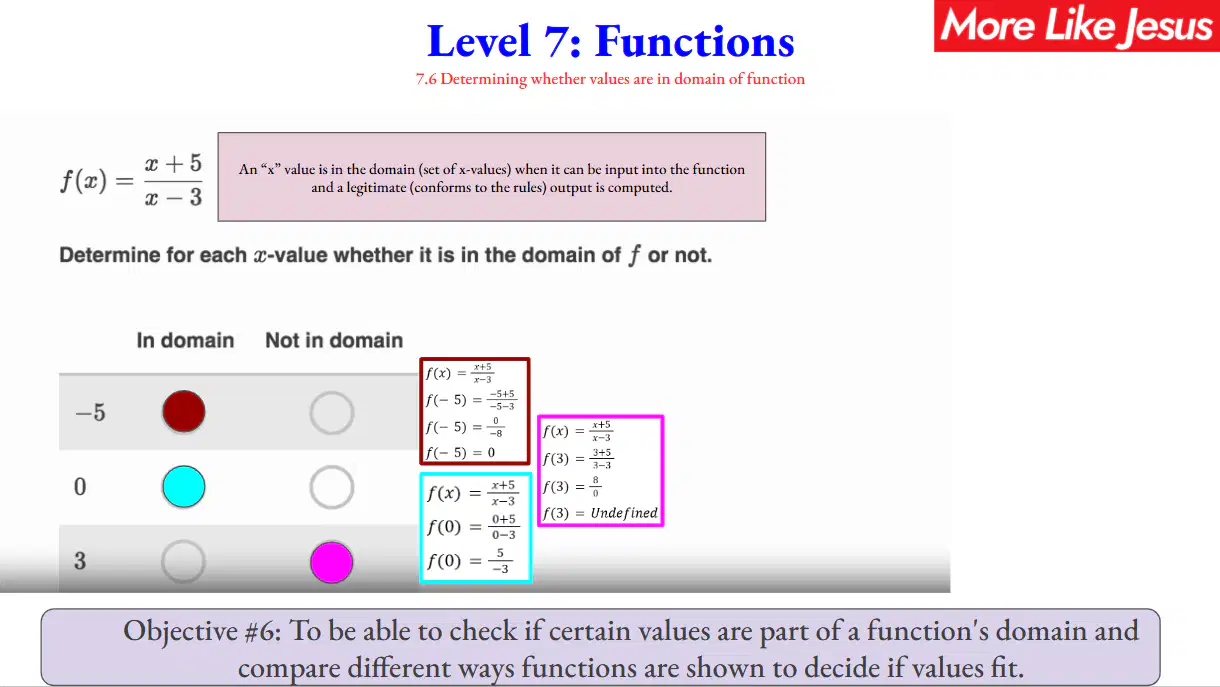
F.6.1 Notes
Kindly confirm that these insights are mastered or copied into your notes by typing "Math"
(a)

F.6.1a
Kindly select all that are true
g(-6): In domain
g(0): In domain
g(2): In domain
g(0): Not in domain
g(-6): Not in domain
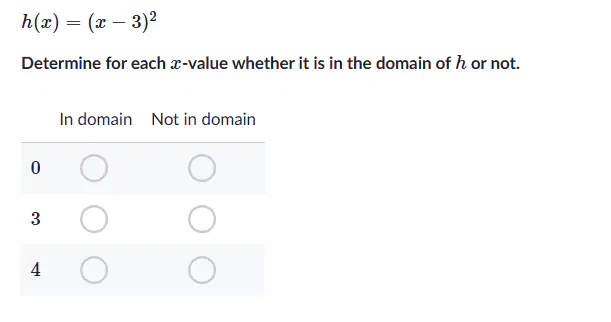
F.6.1b
Kindly select all that are true
g(0): In domain
g(3): In domain
g(4): In domain
g(3): Not in domain
g(4): Not in domain

F.6.1c
Kindly select all that are true
g(-6): In domain
g(-3): In domain
g(3): In domain
g(-6): Not in domain
g(-3): Not in domain
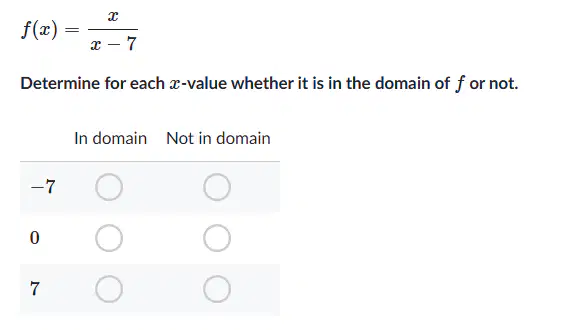
F.6.1d
Kindly select all that are true
g(-7): In domain
g(0): In domain
g(7): In domain
g(7): Not in domain
g(-7): Not in domain
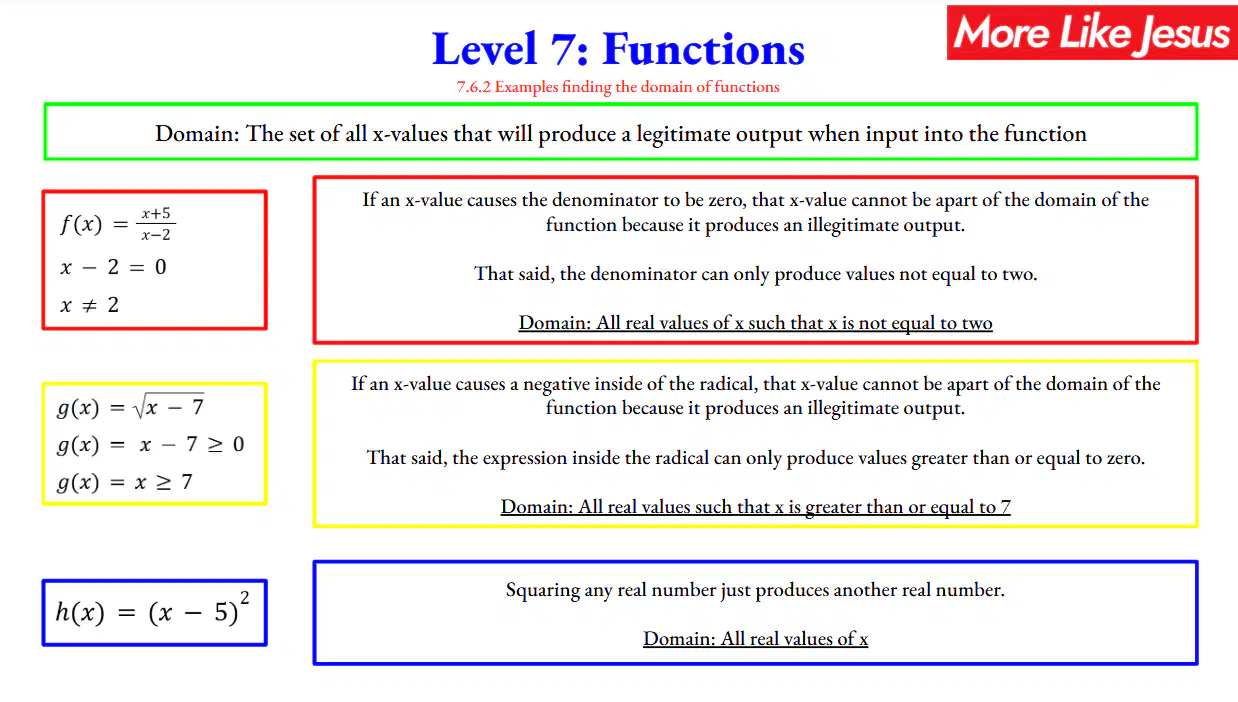
F.6.2 Notes
Kindly confirm that these insights are mastered or copied into your notes by typing "Done"
(a)
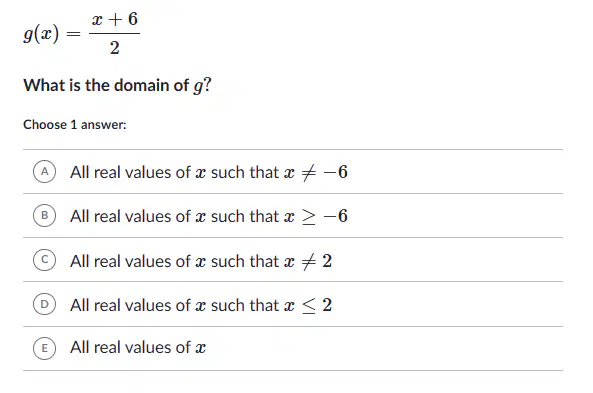
F.6.2a
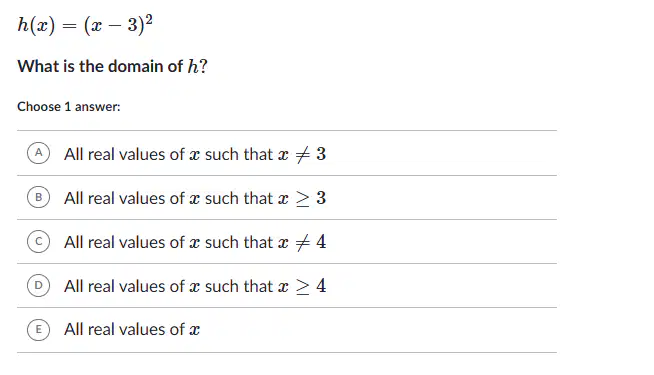
A
B
C
D
E
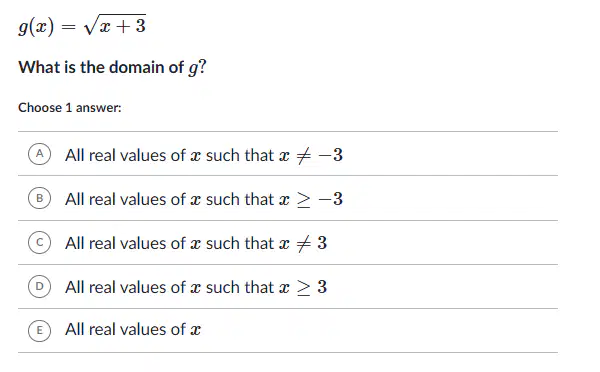
F.6.2b
A
B
C
D
E
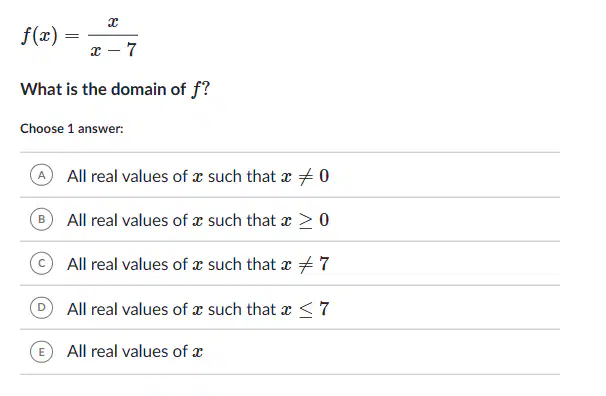
F.6.2c
A
B
C
D
E
F.6.2e
A
B
C
D
E
F.6.3.Bonus1
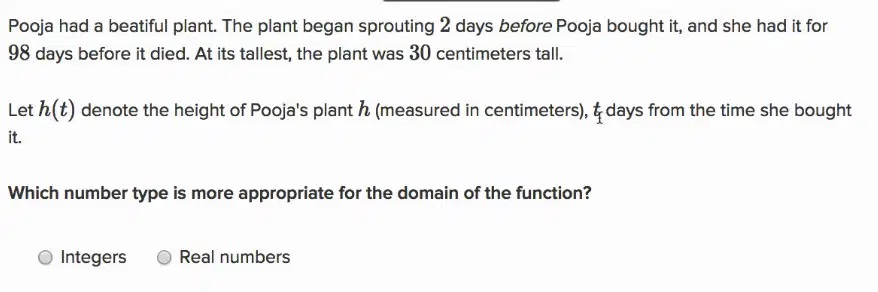
What's the domain of this prompt?
The number of days from the time the plant was purchased
The height of the plant measured in centimeters
The height of the plant at its tallest
When the plant began sprouting
How long Pooja had the plant
F.6.3.Bonus2
Which represents the set of inputs for this prompt?
The number of days from the time the plant was purchased
The height of the plant measured in centimeters
The height of the plant at its tallest
When the plant began sprouting
How long Pooja had the plant
F.6.3.Bonus3
Which represents the set of range for this prompt?
The number of days from the time the plant was purchased
The height of the plant measured in centimeters
The height of the plant at its tallest
When the plant began sprouting
How long Pooja had the plant
F.6.3.Bonus4
Which represents the set of outputs for this prompt?
The number of days from the time the plant was purchased
The height of the plant measured in centimeters
The height of the plant at its tallest
When the plant began sprouting
How long Pooja had the plant
F.6.3.Bonus5
Which of the following would be based on the x-axis?
The number of days from the time the plant was purchased
The height of the plant measured in centimeters
The height of the plant at its tallest
When the plant began sprouting
How long Pooja had the plant
F.6.3.Bonus6
Which of the following would be based on the y-axis?
The number of days from the time the plant was purchased
The height of the plant measured in centimeters
The height of the plant at its tallest
When the plant began sprouting
How long Pooja had the plant
F.6.3a
Integers: Days, in this instance, can only be measured using positive and negative whole numbers
Real Numbers: Days, in this instance, can be measured using both whole numbers and decimal values
Integers: Days, in this instance, can be measured using both whole numbers and decimal values
Real Numbers: Days, in this instance, can only be measured in using positive and negative whole numbers

F.6.3b
Kindly define the interval of the domain
(a)
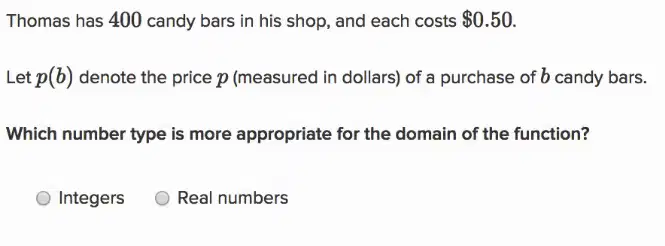
F.6.3.Bonus7
What's the domain of this function
Candy bars
Price
Price of all candy bars
Price of each candy bar
The maximum number of candy bars that can be sold
F.6.3.Bonus8
What's the range of this function
Candy bars
Price
Number of candy bars in the shop
Price of each candy bar
The maximum number of candy bars that can be sold
F.6.3.Bonus9
Which represent the input of this function
Candy bars
Price
Number of candy bars in the shop
Price of each candy bar
The maximum number of candy bars that can be sold
F.6.3.Bonus10
Which represent the output of this function
Candy bars
Price
Number of candy bars in the shop
Price of each candy bar
The maximum number of candy bars that can be sold
F.6.3.Bonus11
Which would be graphed on the y-axis
Candy bars
Price
Number of candy bars in the shop
Price of each candy bar
The maximum number of candy bars that can be sold
F.6.3.Bonus12
Which would be graphed on the x-axis
Candy bars
Price
Number of candy bars in the shop
Price of each candy bar
The maximum number of candy bars that can be sold
F.6.3c
Integers: Candy bars can only be purchased in whole number intervals
Real Numbers: Candy bars can be purchased using both whole numbers and decimal values
Integers: Candy bars can be purchased using both whole numbers and decimal values
Real Numbers: Candy bars can only be purchased in whole number intervals

F.6.3d
Kindly define the interval of the domain
(a)

F.6.3.Bonus13
Which of the following would be on the x-axis
Steps Mason moved
Height above the ground
Where Mason started on the ladder
Height on the ladder
Steps above the ground
F.6.3.Bonus14
Which of the following represents the "input"?
Steps Mason moved
Height above the ground
Where Mason started on the ladder
Height on the ladder
Steps above the ground
F.6.3.Bonus15
Which of the following represents the "output"?
Steps Mason moved
Height above the ground
Where Mason started on the ladder
Height on the ladder
Steps above the ground
F.6.3.Bonus16
Which of the following represents the domain?
Steps Mason moved
Height above the ground
Where Mason started on the ladder
Height on the ladder
Steps above the ground
F.6.3.Bonus17
Which of the following represents the range?
Steps Mason moved
Height above the ground
Where Mason started on the ladder
Height on the ladder
Steps above the ground
F.6.3.Bonus18
Which of the following would be graphed on the y-axis?
Steps Mason moved
Height above the ground
Where Mason started on the ladder
Height on the ladder
Steps above the ground
F.6.3e
Integers: Steps can be either positive or negative based on moving up or down the ladder
Real Numbers: Steps can be either positive or negative based on moving up or down the ladder
Integers: The height difference can be either positive or negative based on moving up or down the ladder
Real Numbers: The height difference can be either positive or negative based on moving up or down the ladder
Integers: Steps taken on a ladder can only be positive whole numbers

F.6.3f
Kindly define the interval of the domain
(a)
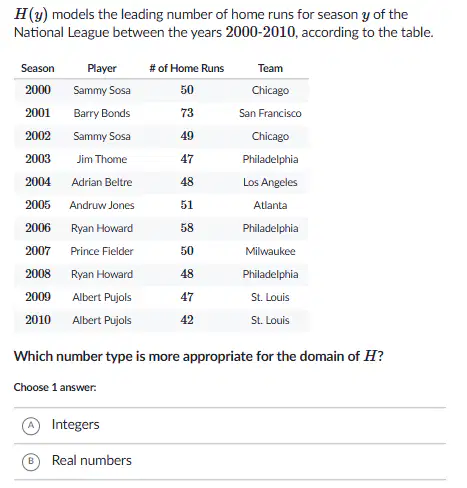
F.6.3g
Which number type is more appropriate for the domain of H?
Integers: Years can be measured in whole numbers exclusively
Real Numbers: Years can be measured in whole numbers exclusively
Integers: Home runs can average as decimal values
Real Numbers: Home runs can average as decimal values
Real Numbers: Seasons are routinely measured by both the year and the number of days into the season
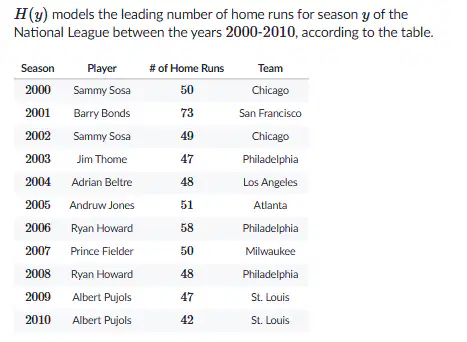
F.6.3h
Kindly select the appropriate domain.
0≤y≤73
0≤y≤2010
42≤y≤73
2000≤y≤2010

F.7.1
Identify all that are true
This is a function
This is not a function
The input has multiple outputs
The output has multiple inputs

F.7.2
Identify all that are true
This is a function
This is not a function
An input has multiple outputs
An output has multiple inputs

F.7.3
Identify all that are true
This is a function
This is not a function
An input has multiple outputs
An output has multiple inputs

F.7.4
Identify all that are true
This is a function
This is not a function
An input has multiple outputs
An output has multiple inputs

F.7.5
Kindly identify whether or not this scenario represents a function along with the appropriate rationale.
This is a function
This is not a function
An output has multiple inputs
An input has multiple outputs

F.7.6
Kindly identify whether or not this scenario represents a function along with the appropriate rationale.
This is a function
This is not a function
An output has multiple inputs
An input has multiple outputs

F.7.7
Kindly identify whether or not this scenario represents a function along with the appropriate rationale.
This is a function
This is not a function
An output has multiple inputs
An input has multiple outputs
Each input only has one output
F.7.8
"In Super Smash Bros, Daniel always has 3 more wins than twice the number of his losses."
Identify all that are true
This is a function
This is not a function
An output has multiple inputs
An input has multiple outputs
Each input only has one output
F.7.9
Grace and Ashley are selling high-speed golf cart rides to help classmates escape a zombie apocalypse. Once participants sign away the guarantee of their health and safety, Grace and Ashley proceed to zip them away at top speeds. Daniel (but which one Mr. Larry?) proposes they rank their classmates in order to establish a priority list of who to save first.
The system:
Classmates whose likeability is rated less than 3 out of 5 pay $50
Classmates whose likeability is rated at 3 out of 5 or greater pay $1
Is the likeability rating a function of the price paid?
This is a function
This is not a function
An output has multiple inputs
An input has multiple outputs
Each input only has one output

F.8.1a
Kindly identify the relative maximum and enter it as a coordinate without spaces
(a)

F.8.2
Kindly identify the relative maximum(s)
(-5,6)
(6,-5)
(7,-1)
(-1,7)

F.8.3
Kindly identify the relative minimum(s)
(-6,-7)
(-1,-2)
(3,-2)
(-2,-1)
(-1,3)

F.8.4
Kindly identify the absolute minimum and enter as a coordinate without spaces.
(a)

F.8.4a
Kindly identify the absolute maximum and enter as a coordinate without spaces
(a)

F.8.5
Kindly identify the absolute minimum and enter as a coordinate without spaces
(a)

F.9.1
A
B
C
None of the above

F.9.3
A
B
C
None of the above

F.9.4
A
B
C
None of the above

F.9.5
A
B
C
None of the above

F.9.6
A
B
C
None of the above

F.10.1a
Identify the statement that aligns with:
Relative maximum or minimum
Keith's lowest altitude was 12 meters below the ground
Between the 6.5 and 10 minute marks, Keith was above the ground
Between the 5 and 8 minute marks, the elevator was going up
None of the above

F.10.3a
Identify the statement that aligns with:
y-intercept
The fastest possible growth rate is 2.6 millimeters per year
At sea level, the tree grows by 1.4 millimeters each year
As the altitude surpasses 7 kilometers above sea level, the growth rate of the tree declines
At 1.4 millimeters above sea level, the tree grows by 0 millimeters each year
At sea level, the tree grows by 14 millimeters each year
F.10.3b
Identify the statement that aligns with:
Relative maximum or minimum
The fastest possible growth rate is 2.6 millimeters per year
At sea level, the tree grows by 1.4 millimeters each year
As the altitude surpasses 7 kilometers above sea level, the growth rate of the tree declines
At 1.4 millimeters above sea level, the tree grows by 0 millimeters each year
The fastest possible growth rate is 3 millimeters per year
F.10.3c
Identify the statement that aligns with:
Increasing or decreasing interval
The fastest possible growth rate is 2.6 millimeters per year
At sea level, the tree grows by 1.4 millimeters each year
As the altitude surpasses 7 kilometers above sea level, the growth rate of the tree declines
At 1.4 millimeters above sea level, the tree grows by 0 millimeters each year
As the altitude surpasses 8 kilometers above sea level, the growth rate of the tree declines

SP.2.5
The mixture has less than the intended volume and has more than the intended percent of butterfat.
The mixture has the intended volume and has more than the intended percent of butterfat.
The mixture has the intended volume and has the intended percent of butterfat.
The mixture has more than the intended volume and has the intended percent of butterfat.

SP.2.6
Marcelina spends the intended amount of money and buys the intended amount of corn.
Marcelina spends the intended amount of money and buys more than the intended amount of corn.
Marcelina spends less than the intended amount of money and buys the correct amount of corn.
Marcelina spends less than the intended amount of money and buys less than enough corn.

SP.2.7
A number of books and their cost where the subscription with the annual fee costs less
A number of books and their cost where the subscription that charges per book costs less
A number of books and their cost where both subscriptions cost the same
A number of books and their cost that is not possible with either subscription
F.8.1
Kindly identify the relative minimums
(a)

F.8.6
Kindly identify the absolute maximum and enter as a coordinate without spaces
(a)

F.9.2
A
B
C
None of the above

SP.2.8
Chana's distance from the starting line at a time when she is behind Josiah
Josiah's distance from the starting line at a time when he is behind Chana
Chana's and Josiah's distance from the starting line at the time when Chana catches up with Josiah
Chana's distance from the starting line at a time when she is farther than Josiah

