
Font size
 Worksheets
IGCSE Magnetism and Electricity
Total questions: 499
Worksheet time: 11hrs 16mins
Which statement about a magnet is correct?
A magnet attracts a gold rod.
A magnet does not attract a plastic rod.
A magnet never repels another magnet.
A magnet sometimes repels an unmagnetised nickel rod.
A student wishes to make a permanent magnet. She has an iron rod and a steel rod.
Which rod should she use to make the permanent magnet, and is this rod a hard magnetic material or a soft magnetic material?
rod = iron; type of magnetic material = hard
rod = iron; type of magnetic material = soft
rod = steel; type of magnetic material = hard
rod = steel; type of magnetic material = hard

Two nickel bars are placed close to the N-pole of a bar magnet. The nickel bars become magnetised.
Which row states the pole induced at P, the pole induced at Q, and the type of magnetic force between P and Q?
pole induced at P = N; pole induced at Q = S; force between
P and Q = attraction
pole induced at P = N; pole induced at Q = S; force between
P and Q = repulsion
pole induced at P = S; pole induced at Q = N; force between
P and Q = attraction
pole induced at P = S; pole induced at Q = N; force between
P and Q = repusion
A student wishes to make a permanent magnet. She has an iron rod and a steel rod.
Which rod should she use to make the permanent magnet, and is this rod a hard magnetic material or a soft magnetic material?
rod = iron; type of magnetic material = hard
rod = iron; type of magnetic material = soft
rod = steel; type of magnetic material = hard
rod = steel; type of magnetic material = soft
Which statement about magnetism is correct?
An unmagnetised iron bar becomes magnetised when it is placed near a magnet.
An unmagnetised steel bar can be magnetised by passing a current through it.
The direction of magnetic field lines is from an S-pole to an N-pole.
The N-poles of two magnets attract each other.
In which pair are both materials magnetic?
aluminium and copper
copper and iron
iron and steel
steel and aluminium

The diagram shows the magnetic field around two bar magnets.
Which diagram shows the poles of the magnets?


The diagram shows apparatus that can be used to make a magnet.
Which metal and which power supply are used to make a permanent magnet?
metal = iron; power supply = 6 V a.c.
metal = iron; power supply = 6 V d.c.
metal = steel; power supply = 6 V a.c.
metal = steel; power supply = 6 V d.c.

A wire perpendicular to the page carries an electric current in a direction out of the page. There are four compasses near the wire.
Which compass shows the direction of the magnetic field caused by the current?
A
B
C
D
Which group contains only non-ferrous metals?
aluminium, brass, iron
brass, copper, lead
copper, iron, steel
copper, lead, steel
An electromagnet with a soft-iron core is connected to a battery and an open switch. The soft-iron core is just above some small soft-iron nails.
The switch is now closed, left closed for a few seconds, and then opened.
What do the soft-iron nails do as the switch is closed, and what do they do when the switch is then opened?
as switch is closed - nails jump up; as switch is opened - nails fall down
as switch is closed - nails jump up; as switch is opened - nails stay up
as switch is closed - nails stay down; as switch is opened - nails jump up
as switch is closed - nails stay down; as switch is opened - nails stay down
Which action will demagnetise a magnetised piece of steel?
Cool it in a freezer for several hours.
Hit it repeatedly with a hammer.
Put it in a coil carrying a direct current (d.c.).
Put it near an unmagnetised piece of iron.

A student investigates the force on a bar magnet placed near a current-carrying coil. She carries out three different experiments.
In experiment 1, the magnet is attracted to the coil.
Which row shows what happens in the other two experiments?
experiment 2: magnet attracted; experiment 3: magnet attracted
experiment 2: magnet attracted; experiment 3: magnet repelled
experiment 2: magnet repelled; experiment 3: magnet attracted
experiment 2: magnet repelled; experiment 3: magnet repelled

Three cores of different metals, P, Q and R, are placed inside identical coils of wire.
At least one of the metals is non-ferrous. The cores are held above some iron nails.
The top three diagrams show what happens when there is a current in the coils.
The three diagrams in the second row below show what happens when the current is then switched off in each coil.
Which row identifies whether the core metals are ferrous or non-ferrous?
ferrous = P; non-ferrous = Q and R
ferrous = P and Q; non-ferrous = R
ferrous = Q and R; non-ferrous = P
ferrous = R; non-ferrous = P and Q
Which procedure may be used to demagnetise a steel bar?
cooling it in a freezer for several hours
earthing it with a copper wire for several seconds
removing it slowly from a coil carrying an alternating current (a.c.)
rubbing it in one direction with a woolen cloth
Which statement about a permanent bar magnet is correct?
It is made from a soft magnetic material.
It repels a non-magnetic material.
Its field lines cross each other where the magnetic field is strong.
Its N-pole repels the N-pole of another magnet.

The diagram shows two magnets and two iron rods placed in a line.
Which magnetic poles are induced at the ends J and K of the iron rods?
pole induced at end J = N; pole induced at end K = N
pole induced at end J = N; pole induced at end K = S
pole induced at end J = S; pole induced at end K = N
pole induced at end J = S; pole induced at end K = S

Two iron nails hang from a bar magnet.
Which diagram shows the magnetic poles induced in the nails?
A
B
C
D

The ends of three metal rods are tested by holding end Q of rod 1 close to the others in turn.
The results are as follows.
End Q: attracts end R,
attracts end S,
attracts end T,
repels end U.
Which of the metal rods is a magnet?
rod 1 only
rod 1 and rod 2
rod 1 and rod 3
rod 3 only

The diagram shows two bar magnets, stored with metal keepers across the ends. The keepers help to keep the magnets magnetised.
The material used for the keepers becomes strongly magnetised when placed in contact with the
magnets, but does not remain magnetised when taken away from the magnets.
What is a suitable metal to use for the magnets and what is a suitable metal to use for the keepers?
metal for magnets = iron; metal for keepers = iron
metal for magnets = iron; metal for keepers = steel
metal for magnets = steel; metal for keepers = iron
metal for magnets = steel; metal for keepers = steel
Which of these is not a magnetic material?
aluminium
steel
nickel
iron

Which of the above diagrams shows the magnetic field lines around the north pole of a magnet?
A
B
C
D

When magnets and metal bars are close together they experience forces.
Which row gives the correct description of the effect between these materials?
A
B
C
D
A magnetic compass points North. This shows that...
the Earth is tilted on its axis
the Earth is spinning
the Earth has a magnetic field
the Earth has gravity
A magnetic field line shows the direction of force acting on
a magnetic north pole
a magnetic south pole
a bar magnet
a current carrying wire

A uniform magnetic field can be produced between 2 permanent magnets. Which of the following arrangements of magnets will produce the field shown?
A
B
C
D
Some magnets are easily magnetised when placed in a magnetic field, and then quickly lose their magnetism once the field is removed. These materials are used in electromagnets, and are called...
soft magnetic materials
hard magnetic materials
temporary magnets
partial magnets
The national grid uses step-up transformers to produce very high voltages in long cables that link towns and cities. Why is this?
People are less likely to steal the electrical energy because it is dangerously high voltage.
The transformers step up the power delivered by the same ratio as the step up in voltage.
Houses and offices need this very high voltage to operate
Less current is needed, and therefore there is less power loss in the cables.

-
A
B
C
D

-
A
B
C
D

-
A
B
C
D

-
A
B
C
D

-
A
B
C
D

-
A
B
C
D

-
A
B
C
D

-
A
B
C
D

-
A
B
C
D

-
A
B
C
D
Some metals can be magnetic. Which of these can be magnetic?
Steel
Copper
Aluminum
Copper


Which of the following diagrams is INCORRECT?
A
B
C
D
What happens to the strength of a magnetic field as you move away from the magnet?
The strength of the magnetic field increases.
The strength of the magnetic field doesn't change.
The strength of the magnetic field is doubled.
The strength of the magnetic field decreases.
What is meant by the term magnetic field line?
Line that shows direction of the magnetic force
Line that shows direction a metal object will move.
Line in between the magnetic poles
Line that shows the flow of electric current.
Which statement COULD NOT be used to describe a uniform magnetic field?
Field lines point in the same direction.
Parallel field lines
Field lines get closer together.
Field lines do not change direction.
What happens when an electric current flows through a wire?
The wire begins to spin.
Nothing happens.
A field of gravity is created around the wire.
A magnetic field is created around the wire.

What does this image show?
Parallel circuit
Series circuit
Magnet
Electromagnet
What type of core is best for electromagnets?
Steel
Iron
Plastic
Copper

Which side of the permanent magnet is the SOUTH POLE?
Left side
Right side

Which direction is the CURRENT in the wire?
In to the board.
Out of the board.

True or false. A current carrying wire CAN BE placed inside a magnetic field and experience no force.
True
False

Which of the following will NOT make a d.c. motor spin faster?
Make the magnets closer to the coil.
More loops of wire on the coil.
Higher voltage
Switch around the magnets.

The diagram shows a 12 V d.c. power supply connected across a coil with a metal core.
The core becomes a magnet when the current is switched on. It remains a magnet after the current is switched off.
From which metal is the core made?
aluminium
copper
soft iron
steel
Which material is best for magnetic screening?
copper
iron
lead
plastic
Which list contains an example of a non-magnetic material, a magnetic material and a magnetised material?
copper, iron, a compass needle
copper, iron, polythene
iron, steel, a compass needle
iron, steel, polythene
Which properties make materials suitable for use as a core in an electromagnet?
difficult to magnetise and easy to demagnetise
difficult to magnetise and retains magnetic strength
easy to magnetise and retains magnetic strength
easy to magnetise and easy to demagnetise

Which row describes the ease with which iron or steel can be magnetised and demagnetised?
A
B
C
D
The diagrams show an iron nail in four different situations.
In which diagram will the nail become an induced magnet?


A student tries to magnetise a short steel rod.
Which of these tests will show that he has been successful?
both ends of a permanent magnet attract the rod
one end of a permanent magnet repels the rod
the rod picks up a small piece of paper
when freely suspended, the rod points in any direction

Four plotting compasses are placed near a bar magnet. You may ignore any effects of the Earth’s magnetic field.
In which position does the compass appear like this
A
B
C
D
The diagram shows the magnetic field around two bar magnets.
Which diagram shows the poles of the magnets?


A student wishes to make a permanent magnet. She has an iron rod and a steel rod.
Which rod should she use to make the permanent magnet, and is this rod a hard magnetic material or a soft magnetic material?
rod = iron; type of magnetic material = hard
rod = iron; type of magnetic material = soft
rod = steel; type of magnetic material = hard
rod = steel; type of magnetic material = hard
Two nickel bars are placed close to the N-pole of a bar magnet. The nickel bars become magnetised.
Which row states the pole induced at P, the pole induced at Q, and the type of magnetic force between P and Q?
pole induced at P = N; pole induced at Q = S; force between
P and Q = attraction
pole induced at P = N; pole induced at Q = S; force between
P and Q = repulsion
pole induced at P = S; pole induced at Q = N; force between
P and Q = attraction
pole induced at P = S; pole induced at Q = N; force between
P and Q = repusion
In which pair are both materials magnetic?
aluminium and copper
copper and iron
iron and steel
steel and aluminium
Which group contains only non-ferrous metals?
aluminium, brass, iron
brass, copper, lead
copper, iron, steel
copper, lead, steel
Which action will demagnetise a magnetised piece of steel?
Cool it in a freezer for several hours.
Hit it repeatedly with a hammer.
Put it in a coil carrying a direct current (d.c.).
Put it near an unmagnetised piece of iron.
The diagram shows two magnets and two iron rods placed in a line.
Which magnetic poles are induced at the ends J and K of the iron rods?
pole induced at end J = N; pole induced at end K = N
pole induced at end J = N; pole induced at end K = S
pole induced at end J = S; pole induced at end K = N
pole induced at end J = S; pole induced at end K = S
The ends of three metal rods are tested by holding end Q of rod 1 close to the others in turn.
The results are as follows.
End Q: attracts end R,
attracts end S,
attracts end T,
repels end U.
Which of the metal rods is a magnet?
rod 1 only
rod 1 and rod 2
rod 1 and rod 3
rod 3 only
1 A metal bar PQ hangs from a thin thread and always comes to rest with end P pointing north. Another bar XY of the same metal settles in no definite direction.
What happens if the two bars are brought near one another?
End P and end Q both attract end X.
End P attracts end X but repels end Y.
End P neither attracts nor repels end X.
End P repels end X but attracts end Y.
The diagram shows a 12 V d.c. power supply connected across a coil with a metal core.
The core becomes a magnet when the current is switched on. It remains a magnet after the current is switched off.
From which metal is the core made?
aluminium
copper
soft iron
steel
What always produces a permanent bar magnet?
an iron bar in a coil carrying alternating current (a.c.)
an iron bar in a coil carrying direct current (d.c.)
a steel bar in a coil carrying alternating current (a.c.)
a steel bar in a coil carrying direct current (d.c.)
Which material is best for magnetic screening?
copper
iron
lead
plastic
Which material is used to magnetically screen electrical equipment from unwanted magnetic fields?
aluminium
iron
steel
copper
Which list contains an example of a non-magnetic material, a magnetic material and a magnetised material?
copper, iron, a compass needle
copper, iron, polythene
iron, steel, a compass needle
iron, steel, polythene
Which properties make materials suitable for use as a core in an electromagnet?
difficult to magnetise and easy to demagnetise
difficult to magnetise and retains magnetic strength
easy to magnetise and retains magnetic strength
easy to magnetise and easy to demagnetise
Which row describes the ease with which iron or steel can be magnetised and demagnetised?
A
B
C
D

The diagram shows how a steel bar can be magnetised.
Which statement describes how the steel bar can be demagnetised?
Reverse the d.c. supply and gradually decrease the current in the circuit.
Reverse the d.c. supply and gradually increase the current in the circuit.
Use an a.c. supply and gradually decrease the current in the circuit.
Use an a.c. supply and gradually increase the current in the circuit.

The diagram shows a model railway signal.
What does the end P do when the switch is closed?
It goes down and stays down.
It goes up and stays up.
It goes down and then returns to its original position.
It goes up and then returns to its original position.
Which part of a video tape recording system does not rely on magnetic material for its operation?
the drive motor
the power lead
the transformer
the video tape

The diagram shows a brass rod and an iron rod beside each other at the bottom of a rectangular coil.
What happens when a d.c. current passes through the coil?
Only the brass rod is magnetised.
Only the iron rod is magnetised.
The two rods attract each other.
The two rods repel each other.
The diagrams show an iron nail in four different situations.
In which diagram will the nail become an induced magnet?
A student tries to magnetise a short steel rod.
Which of these tests will show that he has been successful?
both ends of a permanent magnet attract the rod
one end of a permanent magnet repels the rod
the rod picks up a small piece of paper
when freely suspended, the rod points in any direction
Four plotting compasses are placed near a bar magnet. You may ignore any effects of the Earth’s magnetic field.
In which position does the compass appear like this
A
B
C
D
What does the arrow on a magnetic field line show?
the direction of a magnetic field
the electrostatic attraction
the presence of an electric current
the strength of a magnetic field
Which of these field patterns is correct?


What do equal spaces between magnetic field lines show about the magnetic field?
It has uniform strength
It goes from a S-pole to a N-pole
It must be caused by a current
It must be caused by a bar magnet.
Which pair of objects attract each other?


Which magnet has the strongest magnetic field?


The diagram shows the magnetic field around two bar magnets.


The diagram shows two magnets and two iron rods placed in a line. Which magnetic poles are induced at the end J of the iron rod?
North
South
Either
Neither

A magnet is placed on a balance. The balance reading changes when an iron bar or another magnet is held close to the first magnet. The arrangements are shown in the diagrams. What’s the possible reading of balance in Diagram 2?
100g
More than 100g
Less than 100g
Which action will demagnetise a magnetised piece of steel?
Place magnet in a strong magnetic field produced by AC, pull magnet out slowly
Place magnet in a strong magnetic field produced by AC,then switch off the circuit
Hammer magnet in N-S direction
Place metal in a strong magnetic field produced by DC
Which action will magnetise a piece of steel?
Place magnet in a strong magnetic field produced by AC, pull magnet out slowly
Place magnet in a strong magnetic field produced by AC,then switch off the circuit
Hammer magnet in E-W direction
Place metal in a strong magnetic field produced by DC
The diagram shows two magnets and two iron rods placed in a line. Which magnetic poles are induced at the end K end of the iron rod?
North
South
Either
Neither
Magnetic field direction is from ...
North to south
South to north
South to south
North to north
Where is the force of a magnet the strongest?
at the magnet's poles
in the middle of the magnet
far away from the magnet
Which of the following is not a pole on a magnet?
North (N)
Positive (P)
South (S)
When all of the magnetic fields of magnetic domains align in the ______ direction, a material becomes magnetic.
opposite
same
If two magnets have their North Poles facing each other then what will happen?
They will attract.
They will drift.
They will explode.
They will repel.
What does the strength of a magnetic force depend on?
how close an object is to the magnet
the size of the magnet
what the magnet is made of
all of the above
Magnetic field lines can cross each other.
true
false
All magnets have _____.
two north poles
one north and one south pole
two positive poles
one top and one bottom pole
Which metal is NOT magnetic?
copper
iron
cobalt
nickel

Which of the following shows the magnetic field correctly around a bar magnet?
Diagram A
Diagram B
Diagram C
Diagram D
As you bring two magnets closer together, the magnetic force between them ___.
increases regardless of whether they are repelling or attracting.
increases but only if they are attracting.
increases but only if they are repelling.
decreases regardless of whether they are repelling or attracting.
Why are paper clips attracted to magnets?
They contain aluminum.
They contain iron.
They contain tin.
They contain silver.

We know the substance in the image is magnetized because ___.
All the domains are at right angles to each other.
All the domains are aligned.
All the arrows are drawn in red.
All the domains are not aligned.
The space in which the magnetic effects exists is called ___.
the magnetic field
the magnetic domain
the magnetic material
What happens if a magnet is cut in half or broken?
one piece has a north pole only
one piece has a south pole only
the magnet becomes unmagnetized
both pieces will have a north and a south pole
How do magnetic field lines move?
always from the south pole towards the
north pole
always from the north pole towards the
south pole
always from the pole to the middle
depends of the type of magnet
Magnetic field lines that are drawn closer to each other show ___.
a decrease in polarity
an increase polarity
a smaller magnetic force
a greater magnetic force

Which answer describes the pictures correctly?
Both drawings show attraction of magnetic forces.
The left drawing shows repulsion and the right drawing shows attraction of magnetic forces.
Both drawings show repulsion of magnetic forces.
The left drawing shows attraction and the right drawing shows repulsion of magnetic forces.
What is the source of a magnetic field?
Moving electric charge
Stationary Electric Charge
There is no source.

The circuit contains four ammeters, P, Q, R and S.
Which statement about the readings on the ammeters is correct?
The reading on S is less than the reading on P.
The reading on Q is greater than the reading on S.
The reading on R is less than the reading on S.
The reading on Q is greater than the reading on P.
A student wishes to measure an e.m.f. and a potential difference.
Which meter(s) does she need?
an ammeter only
a voltmeter only
a voltmeter and an ammeter
a voltmeter and a newton meter

The circuit shows a current I in a resistor of resistance R.
Which row gives possible values of I and of R ?
A
B
C
D

Two rods, X and Y, look the same.
The N pole of a magnet is brought close, in turn, to P, Q, T and U. The results of these four actions are shown in the table.
Which of the rods is a permanent magnet, with a pole at each end?
both of the rods
neither of the rods
rod X only
rod Y only
The current in a resistor is 0.50 A and the potential difference across the resistor is 4.6 V.
What is the resistance of the resistor?
0.11 Ω
2.3 Ω
5.1 Ω
9.2 Ω

In the circuit all the lamps are lit.
Lamp 2 is removed.
What happens to each of the other lamps?
A
B
C
D
A student believes that a certain steel bar is a magnet.
What shows that the bar is a magnet?
The bar attracts a copper rod.
The bar is attracted by one end of another magnet.
The bar is attracted by both ends of another magnet.
The bar is repelled by one end of another magnet.

A bar magnet is brought near a metal rod.
The magnet is then turned around so that its poles have changed positions. The magnet is again
brought near to the metal rod.
In both cases the metal rod is attracted to the magnet.
What could the metal rod be?
another bar magnet
a piece of aluminium
a piece of copper
a piece of iron

The circuit shown is used to determine the resistance of a lamp.
The ammeter reading is 2.0 A and the voltmeter reading is 6.0 V.
What is the resistance of the lamp?
0.33 Ω
3.0 Ω
8.0 Ω
12 Ω

A 3 Ω.0 resistor and a 6.0 Ω resistor are connected to a power supply as shown.
What is the total resistance of the circuit?
2.0 Ω
3.0 Ω
9.0 Ω
18 Ω

In the lighting circuit in a house, how are lamps usually connected, and what is one reason for this?
A
B
C
D
The instructions for a household lamp state that the plug should be fitted with a 3 A fuse.
What could happen if, by mistake, a 13 A fuse is fitted?
The fuse might melt too easily.
The lamp might explode if a fault develops.
The wires connecting the lamp to the plug might overheat if a fault developed.
Too much voltage might be supplied to the lamp.

A 20 V battery is connected in series with a 4.0 Ω resistor and a 6.0 Ω resistor.
The current in the circuit is 2.0 A.
What is the potential difference across the 6.0 Ω resistor?
8.0 V
10 V
12 V
20 V

X
Y
Z
They all have the same reading

A
B
C
D

A
B
C
D

Less than 4 ohm
50 ohm
Between 60 ohm and 100 ohm
100 ohm

Less than 3 ohm
3.0 ohm
4.5 ohm
more than 6 ohm

4.0 V
6.0 V
8.0 V
12.0 V
Which circuit shows a voltmeter measuring the p.d. across a rasistor


A
B
C
D

A
B
C
D

A
B
C
D
An electromagnet is used to separate magnetic metals from non-magnetic metals.
Why is steel not suitable as the core of the electromagnet?
It forms a permanent magnet
It has a high density
It has a high thermal capacity
It is a good conductor of electricity
How can a permanent magnet be demagnetised?
Cool the magnet for a long time
hit the magnet repeatedly with a hammer
Leave the magnet in a coil which is connected to a batteray
Shine bright light onto the magnet

A
B
C
D
Some resistors aare made using one type of wire. two different lenghts of wire are available. Each lenght is available in two different diameters.
Which wire has the highest resistance?
the wire with the greater lenght and the larger diameter
the wire with the greater lenght and the smaller diameter
the wire with the smaller lenght and the larger diameter
the wire with the smaller lenght and the smaller diameter

A
B
C
D

A
B
C
D

A
B
C
D
A resistor of resistance R is connected to a batteray of e.m.f. V.
There is a current in the resistor.
Power P is dissipated by the resistor, and in time t the energy transferred is E.
Which expression is correct ?
E = I V t
E = P I t
P = V I R
P = V / R

2.4 J
14.4 J
240 J
1440 J
The resistance of a wire depends on its length L and on its cross-sectional area A.
The resistance is?
directly proportional to L and directly proportional to A
directly proportional to L and inversely proportional to A
inversely proportional to L and directly proportional to A
inversely proportional to L and inversely proportional to A


It keeps increasing.
It quickly increases and stays at maximum.
It quickly increases and then decreases.
It stays on zero.

P and Q
P and R
R and Q
R and S

Hold the bar magnet stationary inside the coil.
Move the bar magnet slowly away from the coil.
Use a coil of wire with fewer turns on it.
Use a stronger bar magnet.


Primary # of turns: 50 ; Secondary # of turns: 1000
Primary # of turns: 240 ; Secondary # of turns: 48 000
Primary # of turns: 480 ; Secondary # of turns: 24
Primary # of turns: 2000 ; Secondary # of turns: 100

The diagram shows a circuit containing a cell, a lamp and two ammeters. The current reading on the ammeter 2 is 0.20 A. What is the name for this type of circuit and what is the reading on ammeter 1?
type of circuit: series; reading on ammeter 1: 0.20A
type of circuit: series; reading on ammeter 1: greater than 0.20A
type of circuit: parallel; reading on ammeter 1: 0.20A
type of circuit: parallel; reading on ammeter 1: greater than 0.20A

current in R1: I1 = I0; current in R2: I2 < I0
current in R1: I1 = I0; current in R2: I2 = I0
current in R1: I1 > I0; current in R2: I2 = I0
current in R1: I1 > I0; current in R2: I2 < I0


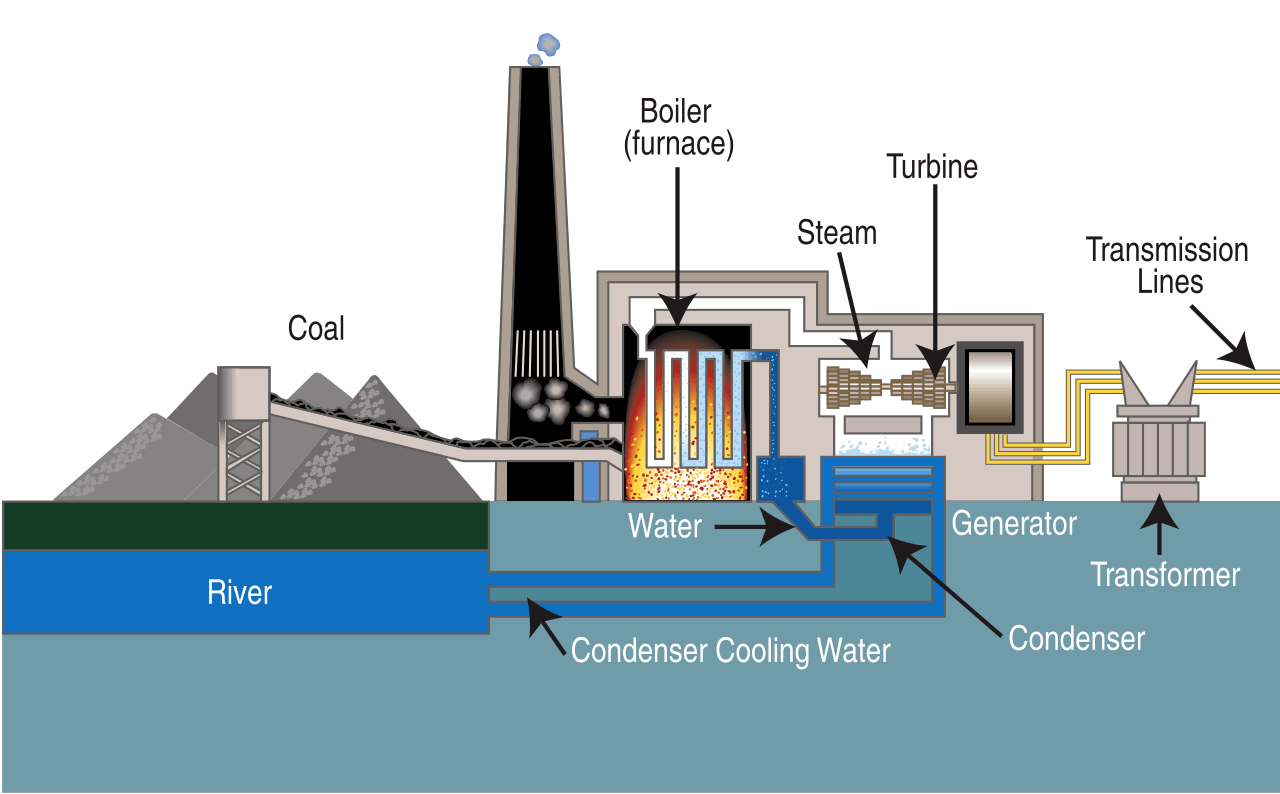
How are fossil fuels used to generate electrical energy?
Heat from burning fuel creates steam that spins a turbine.
Heat from burning fuel spins magnets inside an electric motor.
Heat from burning fuel causes an electric motor to produce a current.
Heat from burning fuel creates steam that turns a transformer.
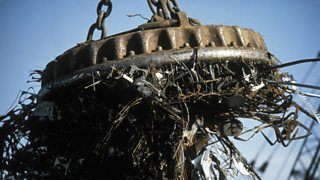
A temporary magnet that only works when electricity is passed through wires surrounding an iron core is called:
electromagnet
galvanometer
induction
super conductor magnet
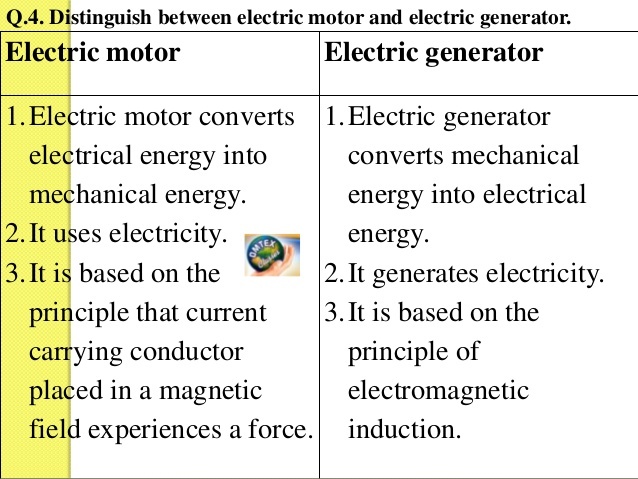
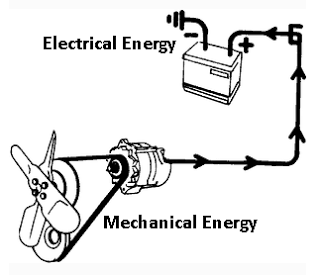
What is the transfer of energy in when you plug in a motor and it spins?
chemical to mechanical
electrical to mechanical
mechanical to electrical
physical to potential
A device that protects a circuit by from having too much current is called a
switch
short
fuse or breaker
resistor
A laptop is plugged into a 120 V outlet and uses 60 ohm's of resistance. How much current is running though it?
120 Amps
60 Amps
2 Amps
20 Amps
A generator converts.....
Mechanical Energy to Chemical Energy
Mechanical Energy to Nuclear Energy
Electrical Energy to Sound Energy
Mechanical Energy to Electrical Energy

A
B
C
D

What is the reading of the ammeter
0.32 A
0.44 A
1 A
0.28 A

What does the voltmeter read?
2 V
3 V
10 V
1 V


in which circuit is the lamp brightest
1
2
3
All the same

in which circuit is the lamp brightest
1
2
3
All the same
What is the SI unit of electric current?
B
C
D
A
What is the formula to calculate electric current?
V = IR
I = Q/t
P = IV
R = V/I
What is the direction of the magnetic field around a straight current-carrying conductor?
Square
Spiral
Circular
Straight
What is the SI unit of magnetic field strength?
ampere (A)
joule (J)
tesla (T)
watt (W)
What is the relationship between the strength of the magnetic field and the distance from the current-carrying conductor?
No relationship
Inverse relationship
Exponential relationship
Direct relationship
What is the SI unit of magnetic flux?
weber
joule
ampere
tesla
What is the right-hand rule used for in the context of electromagnetism?
To determine the speed of an electric current
To calculate the resistance of a wire
To measure the voltage of a circuit
To determine the direction of the magnetic field around a current-carrying conductor.
What is the relationship between the number of turns in a coil and the strength of the magnetic field produced?
Inverse proportional
Directly proportional
Randomly proportional
No relationship
What is the function of a commutator in a DC motor?
To control the temperature of the motor
To regulate the voltage in the armature windings
To increase the speed of the motor
To reverse the direction of the current in the armature windings
What is the principle behind the operation of an electric generator?
Electromagnetic induction
Solar radiation
Chemical reaction
Nuclear fission
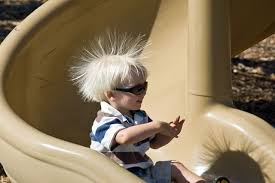
What method of charging is shown in this picture?
Contact
Friction
Grounding
Electron Shifting
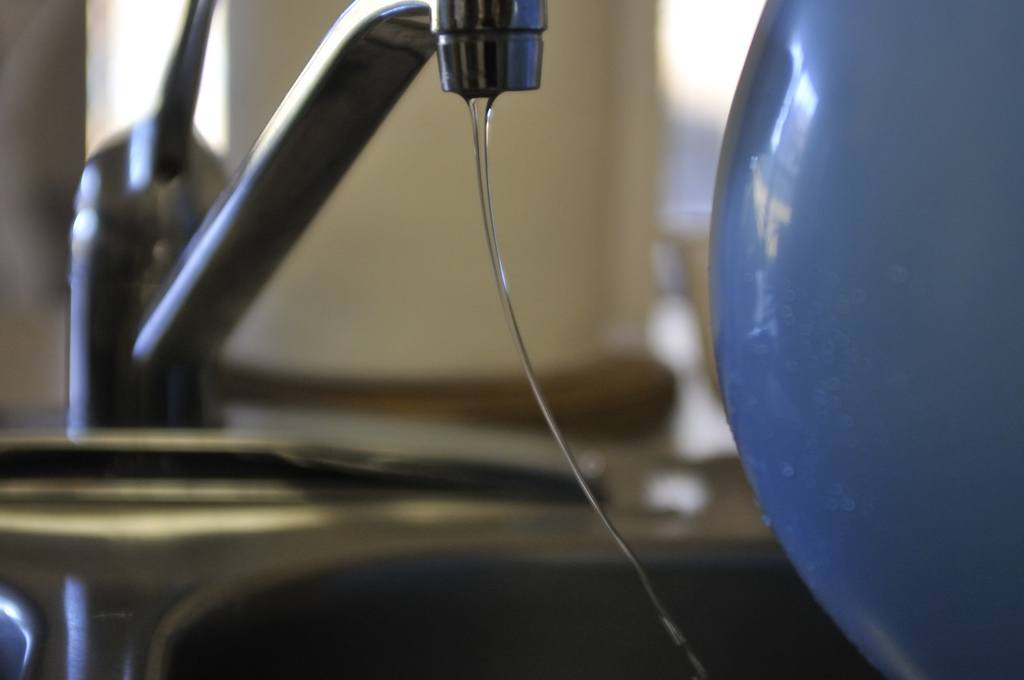
Bending water with a charged balloon is an example of what type of charging (charging an object without touching)
friction
induction
conduction
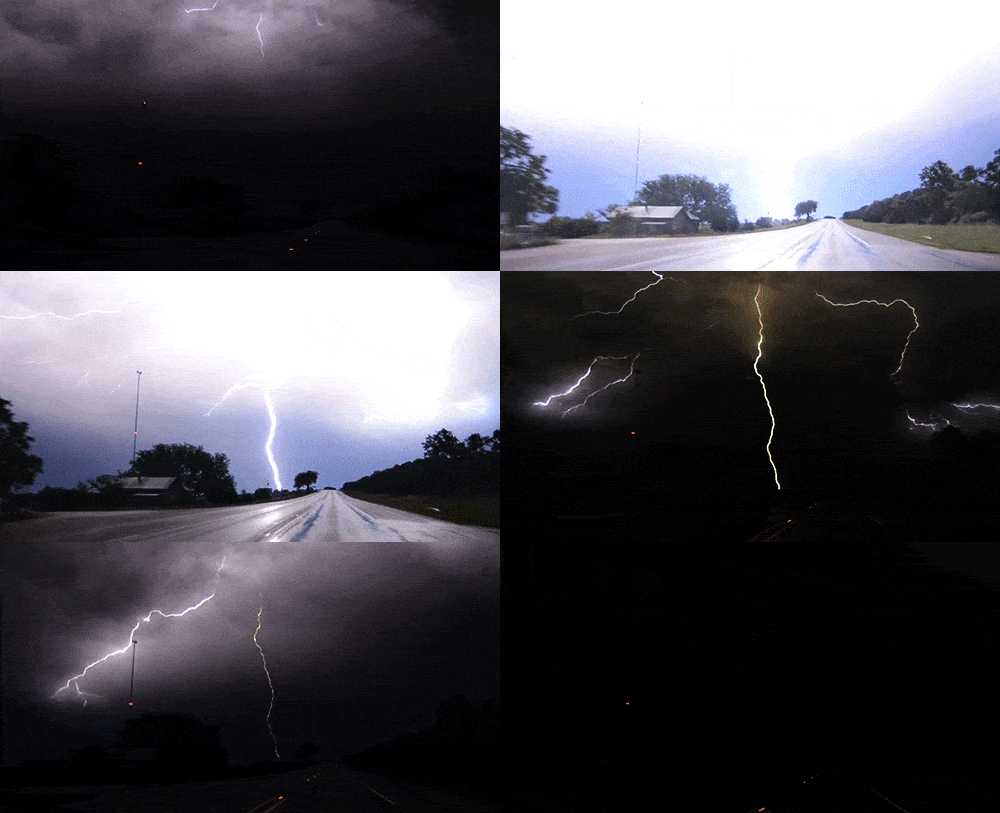
Lightning occurs because ___.
the negative charges at the bottom of clouds are attracted to the positive charges on the ground.
the positive charges at the bottom of clouds are attracted to the negative charges on the ground.
the positive and negative charges inside clouds are attracted to each other
All of these reasons are correct.

The diagram shows a balloon hanging from an insulating thread. A student gives the balloon a positive charge. Which statement explains why the balloon becomes positively charged?
the balloon gains electrons
the balloon loses electrons
the balloon gains protons
the balloon loses protons

A student rubs a plastic rod with a dry cloth, as shown in the diagram. The rod becomes negatively charged. The student moves the rod close to a suspended, charged rod. The two rods repel each other. Why?
They have the same charge.
They have opposite charges.
They are both made of plastic.
They are both insulators.

A plastic ruler is given a positive charge. A sphere hangs from an insulating thread. A student holds the ruler near the sphere, as shown in the diagram. The ruler repels the sphere. State what charge, if any, the sphere carries.
Negative charge.
Neutral charge.
Positive charge.
No charge.

Three balls P, Q and R are electrically charged. The balls are suspended by threads of insulating
material. The diagram shows the arrangement. Ball P is negatively charged. State the charge on ball Q.
positively charged
negatively charged
neutrally charged
no charge
The electrical resistance of insulators is
High
Low
Zero
Infinitely high
An electric bulb is connected to a 220V generator. The current is 0.50 A. What is the power of the bulb?
440 W
110 W
55 W
0.0023 W


In the circuits shown, all resistors are identical
Which circuit has the least resistance?


A
B
C
D

What would be the reading on the voltmeter?
2 V
6 V
4 V
8 V

A
B
C
D
A teacher writes a set of notes about two non-identical bulbs which are connected in parallel
He makes one mistake. Which of the statements below is incorrect?
They have the same current flowing through them
They have the same potential difference across them
They can be switched on and off individually
If one bulb blows, the other will continue to work

What is component Z ?
(a)

What is component B
Thermistor
Resistor
Light Dependent Resistor
Relay
How are resistance and length interrelated ?
Directly Proportional
Inversely Proportional
How is resistance and cross-sectional area interrelated?
Directly Proportional
Inversely Proportional
What does the voltmeter read?
2 V
3 V
10 V
1 V
What is the reading of the ammeter
0.32 A
0.44 A
1 A
0.28 A
What happens to the resistance of the LDR when it is dark
Resistance decreasae
Resistance increases
Resistance is constant
Resistance is unchanged
What happens to a thermistor on a hot day
Resistance increases
Resistance decreases
Resistance is constant
Resistance is unchanged

Which component matches this symbol?
LDR
Fuse
Cell
Variable resistor

Which component matches this symbol?
LDR
LED
Diode
Bulb

Which component matches this symbol?
fuse
LDR
thermistor
LED
Which of these 4 circuits can be used to measure how the current varies with a change in voltage across a bulb?


Which component has the following characteristic graph - showing how the current varies as the voltage is changed?
bulb
fuse
resistor
diode

Which component has the following characteristic graph - showing how the current varies as the voltage is changed?
bulb
resistor
diode
LDR

Which component has the following characteristic graph - showing how the current varies as the voltage is changed?
bulb
resistor
diode
cell

Which of these answers gives the correct way of connecting each meter?
A
B
C
D
What is the correct name for the unit for measuring resistance?
amp
volt
coulomb
ohm
A computer circuit board contains a 4 kΩ resistor and has a p.d. of 8 V across it.
What does p.d. stand for?
potential difference
potential divider
power difference
power divider
A computer circuit board contains a 4 kΩ resistor and has a p.d. of 8 V across it.
What is the current through the resistor?
2 mA
2 A
16 mA
16 A
To get a large current to flow in a wire, you can either
increase the wire resistance or increase the supply voltage
increase the wire resistance or decrease the supply voltage
decrease the wire resistance or increase the supply voltage
decrease the wire resistance or decrease the supply voltage

Which of these answers gives the correct change in resistance for each component?
A
B
C
D
The safety device that limits the current flow in a plug is the
fuse
cable grip
earth wire
insulation
Which of these is the correct formula for electrical power?
P = IV
V = IR
V = PI
P = V/I
A 240 volt, 3 amp heater is left running for 5 minutes.
Which of these gives the total energy output?
3.6 kJ
216 kJ
72 kJ
0.9 kJ
Which of the following is the correct unit for charge?
coulomb
capacitance
current
charge
A 6 V light bulb is switched on for a short time. A 6 V battery transfers 2 C of charge to the bulb in this time. What energy has been transferred?
0.33 J
3 J
6 J
12 J
Which of the following is the definition of a 'volt'?
a joule per coulomb
a watt per coulomb
a joule per amp
a watt per ohm

A wire has a certain electrical resistance. The diameter and length of the wire may be changed. Which pair of changes must cause the resistance of the wire to increase?
A
B
C
D

The table described four different resistance wires. They are all made from the same metal. Which wire has the smallest resistance?
A
B
C
D
What is the unit of electromotive force?
ampere
newton
ohm
volt
What is the unit of electrical power?
ampere
joule
volt
watt

Four students are each given an identical resistor and asked to find its resistance. They each measure the potential difference across the resistor and the current in it. One student makes a mistake. Which row shows the results of the student that makes a mistake?
A
B
C
D

The circuit shown contains a battery, a 6 ohms resistor and two meters X and Y. One meter records current and one meter records potential difference.
A
B
C
D
Which quantities is a voltmeter used to measure?
current and e.m.f. only
current and p.d. only
e.m.f. and p.d. only
e.m.f., current and p.d

What is the ammeter reading with the switch closed?
A
B
C
D

What is the reading on the voltmeter?
A
B
C
D

The diagrams show four current-voltage graphs. Which two graphs show the characteristics of an ohmic resistor and of a filament lamp?
A
B
C
D

A resistor of resistance R is connected to a battery of e.m.f. V. There is a current I in the resistor. Power P is dissipated by the resistor, and in time t the energy transferred is E. Which expression is correct?
A
B
C
D

In the circuit shown, the ammeter reads 2.0A and the voltmeter reads 12V. How much energy is transferred by the resistor in 10 seconds?
A
B
C
D

The circuit shown contains three ammeters, X, Y and Z. Which ammeter has the largest reading?
A
B
C
D

P and Q are the circuit symbols for two electrical components. Which components are represented by P and by Q?
A
B
C
D

The diagram shows two resistors connected in a circuit. What could be the combined resistance of this arrangement of resistors?
A
B
C
D
What are lamps in a house lighting circuit connected in parallel rather than in series?
if one lamp stops working, the remaining lamps become brighter
Less current is taken from the power supply
The lamps can be turned off independently using switches
When move lamps are added, their brightness decreases

Four lamps are each labelled 240V. In which circuit do all four lamps have normal brightness?
A
B
C
D

The diagram shows a potential divider connected to two voltmeters P and Q. The resistance of the variable resistor is decreased. Which row shows what happens to the reading on each voltmeter.
A
B
C
D

What is the total resistance of this arrangement?
A
B
C
D

The diagram shows a 10 ohms resistor and a 20 ohms resistor connected in a potential divider circuit. What is the reading on the voltmeter?
A
B
C
D

Which component is represented by this circuit symbol?
bell
fuse
relay
transformer

A student carries out an experiment to investigate the resistance of a resistor R. She takes a series of readings of potential difference (p.d.) and current, and plots a graph of her results. Which circuit should she use?
A
B
C
D

A circuit is connected for use as a potential divider. The resistance of resistor X is 10 ohms. When the resistance of the variable resistor Y is 20 ohms. What is the reading on the voltmeter?
4V
6V
8V
12V

Which circuit shows the directions of the conventional current I and the flow of electrons?
A
B
C
D
The resistance of a wire depends on its length l and on its cross-sectional area A.
The resistance is...
directly proportional to l and directly proportional to A
directly proportional to l and inversely proportional to A
inversely proportional to l and directly proportional to A
inversely proportional to l and inversely proportional to A
What happens to an LDR in bright light
Resistance remains constant
Resistance increase
Resistance decreases
Resistance is unchanged
10C of charge flows in a wire every 2 seconds. Calculate the current in the wire.
5 Ohms
5 Amps
0.2 Volts
0.2 Amps

Use the graph to find the current and calculate the resistance of this conductor when the voltage is 4V? Ignore the mA and just use A.
2
4
1
0.5

Which graph represents a diode?
A
B
C
D
Which graph represents a Filament bulb?
A
B
C
D
Which graph represents a fixed resistor OR an LDR?
A
B
C
D
Longer wires have _______ resistance than shorter wires.
more
less
the same
What happens to a Thermistor in on a cold day
Resistance remains constant
Resistance increase
Resistance decreases
Resistance is unchanged
If a cell provides 12 V to a circuit and 4 Coulombs of charge flows. How much energy is being provided by the cell?
3 J
0.25 J
48 J
16 J

Calculate the voltage of the 4 Ohm resistor in the circuit and use this answer to find the voltage of the across the heater.
4.8 V and 7.2 V
3 V and 9 V
6 V and 6 V
3.2 V and 9.8 V

A polythene rod is rubbed with a cloth. The rod and the cloth both become charged as electrons move between them. The rod becomes negatively charged. Which diagram shows how the rod becomes negatively charged, and the final charge on the cloth.
A
B
C
D

Two balloons, X and Y, are suspended by insulating threads. They are each held near a negatively charged balloon. The balloons hang as shown.
A
B
C
D

Two similar balloons hang side by side, on insulating threads, a short distance apart. They are both rubbed with the same dry cloth and become charged. Which diagram shows how the balloons hang after charging?
A
B
C
D

A negatively charged rod is held to one side of a metal sphere. The other side of the sphere is earthed. Which diagram shows the distribution of charge on the metal sphere?
A
B
C
D

Which statement is correct?
When the earthing wire is disconnected first, the metal plate becomes positively charged
When the earthing wire is disconnected first, the metal plate becomes negatively charged
When the plastic rod is removed first, the metal plate becomes positively charged
When the plastic rod is removed first, the metal plate becomes negatively charged
A wire has a certain electrical resistance. The diameter and length of the wire may be changed. Which pair of changes must cause the resistance of the wire to increase?
A
B
C
D
The table described four different resistance wires. They are all made from the same metal. Which wire has the smallest resistance?
A
B
C
D
What is the unit of electromotive force?
ampere
newton
ohm
volt
What is the unit of electrical power?
ampere
joule
volt
watt
Four students are each given an identical resistor and asked to find its resistance. They each measure the potential difference across the resistor and the current in it. One student makes a mistake. Which row shows the results of the student that makes a mistake?
A
B
C
D
The circuit shown contains a battery, a 6 ohms resistor and two meters X and Y. One meter records current and one meter records potential difference.
A
B
C
D
Which quantities is a voltmeter used to measure?
current and e.m.f. only
current and p.d. only
e.m.f. and p.d. only
e.m.f., current and p.d
What is the ammeter reading with the switch closed?
A
B
C
D
Why are high voltages used for the transmission of electrical energy?
fear of high voltages stops people from interfering with the cables
heat loss in the cables is smaller than if low voltages are used
High voltages increase the current in the cables
High voltages produce large magnetic fields, so less insulation is needed
What is the reading on the voltmeter?
A
B
C
D

An ammeter and a 18Ω resistor are connected in series with a battery. The reading on the ammeter is 0.50A. The resistance of the battery and the ammeter can be ignored. What is the electromotive force of the battery?
A
B
C
D
The diagrams show four current-voltage graphs. Which two graphs show the characteristics of an ohmic resistor and of a filament lamp?
A
B
C
D
A resistor of resistance R is connected to a battery of e.m.f. V. There is a current I in the resistor. Power P is dissipated by the resistor, and in time t the energy transferred is E. Which expression is correct?
A
B
C
D
In the circuit shown, the ammeter reads 2.0A and the voltmeter reads 12V. How much energy is transferred by the resistor in 10 seconds?
A
B
C
D
The circuit shown contains three ammeters, X, Y and Z. Which ammeter has the largest reading?
A
B
C
D

The diagram shows part of a circuit used to switch street lamps on and off automatically.
A
B
C
D
P and Q are the circuit symbols for two electrical components. Which components are represented by P and by Q?
A
B
C
D
The diagram shows two resistors connected in a circuit. What could be the combined resistance of this arrangement of resistors?
A
B
C
D
What are lamps in a house lighting circuit connected in parallel rather than in series?
if one lamp stops working, the remaining lamps become brighter
Less current is taken from the power supply
The lamps can be turned off independently using switches
When move lamps are added, their brightness decreases
Four lamps are each labelled 240V. In which circuit do all four lamps have normal brightness?
A
B
C
D
The diagram shows a potential divider connected to two voltmeters P and Q. The resistance of the variable resistor is decreased. Which row shows what happens to the reading on each voltmeter.
A
B
C
D
What is the total resistance of this arrangement?
A
B
C
D
The diagram shows a 10 ohms resistor and a 20 ohms resistor connected in a potential divider circuit. What is the reading on the voltmeter?
A
B
C
D
Which component is represented by this circuit symbol?
bell
fuse
relay
transformer
A student carries out an experiment to investigate the resistance of a resistor R. She takes a series of readings of potential difference (p.d.) and current, and plots a graph of her results. Which circuit should she use?
A
B
C
D
A thermistor is used in a circuit to control a piece of equipment automatically. What might this circuit be used for?
lighting an electric lamp as it becomes faster
ringing an alarm bell if a locked door is opened
switching on a water heater at a pre-determined time
turning on an air conditioner when the temperature rises

A student connects a variable potential divider circuit.
A
B
C
D
A circuit is connected for use as a potential divider. The resistance of resistor X is 10 ohms. When the resistance of the variable resistor Y is 20 ohms. What is the reading on the voltmeter?
4V
6V
8V
12V

The four circuits shown all include an a.c. power supply, two diodes and a lamp. In which is there a rectified current in the lamp?
A
B
C
D
Which circuit shows the directions of the conventional current I and the flow of electrons?
A
B
C
D

In the circuit shown, only one of the fuses has blown, but none of the lamps is lit. Which fuse has blown?
A
B
C
D

An appliance is connected to a mains supply. Its circuit also contains a switch and a fuse. Which circuit shows the fuse in the correct position?
A
B
C
D

An air conditioner and television are both connected to the same circuit.
A
B
C
D
The resistance of a wire depends on its length l and on its cross-sectional area A.
The resistance is...
directly proportional to l and directly proportional to A
directly proportional to l and inversely proportional to A
inversely proportional to l and directly proportional to A
inversely proportional to l and inversely proportional to A

What happens when the current in the circuit is 2A and what happens when the current is 18A?
A
B
C
D
Which component matches this symbol?
LDR
Fuse
Cell
Variable resistor
Which component matches this symbol?
LDR
LED
Diode
Bulb
Which component matches this symbol?
fuse
LDR
thermistor
LED
Which of these 4 circuits can be used to measure how the current varies with a change in voltage across a bulb?
Which component has the following characteristic graph - showing how the current varies as the voltage is changed?
bulb
fuse
resistor
diode
Which component has the following characteristic graph - showing how the current varies as the voltage is changed?
bulb
resistor
diode
LDR
Which component has the following characteristic graph - showing how the current varies as the voltage is changed?
bulb
resistor
diode
cell
Which of these answers gives the correct way of connecting each meter?
A
B
C
D
What is the correct name for the unit for measuring resistance?
amp
volt
coulomb
ohm
A computer circuit board contains a 4 kΩ resistor and has a p.d. of 8 V across it.
What does p.d. stand for?
potential difference
potential divider
power difference
power divider
A computer circuit board contains a 4 kΩ resistor and has a p.d. of 8 V across it.
What is the current through the resistor?
2 mA
2 A
16 mA
16 A

Which type of circuit is more suitable for the following 2 applications:
A
B
C
D
To get a large current to flow in a wire, you can either
increase the wire resistance or increase the supply voltage
increase the wire resistance or decrease the supply voltage
decrease the wire resistance or increase the supply voltage
decrease the wire resistance or decrease the supply voltage
Which of these answers gives the correct change in resistance for each component?
A
B
C
D
The safety device that limits the current flow in a plug is the
fuse
cable grip
earth wire
insulation
Where should the earth wire be connected inside a metal toaster?
power supply
heating element
metal casing
Earth wire not needed in a metal appliance

This table describes electrical properties of parts of a mains plug. Which answer is correct?
A
B
C
D

This hair dryer has a case made of plastic. It only needs 2 wires for safe use, and does not need an earth wire. Devices like this are called
neutral devices
safety checked
current controlled
double insulated
When a current passes through a resistance wire it gets hot. Which of these appliances does NOT use this effect?
Toaster
Microwave
Hairdryer
Kettle
Which of these is the correct formula for electrical power?
P = IV
V = IR
V = PI
P = V/I
A 240 volt, 3 amp heater is left running for 5 minutes.
Which of these gives the total energy output?
3.6 kJ
216 kJ
72 kJ
0.9 kJ
Which of the following is the correct unit for charge?
coulomb
capacitance
current
charge
A 6 V light bulb is switched on for a short time. A 6 V battery transfers 2 C of charge to the bulb in this time. What energy has been transferred?
0.33 J
3 J
6 J
12 J
Which of the following is the definition of a 'volt'?
a joule per coulomb
a watt per coulomb
a joule per amp
a watt per ohm
The electrical resistance of insulators is
High
Low
Zero
Infinitely high
An electric bulb is connected to a 220V generator. The current is 0.50 A. What is the power of the bulb?
440 W
110 W
55 W
0.0023 W
In the circuits shown, all resistors are identical
Which circuit has the least resistance?
A
B
C
D
What would be the reading on the voltmeter?
2 V
6 V
4 V
8 V
A
B
C
D
A teacher writes a set of notes about two non-identical bulbs which are connected in parallel
He makes one mistake. Which of the statements below is incorrect?
They have the same current flowing through them
They have the same potential difference across them
They can be switched on and off individually
If one bulb blows, the other will continue to work
What is component Z ?
(a)
What is component B
Thermistor
Resistor
Light Dependent Resistor
Relay
How are resistance and length interrelated ?
Directly Proportional
Inversely Proportional
How is resistance and cross-sectional area interrelated?
Directly Proportional
Inversely Proportional
What does the voltmeter read?
2 V
3 V
10 V
1 V
What is the reading of the ammeter
0.32 A
0.44 A
1 A
0.28 A
What happens to the resistance of the LDR when it is dark
Resistance decreasae
Resistance increases
Resistance is constant
Resistance is unchanged
What happens to a thermistor on a hot day
Resistance increases
Resistance decreases
Resistance is constant
Resistance is unchanged
Which component matches this symbol?
LDR
Fuse
Cell
Variable resistor
Which component matches this symbol?
LDR
LED
Diode
Bulb
Which component matches this symbol?
fuse
LDR
thermistor
LED
Which of these 4 circuits can be used to measure how the current varies with a change in voltage across a bulb?
Which component has the following characteristic graph - showing how the current varies as the voltage is changed?
bulb
fuse
resistor
diode
Which component has the following characteristic graph - showing how the current varies as the voltage is changed?
bulb
resistor
diode
LDR
Which component has the following characteristic graph - showing how the current varies as the voltage is changed?
bulb
resistor
diode
cell
Which of these answers gives the correct way of connecting each meter?
A
B
C
D
What is the correct name for the unit for measuring resistance?
amp
volt
coulomb
ohm
A computer circuit board contains a 4 kΩ resistor and has a p.d. of 8 V across it.
What does p.d. stand for?
potential difference
potential divider
power difference
power divider
A computer circuit board contains a 4 kΩ resistor and has a p.d. of 8 V across it.
What is the current through the resistor?
2 mA
2 A
16 mA
16 A
To get a large current to flow in a wire, you can either
increase the wire resistance or increase the supply voltage
increase the wire resistance or decrease the supply voltage
decrease the wire resistance or increase the supply voltage
decrease the wire resistance or decrease the supply voltage
Which of these answers gives the correct change in resistance for each component?
A
B
C
D
The safety device that limits the current flow in a plug is the
fuse
cable grip
earth wire
insulation
Which of these is the correct formula for electrical power?
P = IV
V = IR
V = PI
P = V/I
A 240 volt, 3 amp heater is left running for 5 minutes.
Which of these gives the total energy output?
3.6 kJ
216 kJ
72 kJ
0.9 kJ
Which of the following is the correct unit for charge?
coulomb
capacitance
current
charge
A 6 V light bulb is switched on for a short time. A 6 V battery transfers 2 C of charge to the bulb in this time. What energy has been transferred?
0.33 J
3 J
6 J
12 J
Which of the following is the definition of a 'volt'?
a joule per coulomb
a watt per coulomb
a joule per amp
a watt per ohm
A wire has a certain electrical resistance. The diameter and length of the wire may be changed. Which pair of changes must cause the resistance of the wire to increase?
A
B
C
D
The table described four different resistance wires. They are all made from the same metal. Which wire has the smallest resistance?
A
B
C
D
What is the unit of electromotive force?
ampere
newton
ohm
volt
What is the unit of electrical power?
ampere
joule
volt
watt
Four students are each given an identical resistor and asked to find its resistance. They each measure the potential difference across the resistor and the current in it. One student makes a mistake. Which row shows the results of the student that makes a mistake?
A
B
C
D
The circuit shown contains a battery, a 6 ohms resistor and two meters X and Y. One meter records current and one meter records potential difference.
A
B
C
D
Which quantities is a voltmeter used to measure?
current and e.m.f. only
current and p.d. only
e.m.f. and p.d. only
e.m.f., current and p.d
What is the ammeter reading with the switch closed?
A
B
C
D
What is the reading on the voltmeter?
A
B
C
D
The diagrams show four current-voltage graphs. Which two graphs show the characteristics of an ohmic resistor and of a filament lamp?
A
B
C
D
A resistor of resistance R is connected to a battery of e.m.f. V. There is a current I in the resistor. Power P is dissipated by the resistor, and in time t the energy transferred is E. Which expression is correct?
A
B
C
D
In the circuit shown, the ammeter reads 2.0A and the voltmeter reads 12V. How much energy is transferred by the resistor in 10 seconds?
A
B
C
D
The circuit shown contains three ammeters, X, Y and Z. Which ammeter has the largest reading?
A
B
C
D
P and Q are the circuit symbols for two electrical components. Which components are represented by P and by Q?
A
B
C
D
The diagram shows two resistors connected in a circuit. What could be the combined resistance of this arrangement of resistors?
A
B
C
D
What are lamps in a house lighting circuit connected in parallel rather than in series?
if one lamp stops working, the remaining lamps become brighter
Less current is taken from the power supply
The lamps can be turned off independently using switches
When move lamps are added, their brightness decreases
Four lamps are each labelled 240V. In which circuit do all four lamps have normal brightness?
A
B
C
D
The diagram shows a potential divider connected to two voltmeters P and Q. The resistance of the variable resistor is decreased. Which row shows what happens to the reading on each voltmeter.
A
B
C
D
What is the total resistance of this arrangement?
A
B
C
D
The diagram shows a 10 ohms resistor and a 20 ohms resistor connected in a potential divider circuit. What is the reading on the voltmeter?
A
B
C
D
Which component is represented by this circuit symbol?
bell
fuse
relay
transformer
A student carries out an experiment to investigate the resistance of a resistor R. She takes a series of readings of potential difference (p.d.) and current, and plots a graph of her results. Which circuit should she use?
A
B
C
D
A circuit is connected for use as a potential divider. The resistance of resistor X is 10 ohms. When the resistance of the variable resistor Y is 20 ohms. What is the reading on the voltmeter?
4V
6V
8V
12V
Which circuit shows the directions of the conventional current I and the flow of electrons?
A
B
C
D
The resistance of a wire depends on its length l and on its cross-sectional area A.
The resistance is...
directly proportional to l and directly proportional to A
directly proportional to l and inversely proportional to A
inversely proportional to l and directly proportional to A
inversely proportional to l and inversely proportional to A
What happens to a thermistor on a hot day
Resistance increases
Resistance decreases
Resistance is constant
Resistance is unchanged
Which component matches this symbol?
LDR
Fuse
Cell
Variable resistor
Which component matches this symbol?
LDR
LED
Diode
Bulb
Which component matches this symbol?
fuse
LDR
thermistor
LED
Which of these 4 circuits can be used to measure how the current varies with a change in voltage across a bulb?
To get a large current to flow in a wire, you can either
increase the wire resistance or increase the supply voltage
increase the wire resistance or decrease the supply voltage
decrease the wire resistance or increase the supply voltage
decrease the wire resistance or decrease the supply voltage
In the circuit shown, only one of the fuses has blown, but none of the lamps is lit. Which fuse has blown?
A
B
C
D

A strong electromagnet is used to attract pins.
What happens when the current in the coil is halved?
No pins are attracted.
Some pins are attracted, but not as many.
The same number of pins is attracted.
More pins are attracted.

The diagram shows a transformer.
The input voltage is 240 V.
What is the output voltage?
6 V
12 V
20 V
40 V

A magnet is suspended from a spring so that it can move freely inside a stationary coil. The coil is connected to a sensitive centre-zero galvanometer.
The magnet repeatedly moves slowly up and down.
What does the galvanometer show?
a constantly changing reading
a steady reading to the left
a steady reading to the right
a steady reading of zero

A transformer has 50 turns on its primary coil and 100 turns on its secondary coil. An alternating voltage of 25.0 V is connected across the primary coil.
What is the voltage across the secondary coil?
12.5 V
50.0 V
100 V
200 V

The diagram shows a flat, rectangular coil placed between the poles of a magnet.
There is a current in the coil that makes it turn in the direction shown in the diagram.
Which change would make the coil turn in the opposite direction?
decreasing the current in the coil
increasing the number of turns on the coil
reversing both the direction of the current in the coil and the poles of the magnet
reversing only the direction of the current in the coil

Which diagram represents the voltage output of a simple a.c. generator?
A
B
C
D
A step-up transformer is used before electricity is transmitted by overhead cables.
Which statement explains why the step-up transformer is used?
It increases the current to increase the speed at which the electricity travels.
It increases the current to reduce energy loss in the cables.
It increases the voltage to increase the speed at which the electricity travels.
It increases the voltage to reduce energy loss in the cables.

A current-carrying wire XY lies in the magnetic field between the two poles of a U-shaped electromagnet.
A force acts on the wire XY because of the magnetic field.
Each of the following actions is carried out separately.
● The current in the wire XY is reversed.
● The magnetic field is reversed.
● Both the current in the wire XY and the magnetic field are reversed at the same time.
How many of these actions cause the direction of the force on the wire XY to be reversed?
0
1
2
3

A current-carrying coil in a magnetic field experiences a turning effect.
How can the turning effect be increased?
Increase the number of turns on the coil.
Reduce the size of the current.
Reverse the direction of the magnetic field.
Use thinner wire for the coil.

A student investigates electromagnetic induction. She has a bar magnet and a coil of wire that is connected to a sensitive ammeter.
Which movement does not cause a reading on the ammeter?
moving the coil to the right
moving both the magnet and the coil to the left at the same speed
moving both the magnet and the coil towards each other at the same speed
moving the magnet to the left

An electric current is passed through a coil of wire.
Which diagram shows the shape of the magnetic field produced in the middle of the coil?


The diagram shows a simple step-down transformer used to decrease a voltage.
Which part is the primary coil?
A
B
C
D

Which diagram represents the direction of the magnetic field around a straight wire carrying a current out of the page?
A
B
C
D

The diagram shows a 12 V d.c. power supply connected across a coil with a metal core.
The core becomes a magnet when the current is switched on. It remains a magnet after the current is switched off.
From which metal is the core made?
aluminium
copper
soft iron
steel

