wayground logo

Free Printable Worksheets

Font size

S
M
L
XL
Worksheets

Particle theory

Total questions: 50

Worksheet time: 37mins

Name
Class
Date
1.

All matter is made up of tiny _______________

a)

energy

b)

particles (atoms and molecules)

c)

bits

d)

antimatter

2.
a)

Solid

b)

Liquid

c)

Gass

3.

These have a FIXED volume, but NOT a fixed shape, taking the shape of their container.

a)

Solid

b)

Liquid

c)

Gas

4.
Which of the following statements about the particle of a gas is true?
a)
Gases can be compressed because their particles are smaller than those of liquids or solids.
b)
Gases can be compressed because there is plenty of space between their particles.
c)
Gases can be compressed because they have low boiling points.
d)
Gases can be compressed because their particles are more elastic than those of liquids or solids.
5.

What is state of this shape?

a)

liquid

b)

gas

c)

solid

6.

The forces of attraction between particles of _________ are weakest.

a)

solids

b)

liquids

c)

gases

d)

none

7.
Number 2 represents a ________
a)
solid
b)
liquid
c)
gas
d)
plasma
8.
Particles in a _____________ are tightly packed together.
a)
solid
b)
liquid
c)
gas
d)
plasma
9.
As particles are exposed to warmer temperatures they __________
a)
speed up
b)
slow down
c)
stay the same
d)
vibrate
10.

Which of the following is a correct description for solids?

a)

closely arranged and in fixed positions

b)

closely arranged and vibrate in fixed positions

c)

closely arranged and can move around

11.

When something goes from gas to liquid, it is called...

a)

Evaporation

b)

Condensation

c)

Deposition

d)

Freezing

12.
An inflated balloon is placed in a refrigerator. Which statement describes the movement of the gas particles in the balloon?
a)
The particles move more slowly and become closer together.
b)
The particles move more slowly and become further apart.
c)
The particles move faster and become closer together.
d)
The particles move faster and become further apart. 
13.

Particles are always moving.

a)

True

b)

False

14.
As particles are exposed to colder temperatures they _____
a)
speed up
b)
slow down
c)
stay the same
d)
become ions
15.
A Gas is a state of matter that has _____________________________________________________
a)
No definite size or shape
b)
No shape but a defenite size
c)
A changing shape
16.
Which state of matter has molecules that slide past each other but stay close together? They do not form a regular pattern.
a)
solid
b)
liquid
c)
gas
17.
Which state of matter has molecules that vibrate the least?
a)
solid
b)
water
c)
gas
18.
What is the change of state from a gas to a liquid called?
a)
melting
b)
evaporation
c)
condensation
d)
sublimation
19.
If the temperature of a gas increases what happens to its pressure?
a)
decreases
b)
increases
c)
stays the same
d)
increases and decreases
20.
Which point of the particle theory is depicted by this picture?
a)
all matter is made of particles
b)
particles are in constant, random motion
c)
particles speed up as heat is added and slow down as heat is removed
d)
different substances are made of different types of particles
21.

How many state of matter does shown in the picture?

a)

One

b)

Two

c)

Three

d)

Four

22.

What will happen if we push the piston?

a)

the volume and the pressure increase

b)

the volume decrease and the pressure increase

c)

the volume increase and the pressure decrease

d)

the volume and the pressure decrease

23.

Which of the following will diffuse the fastest?

a)

A tablespoon of sugar in a glass of water

b)

Heat through a solid piece of steel

c)

A pinch of salt in a glass of water

d)

The smell of food cooking throughout a room

24.
What is diffusion?
a)
when molecules move 
b)
when molecules move from a high concentration to a low.
c)
no movement 
d)
molecules move everywhere
25.

Something that goes from liquid to gas is...

a)

Evaporation

b)

Melting

c)

Freezing

d)

Sublimation

26.

Which of the following sentences are true about solids?

a)

Solids are rigid, have a fixed shape but not a fixed volume

b)

Solids are not rigid, have a fixed shape and no fixed volume

c)

Solids are rigid, have a fixed shape and a fixed volume

27.
Which of the following statements about the kinetic particle theory is not true?
a)
The particles of a gas move faster than those of a liquid.
b)
The particles of a solid have more kinetic energy than those of a gas.
c)
The particles that make up matter are always moving.
d)
The forces of attraction between the particles of a solid are very strong.
28.
What happens when water evaporates?
a)
Particles of the water vapour lose energy to their surroundings.
b)
Particles of the water vapour are spaced further apart.
c)
The speed of the particles of the water increases.
d)
The temperature of the remaining water rises.
29.

Which subatomic particles are found in the nucleus of an atom?

a)

Protons

b)

Electrons

c)

Protons and electrons

d)

Protons and Neutrons

30.

A water is heated

a)

molecular motion increases

b)

molecular motion decreases

c)

molecular motion stops

d)

there is no change in molecular motion

31.
At higher temperatures
a)
particles in an object have less energy
b)
particles in an object move faster
c)
a gas contracts
32.
Which of the following occurs when a liquid becomes a gas?
a)
the particles slow down
b)
the particles beak away from one another
c)
the particles move closer together
33.
In the above diagram, "State of Matter B" is a liquid. This means that it has:

a)
definite shape and volume.
b)
no definite shape or volume.
c)
definite volume, but changing shape.
d)
definite shape, but changing volume.
34.
What does the particle diagram show?
a)
solid
b)
liquid
c)
gas
d)
plasma
35.
What am I? I have a fixed mass, a fixed volume, I cannot be squashed and I have a shape that changes to fit the bottom of my container?
a)
solid
b)
liquid
c)
gas
d)
plasma
36.
What am I? I have a fixed mass, a volume that changes, I can be squashed and I take the shape of all of my container.
a)
solid
b)
liquid
c)
gas
d)
plasma
37.
As particles are exposed to warmer temperatures they __________
a)
speed up
b)
slow down
c)
stay the same
d)
vibrate
38.
As particles are exposed to colder temperatures they _____
a)
speed up
b)
slow down
c)
stay the same
d)
become ions
39.

The picture shows an arrangment of ....

a)

solid

b)

liquid

c)

gas

d)

plasma

40.

What is happening in this picture.

4 lines
41.
3. Identify the states of matter where Brownian Motion can occur.
a)
a) Solid, liquid, gas
b)
b) Liquid, gas
c)
c) Solid, gas
d)
d) Solid, liquid
42.

Pollen grains suspended in water exhibit Brownian motion. How does a particle undergoing Brownian motion move?

a)

In smooth curves

b)

Randomly

c)

Orderly with a pattern

d)

In straight lines with no change of direction

43.

Diffusion is...

a)

It is the random movement of particles.

b)

It is when particles move from a place of higher concentration to a place with lower concentration.

c)

It is when particles move when being mixed together.

d)

It is when the particles hit the sides of their container.
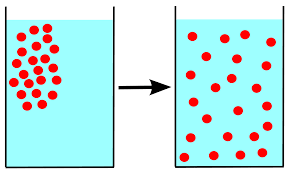
44.

The picture below is an example of _________________.

a)

osmosis

b)

isotonic

c)

diffusion

d)

active transport

45.

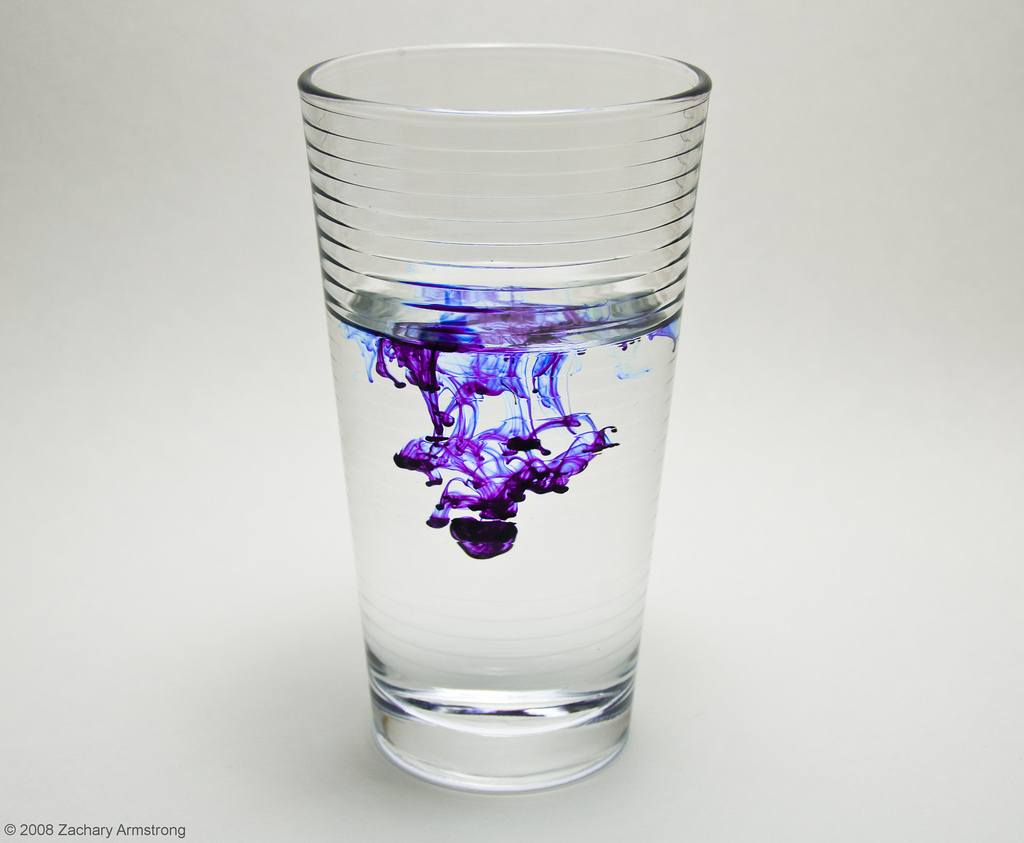
Where is there a low concentration of dye?

a)

at the bottom of cup

b)

in the color

c)

at the top of cup

d)

no concenteraion gradient

46.
Which diagram best shows the end result of diffusion?
a)
F
b)
G
c)
H
d)
J
47.

Diffusion is quicker/faster in ..................................

a)

solids

b)

liquids

c)

gases

48.
Where is there a low concentration of perfume?
a)
in the bottle
b)
on the hand
c)
in the room
d)
in the top
49.

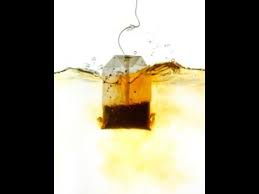
Why does the tea move out of the tea bag and into the water?

a)

The warm water forces it out of the tea bag

b)

There is equal concentration of water and tea

c)

There is a higher concentration of tea in the bag and less in the water

d)

There is a lower concentration of tea in the bag and more in the water

50.

An increase in temperature does what to diffusion?

a)

Speeds it up

b)

Slows it down

c)

Nothing

d)

Stops it all together