
Font size
 Worksheets
Quiz on How Light Travels
Total questions: 50
Worksheet time: 36mins
What is light?
Electromagnetic radiation
A type of sound
A type of energy
A form of matter
What is the speed of light in a vacuum?
600,000 km/s
150,000 km/s
300,000 km/s
450,000 km/s
What happens to light when it enters matter?
It disappears
It slows down
It changes color
It speeds up
Which of the following materials is described as transparent?
Frosted glass
Waxed paper
Wood
Clear glass
What is the wavelength range of visible light?
300 nm to 400 nm
700 nm to 800 nm
200 nm to 300 nm
400 nm to 700 nm
How does the intensity of light change with distance from the source?
It increases
It decreases
It remains the same
It fluctuates
What type of light wave has the highest frequency?
Infrared waves
Gamma rays
Microwaves
Radio waves
What is the term for the energy carried by an electromagnetic wave?
Potential energy
Kinetic energy
Thermal energy
Radiant energy
What is the effect of a bumpy surface on light reflection?
It absorbs light
It scatters light
It transmits light
It creates a clear image
Which of the following statements is true about light?
Light needs a medium to travel
Light travels slower than sound
Light cannot be reflected
Light can travel through a vacuum
What is the perception of brightness dependent on?
The distance from the source
The speed of light
The color of the light
The type of material
What happens to light when it is absorbed by a material?
It is transmitted
It is reflected
It is scattered
It does not pass through
How do shadows form?
When light is absorbed
When light is reflected
When light travels in a vacuum
When an object blocks light
What is the definition of opaque materials?
Materials that absorb most light
Materials that scatter light
Materials that reflect all light
Materials that transmit light clearly
What is the relationship between frequency and energy of light waves?
Energy is constant regardless of frequency
Higher frequency means lower energy
Higher frequency means higher energy
Frequency does not affect energy

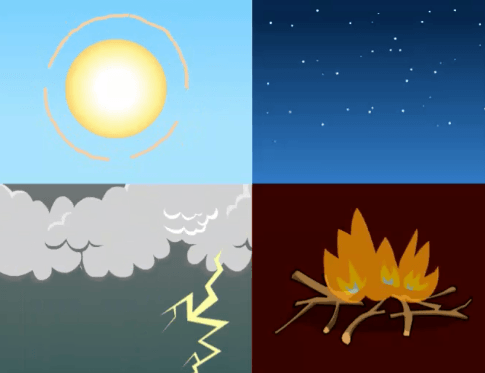
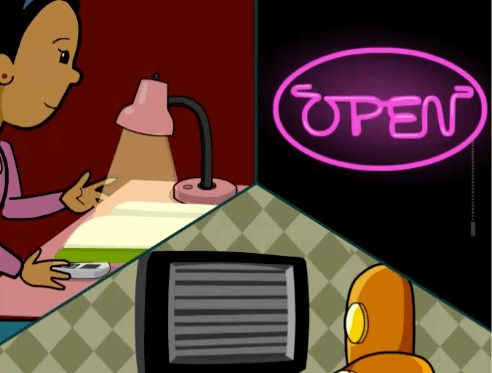


This is an example of a ______________ object. Light travels in a straight line directly into our eyes.
Luminous
Non luminous
Opaque
Translucent
Describes an object which is not a source of its own light.
Luminous
Law of Reflection
Spectrum
Non-Luminous

Which of the following explains why Jia Xin can see the book on the table?


Figure 1 demonstrates light travels in
zig zags
circles
a straight line
random bursts

When the candle is lit some of the candlelight will shine through the hole. Which diagram best shows where the light appears on the opposite wall inside the box?


Electromagnetic radiation that you can see
Sound
Light
Temperature
Photons
A material through which light does not pass
Transparent
Translucent
Opaque
A material that allows almost all of the light striking it to pass through, and through which objects can be seen clearly
Transparent
Translucent
Opaque
A material that allows most of the light that strikes it to pass through, but through which objects appear blurry
Transparent
Translucent
Opaque
When light strikes a transparent material, most of the light is reflected.
True
False
Light carries energy in the form of _______________ energy.
Atomic
Chemical
Radiant
Mechanical
The energy of an electromagnetic wave is related to its amplitude.
True
False
The energy of an electromagnetic wave is related to its frequency.
True
False
Frosted glass is an example of which type of material?
Translucent
Transparent
Opaque
Radiant
Light travels faster in water than in air
False
True
The brightness of a light is determined by ______________.
intensity of light waves
wavelength
air temperature
wave speed
The electromagnetic spectrum is organized by which two properties?
wavelength
amplitude
frequency
speed

What is the black panel doing to the light?
absorbing
transmitting
reflecting
refracting

The three ways that light interacts with matter are: ___________, absorption, and ____________.
refraction
transmission
reflection
refraction
reflection
transmission
absorption
refraction

Light waves and sound waves will both reflect off a piece of cardboard.
True
False
Light waves and sound waves will be absorbed by a piece of cardboard.
True
False
A sound wave will transmit through a piece of cardboard, but a light wave will not.
True
False

When light strikes a transparent material, most of the light is _________.
absorbed
reflected
transmitted

What kind of material is the middle section of the glass in the picture?
Opaque
Transparent
Translucent

The energy of an electromagnetic wave is related to its ___________.
amplitude
frequency
wavelength

Light carries energy in the form of radiant energy.
True
False

Light travels faster in water than in air.
True
False

Light passes through glass windows because of _____.
transfusion
reflection
absorption
transmission

The brightness of a light is determined by _____.
intensity of light waves
air temperature
wave speed
wavelength

