
Font size
 Worksheets
End of IB(DP)ESS Course
Total questions: 100
Worksheet time: 1hrs 22mins

After a forest fire, an ecosystem would start regrowth through -
primary succession
secondary succession
climax community
limiting factors

How does energy enter an ecosystem?
sunlight
soil
animals

One characteristic feature of the tundra is that only the surface thaws in the summer and refreezes in the winter, leaving a permanently frozen subsoil. This characteristic is known as
Hoarfrost
Glaciation
Permafrost
Crystallization

Which of the following processes removes carbon from the atmosphere?
Plant Respiration
Auto and factory emissions
Photosynthesis
Animal Respiration

__________ primary productivity is the total amount of energy that producers convert to chemical energy in organic molecules per unit of time.
Net
Total
Gross
Secondary
How do lichens contribute to primary succession?
Lichens decompose organic matter from animals and plants
Lichens begin to break down rock to form soil
Lichens are nitrogen fixing bacteria
Lichens convert carbohydrates into fossil fuels.
What is formed during primary succession that doesn't need to be formed during secondary succession?
pioneer species
soil
climax community
lichens
Which catastrophic event will most likely have the effect of returning an ecosystem to primary succession?
A tornado
A volcanic eruption
A flood
A drought
Which of the following best describes primary succession?
Volcano wipes out ecosystem that gradually grows back from ash covered soil
Volcano creates a new island of rock that must break down to form an ecosystem
Forest fire burns down forest that must bounce back over time
Tornado destroys a crop that must slowly grow back over time.
What term could be described as an equilibrium?
pioneer species
primary succession
secondary succession
climax community
What best describes the term succession?
rapid changes that create an ecosystem overnight
gradual changes over time to fully create or restore and ecosystem
forest with the tallest trees
the rate species produce offspring
In the context of IB ESS Topic 2, what is the role of a keystone species in an ecosystem?
A) They are the most abundant species in the ecosystem
B) They have a disproportionately large impact on their environment relative to their abundance
C) They are the primary producers in the ecosystem
D) They are the top predators in the ecosystem
Which of the following is an example of a mutualistic relationship in an ecosystem?
A) A lion hunting a zebra
B) A bee pollinating a flower
C) A parasite infecting a host
D) A bird eating a worm
In an ecosystem, what is the primary function of decomposers?
A) To produce energy through photosynthesis
B) To break down dead organic matter and recycle nutrients
C) To compete with primary consumers for food
D) To provide shelter for small animals
If farmers use a controlled burn to prevent forest fires, what would most likely be the first plants to return?
trees
shrubs
mosses
grasses
Which of the following is the correct aquatic succession stages?
Full ecosystem>trees>shrubs>fish and aquatic animals>plants> water only
Water only>small plants and animals>sediment builds> pond fills with soil
fire>grass>shrubs>trees
bare rock>lichens>grasses>shrubs>trees


The rain forest soil is
poor and rocky
frozen soil
thick and nutrient rich
thin and nutrient poor
__________ primary productivity is the total amount of energy that producers convert to chemical energy in organic molecules per unit of time.
Net
Total
Gross
Secondary

__________ primary productivity = the organic materials that remain after photosynthetic organisms in the ecosystem have used some of these compounds for their cellular energy needs (cellular respiration).
Gross
Total
Net
Secondary
Secondary productivity is rate of formation of new organic matter by
Producer
Parasite
Consumer
Decomposer
The zone at the edge of a lake or ocean which is alternatively exposed to air and immersed in water is called
Pelagic zone
Benthic zone
Littoral zone
Lentic zone

Which of the following leads to a decrease in biodiversity?
introduction of invasive species
prevention of erosion
ecological land use planning
pollution control
The 3 different types of biodiversity (in IB ESS) are;
Genes, Species, Habitats
Genes, Species, Ecosystems
Species, Habitats, Communities
Biosphere, Genes, Habitats

Which letter represents amplitude? (a)
A
B
C
D
E

Which community has higher species evenness?
Community A
Community B

Which biome is more likely to survive a change in the environment?
High (rich) biodiversity
Low (poor) biodiversity
What is a benefit of in-situ conservation?
It sustains natural environments.
It prevents imminent extinction.
It provides the potential for repopulation.
It allows for the filtering of genetics.
A solution to habitat fragmentation is
building ecosystem ladders
building more zoos
building more islands
building wildlife corridors
Which of the following is a method used to measure biodiversity in an ecosystem?
Quadrat sampling
Carbon dating
Radioactive tracing
Genetic engineering
Which of the following is a real-world application of biodiversity conservation?
Creating wildlife corridors to connect fragmented habitats
Using pesticides to eliminate invasive species
Building dams to control water flow
Introducing non-native species to increase diversity
Which best explains why runoff is important?
It returns water to other locations on Earth
It increases the chance of flooding
It makes evaporation occur faster
It increases condensation

Approximately what percentage of the water on Earth is freshwater?
0.1%
2.6%
50%
97%

What type of pollution comes from cattle ranches that allow livestock to feed along streams
Point
Non-Point
Which of the following is NOT a source of freshwater pollution?
Runoff
Sewage
Industrial discharge
Desalination
Which of the following is a water conservation strategy?
Using aerators to remove pollutants
Drip irrigation and timed showers
Introducing artificial glaciers
Capture fisheries
What is the primary cause of ocean acidification?
A) Increased levels of atmospheric carbon dioxide
B) Overfishing
C) Oil spills
D) Plastic pollution
In an experiment to measure the rate of photosynthesis, which of the following variables would be most appropriate to manipulate?
A) The concentration of carbon dioxide
B) The amount of oxygen in the air
C) The type of soil used
D) The size of the plant leaves
What is a species?
a group of organisms of the same species living in the same area
a group of similar organisms that can produce offspring
the place where organisms live and provides food, shelter, and other resources an organism needs to survive
all the different organisms living in an area
What is the difference between detritivores and decomposers?
decomposers break down dead material into smaller compounds and detritivores eat dead animals for food
detritivores break down dead material into smaller compounds and decomposers eat dead animals for food
decomposers are animals that eat plants; detritivores are animals that eat other animals
decomposers are producers; detritivores are consumers
What is a carrying capacity?
competition between members of the same species
the maximum population size of a species that can live in a specific environment
competition between members of the different species
resources that limit the growth of a population
What is commensalism?
a symbiotic relationship in which both organisms benefit
a symbiotic relationship in which one organism benefits and the other is unaffected
a symbiotic relationship in which one organism is harmed and one benefits
an ecological relationship in which one organism eats another
What is mutualism?
a symbiotic relationship in which both organisms benefit
a symbiotic relationship in which one organism benefits and the other is unaffected
a symbiotic relationship in which one organism is harmed and one benefits
an ecological relationship in which one organism eats another
What is predation?
a symbiotic relationship in which both organisms benefit
a symbiotic relationship in which one organism benefits and the other is unaffected
a symbiotic relationship in which one organism is harmed and one benefits
an ecological relationship in which one organism eats another
What is a keystone species?
a species selected to act as an ambassador, icon or symbol for a defined habitat, issue, campaign or environmental cause
a species selected for making conservation-related decisions, typically because protecting these species indirectly protects the many other species that make up the ecological community of its habitat
a species on which other species in an ecosystem largely depend, such that if it were removed the ecosystem would change drastically
What is a flagship or 'charismatic' species?
a species selected to act as an ambassador, icon or symbol for a defined habitat, issue, campaign or environmental cause
a species selected for making conservation-related decisions, typically because protecting these species indirectly protects the many other species that make up the ecological community of its habitat
a species on which other species in an ecosystem largely depend, such that if it were removed the ecosystem would change drastically
What is an umbrella species?
a species selected to act as an ambassador, icon or symbol for a defined habitat, issue, campaign or environmental cause
a species selected for making conservation-related decisions, typically because protecting these species indirectly protects the many other species that make up the ecological community of its habitat
a species on which other species in an ecosystem largely depend, such that if it were removed the ecosystem would change drastically

Layer of reactive gas at 20-30km above the Earth (15-20km at the poles) absorbing UV radiation
Greenhouse Gases
Troposphere
Stratosphere
Ozone Layer

Which agreement allowed for a reduction, and eventual elimination, of CFC production and use?
Montreal Protoccol
Kyoto Protoccol
Paris Agreement
Minamata convention
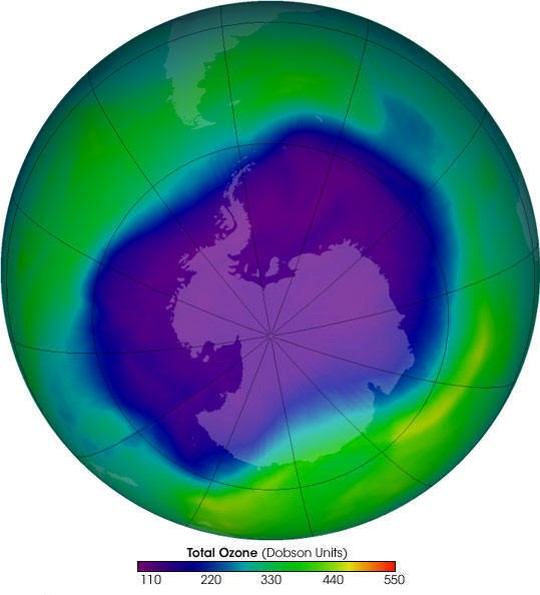
Location of the large whole in the ozone.
Antarctica
Artic
Iceland
Africa

How do CFCs affect ozone production?
UV radiation frees a chlorine atom, which breaks down ozone.
Infrared radiation frees a chlorine atom, which breaks down ozone.
UV radiation frees a fluorine atom, which breaks down ozone.
Infrared radiation frees a chlorine atom, which breaks down ozone.

The main gas component of the current atmosphere is
Oxygen
Carbon dioxide
Nitrogen
Argon
Water vapour

What is a secondary pollutant?
A pollutant which has undergone a physical or chemical change
A pollutant which has been emitted from a direct source
A pollutant which has a direct effect on emission
A pollutant which affects producers
What is a primary pollutant?
A pollutant which has undergone a physical or chemical change
A pollutant which has been emitted from a direct source
A pollutant which has a direct effect on emission
A pollutant which affects producers

What has the highest albedo?
the oceans
Ice in the Arctic or Antarctic
the ground
roads
Layer we live in and breathe
(a)

How many oxygen atoms does a molecule of ozone contain?
1
2
3
4
Which are effects of UV radiation on living organisms? select ALL that are true.
It can cause cataracts.
It can cause mutation in DNA.
It can disrupt food chains by causing harm to photosynthetic organisms.
It can cause organisms to overheat.
Bad ozone (tropospheric) disrupts photosynthesis which can effect primary producers including phytoplankton.
True
False
Using solar and wind power help reduce acid rain
True
False

Smog or ground ozone forms in the troposphere. Which pollutants are most responsible for photochemical smog or ground ozone?
sulfur and particulate matter
volatile organic compounds (VOCs) and nitrogen oxides
carbon monoxide and carbon dioxide
none of these answers are correct
The carbon dioxide released in 1980 was equal to 19.48 gigatons, while 33.31 were released in 2010. Calculate the percent increase of CO2 from 1980 to 2010
1.71%
71.00%
58.48%
41.9%

Which is NOT a benefit of wind energy?
low or no emissions
requires small or reduced land use
low operational and maintenance costs
renewable source of power

What statement about solar energy is true?
requires a small amount of space
it is not considered expensive to setup or maintian
there are no harmful metals or gases used during manufacturing of solar panels
solar energy can be intermittent (not consistent)
Which method of energy can be affected by drought?
Wind
Hydropower
Biofuels
Nuclear

Which of the following substances is fuel used in nuclear power plants?
peat
wood
uranium
coal
What is the accurate definition of climate change mitigation?
The efforts to reduce or prevent the expected effects of climatic change
The efforts to reduce or prevent build-up of GHGs in the atmosphere
The efforts to reduce or prevent Carbon dioxide in the atmosphere
The efforts to reduce or prevent CFC in the atmosphere

Which is not true about geothermal energy?
minimal environmental impact
low start-up costs
very efficient production of energy
geothermal reservoirs are naturally replenished
Erosion is a process where
organic matter is broken down into smaller parts, usually by living organisms
rock is broken down into soil and small grains
soluble nutrients and minerals are drained from soil through water action
soil/rock is moved from one surface to another by wind/water/glaciers
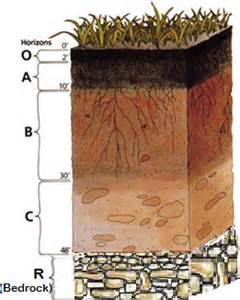
In which horizon is most of the HUMUS?
Horizon A
Horizon B
Horizon C
Horizon D or R

When would a groundwater aquifer become unsustainable?
When more water is extracted than is replenished
When the zone of replenishment is higher than the extraction point
When more water is replenished than is extracted
When the groundwater becomes lower than the well head

Agriculture uses a large amount of water, but which crop uses the most water to produce 1 kg of food?
wheat
rice
beef
chicken
Agriculture uses a large amount of water, but which crop uses the most water to produce 1 kg of food?
wheat
rice
beef
chicken

Water security is...
the safe water being available to some of the population
the capacity of a population to safeguard sustainable access to adequate quantities of safe water for life
having water supplies available without conflict
the capacity of a population to supply themselves with adequate water economically and politically to be able to develop
What is the primary focus of IB ESS Topic 8 in terms of environmental science?
A) Biodiversity and conservation
B) Human systems and resource use
C) Climate change and energy
D) Pollution management
In the context of IB ESS Topic 8, which of the following best describes the concept of 'ecological footprint'?
A) The total area of land and water needed to produce the resources consumed and to assimilate the wastes generated by a population
B) The amount of carbon dioxide emissions produced by an individual or group
C) The diversity of species within a given ecosystem
D) The rate at which renewable resources are replenished
Which of the following is a key concept in understanding human population dynamics as discussed in IB ESS Topic 8?
A) Carrying capacity
B) Photosynthesis
C) Plate tectonics
D) Electromagnetic spectrum
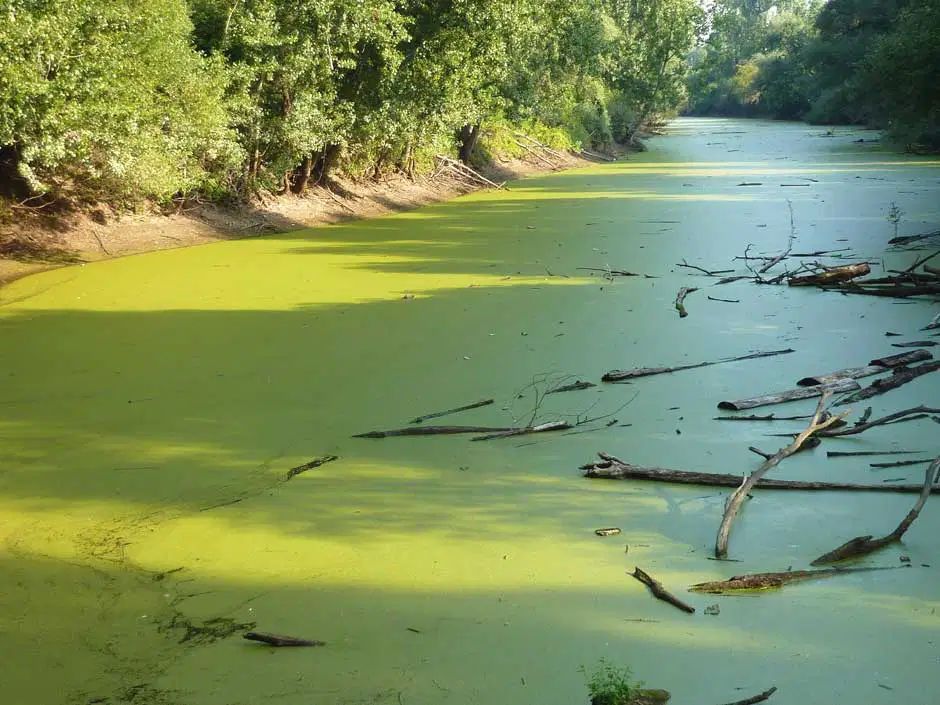
Eutrophication is:
the decrease in oxygen content of water due to an explosion of decomposers
an important energy flow in the nitrogen cycle
a process used to purify water
the gradual improvement of water quality in lakes and rivers
Biochemical oxygen demand is measured in
percent (%)
parts per billion (ppb)
milligrams per liter (mg/L)
grams per liter (g/L)
An example of 'Altering human activity that produces the pollution' to prevent eutrophication of water bodies is
Banning the use of phosphate based detergents
Replace chemical fertilizer with organic matter (i.e. compost)
Treat runoff to remove nutrients before it enters the water body
Pump air through the water body to increase dissolved oxygen levels.
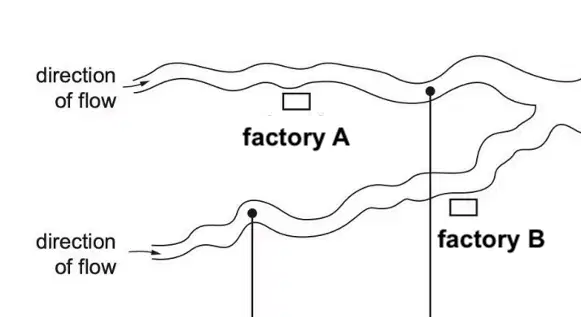
Two different factories release effluent into different initially clean rivers.:Factory A adds 3000 L per day with a BOD of 10 mg per LFactory B adds 1200 L per day with a BOD of 20 mg per LWhich statement correctly explains which factory is adding the most pollution resulting in the biochemical oxygen demand (BOD)?
Factory A because it adds more pollution per day
Neither, because the river takes it away, so preventing the pollution from increasing.
Factory A because it adds more volume
Factory B because the effluent has a higher BOD
An example of 'Clean up and restoration' to deal with eutrophication is
Pump air through the water body to increase dissolved oxygen levels.
Banning the use of phosphate based detergents.
Plant buffer zones between the fields and water courses to absorb the excess nutrients.
Treat runoff to remove nutrients before it enters the water body.
In the context of environmental systems, what does the term 'resilience' refer to?
The ability of an ecosystem to resist changes
The speed at which an ecosystem recovers from disturbance
The diversity of species within an ecosystem
The productivity of an ecosystem
Which of the following is an example of a positive feedback mechanism in climate change?
Increased cloud cover reflecting sunlight
Melting ice reducing albedo and increasing absorption of heat
Increased plant growth absorbing more CO2
Ocean currents redistributing heat
Which of the following is a primary factor contributing to the urban heat island effect?
Increased vegetation
High albedo surfaces
Concentration of buildings and infrastructure
Proximity to water bodies
soil storages include (select all that apply)
leaching
water
nutrients
air
organisms

Demand for freshwater is increasing, which if these factors IS NOT causing this increase?
industrialisation
fishing technology advancement
human population increase
irrigation of agriculture

