wayground logo

Free Printable Worksheets

Font size

S
M
L
XL
Worksheets

Intro 2 Psych--re-learn

Total questions: 100

Worksheet time: 2hrs 17mins

Name
Class
Date
1.

What two things are found in the central nervous system?

a)

brain/spinal cord

b)

spinal cord/motor neurons

c)

motor/sensory neurons

d)

only brain

2.

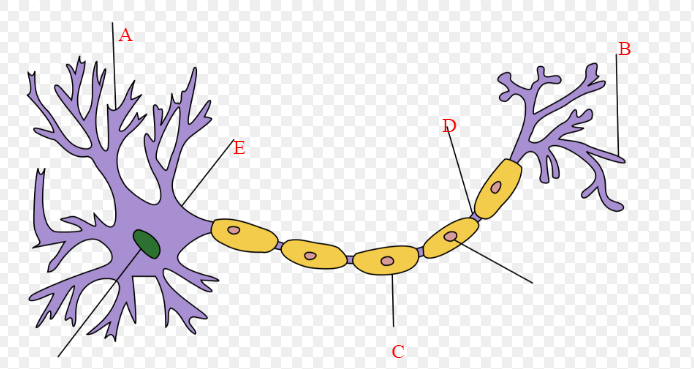
Which part of a neuron RECIEVES information?

a)

axon

b)

dendrite

c)

cell body

d)

axon terminal

3.
Which part of the neuron is a long fiber that send information to other cells?
a)
dendrite
b)
terminal
c)
cell body
d)
axon
4.

Which part of the brain controls breathing?

a)

neurons

b)

medulla

c)

cerebellum

d)

cerebrum

5.
Which part of the brain controls balance and body position?
a)
cerebrum
b)
medulla
c)
cerebellum
d)
impluses
6.

The synapse is a space between the axon of one neuron and the dendrites of other neurons.

a)

True

b)

False

7.
Chemicals released by neurons which determine the rate at which other neurons fire are called _____.
a)
Axon
b)
Spinal Cord
c)
Dendrites
d)
Neurotransmitters
8.
The _____ Prepares the body for dealing with emergencies or strenuous activity
a)
Sympathetic nervous system
b)
Parasympathetic nervous system
c)
Autonomic nervous system 
d)
Somatic nervous system
9.
The _____ Works to conserve energy and to enhance the body’s ability to recover from strenuous activity
a)
Sympathetic nervous system
b)
Somatic nervous system
c)
Autonomic nervous system
d)
Parasympathetic nervous system
10.
The _____ insulates and protects the axon for some neurons
a)
Axon
b)
Dendrites
c)
Myelin sheath
d)
Axon terminals
11.
Endorphine which inhibit pain, is an example of a Neurotransmitter
a)
True
b)
False
12.
Which of the following controls functions of hunger, thirst, sexual behavior, and controls the bodies reaction to temperature?
a)
Thalamus
b)
Medulla
c)
Midbrain
d)
Hypothalamus
13.

Which of the following acts as a bridge between the spinal cord and brain producing chemicals the body needs for sleep, attention & biological rhythms?

a)

Cerebellum

b)

Medulla

c)

Pons

14.
A person has a stroke on her occipital lobe.  What might happen to her?
a)
reduced planning abilities
b)
deafness
c)
coma
d)
blindness
15.
The split-brain procedure involves the cutting of this
a)
Cerebral Cortex
b)
Cerebellum
c)
Corpus Callosum
d)
Caudate Nucleus
16.
Hemisphere that is associated with Verbal and Mathematical abilities
a)
Left Hemisphere
b)
Right Hemisphere
17.
Brain hemisphere associated with spatial abilities and recognizing others faces
a)
Left Hemisphere
b)
Right Hemisphere
18.
Known as the "Little Brain" and is in charge of balance and coordinating movements
a)
Thalamus
b)
Reticular Formation
c)
Hypothalamus
d)
Cerebellum
19.
Damage this and you won't form new memories
a)
Hypothalamus
b)
Hippocampus
c)
Amygdala
d)
Thalamus
20.
Makes decisions, plans, reasons, and carries out behaviors
a)
Frontal Lobe
b)
Parietal Lobe
c)
Occipital Lobe
d)
Temporal Lobe
21.
Possesses the Sensory Cortex
a)
Frontal Lobe
b)
Occipital Lobe
c)
Temporal Lobe
d)
Parietal Lobe
22.
Controls hearing, and language comprehension
a)
Frontal Lobe
b)
Temporal Lobe
c)
Occipital Lobe
d)
Parietal Lobe
23.
This stage of sleep is considered deep sleep and has almost exclusively delta waves.
a)
1
b)
2
c)
4
d)
5
24.
Your body’s natural time clock that tells you when to wake up and when to sleep.
a)
Insomnia
b)
Circadian rhythm
c)
Frontal Lobe
d)
Sleep apnea
25.
REM stands for
a)
Rapid eye movement
b)
Rapid eye motion
c)
Rage eye movement
d)
Random eye movement
26.
Your body heals itself while you sleep.
a)
True
b)
False
27.
Which dream theory suggests dreams are the mind's attempt to make sense of random neural activity in the brain while one sleeps?
a)
information processing
b)
physiological function
c)
activation synthesis
d)
cognitive development
28.
Whose dream theory suggests dreams are expression of wish fulfillment?
a)
William Dement
b)
Sigmund Freud
c)
Carl Jung
d)
Erik Erikson
29.
A person has a stroke on her occipital lobe.  What might happen to her?
a)
reduced planning abilities
b)
deafness
c)
coma
d)
blindness
30.
Hemisphere that is associated with Verbal and Mathematical abilities
a)
Left Hemisphere
b)
Right Hemisphere
31.
Controls heartbeat and breathing
a)
Pons
b)
Medulla
c)
Cerebellum
d)
Thalamus
32.
Known as the "Little Brain" and is in charge of balance and coordinating movements
a)
Thalamus
b)
Reticular Formation
c)
Hypothalamus
d)
Cerebellum
33.
Controls motivational behaviors, including: feeding, fight-flight response, and fornicating
a)
Hippocampus
b)
Amygdala
c)
Reticular Formation
d)
Hypothalamus
34.
Possesses the Motor Cortex
a)
Temporal Lobe
b)
Parietal Lobe
c)
Occipital Lobe
d)
Frontal Lobe
35.
Possesses the Sensory Cortex
a)
Frontal Lobe
b)
Occipital Lobe
c)
Temporal Lobe
d)
Parietal Lobe
36.
Which letter on the illustration represents the occipital lobe
a)
A
b)
B
c)
C
d)
D
37.
Which letter on the illustration represents the parietal lobe
a)
A
b)
B
c)
C
d)
D
38.
Which letter on the illustration represents the temporal lobe
a)
A
b)
B
c)
C
d)
D
39.
Which letter on the illustration represents the frontal lobe
a)
A
b)
B
c)
C
d)
D
40.
A problem solving strategy that often includes a formula and guarantees an answer to the problem is a(n)
a)
subgoal
b)
prototype
c)
Algorithm
d)
Heurisitc
41.
The term used to describe the mental activities involved in acquiring, retaining, and using knowledge is:
a)
Cognition
b)
Learning
c)
Perception
d)
Sensation
42.
A mental grouping of similar things, events or people is called a(n):
a)
Prototype
b)
Concept
c)
Algorithm
d)
Heuristic
43.
The capacity to learn from experience, to think rationally, and to deal effectively with the envirnoment
a)
Creativity
b)
Achievement
c)
Inteligence
d)
Reliability 
44.
Psychologists use ________ to assess individuals' mental aptitudes and compare them with those of others.
a)
factor analysis
b)
a universal grammar
c)
intelligence tests
d)
the g factor
45.
Alfred Binet and Théodore Simon designed a test of intellectual abilities in order to
a)
provide a numerical estimate of inherited intelligence.
b)
distinguish between general intelligence and creativity.
c)
identify children likely to have difficulty learning in regular school classes.
d)
assess general capacity for goal-directed behavior.
46.

What are five basic parts of a neuron?

a)

Dendrite, mitochondria, mitosis, nucleus, axon

b)

Dendrite, cell body, axon, axon sheath, axon terminal

c)

Dendrite, cell body, blood vessel, brain, spinal cord

47.

The following are all neurotransmitters except

a)

Dopamine

b)

Acetylcholine--ACH

c)

Glia

d)

Serotonin

48.
What is the insulating membrane that surrounds parts of the axon that helps the impulses travel faster called?
a)
Axon
b)
Dendrites
c)
Node of Ranvier
d)
Myelin Sheath
49.

What is the Master Gland of the Body & produces growth hormones?

a)

Esophagus

b)

Lymph Nodes

c)

Pituitary Gland

d)

Hypothalamus

50.
A
a)
Dendrite
b)
Axon
c)
Axon Terminal
d)
Cell Body
51.
B
a)
Dendrite
b)
Axon
c)
Axon Terminal
d)
Cell Body
52.
What functions does this lobe carry out?
a)
Hearing and auditory processing
b)
Vision and visual processing
c)
Processing fear
d)
Judgment, impulse control, planning
53.
Split brain operations are done to
a)
shrink tumors
b)
increase memory
c)
help speech disorders
d)
help stop seizures
54.
When instances come readily to mind, we often presume such events are common. What of the following is the term for this phenomenon?
a)
Intuition insight 
b)
Confirmation bias
c)
Belief perserverance
d)
Availability heurisitic
55.
___ a rule of thumb that is often useful in solving problems.
a)
Heuristic
b)
algorithm
c)
protype
d)
concept
56.
Inductive or Deductive:
All dogs are mammals.
All mammals have brains.
All dogs have brains.
a)
Inductive
b)
Deductive
57.
Name the lobe that appears pink in this image.
a)
Frontal
b)
Parietal
c)
Temporal
d)
Occipital
58.
When you go to reach for a pencil and you miss the mark, you may have an impaired...
a)
Parietal Lobe
b)
Cerebellum
c)
Frontal Lobe
d)
Temporal Lobe
59.
The four lobes of the brain make up the:
a)
Cerebellum
b)
Diencephalon
c)
Cerebrum
d)
Brainstem
60.
Name the lobe that appears yellow in this image.
a)
Frontal
b)
Parietal
c)
Temporal
d)
Occipital
61.
Which lobe of the brain is located on the sides by your ears?
a)
Temporal
b)
Frontal
c)
Occipital
d)
Parietal
62.
Controls hearing, and language comprehension
a)
Frontal Lobe
b)
Temporal Lobe
c)
Occipital Lobe
d)
Parietal Lobe
63.
A blind person may have experienced damage to her:
a)
visual cortex
b)
prefrontal area
c)
Broca's area
d)
auditory association area
64.
Which of the following is NOT a neurotransmitter?
a)
dopamine
b)
norepinephrine
c)
acetycholine
d)
interneuron
65.
The four regions of the cerebral cortex are referred to as:
a)
lesions
b)
lobes
c)
pons
d)
corpus callosum
66.
This area controls breathing, heart-rate, and reflexes
a)
pons
b)
medulla oblongata
c)
cerebral cortex
d)
cerebrum
67.
What are the basic elements of the nervous system?
a)
neurons
b)
dendrites
c)
synapses
d)
axons
68.
What is the basic function of the thalamus?
a)
serving as a relay station for sensory stimulation
b)
regulating aspects of motivation an demotion
c)
forming a border around the brain stem
d)
enabling the learning of complex information
69.
When you touch something with your left hand, to what part of your brain is the information transmitted?
a)
hindbrain
b)
midbrain
c)
right hemipshere
d)
left hemipshere
70.
What is the main function of the corupus callosum?
a)
aiding in the transfer of information from the cerebrum to the cerebellum
b)
interpreting visual stimulation fro the eyes
c)
interpreting auditory stimulation from ears
d)
aiding in the transfer of information from one side of the brain to other
71.
What is debated in the "nature-nuture" issue?
a)
heredity versus environment
b)
genes versus heredity
c)
parents versus children
d)
personality versus biology
72.
Chemicals released between the nerves are called what 
a)
neurons
b)
stimulus
c)
neurotransmitters
73.
The oldest part of the brain
a)
Brainstem
b)
Cerebral Cortex
c)
Limbic System
d)
Forebrain
74.
The amygdala, the hypothalamus and the hippocampus are a part of
a)
limbic system
b)
cerebral cortex
c)
hindbrain
d)
forebrain
75.
What is #3?
a)
Frontal Lobe
b)
Parietal Lobe
c)
Occipital Lobe
d)
Temporal Lobe
76.
What is #4?
a)
Frontal Lobe
b)
Parietal Lobe
c)
Occipital Lobe
d)
Temporal Lobe
77.
These receive messages and conduct impulses to the Cell Body
a)
Axon
b)
End Bulbs
c)
Dendrites
d)
Myelin Sheath
78.
This is a fatty layer that prevents interference and increases the speed of impulses going down the axon
a)
Dendrites
b)
Nodes of Ranvier
c)
Myelin Sheath
d)
End Bulbs
79.
CNS
a)
Central Neck System
b)
Central Nervous System
c)
Central Nerve System
d)
Cranial Nervous System
80.
Experts in a given field prefer heuristics to algorithms because heuristics:
a)
Guarantee solutions to problems
b)
Prevent mental sets
c)
Often save time
d)
Prevent fixation
81.
Confirmation bias refers to the tendency to:
a)
Allow preexisting beliefs to distort logical reasoning
b)
Cling to one’s initial conceptions after the basis on which they were formed has been discredited
c)
Search randomly through alternative solutions when problem solving
d)
Look for information that is consistent with one’s beliefs
82.
A strategy in which the likelihood of an event is estimated on the basis of how easily other instances of the event are available in memory is called the:
a)
Availability heuristic
b)
Availability algorithm
c)
Representativeness heuristic
d)
Representativeness algorithm
83.
A prototype is a:
a)
Step-by-step procedure for solving problems
b)
Mental grouping of similar objects, events or people
c)
Best example of a particular category
d)
Simple thinking strategy for solving problems efficiently
84.
Marilyn was asked to solve a series of five math problems. The first four problems could only be solved by a particular sequence of operations. The fifth problem could also be solved following this sequence; however, a much simpler solution was possible. Marilyn did not realize this simpler solution and solved the problem in the way she had solved the first four. Her problem-solving strategy was hampered by
a)
Functional fixedness
b)
The overconfidence phenomenon
c)
A mental set
d)
Her lack of a prototype for the solution
85.
Suppose you consider elderly people to be infirm and mentally slow. Every time you see elderly people in need of care or assistance, you take it as evidence of your belief, while ignoring the many cases of healthy, active elderly people. This is an example of:
a)
Representative heuristic
b)
Availability heuristic
c)
Confirmation bias
d)
Prototype
86.
If we know that all dogs have tails, and thus poodles must have tails, we are demonstrating ___________ reasoning.
a)
Determined
b)
Insight
c)
Inductive
d)
Deductive 
87.
Mental quality consisting of the ability to learn from experience, solve problems, and use knowledge to adapt to new situations
a)
Intelligence
b)
Heuristics
c)
Mental Set
88.
An I.Q. of 70 or below indicates
a)
Mental Retardation
b)
Slow Learner
c)
Giftedness
89.
Which is NOT a factor of emotional intelligence?
a)
People Skills
b)
Cooking Skills
c)
Self-Awareness
90.
What is the part of the nervous system that consists of the brain and spinal cord?
a)
axon
b)
cell body
c)
somatic nervous system
d)
central nervous system
91.
What are the small fibers branching out from the axon?
a)
neurons
b)
cerebrum
c)
axon terminal
d)
dendrites
92.
What are the small fibers branching out from the axon?
a)
neurons
b)
cerebrum
c)
axon terminal
d)
dendrites
94.
Following a nail gun wound to his head, Daryll became more uninhibited, irritable, dishonest, and profane.  It is likely that his personality change was the result of an injury to his?
a)
parietal lobe
b)
temporal lobe
c)
occipital lobe
d)
frontal lobe
94.
Following a nail gun wound to his head, Daryll became more uninhibited, irritable, dishonest, and profane.  It is likely that his personality change was the result of an injury to his?
a)
parietal lobe
b)
temporal lobe
c)
occipital lobe
d)
frontal lobe
95.
Multiple sclerosis is a disease in which the immune system mistakenly destroys some of the myelin wrapped around nerve cell fibers. Which nerve cell fibers are being attacked by this process?
a)
synapses
b)
axons
c)
dendrites
d)
mitochondria
96.
Neurotransmitters are ______________ that travel across the ______________ to another cell. 
a)
electoral signals; receptors
b)
electrical signals; synapse
c)
chemicals; receptors
d)
chemicals; synapse
97.
Which component of the limbic system has an essential role in the formation of new memories?
a)
amygdala
b)
pituitary gland
c)
hippocampus
d)
hypothalamus
98.
 emphasizes the role that thoughts play in determining behavior  
a)
evolutionary perspective
b)
cognitive perspective
c)
biological perspective
d)
all of the above
99.
The left side of the brain is typically in control of which of the following?
a)
spatial reasoning
b)
left side of the body
c)
word recognition
d)
perception
100.
What is an inference?
a)
 An inference is something that you think is true based on information that you have.
b)
An inference is directly written in the text