
NEW
Font size
 Worksheets
Food Webs, Water, Carbon Cycle
Total questions: 27
Worksheet time: 39mins

Which level contains organisms that do photosynthesis?
A
B
C
D


If there is 1000 Kcal available in the producers in trophic level 1, approximately how much energy is available in the herbivores in trophic level 2?
10 Kcal
1 Kcal
100 Kcal
1000 Kcal

The bacteria have a very important role in the food web. What do they classify as?
decomposers
omnivores
apex predators
primary producers


Abiotic factors are ___________.
non-living parts of an ecosystem
living parts of an ecosystem
things that once were alive, but now are dead
not important parts of ecosystems.
Biotic factors are ___________.
non-living parts of an ecosystem
living parts of an ecosystem or the parts of an ecosystem that are/were made of cells and contain DNA
things that once were alive, but now are dead
not important parts of ecosystems.


Why does groundwater usually require less treatment than surface water?
The layers of Earth protect groundwater from pollutants.
As groundwater sinks into the ground, the layers of rock act like a natural filter and remove pollutants from the water.
Surface water has more exposure to pollutants in runoff and the atmosphere.
all of the above

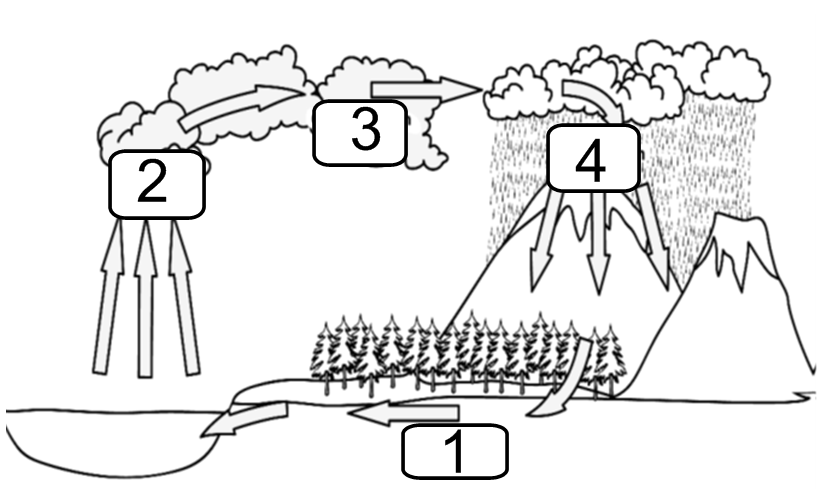
The image shows various stages in the water cycle. During which stage does water flow back towards the sea as runoff?
W
X
Y
Z
Humans burn fossil fuels and wood, releasing carbon dioxide into the atmosphere. This carbon dioxide is then absorbed by trees for photosynthesis. These processes are contributory to which chemical cycle?
The carbon cycle
The water cycle
The nitrogen cycle
The phosphorous cycle
How does the human body return carbon to the atmosphere in the carbon cycle?
Waste products
Photosynthesis
Cellular respiration
Formation of glucose
In the carbon cycle, animals can release carbon back into the cycle through __________ or through __________.
burning . . . photosynthesis
fixation . . . decomposition
decomposition . . . photosynthesis
respiration . . . decomposition
respiration . . . photosynthesis
What kind of organism takes out the most carbon from the atmosphere?
Plants
Bacteria
Animals
Humans

Decomposers can release carbon dioxide when they....
release as carbon dioxide
break down dead organisms
recycle energy back to the sun
recycle nutrients to form rocks

According to the diagram, what process puts carbon directly into the ground?
photosynthesis
respiration
decomposition
burning of fossil fuels


Which food source would contribute to climate change the least?
Corn
Eggs
Pork
Beef
Carbon atoms cannot be created or destroyed
True
False
Not enough information to answer

