wayground logo

Free Printable Worksheets

Font size

S
M
L
XL
Worksheets

Nafs

Total questions: 54

Worksheet time: 2hrs 36mins

Name
Class
Date
1.

What is matter?

a)

Anything that has mass and volume

b)

The amount of "stuff" something contains

c)

The measure of how much space something takes up

2.

What is volume?

a)

Anything that has mass and volume

b)

The amount of "stuff" something contains

c)

The measure of how much space something takes up

3.

Air has volume, but it does not have mass.

a)

True

b)

False

4.

What happens when you push an upside down cup under water?

a)

The cup fills with water

b)

Air from the cup goes into the water

c)

Air gets trapped in the cup and stays in the cup

5.

When a ball is inflated with air, it weighs more than when it has no air in it.

a)

True

b)

False

6.
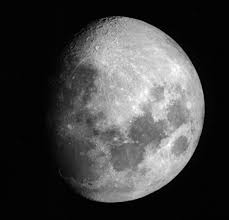
Name the moon phase
a)
waning crescent
b)
waxing crescent
c)
waning gibbous
d)
waxing gibbous
7.
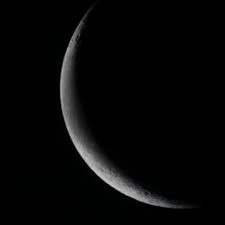
Name the moon phase
a)
waning crescent
b)
waxing crescent
c)
waning gibbous
d)
waxing gibbous
8.
Name the moon phase
a)
waning crescent
b)
waxing crescent
c)
waning gibbous
d)
waxing gibbous
9.
Name the moon phase
a)
waning crescent
b)
waxing crescent
c)
waning gibbous
d)
waxing gibbous
10.
Name the moon phase
a)
First Quarter
b)
Last Quarter
c)
New Moon
d)
Full Moon
11.
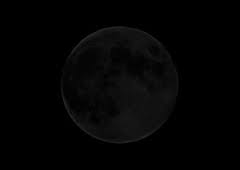
Name the moon phase
a)
First Quarter
b)
Last Quarter
c)
New Moon
d)
Full Moon
12.
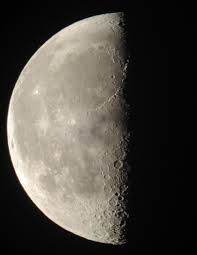
Name the moon phase
a)
First Quarter
b)
Last Quarter or (third quarter)
c)
New Moon
d)
Full Moon
13.
Day and night on Earth is caused by
a)
The tilt of Earth's axis
b)
Earth's revolution around the sun
c)
Eclipses
d)
Earth's rotation on it's axis
14.

What are the names of the two types of crust?

a)

Oceanic

b)

Mantle

c)

Layered

d)

Continental

e)

Mountainous

15.

The crust and upper mantle together are called what?

a)

Atmosphere

b)

Outersphere

c)

Lithosphere

d)

Asthenosphere

16.
Which layer is the outermost layer?
a)
troposphere
b)
thermosphere
c)
exosphere
d)
mesosphere
17.
Where you will find the ozone layer.
a)
stratosphere
b)
thermosphere
c)
exosphere
d)
mesosphere
18.
Where weather occurs.
a)
stratosphere
b)
thermosphere
c)
troposphere
d)
mesosphere
19.
Where we live.
a)
stratosphere
b)
thermosphere
c)
troposphere
d)
mesosphere
20.
The hottest layer.
a)
troposphere
b)
thermosphere
c)
exosphere
d)
mesosphere
21.

What do you call organisms that can make their own food?

a)

heterotophs

b)

autotrophs

c)

trophies

22.

Which organisms perform photosynthesis?

a)

Heterotrophs, such as animals and fungi

b)

Autotrophs, such as plants and some bacteria

c)

Decomposers, such as mushrooms

d)

Parasites, such as tapeworms

23.

What is another term for a producer?

a)

Heterotroph

b)

Autotroph

c)

Decomposer

d)

Consumer

24.

Can you name a type of heterotroph?

a)

Herbivores

b)

Photosynthetic bacteria

c)

Fungi

d)

Cyanobacteria

25.

What is photosynthesis?

a)

Photosynthesis is the process by which autotrophs convert light energy into chemical energy in the form of glucose.

b)

Photosynthesis is the process by which plants absorb water from the soil.

c)

Photosynthesis is the method by which animals convert food into energy.

d)

Photosynthesis is the process of breaking down glucose to release energy.

26.
An animal that hunts other animals for food is a ___________
a)
herbivore
b)
predator
c)
prey
d)
omnivore
27.
A community of living and nonliving things in their natural environment makes up a 
a)
food web
b)
ecosystem
c)
food chain
28.
which symbiosis is this 
a)
parasitism 
b)
mutualism
c)
commensalism
d)
nonalism 
29.
Members of a species in a defined area
a)
Ecosystem
b)
community
c)
biodiversity
d)
population
30.
Non-living factor that affects an ecosystem
a)
biotic factor
b)
abiotic factor
c)
food chain 
d)
biome
31.
Organisms that breaks down and absorbs nutrients from dead organisms 
a)
consumer
b)
trophic level
c)
decomposer
d)
species
32.

What is the tertiary consumer?

a)

grass

b)

grasshopper

c)

mouse

d)

snake

e)

red hawk

33.

What is the secondary consumer?

a)

grass

b)

grasshopper

c)

mouse

d)

snake

e)

red hawk

34.
Speaking
a)
inherited
b)
acquired
35.
Tallness in plants
a)
inherited
b)
acquired
36.
eye color
a)
inherited
b)
acquired
37.
Blood type
a)
Inherited
b)
Acquired
38.

Jason is a good cook.

a)

inherited

b)

acquired

39.

A squid will squirt black ink at predators when frightened.

a)

Behavioral Adaptation

b)

Structural//Physical Adaptation

40.
Cactus has spines instead of leaves. The spines reduces water loss through the stomata.
a)
Structural
b)
Behavioural
41.

give an example of a source of electric energy.

a)

battery

b)

wire

c)

copper

d)

all of the above

42.

what are the components of a simple circuit?

a)

battery,wire,switch,bulb

b)

bulb,battery,switch

c)

none of the above

d)

the light bulb is not a component

43.

The picture shows an electrical circuit. This circuit is a series circuit because:

a)

It has 3 light bulbs.

b)

The same current flows through all three light bulbs.

c)

It uses a single battery.

d)

The electrical current is divided between the three light bulbs.

44.

What will happen if one light bulb is removed from this circuit?

a)

The other bulbs will go out.

b)

The other bulbs will stay on

c)

The other bulbs will get dimmer.

d)

The battery will become stronger.

45.

The current has only has one loop to flow through in this circuit.

a)

Series Circuit

b)

Parallel Circuit

c)

either series or parallel

d)

neither series nor parallel

46.

Does this diagram represent a series or parallel circuit?

a)

series circuit

b)

parallel circuit

c)

either series or parallel

d)

neither series nor parallel

47.
According to Newton's second law, if you increase the force applied to an object :
a)
it accelerates more
b)
it doesn't move
c)
you get more inertia
d)
it decelerates
48.
According to Newton’s first law of motion, a moving object that is not acted on by an unbalanced force will
a)
remain in motion.
b)
eventually come to a stop.
c)
change its momentum.
d)
accelerate.
49.
With unbalanced forces, the object will move in the direction of the _______ force.
a)
larger 
b)
smaller 
c)
equal 
50.
Force pair that has a net force of zero.
a)
Balanced force
b)
Unbalanced force
51.
Which one is balanced?
a)
top
b)
bottom
c)
both
d)
neither
52.

feet push down on the floor & the floor pushes up at feet while you walk

a)

Newton's 1st Law

b)

Newton's 2nd Law

c)

Newton's 3rd Law

d)

None of the above

53.

takes less force to move a phone than a TV

a)

Newton's 1st Law

b)

Newton's 2nd Law

c)

Newton's 3rd Law

d)

None of the above

54.

seatbelt stops you from hitting the windshield if you hit the brakes quickly

a)

Newton's 1st Law

b)

Newton's 2nd Law

c)

Newton's 3rd Law

d)

None of the above