Worksheets
TIA Chemistry Vocabulary Review
Total questions: 61
Worksheet time: 41mins

Fill in the blank: An (a) is electrically neutral (no charge) with # protons = # electrons and # neutrons = atomic mass - protons.
Molecule
Electron
Proton
Fill in the blank: An (a) is an atom or molecule with a net electric charge due to the loss or gain of one or more electrons. # protons DOES NOT EQUAL # electrons.
Atom
Molecule
Electron
Fill in the blank: An (a) is a variant of an element that differs in number of neutrons (and subsequently, mass number) but has the same number of protons.
Isotope
Ion
Atom
Molecule
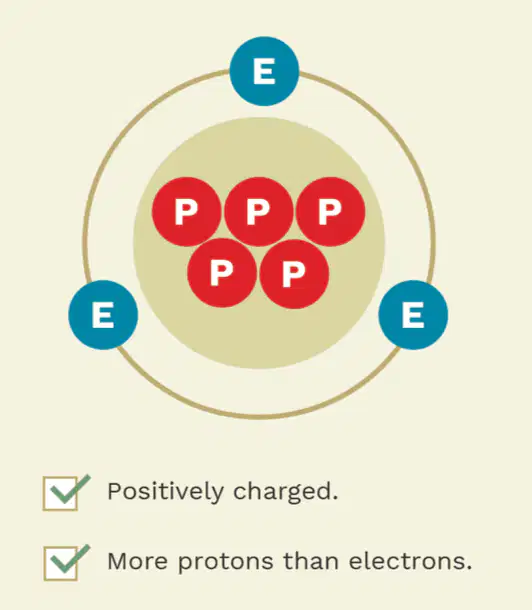
A (a) is a positively charged ion; occurs due to a loss of electrons.
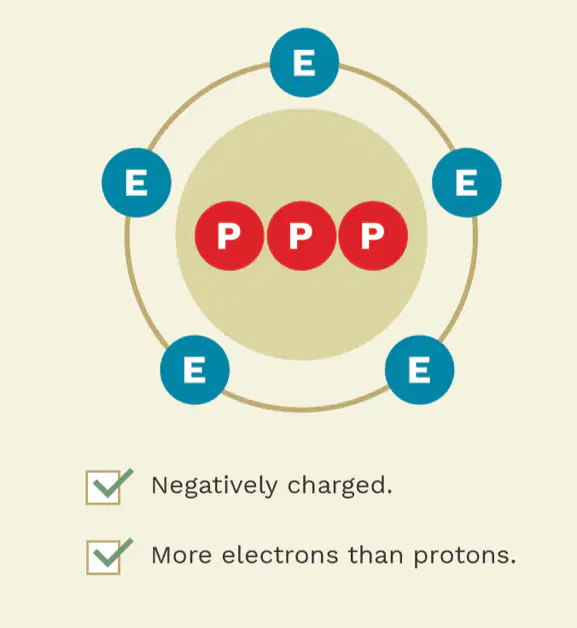
A(n) (a) is a negatively charged ion; occurs due to a gaining of electrons.
positively
neutrally
doubly
A(n) _______ is a substance that cannot be broken down into simpler substances by physical means
element
compound
substance
meow
Fill in the blank: A ________ is a substance formed when two or more different elements are chemically bonded together.
compound
element
anion
cation
What is a heterogeneous mixture?
A mixture with a uniform composition
A mixture with a non-uniform composition
A pure substance
A compound
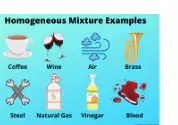
What is a homogeneous mixture?
A mixture with a uniform composition
A mixture with a non-uniform composition
A pure substance
A compound
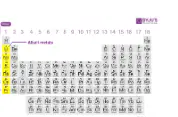
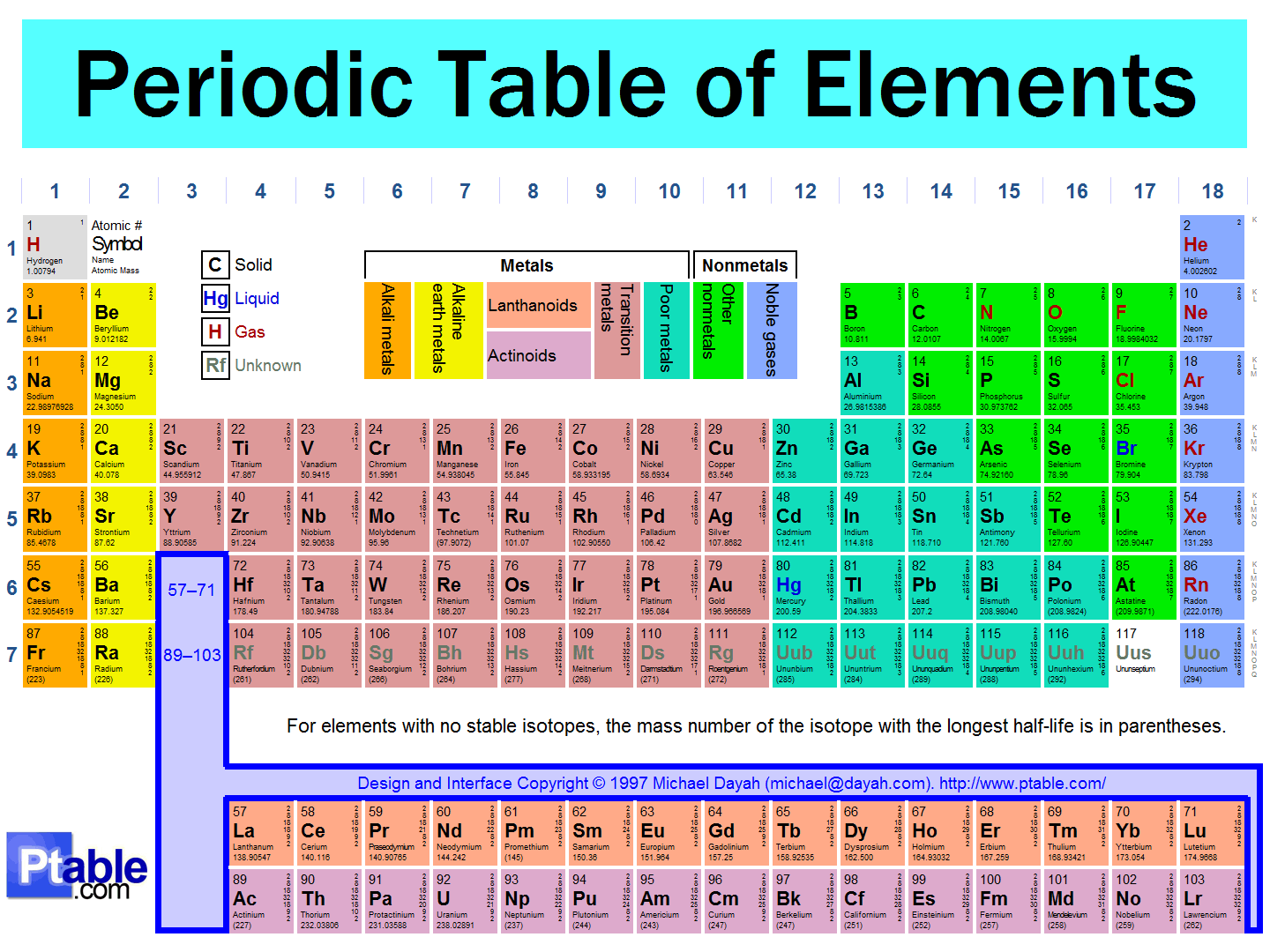
_______ are elements found in Group 1 of the periodic table and have 1 valence electron.
Alkali Metals
Alkaline Earth Metals
Halogens
Transition Metals
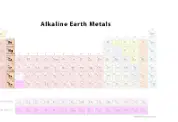
______ have 2 valence electrons and are found in group 2 of the periodic table.
Alkaline Earth Metals
Alkali Metals
Transition Metals
Halogens
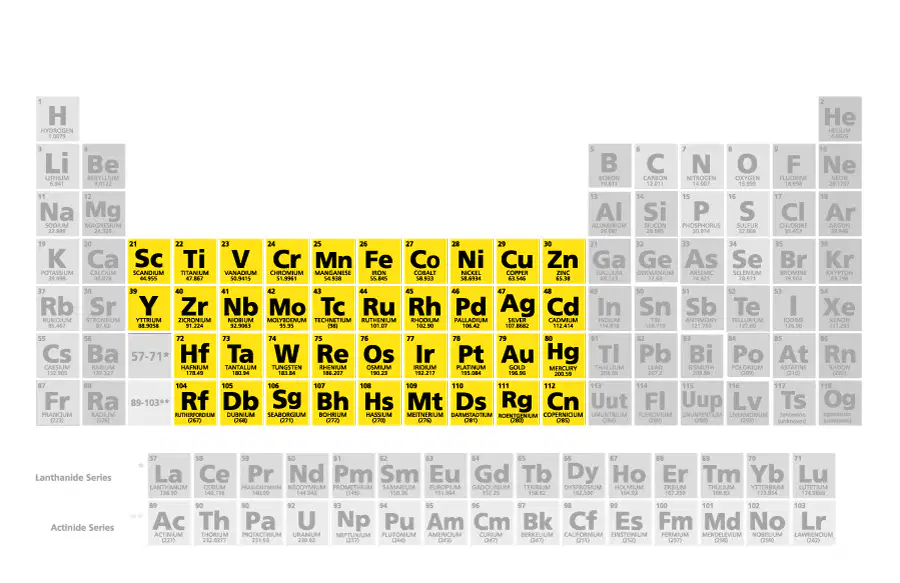
What are transition metals?
Elements found in Groups 3-12 of the periodic table. d - sublevel
Elements found in Group 1 of the periodic table. s - sublevel
Elements found in Group 17 of the periodic table. p - sublevel
Elements found in Group 18 of the periodic table. p - sublevel
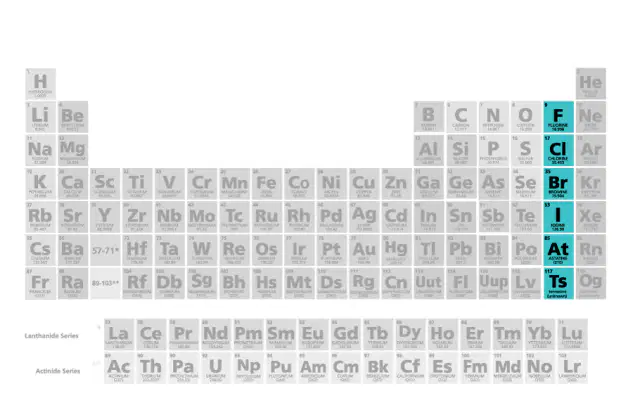
What are halogens?
Elements found in Group 17 of the periodic table. have 7 valence electrons nonmetals that form anions with a -1 charge
Metals found in Group 1 of the periodic table. have 1 valence electron
Noble gases found in Group 18 of the periodic table. have full valence shells
Transition metals found in the center of the periodic table. have variable oxidation states
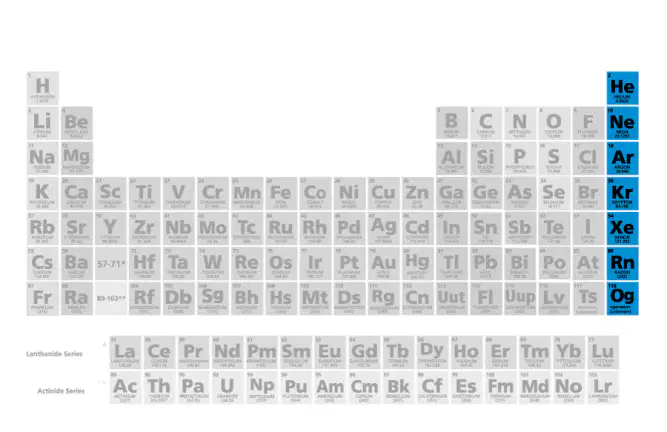
What are noble gases?
Elements found in Group 18 of the periodic table. have 8 valence electrons elements have NO CHARGE chemically non-reactive because they are already stable
Elements found in Group 1 of the periodic table. highly reactive metals
Elements that are liquid at room temperature and have a strong odor
Elements that are typically found in compounds and are highly reactive
What is the periodic table?
an arrangement of the elements by atomic number (increasing # of protons) elements in the same group (vertical column) have similar chemical properties
a list of chemical reactions
a chart of isotopes
a table of molecular compounds
What is the arrangement of electrons in orbitals around an atom called?
electron configuration
atomic structure
molecular formation
nuclear arrangement
What is made of ions bonded together, has high melting and boiling points, and is a good conductor of electricity?
ionic compound
covalent compound
molecular solid
metallic bond
What type of chemical bond involves the electrostatic attraction between oppositely charged ions and results from a transfer of electrons?
ionic bond
covalent bond
metallic bond
hydrogen bond
What is made of two non-metals, has low melting and boiling points, and is a poor conductor of electricity?
covalent compound
ionic compound
metallic compound
alloy
match these to the correct word
equal sharing of electrons
non-polar covalent bond
non-equal sharing of electrons
polar covalent bond
results from a transfer of electrons
ionic bond
What is a metallic bond?
A type of chemical bond that occurs between metals; sea of electrons.
A bond formed by the sharing of electron pairs between atoms.
A bond formed by the transfer of electrons from one atom to another.
A weak bond between two molecules resulting from an electrostatic attraction.
What is electronegativity?
The force of attraction an atom feels for other atoms' electrons (how badly an atom wants electrons from other atoms).
The ability of an atom to lose electrons easily.
The measure of an atom's size in a molecule.
The energy required to remove an electron from an atom.
What is ionization energy?
The energy required to remove an electron from an atom or ion.
The energy required to add a neutron to an atom.
The energy required to split an atom into two.
The energy required to change an atom into a different element.
What is the measure of the size of an atom called?
atomic radii
atomic mass
atomic number
atomic volume
What is the measure of the size of an ion called?
ionic radii
atomic mass
electron affinity
ionization energy
What are the parts of a chemical equation?
What kind of reaction is described below?
Two or more reactants combine to form a single product.
A + B → AB
synthesis reaction
decomposition reaction
combustion reaction
single replacement reaction
What kind of reaction is described below?
A compound breaks down into its component parts.
AB → A + B
synthesis reaction
decomposition reaction
combustion reaction
single replacement reaction
What kind of reaction is described below?
A hydrocarbon reacts with oxygen gas to produce carbon dioxide and water.
CxHy + O2 → CO2 + H2O
synthesis reaction
decomposition reaction
combustion reaction
single replacement reaction
What kind of reaction is described below?
An element takes the place of another element that is part of a compound. "Mr. Steal Yo Girl"
A + BY → AY + B
synthesis reaction
decomposition reaction
combustion reaction
single replacement reaction
What kind of reaction is described below?
An equal exchange of ions between compound. "Wife Swap"!
AX + BY → AY + BX
synthesis reaction
decomposition reaction
combustion reaction
single replacement reaction
double replacement reaction
The reactant that is totally consumed when the chemical reaction is complete is called the _________
limiting reactant
catalyst
solvent
excess reactant
The reactant that is not used up completely in a reaction is called the _________.
excess reactant
limiting reactant
catalyst
product
Fill in the blank: Molarity is a measure of the concentration of a solute in a solution and is calculated as _________.
mols of solute / Liters of solution
grams of solute / Liters of solution
mols of solute / milliliters of solution
grams of solute / milliliters of solution
Fill in the blank: A substance that releases H+ when dissolved in water and increases the concentration of H+ ions in aqueous solution is called an _________.
Arrhenius Acid
Base
Salt
Neutral compound
Match the following terms with their correct definitions:
Arrhenius Base
Releases OH⁻ when dissolved in water. A substance that increases the concentration of OH⁻ ions in aqueous solution.
Lewis Acid
Electron pair acceptor
Lewis Base
Electron pair donator
Brønsted - Lowry Acid
A substance that donates a proton (H⁺ ion) in a chemical reaction.
A substance that accepts a proton (H+ ion) in a chemical reaction is called a ________.
Brønsted - Lowry Base
Brønsted - Lowry Acid
Lewis Acid
Lewis Base
A solution in which no more solute can be dissolved at a given temperature is called a ________.
saturated solution
unsaturated solution
supersaturated solution
dilute solution
Fill in the blank: A solution that can dissolve more solute at a given temperature is called an ________.
unsaturated solution
saturated solution
supersaturated solution
concentrated solution
A solution that contains more dissolved solute than is required to reach equilibrium at a given temperature is called a ________.
supersaturated solution
unsaturated solution
saturated solution
dilute solution
What is an endothermic reaction?
chemical reaction that absorbs energy from its surroundings. ΔH = +
chemical reaction that releases energy to its surroundings. ΔH = -
reaction that occurs spontaneously without energy input. ΔG = -
reaction that involves the transfer of electrons between two species
What is an exothermic reaction?
chemical reaction that releases energy by light or heat. ΔH = -
chemical reaction that absorbs energy from the surroundings. ΔH = +
reaction that occurs without any energy change. ΔH = 0
reaction that requires continuous energy input to proceed. ΔH > 0
What is nuclear fission?
A nuclear reaction in which a heavy nucleus splits into smaller nuclei with the simultaneous release of energy.
A process where two light atomic nuclei combine to form a heavier nucleus.
A chemical reaction involving the exchange of electrons between atoms.
A physical change where a substance changes its state from solid to liquid.
What is nuclear fusion?
A nuclear reaction in which atomic nuclei of low atomic number fuse together to form a heavier nucleus with a large release of energy.
A process where heavy atomic nuclei split into lighter nuclei.
A chemical reaction involving the exchange of electrons.
A method of generating electricity using wind turbines.
What is the term for a scale used to specify the acidity or basicity of an aqueous solution?
pH scale
Temperature
Density
Viscosity
What is the range of all types of electromagnetic radiation called?
Electromagnetic Spectrum
Visible Light
Radio Waves
Infrared Radiation
What are elements that are good conductors of heat and electricity and have a high luster called?
metals
nonmetals
metalloids
insulators
What are elements that are poor conductors of heat and electricity called?
non-metals
metals
alloys
metalloids
What are metalloids?
Elements with properties of both metals and non-metals. Staircase on the periodic table.
Elements that are only metals.
Elements that are only non-metals.
Elements that are gases.
What is a physical change?
A change in which no new substances are formed and which can often be reversed. Changes physical appearance, not chemical makeup. Any phase change (melting, freezing, boiling).
A change that results in the formation of new chemical substances.
A change that involves the breaking and forming of chemical bonds.
A change that is always irreversible and results in a new substance.
What is a chemical change?
change that results in the formation of new chemical substances. Changes the chemical makeup of a substance.
change in the state of matter without altering the chemical composition.
temporary change that can be easily reversed.
change that involves only physical properties
What is a physical property?
A characteristic of a substance that can be observed or measured without changing the substance's chemical identity.
A process that changes the chemical identity of a substance.
A property that can only be observed during a chemical reaction.
A measure of how a substance reacts with other substances.
A chemical property is a substance's ability to react (it's chemical _______).
reactivity
stability
density
conductivity
Fill in the blank: Reactants are substances that start a chemical reaction. They are found on the _______ side of a chemical equation.
left
right
top
bottom
Products are substances that are produced in the reaction. They are found on the _______ side of the chemical equation.
right
left
top
bottom
Match the charge with the groups.
-1
Group 17
-3
Group 15
-2
Group 16
Match the charge with the groups.
+1
Group 1
+2
Group 2
+3
Group 3
Cations
Gain electrons, has an overall positive charge
Lose electrons, has an overall positive charge
Lose electrons, has an overall negative charge
Gain electrons, has an overall negative charge
A Nitrogen molecule (N2) has one triple bond. How many electrons do the nitrogen atoms share?
(a)1
8

Each horizontal row on the periodic table is called a what?
(a)