
 Worksheets
Objective
Total questions: 45
Worksheet time: 30mins
Explain the function of the instruments and controls found in the operator’s cab.
The instruments and controls are used for navigation and operation of the vehicle.
The instruments and controls are decorative elements in the cab.
The instruments and controls are used for communication with other vehicles.
The instruments and controls are used for entertainment purposes.
Describe the categories of forklift controls.
Hydraulic controls, Pedal controls, and Steering controls
Electrical controls, Manual controls, and Hydraulic controls
Mechanical controls, Electrical controls, and Hydraulic controls
Pedal controls, Steering controls, and Manual controls
Switches on SDCB forklifts are used to:
control the speed of the forklift
operate the hydraulic system
turn the forklift on and off
adjust the seat position
Under the supervision of an instructor, trainees should be able to do the following:
Perform tasks independently
Follow instructions accurately
Demonstrate leadership skills
Work collaboratively in teams
What does forklift instrumentation include?
Gauges, signals, and indicators
Wheels and tires
Engine and transmission
Forklift controls are used to ______ the forklift and load and are accessible within the forklift’s operator cab.
maneuver
lift
stop
accelerate
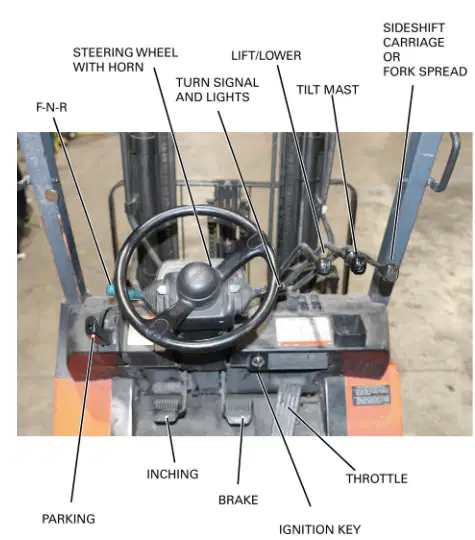
The function of the steering wheel with horn in the operator's cab is to:
control the direction of the vehicle and sound the horn
adjust the seat position
control the speed of the vehicle
operate the windshield wipers
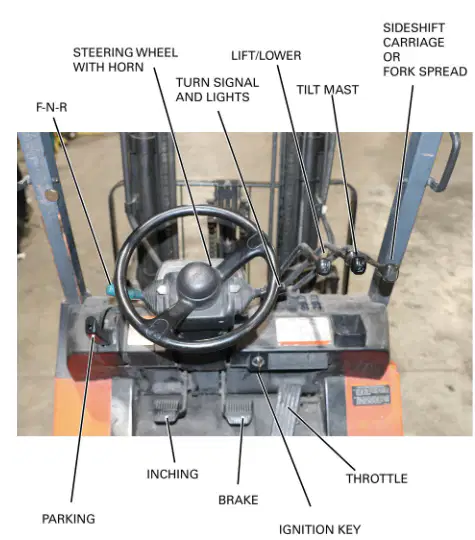
Which part of the operator"s cab is used to lift or lower the load?
Lift/Lower lever.
Steering wheel.
Brake pedal.
Horn button

The purpose of the ignition key in the operator's cab is to:
Start the engine
Open the fuel tank
Control the air conditioning
Adjust the seat position
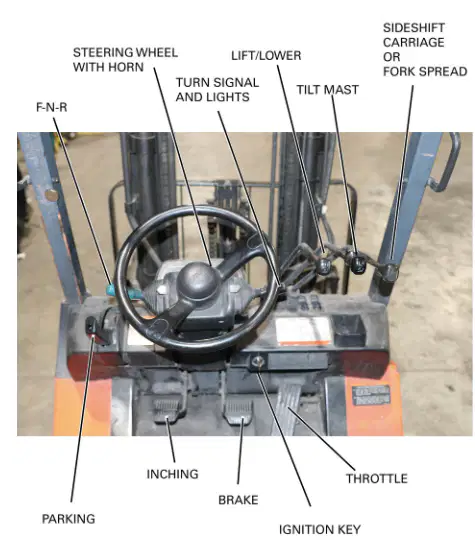
Which part of the operator's cab is used to tilt the mast?
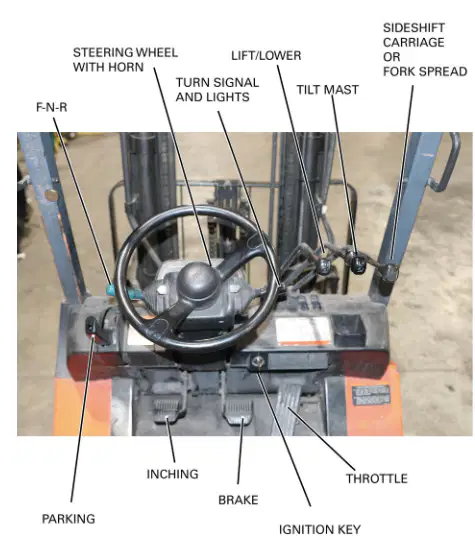
What is the function of the throttle in the operator's cab?
To control the speed of the vehicle
To steer the vehicle
To apply brakes
To signal turns
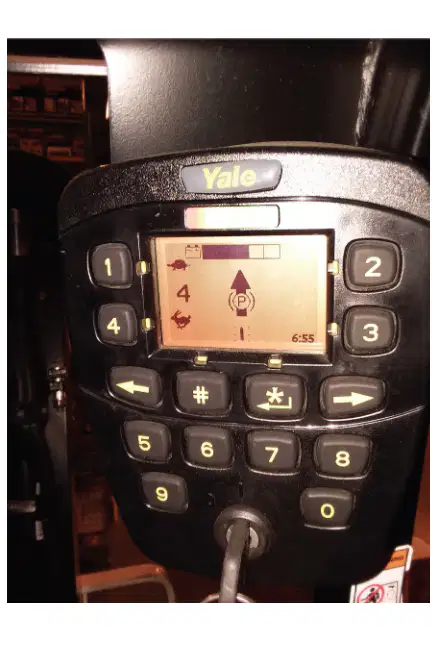
What do instrument panels include?
Gauges that monitor engine and transmission temperature, oil pressure, fuel level, and battery charge.
Only speedometers.
Only fuel gauges.
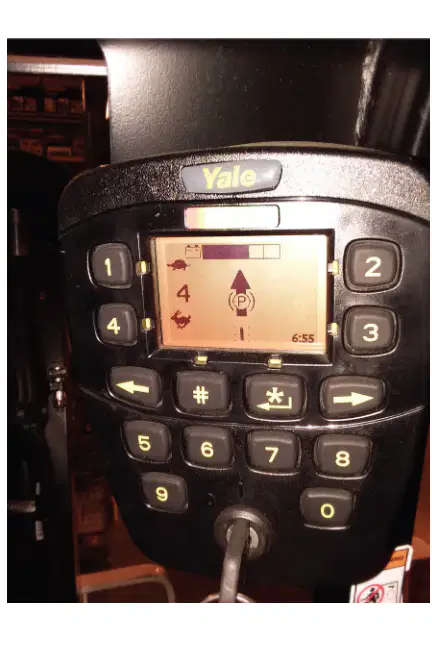
Where may panels be located on a forklift?
Behind the steering wheel, on the forklift’s dash, or as part of the steering column.
Only on the roof.
Only on the doors.
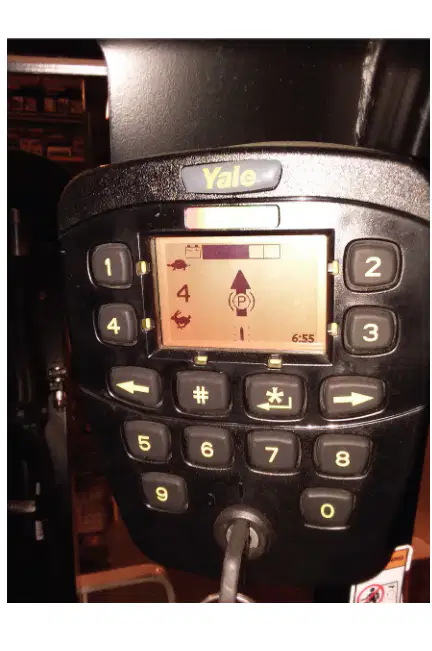
The instrument panel may be a ________ unit.
standalone
integrated
modular
combined
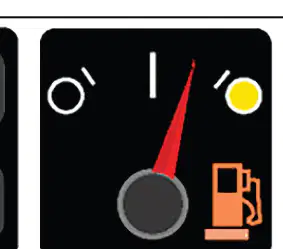
What does the Fuel-Level Gauge indicate on diesel engine forklifts?
The amount of fuel remaining in the tank
The engine temperature
The battery charge level
The oil pressure
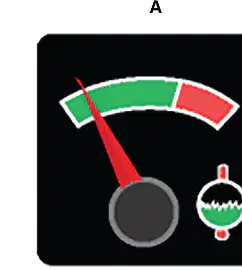
The function of the Engine Temperature Gauge is to:
measure the speed of the vehicle
indicate the fuel level
monitor the engine's temperature
control the air conditioning system
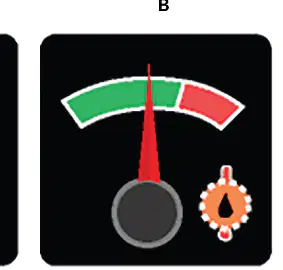
The Transmission Oil Temperature Gauge indicates:
the level of oil in the transmission
the temperature of the transmission oil
the pressure of the transmission oil
the speed of the vehicle
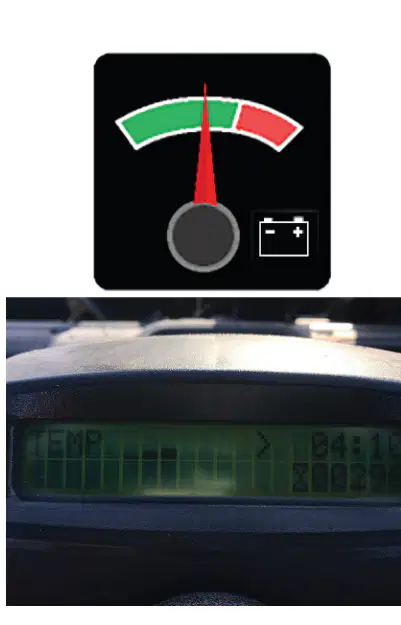
What does the Battery Charge Indicator show on a forklift?
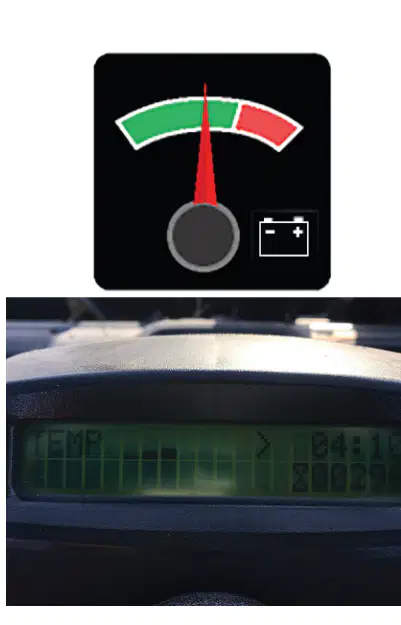
The amount of charge remaining in the forklift’s main batteries.
The speed of the forklift.
The weight of the load being carried.
The temperature of the engine.

When should the forklift be attached to a charger according to the Battery Charge Indicator?
When the needle enters the red zone.
When the needle enters the green zone.
When the needle enters the yellow zone.
When the needle is in the off position.
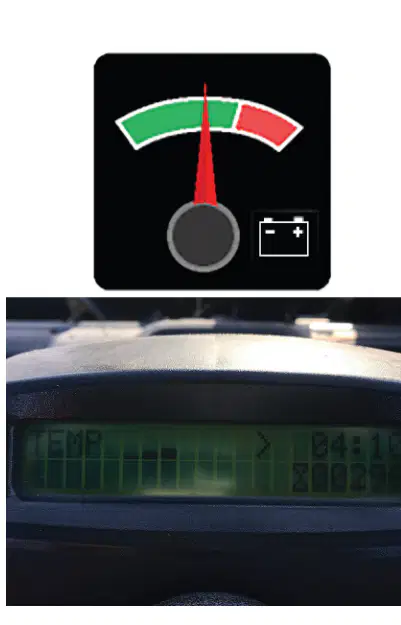
What does the Service Hour Meter indicate?
The period of time the machine has been running during the life of the forklift.
The amount of fuel consumed by the forklift.
The speed at which the forklift is moving.
The weight the forklift can lift.
Why is it important to monitor the Service Hour Meter on a forklift?
Maintenance should be scheduled and performed based on the time shown on the meter.
It helps in tracking the fuel consumption of the forklift.
It ensures the forklift is operated within safe temperature limits.
It provides information about the load capacity of the forklift.
What are the two categories into which controls can be grouped?
Which of the following is a category of controls?
Vehicle Movement
Electrical Systems
Hydraulic Systems
Fuel Systems
What type of lever is used on machines that have a torque converter drive?
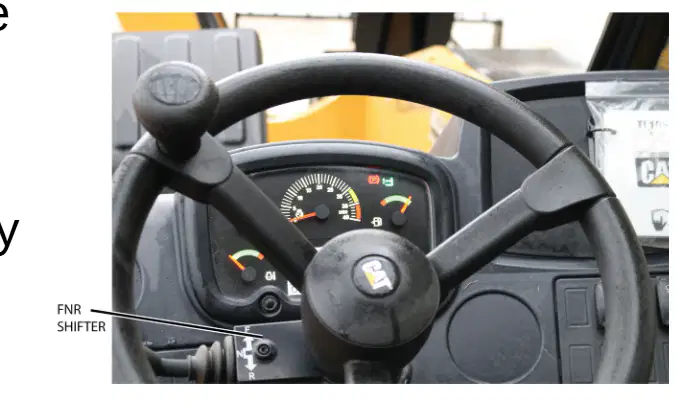
Forward/Neutral/Reverse (F-N-R) Lever
Hydraulic Lever
Manual Lever
Electric Lever
What is a torque converter drive commonly used for?
Powering forklifts
Controlling hydraulic fluid
Manual operations
Electric vehicles
What is the other form of drive mentioned besides the torque converter drive?
Hydrostatic drive
Electric drive
Manual drive
Pneumatic drive
What type of shifter may be found on electric-powered forklifts?
Manual shifter
Automatic shifter
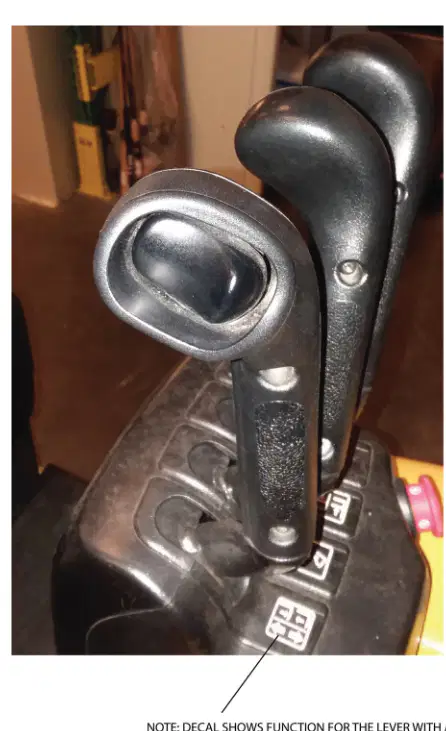
Similar type of shifter as shown
Hydraulic shifter
What type of pedals do IC-powered forklifts have?
Throttle, brake, and inching pedal
Throttle and brake pedal
Brake and inching pedal
Engage the _______ whenever exiting the forklift or leaving it unattended.
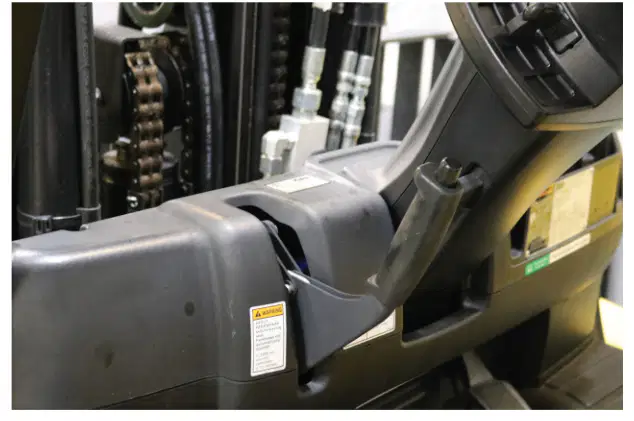
parking brake
ignition switch
seat belt
accelerator
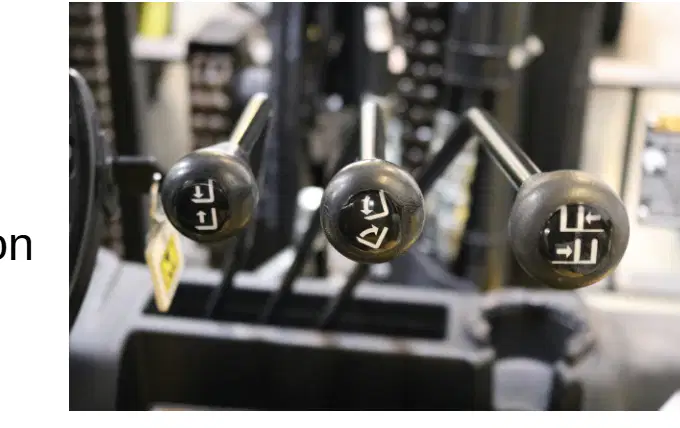
What is the purpose of the levers on a forklift?
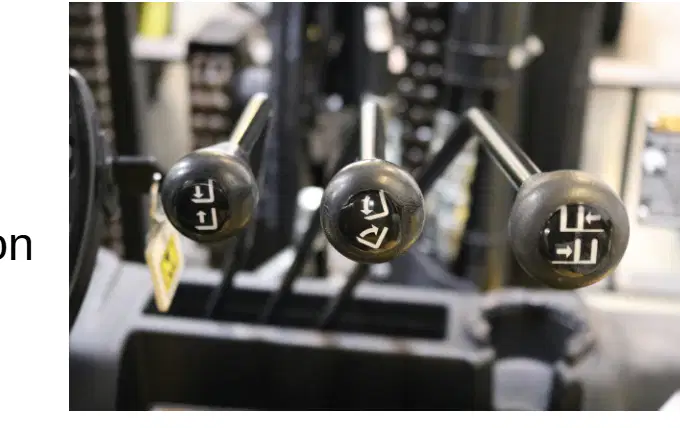
The symbols on the levers show the fork’s action based on the direction the lever is moved.
True
False
The hydraulic mast controls on a conventional forklift may include a lift cylinder, tilt cylinder, and, depending on the forklift’s features, a carriage sideshift and/or forks spread _______.
cylinders
levers
gears
pistons
What does the first lever (lift control) control in a forklift?
The tilt of the mast
The lift cylinder to raise and lower the carriage
The side shift movement of the carriage
What is the function of the second lever (tilt control) in a forklift?
Controls the lift cylinder
Controls the tilt of the mast
Controls the side shift movement
Fill in the blank: The third or fourth lever (side shift or spread control) controls the ________ of the carriage or the spreading and narrowing of the forks.
side shift movement
lifting height
tilt angle
speed
What should you adjust before starting the forklift?
Seat height, armrests, and mirrors
Engine
Tires
Adjustments can affect safety as well as ________.
operator comfort
fuel efficiency
engine power
vehicle speed
If you will be working at night, what should you familiarize yourself with?
Light switches
Brake system
Fuel gauge
What is the function of a switch in an electrical circuit?
To increase voltage
To make or break the circuit
To store energy
To convert AC to DC
Fill in the blank: Forklift switches are mechanical or electrical and typically connect or disconnect critical functions such as the ______ and lights.
starter
engine
brakes
horn
What is the purpose of a fuel shutoff switch on some machines?
To increase fuel flow
To prevent fuel from flowing from the fuel tank into the supply lines
To charge the battery
To start the engine
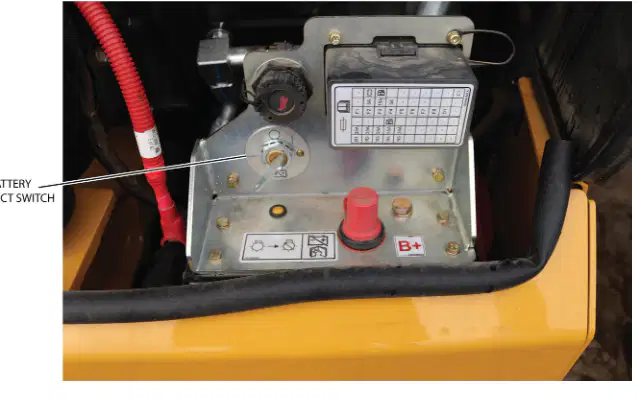
Some machines have a battery disconnect switch that disables the entire ________ system. This switch should be turned off when the machine is idle overnight (or longer).
electrical
mechanical
hydraulic
pneumatic
What does the 'Off (1)' position do in the IC-engine start switch?
Activates the starter
Stops the engine and disconnects power
Activates all electrical circuits except the starter motor circuit
What happens when the IC-engine start switch is in the 'On (2)' position?
Activates the starter
Stops the engine and disconnects power
Activates all electrical circuits except the starter motor circuit.
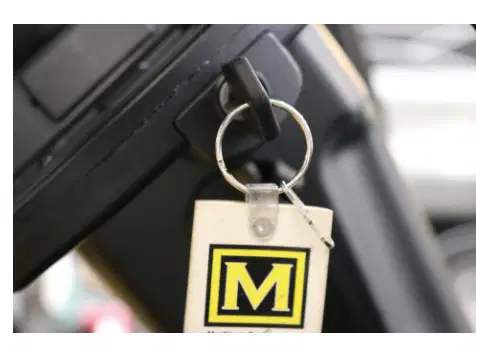
What is the function of the 'Start (3)' position in the IC-engine start switch?
Activates the starter
Stops the engine and disconnects power
Activates all electrical circuits except the starter motor circuit.

