
 Worksheets
Chapter 7 Vocabulary: Cardiology and Blood
Total questions: 73
Worksheet time: 37mins
Fill in the blank: In cardiology, the wall dividing the right and left sides of the heart is called the _______.
septum
atrium
valve
ventricle
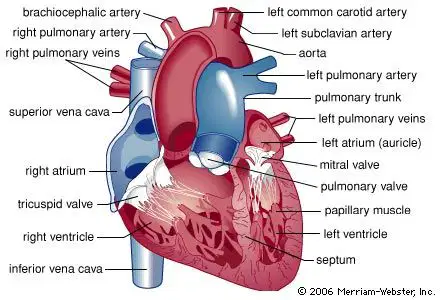
Fill in the blank: One of the two upper chambers of the heart is called the _______.
atrium
ventricle
aorta
valve
Fill in the blank: The two lower chambers of the heart are called the _______.
ventricles
atria
valves
septum
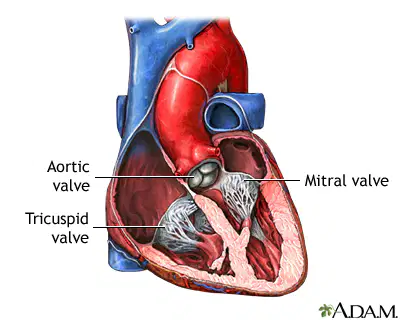
Fill in the blank: The heart valve located between the right atrium and the right ventricle is called the _______.
tricuspid valve
mitral valve
pulmonary valve
aortic valve
Fill in the blank: The heart valve located between the right ventricle and the pulmonary artery is called the _______.
pulmonary valve
mitral valve
aortic valve
tricuspid valve
Fill in the blank: The heart valve located between the left ventricle and the pulmonary artery is called the _______.
bicuspid valve
tricuspid valve
pulmonary valve
aortic valve
Fill in the blank: The heart valve located between the left ventricle and the aorta is called the _______.
aortic valve
mitral valve
pulmonary valve
tricuspid valve
Fill in the blank: The pathway of electrical impulses that controls the heart’s pumping action is called the _______.
cardiac conduction system
pulmonary circuit
systemic circuit
respiratory tract
Fill in the blank: The part of the electrical conduction system of the heart that acts as the primary pacemaker is called the _______.
sinoatrial node
atrioventricular node
bundle of His
Purkinje fibers
Fill in the blank: The part of the electrical conduction system of the heart located at the bottom of the right atrium is called the _______.
atrioventricular node
sinoatrial node
bundle of His
Purkinje fibers
Fill in the blank: The part of the electrical conduction system of the heart located between the AV node and the bundle of His is called the _______.
atrioventricular (AV) junction
sinoatrial (SA) node
Purkinje fibers
left bundle branch
Fill in the blank: The part of the electrical conduction system of the heart located in the upper part of the septum dividing the ventricles is called the _______.
bundle of His
sinoatrial node
Purkinje fibers
atrioventricular node
Fill in the blank: The part of the electrical conduction system of the heart that divides from the bundle of His and carries the electrical impulse to the walls of the ventricles is called the _______.
bundle branches
sinoatrial node
Purkinje fibers
atrioventricular node
Fill in the blank: The part of the electrical conduction system of the heart that divides from the bundle branches is called the _______.
Purkinje fibers
Sinoatrial node
Atrioventricular node
Bundle of His
Fill in the blank: A blood vessel that carries oxygenated blood away from the heart is called an _______.
artery
vein
capillary
venule
Fill in the blank: The area where exchanges of oxygen and carbon dioxide, and nutrients and waste products, take place is called the _______.
capillary bed
artery
vein
alveolus
Fill in the blank: A large vein that carries blood to the heart from the legs and trunk is called the _______.
inferior vena cava
pulmonary artery
aorta
superior vena cava
Fill in the blank: A large vein that carries blood from the arms, head, and neck to the heart is called the _______.
superior vena cava
inferior vena cava
pulmonary artery
aorta
Fill in the blank: To examine the body using the fingers or hands is to _______.
palpate
incise
auscultate
percuss
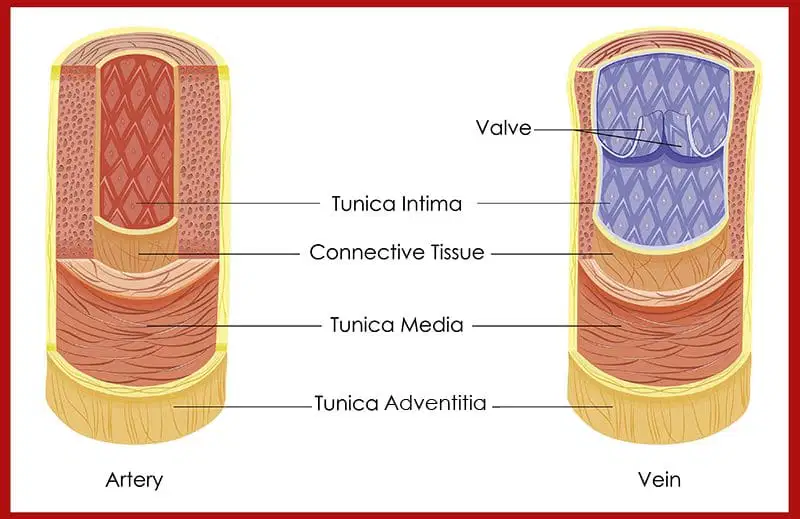
Fill in the blank: The outer layer of veins or arteries is called the _______.
tunica adventitia
tunica intima
tunica media
endothelium
Fill in the blank: The middle layer of veins or arteries is called the _______.
tunica media
tunica intima
tunica externa
endothelium
Fill in the blank: The inner layer of veins or arteries is called the _______.
tunica intima
tunica media
tunica externa
endothelium
Fill in the blank: The circulation of blood between the heart and the lungs is called the _______.
pulmonary circuit
systemic circuit
coronary circuit
hepatic portal system
Fill in the blank: The circulation of blood between the heart and the rest of the body (except the lungs) is called the _______.
systemic circuit
pulmonary circuit
coronary circuit
lymphatic circuit
Fill in the blank: The liquid portion of blood is called _______.
plasma
serum
hemoglobin
platelets
Fill in the blank: The solid portion of blood is called _______.
formed elements
plasma
serum
lymph
Fill in the blank: A red blood cell that contains the protein hemoglobin that carries oxygen in the blood is called an _______.
erythrocyte
leukocyte
thrombocyte
plasma cell
Fill in the blank: A white blood cell capable of producing antibodies and destroying pathogens is called a _______.
leukocyte
erythrocyte
thrombocyte
hepatocyte
Fill in the blank: Part of the formed elements of blood that plays a role in blood clotting is called a _______.
thrombocyte
erythrocyte
leukocyte
plasma
Fill in the blank: A cell that can become any type of cell is called a _______.
stem cell
red blood cell
muscle cell
nerve cell
Fill in the blank: A type of white blood cell that is the body’s first defense against illness is called a _______.
neutrophil
lymphocyte
eosinophil
basophil
Fill in the blank: A type of white blood cell is called an _______.
eosinophil
neuron
hepatocyte
osteocyte
Fill in the blank: A type of white blood cell is called a _______.
basophil
erythrocyte
hepatocyte
neuron
Fill in the blank: A category of short-lived white blood cells including neutrophils, eosinophils, and basophils is called a _______.
granulocyte
lymphocyte
erythrocyte
monocyte
Fill in the blank: A type of white blood cell that plays a role in boosting the body’s immune system is called a _______.
lymphocyte
erythrocyte
platelet
neuron
Fill in the blank: A type of lymphocyte that produces antibodies is called a _______.
B cell
T cell
Macrophage
Neutrophil
A type of lymphocyte that can give chemical signals to regulate immune response or fight infected cells directly is called _______.
T cell
B cell
Macrophage
Neutrophil
A substance that can prompt an immune response is called an _______.
antigen
enzyme
hormone
neuron
The largest of the white blood cells; matures into macrophages, which 'eat' invading organisms, is called a _______.
monocyte
lymphocyte
eosinophil
basophil
A cell produced in the bone marrow that fragments into platelets is called a _______.
megakaryocyte
erythrocyte
osteoblast
lymphocyte
A common blood test used to determine the number of red blood cells, white blood cells, and platelets in a patient’s blood is called _______.
complete blood count (CBC)
blood glucose test
lipid profile
liver function test
A condition in which a person has either too few red blood cells or too little hemoglobin in the blood is called _______.
anemia
leukemia
hemophilia
thrombosis
A designation based on the presence or absence of specific antigens on a person’s red blood cells is called _______.
blood type
genotype
antibody
plasma group
A system of classifying blood type based on the presence or absence of A and B antigens on a person’s red blood cells is called the _______.
ABO blood group system
Rh factor system
MNS blood group system
Kell blood group system
A protein that may be present on a person’s red blood cells is called _______.
Rh factor
Hemoglobin
Insulin
Keratin
A designation for people who have Rh factor on their red blood cells is called _______.
Rh positive
Rh negative
Type O
Universal donor
A designation for people who do not have Rh factor on their red blood cells is called _______.
Rh negative
Rh positive
Type O
Universal donor
A transfer of blood from one person to the bloodstream of another is called a _______.
transfusion
diffusion
injection
translocation
Blood in the arteries; oxygenated and marked by a bright red color is called _______.
arterial blood
venous blood
plasma
serum
Blood in the veins; it is deoxygenated and marked by a dark, deep red color is called _______.
venous blood
arterial blood
plasma
serum
A tubular device with a plunger that, when pulled, acts to draw in fluid (e.g., blood) is called a _______.
syringe
stethoscope
thermometer
scalpel
Blood in the capillaries; contains both arterial and venous blood and its color is between bright and deep red is called _______.
capillary blood
arterial blood
venous blood
plasma
The formation of a clot within a blood vessel is called _______.
thrombosis
anemia
hemophilia
leukemia
A reaction to injury in a blood vessel causing narrowing of muscular tissue at the site of the injury is called _______.
vasoconstriction
vasodilation
hemolysis
thrombosis
A substance in the body that speeds up a specific reaction is called an _______.
enzyme
hormone
vitamin
antibody
An enzyme in plasma that controls platelet response is called _______.
thrombin
amylase
lipase
pepsin
The first stage of hemostasis, concluding with the formation of a platelet plug, is called _______.
primary hemostasis
secondary hemostasis
fibrinolysis
coagulation cascade
A protein associated with blood clotting; turned into fibrin when injury occurs, creating a mesh with platelets to stop bleeding, is called _______.
fibrinogen
hemoglobin
albumin
myosin
A protein that cannot be dissolved; forms a mesh with platelets to stop bleeding when injury occurs is called _______.
fibrin
albumin
collagen
keratin
The mesh of fibrin and activated platelets formed at an injury site is called a _______.
hemostatic plug
clotting factor
plasma membrane
red blood cell
The second stage of hemostasis, concluding with the formation of the hemostatic plug, is called _______.
secondary hemostasis
primary hemostasis
fibrinolysis
vasoconstriction
The breaking down of fibrin as an injury heals is called _______.
fibrinolysis
hemolysis
coagulation
thrombosis
An enzyme that plays a vital role in breaking apart fibrin as an injury heals is called _______.
plasmin
thrombin
collagenase
amylase
A blood protein involved in the process of blood clotting is called a _______.
clotting factor
hemoglobin
insulin
albumin
The series of changes in the body to prevent blood loss while also avoiding unnecessary and dangerous excessive clotting is called the _______.
coagulation cascade
immune response
respiratory cycle
renal filtration
A disorder that can cause excessive bleeding is called _______.
hemophilia
anemia
leukemia
thrombosis
A disorder that can cause excessive clotting is called _______.
thrombophilia
anemia
hemophilia
leukopenia
A clot formed within a blood vessel is called a _______.
thrombus
embolus
plaque
aneurysm
A blood clot in the lungs; potentially deadly disorder is called _______.
pulmonary embolism
myocardial infarction
asthma
pneumothorax
In phlebotomy, a chemical agent that affects how blood can be processed and tested is called an _______.
additive
antibody
enzyme
plasma
The liquid portion of blood that has been allowed to clot; it is distinct from plasma and does not contain fibrinogen is called _______.
serum
plasma
whole blood
lymph
Fill in the blank: A(n) ________ is an anticoagulated blood specimen that has not been separated into solid and liquid components by spinning in a centrifuge.
whole blood specimen
serum sample
plasma sample
clotted blood specimen
Fill in the blank: The ________ is the middle layer of an anticoagulated blood specimen that has been spun in a centrifuge; contains white blood cells and platelets.
buffy coat
plasma
serum
hematocrit

