
Font size
 Worksheets
CFE Review Quiz 4
Total questions: 30
Worksheet time: 17mins

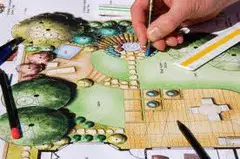
A professional trained in the art and science of arranging plants and hardscapes. Designs gardens, parks, recreation facilities, landscapes, and traffic patterns...

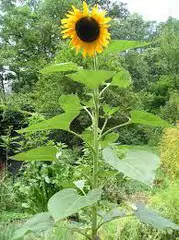

Symmetrical and asymmetrical are two types of ___________.
Balance
Harmony
Scale
Centering
Size comparisons between design components is known as:
Balance
Design
Proportion
Dispositon

What is the plant below?
English Ivy
Pansy
Geranium
Jade
Chrysanthemum

What is the plant below?
English Ivy
Pansy
Boston Fern
Jade

ID this plant
Snake Plant
Thanksgiving Cactus
Pothos
Coleus
Swedish Ivy

ID this plant
Snake Plant
Thanksgiving Cactus
Pothos
Coleus
Swedish Ivy

ID this plant
Boston Fern
Wandering Jew
Wax Begonia
Succulents
Swedish Ivy

Identify this plant.
Bermudagrass
Carpet Bugle
Winged Euonymus
Oakleaf Hydrangea

Identify this plant.
Japanese Maple
Red Maple
Mentor Barberry
Redbud

Identify this plant.
Petunia
Zonal Geranium
Peony
Pansy
What are the FFA Colors?
National Blue &
Golden Yellow
American Blue &
Corn Gold
Blue & Gold
National Blue & Corn Gold
The president is stationed by the
Ear of Corn
Flag
Rising Sun
Emblem of Washington
What is the first line of the FFA Motto?
(a)
The Cross Section of the Ear of Corn represents
Unity
Brotherhood
Agriculture
Crops
The Advisor is stationed by the
Plow
Owl
Flag
Desk

This image is known as the
FFA Seal
FFA image
FFA emblem
FFA symbol
What does SAE stand for?
Society of Automotive Engineers
Sale of Animals and Equine
Supervised Agriculture Experience
Small Animal Experience
Which best describes working as an intern for a company?
Placement
Entrepreneur
Research
Exploration
Which best describes studying a concept as a scientist?
Placement
Entrepreneur
Research
Exploration
Which best describes basic learning about a subject?
Placement
Entrepreneur
Research
Exploration
This type of SAE deals with planning, implementing, operating and assuming financial risks in an agricultural business or farming activity.
Placement
Entrepreneurship
Research
School Based Enterprise
4 P's of Marketing
Product, Potential, Public, Price
Public, Person, Promotion, Price
Product, Promotion, Place, Price
Product, Person, Potential, Price



