
 Worksheets
US History EOC Review 3
Total questions: 83
Worksheet time: 47mins


What strategy did the United States use that involved attacking only important strategic islands and bypassing others?
blitzkrieg
the Manhattan Project
kamkikaze
island hopping
Which group is an international peacekeeping body formed near the end of WWII in an effort to prevent future wars?
The United Nations
The League of Nations
The Geneva Convention
The North Atlantic Treaty Organization
What did Hitler do before he invaded Poland, to make sure the Soviets would not attack him later?
He canceled trade with the Soviets
He signed a non-aggression pact with the Soviets.
He challenged Stalin to a fist fight.
He attack Soviet Naval bases before the Polish invasion.
Why did we put an embargo against Japan on materials like iron, oil, steel, and rubber?
Because of the multiple trade wars that we had in the past.
Because we had to stop them from building Mecha-Godzilla.
Because we simply did not like them, and vice versa.
To stop supplying materials for their war and prevent Japan from spreading.
What lead to the surrender of Japan and the end of WWII in the Pacific?
US dropped atomic bombs on 2 Japanese cities.
Russia defeated the Japanese in North Korea.
Japan dropped atomic bombs on Pearl Harbor Naval base.
United States agreed to help rebuild Japan

This all-African-American unit accompanied B52 bombers on bombing raids over Europe.
Tuskegee Airmen
Navajo Codetalkers
Mexican-Americans
The Nisei

The picture shows defendants on trial at Nuremberg, Germany in 1945. Who were the defendants?
Nazis accused of war crimes
American generals accused of war crimes
Japanese soldiers who mistreated American POWs
Italian generals who had supported Hitler
What US leader made the decision to use atomic bombs against Japan?
Roosevelt
Truman
Eisenhower
Churchill
How did the Marshall Plan aim to contain the spread of communism?
It built up the western European armed forces.
It helped rebuild and strengthen European economies.
It forced Americans to take loyalty oaths to avoid losing their jobs.
It created a military alliance among western European and North American nations.
Which choice best describes the Second Red Scare ?
the use of military force to put down civil unrest in American cities
the use of accusations, blacklisting, and investigations against suspected communists
the effort to expand civil rights protections to more groups of Americans
the use of unethical searches and unfounded proclamations of a planned communist revolution in America by Attorney General A Mitchell Palmer
What is NATO?
A military alliance between Western European Countries, the U.S. and Canada.
A military alliance between Western European Countries, the Soviet Union and China.
A military alliance between Eastern European Countries, Including the Soviet Union and its satellite nations.
A military alliance between Eastern European Countries.
Which of the following terms refers to the indirect but hostile conflict between the U.S. and Soviet Union that began at the end of WWII and lasted until 1991?
Iron Curtain
Soviet-Communist War
Korean War
Cold War
What is significant about the 38th parallel?
It divides Western and Eastern Europe, this line is also described as the Iron Curtain
The division between North and South Korea
The division between China and North Korea, also known as the Iron Curtain.
The 38th parallel was the location of all communist satellite nations.
Which statement best describes the primary focus of the House Un-American Activities Committee in the 1950s?
to prevent the admission of Red China to the United Nations
to prevent the integration of various racial groups in U.S. society
to investigate radical groups in order to find disloyal Americans
to place quotas on the number of immigrants entering the U.S.

The launch of Sputnik I intensified Cold War tensions and caused the —
United States to increase spending on technology, education and weapons to compete with the Soviet Union
Soviet Union to move missiles and warships to Cuba in order to threaten the United States
United States to send troops and aid to East Berlin to free it from Soviet control
Soviet Union to threaten Europe with nuclear attack if Soviet airspace were violated
Which statement best explains how the United States responded to the presence of the "Iron Curtain"?
The United States established a blockade of East Berlin.
The United States worked to stop the spread of communism.
The United States withdrew from its European alliances
The United States declared war on the Soviet Union.
Which reason explains why President Truman issued the Truman Doctrine?
The Soviet Union interfered in the domestic affairs of Greece and Turkey.
The Soviet Union refused to allow Greece and Turkey to join the United Nations.
The Soviet Union provided economic assistance to Greece and Turkey.
The Soviet Union prevented Greece and Turkey from accepting the Marshall Plan.

What is the map associated with?
The US and British response to the Berlin Wall
The US and British response to the Berlin Blockade
The Soviet Union building the Iron Curtain
The division on Berlin
Detente was about:
Easing tensions between the US and USSR
Increasing tensions between the US and USSR
Punishing the USSR
Containing the USSR
What is the name of Lyndon B. Johnson's program designed to eliminate poverty and racial injustice?
Make American Great Again
The Great Society
The Vietnam War
Why did the U.S. get involved in the Vietnam War?
To steal money from South Vietnam.
To stop the spread of communism in Asia.
What were people protesting at Kent State?
Nuclear Bombs
Civil Rights
President Nixon
Vietnam War
Which amendment lowered the voting age to 18 years old?
23th
24th
25th
26th
Martin Luther King Jr. used ___________ protests.
non-violent
deadly
violent
chaotic
The Little Rock Nine needed protection from the __________ government because the __________ government would not enforce the law.
state, federal
federal, state
state, local
local, state
____________ was the belief that if Vietnam became communist then other countries would too.
Domino Theory
Yahtzee Theory
Poker Theory
Jenga Theory
The Brown vs. Board of Education Supreme Court ruling stated that ________ in schools was unconstitutional.
segregation
federation
regulation
None of these
The Montgomery Bus Boycott started because ________ was arrested.
Thurgood Marshall
Malcom X
Rosa Parks
Martin Luther King Jr.
The Pentagon Papers showed that:
The US was winning in Vietnam
The US government lied about Vietnam
The US was going to attack the USSR
he US government was ending the war in Vietnam
The Watergate Scandal resulted in President __________ resignation.
Kennedy's
Johnson's
Nixon's
Ford's

Who was put in charge of the American forces in Korea and even wanted to use the atomic bomb against China?
John Bassilone
Douglas MacArthur
Harry Truman
Richard Nixon

This Amendment outlawed slavery
13th
14th
15th
This Amendment made African Americans citizens guaranteed equal protection under the law -
13th
14th
15th
This Amendment guaranteed African Americans the right to vote -
13th
14th
15th
Laws created after Reconstruction to enforce segragation in public places -
Jim Crow Laws
Black Codes
Jim Pigeon Laws
KKK Code
U.S. Supreme Court case that made segregation legal in the U.S. - created the "seperate but equal" principle.
Plessy V. Ferguson
Brown V. Board of Education
Hernanadez V. Texas
Miranda V. Arizona
A case in which the Court held that the 14th Amendment prohibited the University of Texas from rejecting applicants soley on the basis of race -
Brown V. Board of Education
Plessy V. Ferguson
Sweatt V. Painter
Hernandez V. Texas
Removed barriers to black enfranchisement in the South, banning poll taxes, literacy tests, and other measures that effectively prevented African Americans from voting -
Voting Rights Act of 1965
Voting Rights Act of 1865
Votings Rights Act of 1982
What was the goal of the Washington Naval Conference?
To keep peace in the Atlantic after WW1.
To keep peace in the pacific after WW2.
To keep peace in the pacific after WW1.
To help the US recover from the civil war.
What did the Five Power Treaty, signed between the U.S., Great Britain, Japan, France, and Italy at the Washington Naval Conference in 1922, stipulate?
That the countries involved would maintain a set ratio of warship tonnage and reduce the size of their navies by scrapping older ships.
That the countries would disarm 60 percent of their militaries, including reducing ships, tanks, and planes.
That the countries would respect the borders of China.
That the countries involved would consult with each other in the event of a future crisis in East Asia before taking any action.
What was the open door policy?
It was the idea that all countries should be able to trade freely within the Japanese market.
It was the idea that the involved countries should consult with each other before making any major decisions.
It was the idea that all countries involved should allow immigration between the countries.
It was the idea that all countries should be able to trade freely within the Chinese market.
Who was involved in the four power treaty?
United States, United Kingdom, Japan, and France.
France, Italy, Britain, and the US.
Belgium, the Netherlands, China, and Portugal.
None of these.
What were the three treaties that were made and when were they established?
Three power treaty (1921), the five power treaty (1922), and the nine power treaty (1922).
four power treaty (1921), the five power treaty (1922), and the nine power treaty (1922).
The 6 power treaty (1921), the seven power treaty (1922), And the nine power treaty (1922).
There were four treaties.
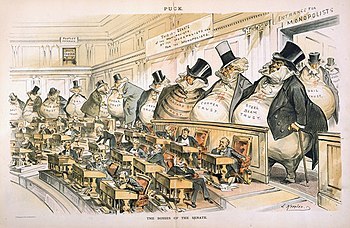
Big Business, Westward Expansion, bad working conditions, political machines, and immigration were issues of what time period in the U.S
Gilded Age
Progressive Era
Building an Empire
Civil Rights and the 60's
A union leader who ran for President of the United States five times as a Socialist Party candidate.
Eugene V. Debs
Samuel Gompers
Andrew Carnegie
Booker T. Washington
Represented the farmer and working man. Government ownership of railroads, bimetallism, and direct election of senators.
Populist Party
Reservation System
Dawes Act
Homestead Act
Address by William Jennings Bryan promoting bimetallism to help farmers pay off their debts
Pull Factors of Westward Expansion
Farmers Problems
Monopoly
Cross of Gold Speech
1887 law that distributed reservation land to individual Native American owners with the goal of turning natives into farmers. Led to sell off of Indian lands.
Reservation System
Dawes Act
Populist Party
Homestead Act
Facing 12-hour work days and wage cuts resulting from the depressed economy, factory workers at the Pullman Palace Car Company walked out in protest. The strike ended when President Grover Cleveland sent federal troops to Chicago on July 6, 1894.
The Pullman Strike
Great Anthracite Coal Strike
Great Southwest Railroad Strike
Steel Strike of 1919
The American Federation of Labor was led by _________
Lowell Mill
Terence Powderly
Samuel Gompers
Child Laborers
Who led the Pullman strike?
Samuel Gompers
Eugene V. Debs
A. Philip Randolph
Jimmy Hoffa

The Social Security Act provided for old-age pensions to be financed through
a payroll tax on working Americans and their employers.
taxes on the wealthiest Americans.
a higher tariff.
an annual appropriation by the U.S. congress

_____________ _________________was the first woman to serve in a presidential cabinet. She served under President Franklin Roosevelt
Frances Perkins
Mary McCloud Bethune
Eleanor Roosevelt
Geraldine Ferraro
The 1991 U. S. attack on Iraq to force the Iraqi's out of Kuwait
Operation Desert Storm
Title 9
Glasnot
Tiananmen Square

President Carter received a lot of criticism when he handed control of the canal back to Panama in the _________________________________________.
Panama Canal Treaty
Camp David Accords
Treaty of Paris
Treaty of Versailles
The Women’s Rights Movement helped push Congress to pass the __________________________________ but failed to get the total number of states to pass.
Equal Rights Amendment
Civil Rights Act of 1964
Civil Rights Voting Act of 1965
Camp David Accords
Congress issued the ___________________________________ that granted the President all the means necessary to fight communism in North Vietnam.
War Powers Resolution
Selective Service Act
Marshall Plan
Gulf of Tonkin Resolution
In 1979 the people of Iran were upset with the U.S. -
Because of the economic damage done to their economy by an American placed embargo
After the U.S. sold nuclear weapons to enemies of the country of Iran
After the U.S. allowed the formal brutal dictator of Iran to receive medical treatment in our country
When an American spy was caught in an Iranian government office
In retaliation, angry students from Iran -
Boycott American goods and refused to watch American made films
Formed a civil protest in the streets of Tehran, the capital of Iran
Lobbied the Iranian government to launch an attack on an American vessel in Persian Gulf
Captured the American embassy in Iran and took Americans hostage
In response to the actions of the Iranian students the U.S. government -
Dropped two tons of bombs on the capital of Iran forcing the Iranians to surrender
Sent in a special force that successfully rescued the Americans
Sent in a special force that was unable to rescue the Americans
Returned the former leader of Iran back over to Iranian soil
The Iranian Hostage Crisis finally ended-
When the Shah of Iran returned to Iran
The day Ronald Regan took office
After the U.S. dropped weapons on Iran
With the U.S. paying Iran $30 million in exchange for the hostages

The Camp David Accords was-
peace treaty to end the Cold war
agreement between the U.S and Middle eastern nations to lift the oil embargo by OPEC.
peace agreement negotiated by Carter between Israel & Egypt
agreement to protect Middle Eastern countries from Soviet rule
What did Swann v Charlotte-Mecklenberg lead to?
Busing black students from segregated neighborhoods to integrated schools
The closure of Little Rock public schools
Integration of Prince George's County public schools
none of the above
On what grounds did Brown Challenge "separate but equal"?
First Amendment
Thirteenth Amendment
Fourteenth Amendment
Civil Rights Act of 1965

1803- it established the idea of “judicial review” for the federal court systems. (The right for the courts to decide the constitutionality of a law or treaty)

1857- legalized slavery in the territories and declared the Missouri Compromise unconstitutional

1919- freedom of speech can be denied when there is a “clear and present danger”

1944- declared that the government had the right to keep Japanese Americans in internment camps due to the idea of “national security threat”


1954- declared segregation in public schools as unconstitutional (overturned Plessy v. Ferguson)

This law set out the first requirements for people to become naturalized citizens
Immigration Act of 1917
Plyler vs. Doe
14th Amendment
Naturalization Act of 1790
This banned Chinese people from coming to the US or gaining citizenship
Immigration and Nationality Act (1965)
Emergency Quota Act
Chinese Exclusion Act
Gentlemen's Agreement
This prevented Japanese people from leaving Japan to come to the US
Gentlemen's Agreement
Immigration and Nationality Act (1952)
Emergency Quota Act
14th Amendment
Policy adopted by the United States in 1939 to preserve neutrality while aiding the Allies. Britain and France could buy goods from the United States if they paid in full and transported them.
Lend Lease Act
Atlantic Charter
Neutrality Act
Cash and Carry
A series of laws created to prevent US arms sales and loans to nations at war.
Cash and Carry
Lend Lease Act
Atlantic Charter
Neutrality Acts

