
 Worksheets
8th Grade CAST Review
Total questions: 60
Worksheet time: 30mins
All matter is made of what?
energy
atoms
electrons
compounds
The positive particles of an atom are?
electrons
positrons
neutrons
protons
The central region of an atom where its neutrons and protons are is its?
nucleus
electron cloud
core
center
An atom with atomic number 6 would have how many protons?
6
12
3
Cannot be determined
A particle that moves around the nucleus is a(n)...
Proton
Neutron
Electron
Quark
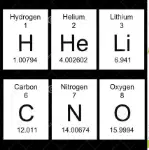
The number at the bottom of each square on the periodic table is the ...
atomic number
atomic mass
chemical symbol
element name
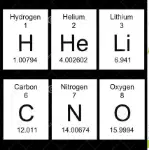
The number at the top of each square on the periodic table is the ...
atomic number
atomic mass
chemical symbol
element name
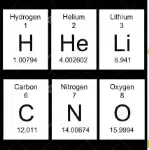
What is the chemical symbol for Lithium?
Li
He
H
N
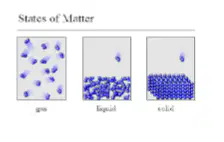
At higher temperatures ...
particles in an object have less energy
particles in an object move faster
particles in an object move at the same rate

A gas ...
has a definite shape but no definite volume
has a definite volume but no definite shape
has fast-moving particles
Freezing
Solid to gas
Liquid to solid
Gas to solid
Liquid to gas
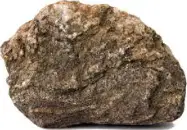
Which state of matter has tightly packed molecules?
Solid
Liquid
Gas
What is happening when my ice cream changes from a solid to a liquid?
Freezing
Melting
Burning
Evaporation
Define a liquid.
Indefinite shape, indefinite volume
Definite shape, definite volume
Found in stars
Definite volume, indefinite shape
Particles (molecules) in a ____________________ have more energy than the other states of matter.
Gas
Solid
Liquid
Plasma
What is condensation?
Gas to solid
Gas to liquid
Liquid to solid
Solid to liquid
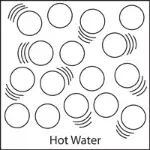
The speed of the molecules determines the _____.
density
pressure
color
temperature
volume
The slower the particles in a substance move,
the colder it is.
the warmer it is.
the more energy it has.
the less energy it has.
Thermal energy is...
heat energy.
the energy of motion.
energy of nuclear processes.
an indication of physical change.
A chemical change...
doesn't really change much.
creates a new substance.
is a change in the state of matter.
A physical change is...
a change that doesn't change the identity.
a change that makes something new.
a chemical reaction.
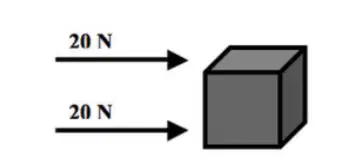
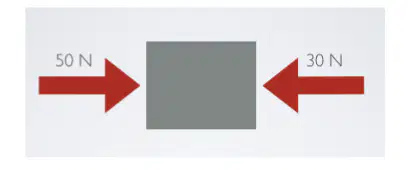
What is the net force?
40 N left
0 N Balanced
400 N right
40 N right
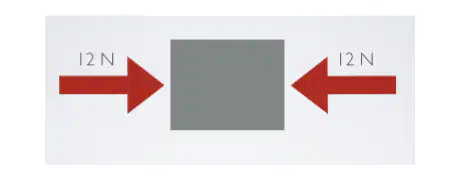
How will this object move?
It won't move.
It will move to the right.
It will move to the left.
It will move in both directions.
How will this object move?
It won't move.
It will move to the right.
It will move to the left.
It will move up.
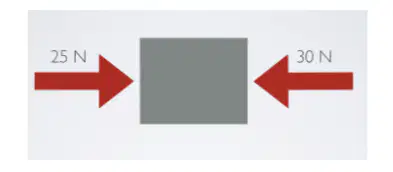
What is the net force?
30 N left
25 N right
5 N left
5 N right
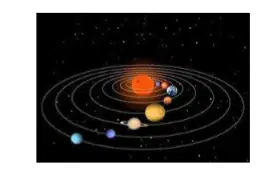
When mass increases then gravity
Decreases
Increases
Stays the same
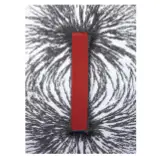
What type of force?
Magnetic
Gravitational
Applied
Normal

What force holds the planets in motion around the sun?
Magnetic
Gravitational
Electrical
Air Resistance
What does the strength of gravity between two objects depend upon?
Mass & distance
Mass & weight
Gravity & inertia
Inertia & mass
An _______ force must act on an object for it to CHANGE its motion.
unbalanced
balanced
equal
opposite

What type of energy is in this picture?
Kinetic
Potential
Electromagnetic
When plants convert the sun's energy into food, which type of energy does the sun energy become?
kinetic
chemical
thermal
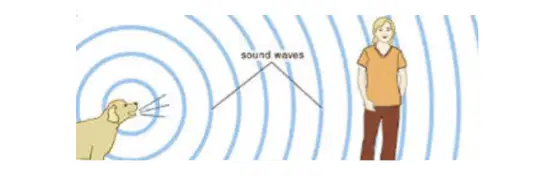
What form of energy is shown in the picture?
Mechanical (kinetic) energy
Chemical (kinetic) energy
Sound (potential) energy
Sound (kinetic) energy
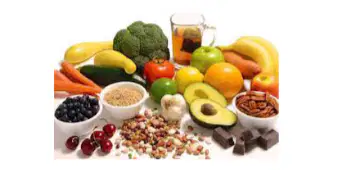
What kind of energy?
Thermal (kinetic) energy
Chemical (kinetic) energy
Chemical (potential) energy
Mechanical (kinetic) energy
What form of energy do plants use to make sugar in the photosynthetic process?
heat energy
chemical energy
solar energy
kinetic energy

What property of this wave is represented by the letter "A"?
amplitude
crest
trough
wavelength
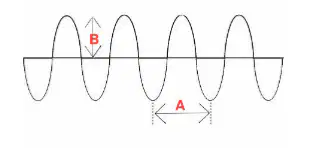
What property of the wave is represented by the letter "B"?
amplitude
crest
trough
wavelength
The number of wavelengths that pass a point each per second is:
frequency
period
longitudinal
transverse wave

Which vocabulary term is used to identify the distance between points C & G?
Amplitude
Crest
Frequency
Wavelength
When the frequency of a wave increases, what happens to the wavelength?
The wavelength is not directly affected by the frequency of a wave.
The wavelength increases.
The wavelength decreases.
More specific information is needed to form a conclusion about the wavelength.
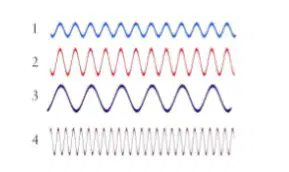
Which wave in the diagram has the greatest frequency?
1
2
3
4
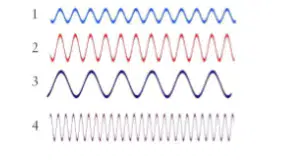
Which wave in the diagram has the greatest wavelength?
1
2
3
4
Which of the following can sound travel through?
solid
liquid
gas
all of the above
When a wave strikes an object and bounces off, what is this called? (example echo)
medium
refraction
reflection
interference
When a wave bends as it passes through at an angle from one medium to another, what is this called? (example: pencil in a glass of water)
medium
refraction
reflection
interference
What is the force that pulls objects down towards Earth's surface?
Friction
Gravity
Motion
Velocity

A collision where NO energy is lost and the objects bounce off undamaged is called what?
Elastic Collision
Inelastic Collision
Gravity
Force
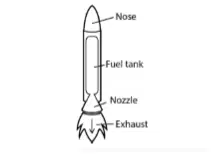
The nozzle of a rocket is pointed downward so that as fuel is ignited, the exhaust pushes downward. Why is this arrangement necessary for a rocket to function properly?
This allows the rocket to be steered properly.
As fuel is combusted, the rocket pushes the gases backward and the gases push the rocket forward.
Burned fuel can be collected on the ground.
The rocket is protected from the heat of the exhaust.

What is the net force on this box? You must include a magnitude and direction.
6 N to the right
6 N to the left
26 N to the right
26 N to the left

What is the net force on this box? You must include a magnitude and direction.
18 N to the right
18 N to the left
2 N to the right
2 N to the left
The magnetic field of a magnet is __________ the further away from the magnet.
Stronger
Weaker
Larger
Smaller
The magnetic field of a magnet is __________ the closer to the magnet.
Stronger
Weaker
Longer
Smaller
The greater the charge, the __________ the field.
Stronger
Weaker
Larger
Smaller
What makes an electromagnet stronger?
Greater number of loops.
Smaller number of loops.
Decreasing the current.
Decreasing the voltage.
Which statement is true?
Gravity can both push and pull objects.
Only celestial objects exert a gravitational force.
Only Earth exerts a gravitational force.
All objects with mass exert a gravitational force.
The force of gravity depends on ...
What substance the object is made of
The mass of the object
The volume of the object
The distance of the object from the center of the universe
As distance increases, the gravitational pull between two objects will ...
Increase
Decrease, and then increase and stabilize
Decrease
Not be affected

Which direction will the rope move?
Left
Right
Will not move
A smooth surface with faster movement produces
speed and direction describe
less friction
Gravity
Inertia
Gravity and magnetism are examples of what?
contact force
electrical force
friction
non-contact force

