
 Worksheets
Middle School Physical Science Review
Total questions: 43
Worksheet time: 23mins
James is riding a bike down a hill. As he gets to the bottom, he applies the brakes to stop the brakes forward motion. Which of the following statements best describes an example of friction acting on the bicycle?
The ground pushing up on the bike
His hands squeezing the handle of the brakes
James is body pressing down on the seat of the bike
The surface of the brake rubbing the rim of the front tire
A group of people rented a fishing boat for the day and traveled far from land. Later they discovered they needed a compass to find their way back. Which of the following describes the force acting on the compass to guide them safely back to land?
Electrical Force
Gravity
Magnetic Force
Friction
In 1969, Neil Armstrong became the first person to walk on the Moon. Video coverage showing the astronaut walking on the surface of the Moon gives the impression that he was bouncing while he walked. What is the reason for this?
The astronaut's mass on the Moon decreases.
The density of the astronaut on the Moon is higher than on Earth.
The atmosphere of the Moon affects the way the astronaut is able to move.
The astronaut's weight on the Moon depends on the Moon's gravitational force.
Contact Forces require contact between 2 objects in order to be in effect.
Which of the following are Contact types of Forces (as opposed to Non-Contact types of Forces)?
Select all that apply.
Friction
Applied Force (Push/Pull)
Gravity
Electrical Force
Non-Contact Forces do NOT require contact between 2 objects in order to be in effect.
Which of the following are Non-Contact types of Forces (as opposed to Contact types of Forces)?
Select all that apply.
Electrical Force
Magnetic Force
Friction
Gravity
Select all of the substances that are strong magnetic materials (that will easily be pulled by a magnet placed close to the substance).
glass
aluminum
iron
cobalt
nickel
The force of attraction between two objects with mass.
Friction
Gravitational Force
Electrical Force
An apple falling on your head is an example of what?
Applied Force
Magnetism
Friction
Gravity
The more mass an object has, the greater the gravitational force between it and other objects.
False
True
Depends on the environment
What is the definition of Mass?
the measure of an object from top to bottom
the weight of an object
the measure of an amount of matter in an object
How does distance impact gravitational force?
As distance decreases between two objects, the gravitational force will decrease.
As distance increases between two objects, the gravitational force will decrease.
Your living room floor is covered with thick rug. Your kitchen floor is covered with smooth tiles. Why is it more difficult to move a heavy table across your living room floor than it is to move it across your kitchen floor?
Gravity
Friction
Weight
Mass
The human eye is not able to see all of the waves that are within the Electromagnetic Spectrum. What type of radiation represents the color spectrum seen on Earth?
X-Rays
Gamma
Visible
Infrared
What is the bottom of a wave called?
radius
crest
trough
What is the top of a wave called?
crest
trough
peak

Which have the longest wavelengths?
visible light
gamma rays
radio waves
xrays

Which have the highest frequency waves?
radio waves
ultraviolet
gamma
visible light
Which is NOT true about sound waves?
A sound wave travels by the compression of molecules as it travels through a medium.
Sound waves travel as Electromagnetic Radiation.
Sound causes compression waves from side to side in matter.
The closer the molecules, the faster sound can travel.
When a light wave bounces off a surface and changes its direction.
Refraction
Absorption
Reflection
When light hits a surface, some is taken into the surface.
and transformed from light energy to heat energy.
Refraction
Absorption
Reflection
When light passes through one form of
matter into another, it changes speed distorting how the eye perceives the light.
Refraction
Absorption
Reflection
Potential Energy
stored energy
energy of motion
Kinetic Energy
stored energy
energy of motion
A ball being held by a baseball pitcher is an example of ______________.
Kinetic Energy
Potential Energy
A ball flying through the air after being thrown by a baseball pitcher is an example of ______________.
Kinetic Energy
Potential Energy
Stored energy in compounds.
Electrical Energy
Mechanical Energy
Chemical Energy.
Heat Energy
Electromagnetic Energy traveling as radiation.
Heat Energy
Sound Energy
Mechanical Energy
Light Energy
Transfer of molecular kinetic energy (Hot→Cold).
Electrical Energy
Heat Energy
Light Energy
Chemical Energy
Transferred by moving parts.
Mechanical Energy
Electrical Energy
Chemical Energy
Heat Energy
Caused by vibrations in matter.
Chemical Energy
Mechanical Energy
Electrical Energy
Sound Energy
Charged particles that follow a path.
Chemical Energy
Electrical Energy
Light Energy
Mechanical Energy
Law of Conservation of Energy
Energy cannot be used, it can only be viewed or heard.
Energy can be created and destroyed.
Energy can be conserved by capturing it inside of black hole reactors.
Energy cannot be created or destroyed, only changed from one form to another.
What happens to the speed of light as it exits the air and enters a glass of water?
There is no change of speed
It speeds up
It slows down
It stops and disappears
How does heat transfer from one object to another?
From the colder object to the hotter object
From the hotter object to the colder object

Sun tanning is an example of....
Convection
Radiation
Conduction

Frying food in a pan on the stove is an example of....
Convection
Radiation
Conduction

Baking cookies in the oven is an example of....
Convection
Radiation
Conduction
Density is a __________ property of matter.
chemical
physical
What equation do we use to determine density?
gravity / volume = density
mass / pressure = density
mass / volume = density
volume / weight = density
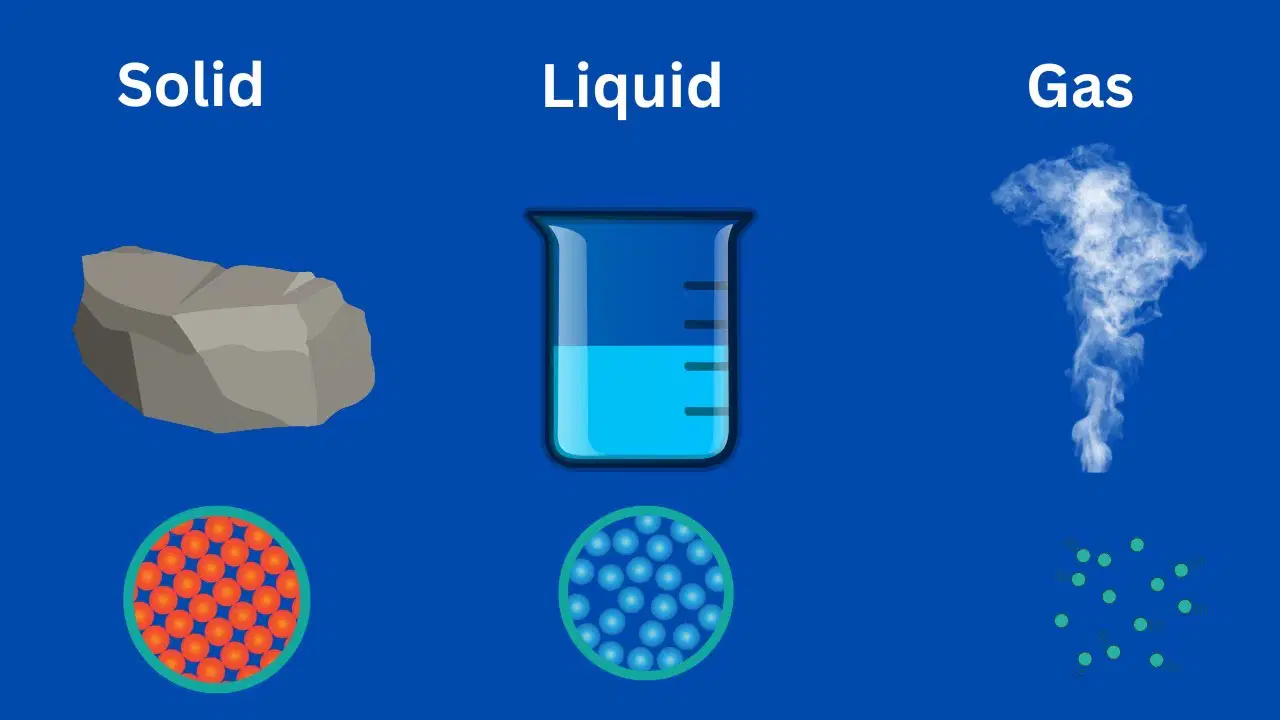
Which form of matter is the least dense?
solid
gas
liquid
Mass is....
a measure of the amount of space an object occupies.
a measure of the amount of matter in an object.
a measure of an object's length x width.
Volume is...
a measure of the of the amount of matter in an object.
a measure of an object's gravitational impact.
a measure of the space an object occupies.
Leanna decided to rearrange her bedroom by moving her dresser to the opposite wall. She tried pushing it, but found that the dresser would not move. What force was Leanne NOT able to overcome?
electrical force
balanced force
frictional force
balanced force

