
Font size
 Worksheets
CSEC Physics Formula Quiz
Total questions: 55
Worksheet time: 34mins
What is the formula for density?
Density = Mass x Volume
Density = Weight x Volume
Density = Weight / Volume
Density = Mass / Volume
What does the formula for weight include?
Mass and Density
Mass and Acceleration due to gravity
Force and Distance
Mass and Volume
Which formula represents Newton's second law?
Work = Force x Distance
Force = Mass x Acceleration
Momentum = Mass x Velocity
Weight = Mass x Gravity
What is the unit of pressure?
N/m²
J/kg
kg/m³
m/s²
What is the formula for kinetic energy?
E = 1/2 mv²
E = Fd
E = mgh
E = pV
What does the formula for potential energy include?
Mass, Height, and Acceleration due to gravity
Mass and Velocity
Pressure and Volume
Force and Distance
What is the relationship between work and force?
Work = Force + Distance
Work = Force / Distance
Work = Force - Distance
Work = Force x Distance
What does the formula for acceleration represent?
Change in force over time
Change in mass over time
Change in distance over time
Change in velocity over time
What is the formula for momentum?
p = Mass x Velocity
p = Force x Distance
p = Energy / Mass
p = Work / Time
What is the formula for specific heat capacity?
c = EH / (m x Δ T)
c = m / (EH x Δ T)
c = EH x Δ T
c = EH / m
What does the principle of moments state?
Force equals mass times acceleration
Energy is conserved in a closed system
Pressure is force per unit area
Clockwise moments equal counterclockwise moments
What is the formula for pressure in liquids?
Pressure = Mass / Volume
Pressure = Work / Distance
Pressure = Height x Density x Gravity
Pressure = Force / Area
What is the unit of work?
Pascals
Joules
Kilograms
Newtons
What does the formula for heat capacity represent?
Force per area
Mass per change in temperature
Heat energy per change in temperature
Energy per volume
What is the formula for speed?
Speed (v) = Distance (s) / Time (t)
Speed (v) = Force (F) / Acceleration (a)
Speed (v) = Mass (m) / Volume (V)
Speed (v) = Work (W) / Time (t)
If s=ut+21at2 and u=0m/s , a=9.8m/s2 , and t=3s , what is the displacement s ?
14.7m
29.4m
44.1m
58.8m
What is the formula for specific latent heat of fusion?
E₁ = m / l
E₁ = m - l
E₁ = m + l
E₁ = ml
What is the formula for acceleration due to gravity?
g = Weight / Mass
g = Pressure / Volume
g = Mass / Weight
g = Force / Area
What does the area under a velocity-time graph represent?
Total time taken
Total distance traveled
Total force applied
Total energy used
What is the formula for force in terms of spring constant?
F = pV
F = ma
F = mg
F = kx
What is the formula for specific latent heat of vaporization?
EH = mlv
EH = ml + v
EH = ml - v
EH = m / lv
What is the unit of specific heat capacity?
J/ kg/ oC
J kg oC
J/ kg
J/ oC
What is the formula to calculate the energy (Q) required to raise the temperature (T) of a mass (m) of a substance?
Q=mc∆T
Q=mc
Q= ½mv2
m=QC
Which of the following equations can be used to find the current leaving the transformer?
V = IR
P = VI
VpIp=VsIs
VsVp=NsNp
The SI unit of workdone is
J
W
s
ms−1
The SI unit of power is
J
W
s
ms−1
Your oven has a power of 5000 watts. How many kilowatts is this?
(a)
The power is expressed as
P= W/t
P= t/W
P=Wt
The unit of Energy in SI unit is
ergs
watt(W)
Joule(J)
Ampere(A)
Choose all the possible answers.
From Ohm's law, we can get the formulas of power(P)
P=VI
P=V/I
P=I2R
P=V2/R
P=VR2
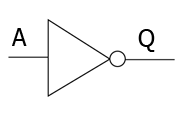
Which logic gate is this?
AND
OR
NOT
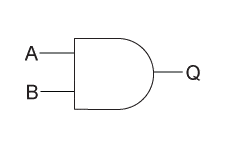
Which logic gate is this?
AND
OR
NOT
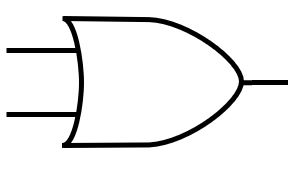
Which logic gate is this?
AND
NOT
OR

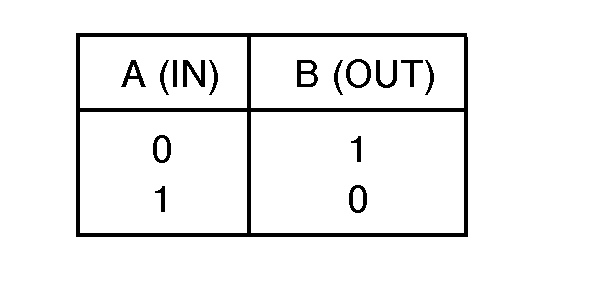
What type of logic gate is this table showing?
AND
OR
NOT
The time required to produce one cycle of a wave is known as the wave’s
amplitude
frequency
period
wavelength
Formula for period of a wave
Lens formula with focal length is ...
Unit for electric charge
Formula for electric charge
Potential difference can be determined using ...
Potential difference formula with energy in it
Resistors in series formula
How to you calculate the total resistance in a series circuit?
R1 + R2+ R3
R1 - R2 - R3
1/R1 + 1/R2 + 1/R3
R1 = R2 = R3
Rearrange 'V = IR' to make current (I) the subject
I = V2R
I = V/R
I = R/V
I=VR
total resistance in parallel
1/ R_total = (1/R1 + 1/R2 + 1/R3 + ... + 1/Rn)
Energy equation used during nuclear reactions
what is half-life?
Principle of conservation of energy

