
 Worksheets
Electrical Safety
Total questions: 59
Worksheet time: 55mins
What is electricity?
Electricity is the flow of electrons
What materials are considered conductors?
Silver, Copper, Steel, and the human body
Metals such as copper, aluminum, and glass.
How does skin moisture affect conductivity?
What is the equivalent of 1 mA in amperes?
one one-hundredth of an ampere
one one-thousandth of an ampere
What are the typical effects of 1 mA of current?
1 mA of current is typically safe but is very painful
slight tingling
What can occur at 5 mA of current?
Slight shock, involuntary reactions can result in serious injuries
5 mA can power a medium appliance if it has a dead battery.
What effects can occur at 6 to 30 mA of current?
Painful shock, loss of muscular control.
Tingling sensation and numbness, potential respiratory issues.
What are the consequences of 50 to 150 mA of current?
Extreme pain, respiratory arrest, severe muscular contractions
What can happen with 1000 mA to 4300 mA of current?
extreme nubness and cold feeling
nothing, this is safe
Ventricular fibrillation, nerve damage, death
nerve regeneration
How many electricity-related accidents occur each year in the US?
What is the rank of electrical accidents as a cause of death in the workplace?
Third
What is a defibrillator?
How does electricity affect the human heart?
Unnatural electrical forces can cause irregular heart rhythms, known as fibrillation
by making it beat harder, it strengthens the heart
it doesn't, hearts are not made out of metal
by making them magnets

Why is it important to never touch a live wire with bare hands?
To avoid electric shock or electrocution.
To test if the wire is working properly
To keep the wire clean
To feel the power of electricity
Many electrical appliances such as straightening irons, elecric razors, and hair dryers come with warning tags not to use them while in the shower or bathtub. How does wet skin make these appliences more dangerous?
Wet skin has a lower resistance, allowing more voltage to ener the body.
Wet skin has a higher resistance, allowing more voltage to ender the body.
Wet skin has a lower resistance, allowing more current to ener the body.
Wet skin has a higher resistance, allowing more current to ender the body.
What is the primary function of a circuit breaker in an electrical system?
To prevent overload by interrupting the flow of electricity
To convert AC to DC
To store electrical energy
To increase the voltage in the circuit
Which of the following is a common insulator used in electrical wiring?
Copper
Aluminum
Rubber
Steel
What is the effect of grounding an electrical device?
It increases the device's power output
It enhances the device's efficiency
It provides a path for electrical current to safely dissipate into the earth
It reduces the device's weight
What happens when a body becomes part of a circuit?
The body will increase the circuit's resistance and cause the need for additional batteries
The body becomes a power source for the circuit, making it not need batteries due to the chemicals inside a person
What factors affect shock severity?
The amount of current, the path of current, and the length of time the body is part of the circuit
Time of day, level of light, and moisture of the person's hands
Type of shock only, whether it is from AC or DC curent
What is the 'let go' current?
the electricity voltage in the kingdom from Frozen
The maximum current at which a person can voluntarily relax their grip.
the minimum voltage required for a person to move their hand open
the ohms that occurr when a person lets go of a conductive wire underwater
What is the most important piece of safety equipment?
common sense
What is dangerous when mixed together?
metal and plastic
water and electricity
water and plastic
What is the unit of measurement for voltage?
Watt
Volt
Ohm
Coulomb
What is the pressure at which current is applied known as?
Current
Voltage
Power
Resistance
What is the flow of charges called?
Voltage
Current
Resistance
Power
What is the symbol for resistance?
C
I
V
R
What is the unit of measurement for resistance?
Volt
Ohm
Coulomb
Ampere
What is the term for a material that does not permit electron flow?
Resistor
Insulator
Capacitor
Conductor
What is the primary purpose of a fuse in an electrical circuit?
To store energy
To measure current
To protect against overload
To increase voltage
What is the unit of measurement for electric power?
Joule
Watt
Ohm
Volt
What is the term for a closed loop through which electric current can flow?
Connection
Pathway
Network
Circuit
What is the term for a device that stores electrical energy?
Resistor
Transformer
Capacitor
Inductor
What is the formula for power in terms of current and voltage?
P = I + V
P = I - V
P = I × V
P = I / V
What is the main difference between alternating current (a.c.) and direct current (d.c.)?
a.c. is constant, d.c. changes direction
a.c. changes direction, d.c. is constant
Both change direction
Both are constant
What is the source of direct current (d.c.)?
Generators
Batteries
Transformers
Solar panels

Safe or dangerous?
Safe
Dangerous

Safe or dangerous?
safe
dangerous

Safe or dangerous?
safe
dangerous
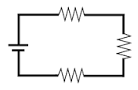


This is the circuit symbol of a
resistor
battery
fuse
switch
an earth wire


If a person is electrocuted, what is the first thing you should do?
Cut off the supply of electricity
Pour water on his head
Slap him for being careless
Call your friend to gossip about it


What did Nikola Tesla develop that is still used today?
The internet
Alternating current and wireless communication
The steam engine
The printing press
What did Thomas Edison do to the media to give negative impression to people about Nikola Tesla AC?
Slander him
Electrocuting animals in public demonstration
Talk bad about him
What is the name of falls the Nikola Tesla and General Electric work together to build first modern power station?
Havasu Falls
Palaouse Falls
Niagara Falls
Neveda Falls
What was Thomas Edison said to Nikola Tesla after Tesla present solution to him and asked for money?
"Tesla, you dont understand our American humor"
"Tesla, you dont understand anything about direct current"
"Tesla, you dont know what are you doing!"
"Tesla, are you sure you doing it right?"
What are some examples of Nikola Tesla's eccentric behavior?
Fear of the color blue
Refusal to eat anything but bread and milk
Obsession with the number 3, aversion to pearls, and staying up all night working
Wearing 3 different colored socks at the same time
How many patents did Nikola Tesla hold in his lifetime?
300
500
100
50

