
 Worksheets
Science for gifted 8th grade (GMAS)
Total questions: 47
Worksheet time: 44mins
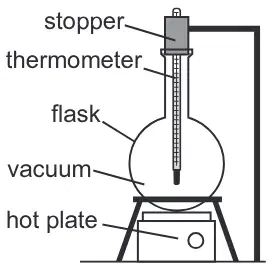
In this setup, the thermometer is being heated by conduction and convection. How should the student change the setup to heat the thermometer by using only radiation?
Use a stopper and sand with a burner.
Use a thermometer directly over a burner.
Use a hot plate without any liquid.
Use a vacuum flask with a hot plate.
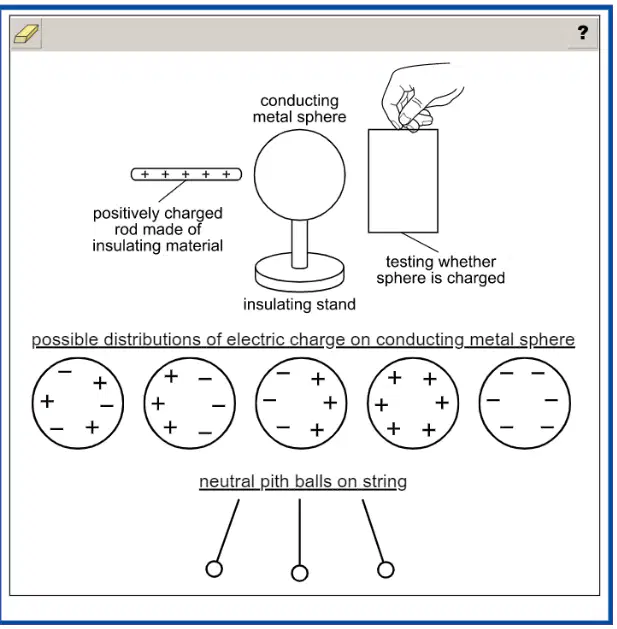
What is the purpose of using a positively charged rod made of insulating material in the experiment described?
To create a magnetic field
To apply an electric charge to a conducting metal sphere
To measure the weight of the sphere
To test the strength of the sphere
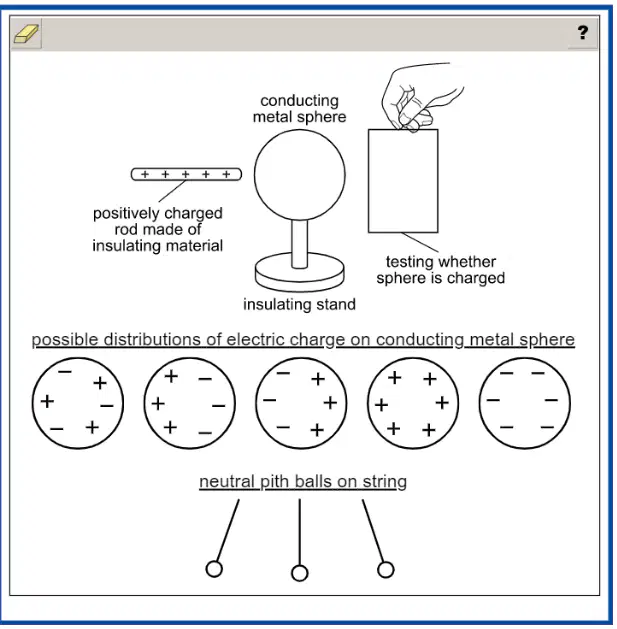
During a science experiment, Samuel noticed that a certain material was used to easily pick up an electrical charge. What material is this?
Rubber
Pith
Metal
Plastic
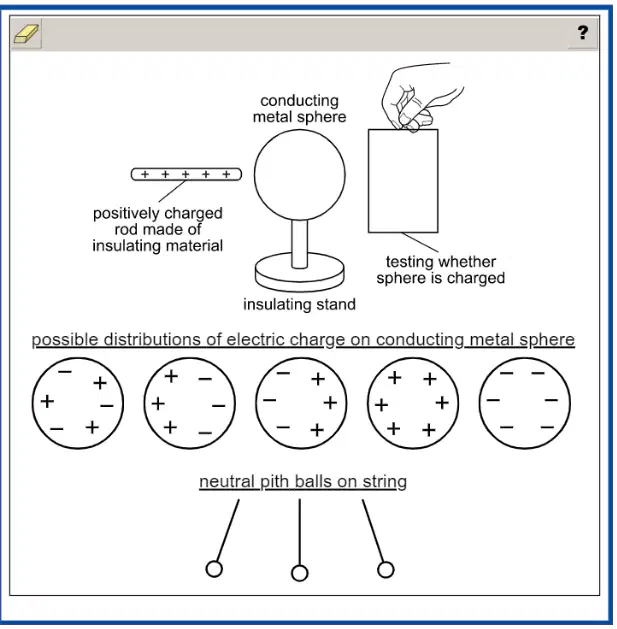
What is the role of the neutral pith ball in the experiment?
To measure temperature
To observe the behavior of the charged sphere
To apply a charge to the sphere
To test the sphere's weight
How can the student test whether the magnetic field produced by an electromagnet is increasing in strength?
A stronger magnet will require less wire for the coils.
A stronger magnet will have more widely spaced coils.
A stronger magnet will have a reduced measurable current.
A stronger magnet will attract a greater number of metallic items.
What is the definition of frequency in the context of waves?
The distance from one peak of a wave to the next peak
The number of vibrations a wave makes per unit of time
The height of the wave from the resting position
The energy transferred by the wave
Which type of wave does not require a medium to move through?
Mechanical waves
Sound waves
Electromagnetic waves
Water waves
What happens during the process of reflection?
Light bends as it moves through a medium
Light is absorbed by a surface
Light bounces off a surface
Light is scattered in all directions
What is the property of a wave that describes half the distance between the height of the peak of the wave and the trough?
Frequency
Wavelength
Amplitude
Speed
What is the electromagnetic spectrum?
The range of all types of electromagnetic radiation
The distance between two peaks of a wave
The number of waves passing a point per second
The height of a wave from its resting position
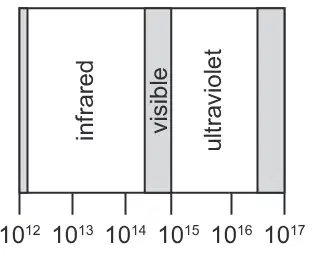
Which explanation correctly uses the data in the diagram to show how infrared radiation and ultraviolet radiation are related in terms of energy?
Ultraviolet radiation has less energy than infrared radiation because energy is inversely proportional to frequency and the frequency of ultraviolet radiation is higher.
Ultraviolet radiation has more energy than infrared radiation because energy is inversely proportional to frequency and the frequency of ultraviolet radiation is lower.
Ultraviolet radiation has less energy than infrared radiation because energy is proportional to frequency and the frequency of ultraviolet radiation is lower.
Ultraviolet radiation has more energy than infrared radiation because energy is proportional to frequency and the frequency of ultraviolet radiation is higher.
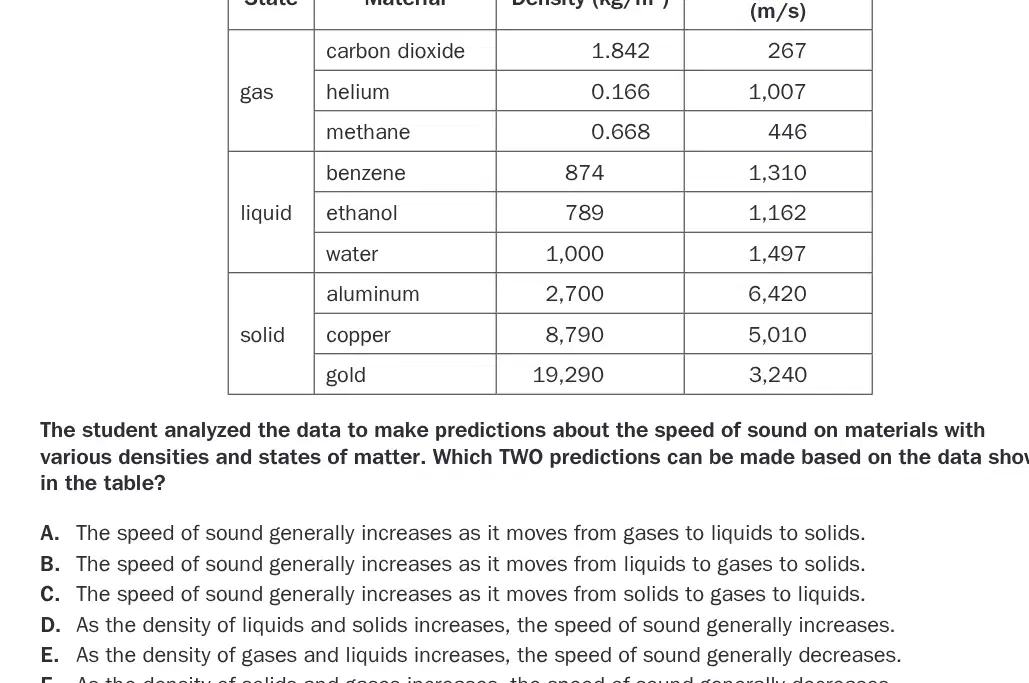
Which TWO predictions can be made about the speed of sound in materials with various densities and states of matter based on the data shown in the table?
As the density of gases and liquids increases, the speed of sound generally decreases.
The speed of sound generally increases as it moves from solids to gases to liquids.
The speed of sound generally increases as it moves from liquids to gases to solids.
As the density of liquids and solids increases, the speed of sound generally increases.
The speed of sound generally increases as it moves from gases to liquids to solids.
Which of the following terms describes the bending of waves around obstacles?
Absorption
Diffraction
Reflection
Refraction
What is the term for the bouncing back of waves when they hit a surface?
Absorption
Diffraction
Reflection
Refraction
Which term describes the change in direction of waves as they pass from one medium to another?
Absorption
Diffraction
Reflection
Refraction
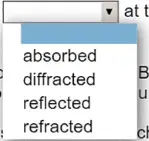
What happens to the path of white light when it enters and leaves a prism?
The light is absorbed at the boundary between the glass and the air.
The light is diffracted at the boundary between the glass and the air.
The light is reflected at the boundary between the glass and the air.
The light is refracted at the boundary between the glass and the air.
Why are different colors seen when light emerges from a prism?
Each color of light has a different amplitude.
Each color of light has a different intensity.
Each color of light has a different speed.
Each color of light has a different wavelength.
What is an echo in terms of sound wave interactions?
A sound that is absorbed by a surface
A sound that is transmitted through a surface
A sound that is reflected back from a surface
A sound that is refracted through a surface
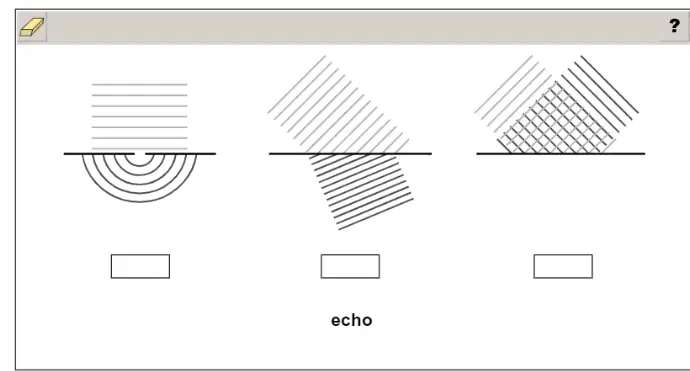
Which of the following best describes the interaction of sound waves that results in an echo?
Sound waves are absorbed by the surface
Sound waves are reflected back from the surface
Sound waves pass through the surface
Sound waves are scattered in different directions
What is displacement?
The rate at which an object changes its position
The length and direction of a straight line between two locations
The measure of the length of a path that a moving object travels
The speed at which an object moves along a path
How is distance different from displacement?
Distance includes direction, while displacement does not
Distance is always shorter than displacement
Distance measures the length of a path, while displacement is a straight line
Distance is a vector quantity, while displacement is scalar
What does velocity measure?
The speed of an object without direction
The rate at which the position of an object changes in time
The total distance traveled by an object
The acceleration of an object
Which of the following statements is true about acceleration?
An object moving at constant velocity is accelerating
Acceleration is the rate of change of speed only
An object slowing down is experiencing negative acceleration
Acceleration does not affect velocity
What is a force?
A measure of the speed of an object
A push or pull on an object
The distance an object travels
The direction of an object's motion
What are balanced forces?
Forces that cause an object to accelerate
Forces that act in the same direction
Forces that do not change an object's velocity
Forces that increase the speed of an object
What happens when unbalanced forces act on an object?
The object remains stationary
The object moves at a constant speed
The object changes its velocity
The object moves in a circular path
What is the force that resists motion between two surfaces?
Gravity
Inertia
Friction
Magnetism
Which term describes the resistance to any change in the state of motion of a physical object?
Gravity
Inertia
Friction
Velocity
What is the force of attraction that exists between any two or more masses?
Friction
Inertia
Gravity
Magnetism
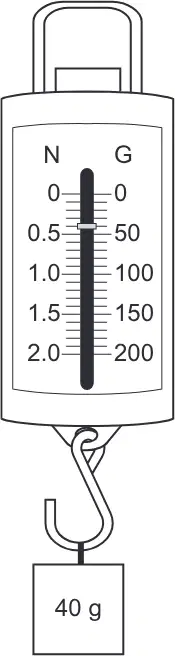
Based on the investigation, how does Earth's gravitational acceleration affect the force exerted on toy blocks of different masses?
The force is inversely proportional to the mass.
The force is directly proportional to the mass.
The force is independent of the mass.
The force decreases as the mass increases.
What claim does the group make about the relationship between force and inertia?
The force needed is inversely proportional to inertia.
The force needed is directly proportional to inertia.
The force needed is unrelated to inertia.
The force needed decreases with increased inertia.
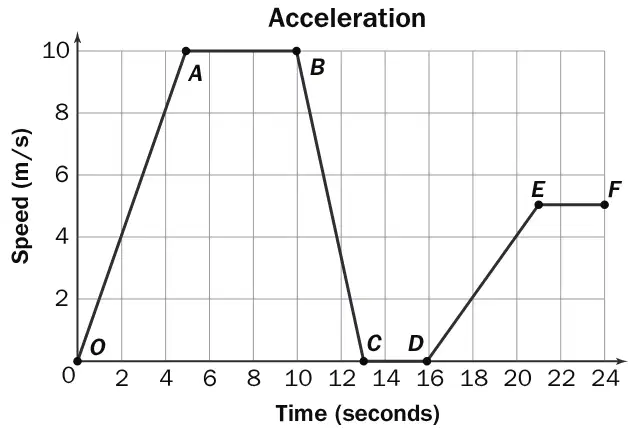
Which statement is TRUE based on the graph?
Segment BC and segment EF show constant speed.
Segment OA and segment BC show constant speed.
Segment AB and segment CD show positive acceleration.
Segment OA and segment DE show positive acceleration.
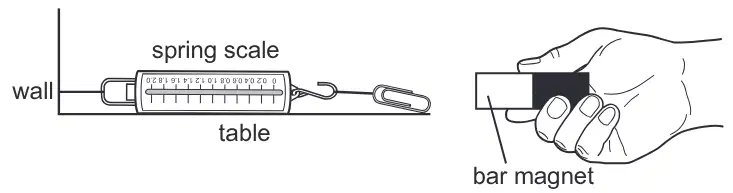
Which TWO factors should the students vary to BEST investigate the strength of the force between the paper clip and a magnet?
Attach the spring scale to the table.
Replace the bar magnet with a horseshoe magnet.
Move the magnet farther away from the paper clip.
Increase the length of the string attaching the spring scale to the wall.
Replace the spring scale with a larger spring scale.
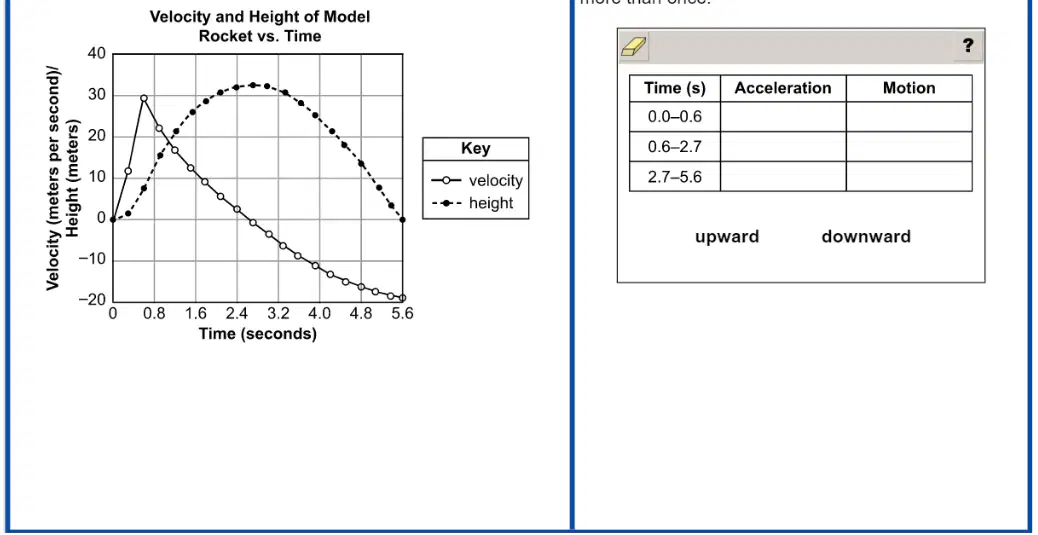
What is the total time the model rocket is in the air according to the graph?
4.8 seconds
5.6 seconds
6.4 seconds
7.2 seconds
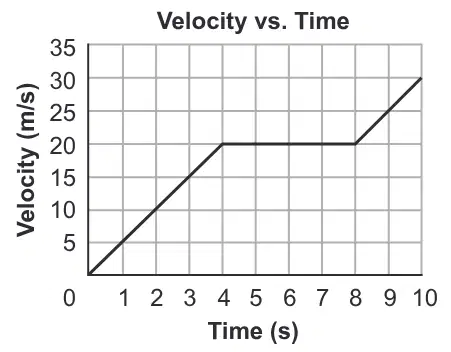
What is the velocity of the vehicle at 5 seconds according to the graph?
10 m/s
15 m/s
20 m/s
25 m/s
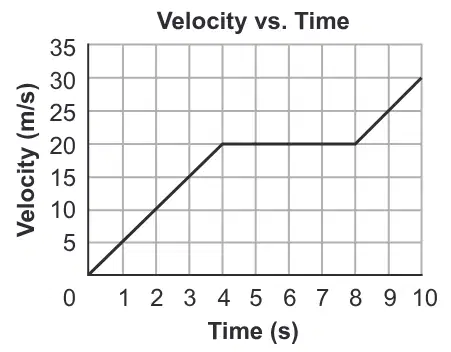
How long does it take for the vehicle to reach a velocity of 30 m/s?
6 seconds
8 seconds
10 seconds
12 seconds
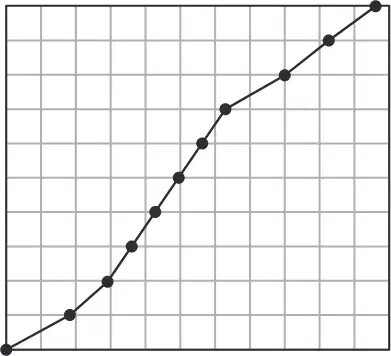
Which statement is the BEST analysis of the data for the runner?
The runner covers the first 80 m running at a constant speed and then slows down, reaching a minimum speed during the final 20 m.
The runner starts slower and speeds up, reaching a constant speed between 20 and 80 m, and then speeds up again during the final 20 m.
The runner covers the first 70 m running at a constant speed and then speeds up, reaching a maximum speed during the final 30 m.
The runner starts slower and speeds up, reaching a maximum speed between 50 and 70 m, and then slows down during the final 30 m.
What is the primary factor that affects the strength of a magnetic field in an electromagnet?
The temperature of the environment
The number of coils around the core
The length of the wire used
The type of core material used
Which of the following best describes the relationship between mass and gravitational force?
Gravitational force decreases as mass increases
Gravitational force is independent of mass
Gravitational force remains constant regardless of mass
Gravitational force increases as mass increases
What happens to the wavelength of a wave as its frequency increases, assuming the speed of the wave remains constant?
The wavelength remains the same
The wavelength decreases
The wavelength increases
The wavelength becomes zero
Electrical → Mechanical → Sound
Which device were the students most likely observing?

The amount of energy a wave carries is the _________.
Amplitude
Height
Loudness
Volume

A
B
C
D

