wayground logo

Free Printable Worksheets

Font size

S
M
L
XL
Worksheets

Acids and Bases, pH, pOH, titration review

Total questions: 46

Worksheet time: 46mins

Name
Class
Date
1.

Four substances were tested for pH, lemon juice (pH 2), baking soda (pH 9), bleach (pH 12), and milk (pH 6). Which of the following correctly lists the substances from most basic to acidic?

a)

lemon juice, milk, baking soda, bleach

b)

bleach, baking soda, milk, lemon juice

c)

milk, lemon juice, baking soda, bleach

d)

baking soda, bleach, lemon juice, milk

2.

Which of these is a property of acidic solutions?

a)

they taste sour

b)

they feel slippery

c)

they are in many cleaning products

d)

they taste bitter

3.

Bases turn red litmus paper (a)   .

4.
A(n) ______ is a substance with a pH less than 7
a)
Acid
b)
Alkaline
c)
Base
d)
Buffer
5.
A(n) _______ is a substance with a pH greater than 7.
a)
Base
b)
Acid
c)
Buffer
d)
Water
6.

A base is a substance

a)

That releases OH- ions when dissolved in water

b)

That releases H+ ions when dissolved in water

c)

Does not release any ions when dissolved in water

d)

None of the above

7.

An acid

a)

is a substance that releases H+ ions when dissolved in water

b)

is a substance that does not release any ions when dissolved in water

c)

is a substance that releases OH- when dissolved in water

d)

releases an equal amount of OH- and H+ ions when dissolved in water

8.
A solution has a pH of 7.0.  What would happen to the pH if H ions were added?
a)
pH would go up
b)
pH would go down
c)
pH would stay the same
d)
None of these
9.
Unsweetened cocoa has a bitter taste. It is most likely which of the following?
a)
acid
b)
base
c)
neutral
d)
salt
10.

From which point to which point in the pH scale is Base

a)

7.1- 14

b)

0- 6.9

c)

6.2- 9.1

d)

12- 14

11.

Reaction between acid and alkali producing salt and water:

a)

Combustion

b)

Neutralization

c)

Precipitation

d)

Decomposition

12.
Which of these solutions is an acid?
a)
Dish Soap: pH of 12
b)
Tomato Soup: pH of 4
c)
Baking Soda: pH of 9
d)
Drain Cleaner: pH of 14
13.
The pH scale is a range from:
a)
1-7
b)
0-14
c)
1-14
d)
1-20
14.

pH paper has a range of colors to represent the different pH of solutions. Examine the results (color change) of the pH paper shown in the picture. What type of substance was tested?

a)

an acid

b)

a base

c)

a neutral substance

d)

none of the above

15.
Bases will turn litmus paper __________, while acids will turn litmus paper __________.
a)
blue.....red
b)
red.....blue
c)
pink.........colourless
d)
colourless..........pink
16.
Many cleaning solutions are bases. Which of the following is a property of most bases?
a)
feels slippery
b)
white color
c)
can only be liquid
d)
tastes sour
17.

The taste of acids is...

a)

bitter and sweet

b)

sweet and salty

c)

slty

d)

sour

18.
Which has a pH above 7?
a)
Acid
b)
Base
19.

ACID will change BLUE litmus paper to

a)

red

b)

blue

c)

yellow

d)

green

20.

What is the colour of phenolphthalein an acid?

a)

Pink

b)

Yellow

c)

Orange

d)

Colourless

21.

What is the colour of phenolphthalein in a base ?

a)

Pink

b)

Blue

c)

Red

d)

Colourless

22.

Is pure water acidic, basic, or neutral?

a)

Acidic

b)

Basic

c)

Neutral

23.

On the pH scale, an acid is a compound that produces a solution with a pH (a)   7.

24.

What is the [OH-] if the [H+] is 1.0 x 10⁻³M?

a)

1.0 x 10⁻³ M

b)

1.0 x 10⁻¹⁴ M

c)

6.02 x 10⁻²³ M

d)

1.0 x 10⁻¹¹ M

25.

Find the pH of a solution with [OH-] = 8.41 x 10⁻⁴.

a)

3.08

b)

10.92

c)

9.88

d)

11.23

26.

What is the pOH of a solution with [H+] = 1.24 x 10 -2?

a)

1.91

b)

1.61

c)

12.09

d)

12.39

27.

If the pH of a solution is 4.0, what is the pOH?

a)

4.0

b)

10.0

c)

1.0 x 10 -4

d)

cannot be determined from the information

28.

For a solution, pH + pOH =

a)

7

b)

14

c)

1.0 x 10⁻¹⁴

d)

-log (1.0 x 10 -14)

29.

What allows us to know when the end point has been reached?

a)

Bubbles

b)

Feels warm

c)

indicator changing color

d)

Turns to a solid

30.
acid + base ₋>
a)
salt + hydrogen
b)
salt + water
c)
salt + carbon dioxide + water
d)
salt
31.
What does pH measure?
a)
Amount of Oxygen Ions
b)
Amount of Hydrogen Ions
c)
The amount of salt in a solution
d)
The density
32.

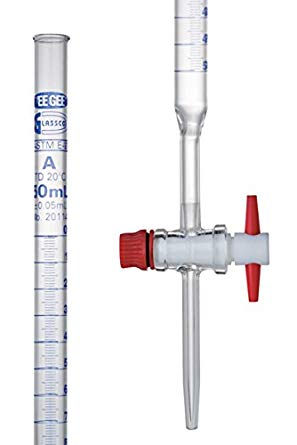
What is this piece of apparatus called

a)

Pipette

b)

Burette

c)

Janette

d)

Cuvette

33.

If it takes 54 mL of 0.1 M NaOH to neutralize 125 mL of an HCl solution, what is the concentration of the HCl? (record you answer with the correct unit)

a)

0.043 M

b)

0.034 M

c)

0.065 M

d)

0.77 M

34.

If it takes 25 mL of 0.05 M HCl to neutralize 345 mL of NaOH solution, what is the concentration of the NaOH solution?

a)

0.0036 M NaOH

b)

0.00125 M NaOH

c)

3.62 M NaOH

d)

1.25 M NaOH

35.
What is the endpoint of a titration
a)
Where the amount of acid and base are balanced according to the equation
b)
Where there is no base
c)
At the end
36.

Vinegar is an example of:

a)

An acid.

b)

A base.

c)

Neither an acid nor a base.

37.

If you check the pH of cooking oil with litmus paper, the results will indicate that the oil is:

a)

Acidic.

b)

Basic.

c)

Neither acidic nor basic, since a substance must dissociate in water to cause a change to litmus paper.

38.
A water strider can skate along the top of a pond because:
a)
covalent bonds result in water cohesion
b)
hydrogen bonds result in water cohesion (surface tension)
c)
water striders have adapted to take advantage of water cohesion
d)
low surface tension of water
39.
What word describes when water is attracted to other substances?
a)
cohesion
b)
adhesion
c)
capillary action
d)
surface tension
40.
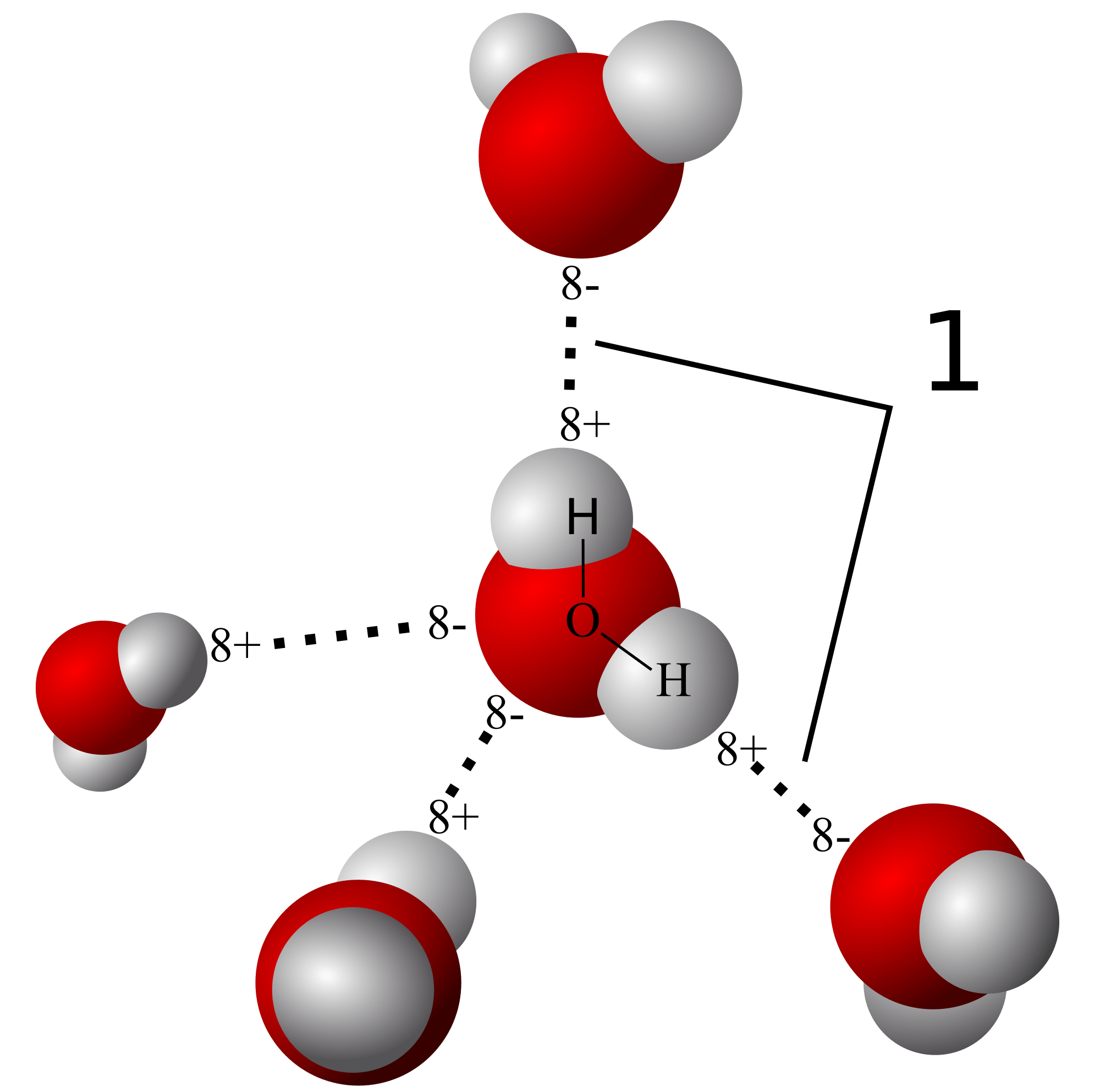
Why can water have no net charge but have slight charges in different parts of the molecule?
a)
The oxygen end is slightly negative and the hydrogen end is slightly positive
b)
The hydrogen end is slightly negative and the oxygen end is slightly positive
c)
The hydrogen and oxygen ends change in polarity
d)
Because it is hydrophobic
41.
Attractions between water molecules are called
a)
Covalent bonds
b)
Ionic bonds
c)
Polar bonds
d)
Hydrogen bonds
42.
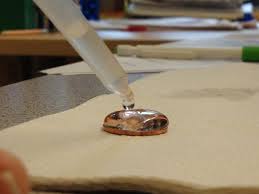
The attraction that causes water and other liquids to form drops on thin films is called ________________. This is also water’s ability to be attraction to other water molecules.
a)
adhesion
b)
capillary action
c)
cohesion
d)
surface tension
43.
Water is polar because...
a)
The unequal sharing of electrons gives the water molecule a slight negative charge near its oxygen atom and a slight positive charge near its hydrogen atoms.
b)
The molecule has two poles, at which the it is colder than other regions of the molecule.
c)
The unequal sharing of electrons gives the water molecule a slight negative charge near its hydrogen atoms and a slight positive charge near its oxygen atom.
d)
The water molecule is neutral.
44.
Why does ice float?
a)
As water freezes, it expands and its density decreases.
b)
As water freezes, it takes up more hydrogen from the atmosphere, causing it to have a greater buoyancy.
c)
As water freezes, air becomes trapped between the hydrogen bonds of water molecules.
d)
As water freezes, it takes up more oxygen from the atmosphere, causing it to have a greater buoyancy.
45.
Water is a universal solvent because it...
a)
It can be found anywhere
b)
It freezes when it gets cold
c)
floats when frozen
d)
Dissolves most substances
46.
Which of the following is LEAST likely to dissolve in water?
a)
nonpolar fats and oils
b)
polar sugar molecules
c)
salt made of a positive sodium ion and a negative chloride ion
d)
all of the substances will dissolve easily in water