
 Worksheets
APWH Unit 7 and Unit 8- Review Spring 2025
Total questions: 100
Worksheet time: 50mins
What was the main focus of the Tehran Conference during World War II?
The Allies agreed that the Soviet Union would focus on freeing Eastern Europe.
The Allies decided to invade Japan immediately.
The Allies planned to divide Germany into zones.
The Allies agreed to end the war by 1944.
Who were the "Big Three" during World War II?
The leaders of Germany, Italy, and Japan.
The leaders of Great Britain, the United States, and the Soviet Union.
The leaders of France, China, and the United States.
The leaders of Canada, Australia, and India.
What was a key outcome of the Yalta Conference in 1945?
The Allies agreed to invade Italy.
The Allies planned for reconstructing Eastern Europe and defeating Japan.
The Allies decided to focus on the Pacific War.
The Allies agreed to end colonialism in Africa.
What was one of the main methods nationalist groups used to challenge colonial rule in the 20th century?
Land reform
Building new cities
Creating new languages
Developing new technologies
Who was the leader of the Indian National Congress in 1920?
Jawaharlal Nehru
Subhas Chandra Bose
Mohandas Gandhi
Sardar Patel
What was the main goal of the Muslim League founded in 1906?
To promote Hindu-Muslim unity
To advocate for a separate nation for Indian Muslims
To support British rule in India
To develop new trade routes
What event in 1946 was instrumental in bringing Britain to the realization it could no longer rule India?
The Quit India Movement
The Royal Indian Navy Revolt
The Salt March
The Dandi March
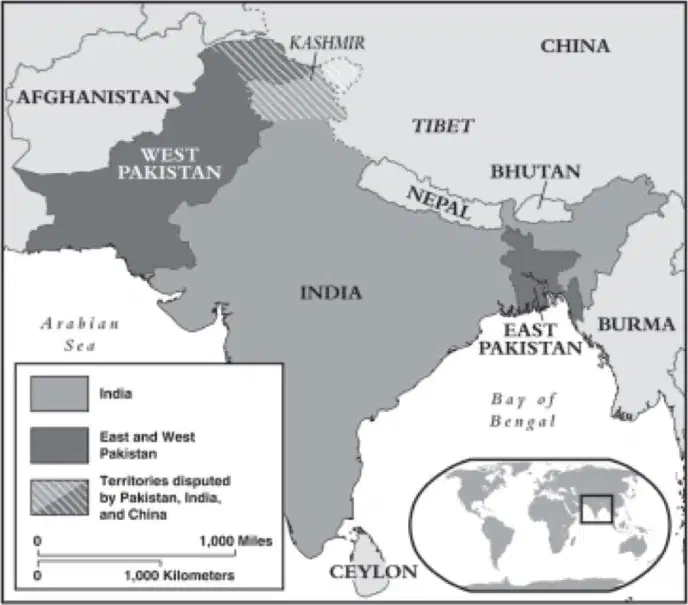
What year did India and Pakistan gain independence?
1947
1950
1960
1975
Who was the first president of Ghana?
Kwame Nkrumah
Nelson Mandela
Jomo Kenyatta
Julius Nyerere
Which two regions combined to form Ghana?
Gold Coast and British Togoland
Gold Coast and Nigeria
British Togoland and Nigeria
Gold Coast and Kenya
What did Kwame Nkrumah emphasize in his national narrative for Ghana?
Historical past of glory and rich tradition
Economic prosperity
Military strength
Technological advancement
What did Nkrumah claim in 1964 regarding his political position in Ghana?
He became a king.
He declared a one-party state.
He resigned from politics.
He joined a coalition government.
What organization did Nkrumah found in 1963 to promote Pan-Africanism?
African Union (AU)
Organization of African Unity (OAU)
United Nations (UN)
African Development Bank (ADB)
What was the main goal of the FLN in Algeria?
To establish a monarchy
To gain independence from France
To join the European Union
To promote French culture
What was a significant consequence of Algeria's independence in 1962?
Economic prosperity in Algeria
War broke out again in Algeria
Peaceful relations with France
Increase in French settlers in Algeria
What was the main political change in Algeria after the military coup in 1965?
Algeria became a multi-party state.
Algeria became a single-party state.
Algeria adopted a democratic system.
Algeria joined a political union with Tunisia.
What was the outcome of the Algerian Civil War that began in 1991?
The establishment of a multi-party democracy.
The continuation of FLN control.
The division of Algeria into two countries.
The immediate end of military rule.
What significant event occurred in Ghana in 1997?
Ghana became a military state.
Ghana's leader became UN Secretary General.
Ghana declared independence from France.
Ghana banned religious political parties.
How did France maintain control over its colonies in French West Africa before independence?
By establishing direct rule with French governors.
By using local chiefs and existing governments.
By forming a union with British colonies.
By granting immediate independence.
Who was the communist leader of North Vietnam who appealed to nationalist feelings to unite the country under a single communist government?
Richard Nixon
Ho Chi Minh
Gamal Abdel Nasser
Muhammad Naguib
What was the name of the guerrilla group that fought against U.S. troops in South Vietnam?
Viet Cong
Khmer Rouge
Red Army
Green Berets
Which treaty allowed more Egyptian autonomy in 1936?
Paris Treaty
Anglo-Egyptian Treaty
Geneva Convention
Treaty of Versailles
Who became the first president of the Republic of Egypt after the overthrow of the king?
Ho Chi Minh
Richard Nixon
Muhammad Naguib
Gamal Abdel Nasser
What was one of Nasser's domestic policies?
Privatizing state enterprises
Nationalizing industries and banks
Reducing irrigation systems
Increasing foreign ownership
What event did Nasser's nationalization of the Suez Canal lead to?
The Biafran Civil War
The Suez Crisis
The Cold War
The Nigerian Independence
Which countries had interests in the Suez Canal before Nasser's nationalization?
United States and Soviet Union
Britain and France
Egypt and Israel
Nigeria and Biafra
What was the outcome of the Igbo's secession movement in Nigeria?
Successful independence
Formation of a new country
Failure and end of Biafra
Establishment of a monarchy
What was the purpose of Nigeria's federation of 36 states?
To increase military power
To prevent tribalism
To expand territory
To promote foreign investment
What did the constitution of Nigeria permit states to vote for?
A dual legal system of secular law and shariah
A single legal system of secular law
A single legal system of shariah
A dual legal system of common law and civil law
What was a major complaint of citizens in the Niger River Delta?
The national government exploited oil resources without returning wealth
The national government refused to build schools
The national government banned fishing
The national government increased taxes on agriculture
What was the "Quiet Revolution" in Quebec associated with?
Political and social change
Industrial development
Agricultural reform
Military expansion
Who was able to preserve Canada's unity during the 1960s?
Pierre Trudeau
Charles de Gaulle
Ho Chi Minh
Gamal Abdel Nasser
Which of the following was a key term related to government structures?
One-party state
Quiet Revolution
Viet Cong
Muslim League
What marked the beginning of a new world order after World War II?
The rise of Western European colonial empires
The dominance of the United States and the Soviet Union as superpowers
The decline of the United States
The unification of Eastern and Western Europe
What was the Marshall Plan's role in post-World War II Europe?
To divide Europe into Eastern and Western regions
To help rebuild and achieve economic prosperity in Western Europe
To support the Soviet Union's expansion
To create a single European government
How did the Cold War influence global events in the latter half of the 20th century?
It had no significant impact on global events
It influenced economic, social, and cultural aspects worldwide
It led to the unification of all countries
It only affected the United States and the Soviet Union
What was a significant challenge to existing social orders after World War II?
The complete peace among all nations
The emergence of new colonial empires
The unprecedented conflict as people and states challenged the established order
The unification of the "Big Three" Allied powers
What was the main reason the Soviet Union maintained control over Eastern European countries after World War II?
To protect against future aggression from the West
To expand their territory
To gain economic resources
To promote tourism
What policy did the United States establish to stop the spread of communism during the Cold War?
Isolationism
Containment
Expansionism
Neutrality
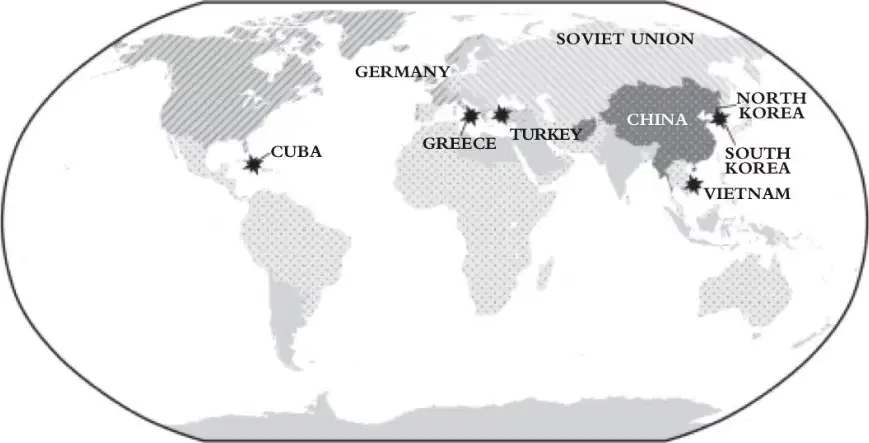
Which countries were part of the "First World" during the Cold War?
The United States and its allies
The Soviet Union and its allies
Non-aligned countries
Eastern European countries
Which two superpowers were involved in the geopolitical balance of power during the Cold War?
United States and China
United States and Soviet Union
Soviet Union and Japan
United States and Germany
What was the dividing line through Germany called during the Cold War?
The Berlin Wall
The Iron Curtain
The Great Divide
The Western Front
What was the purpose of the North Atlantic Treaty Organization (NATO) during the Cold War?
To promote economic trade
To ensure collective security through military cooperation
To establish a global government
To create a new world currency
Which event marked the beginning of the nuclear arms race?
The launch of Sputnik
The bombing of Hiroshima and Nagasaki
The fall of the Berlin Wall
The Cuban Missile Crisis
What was a major concern during the Cold War that kept people on edge?
Economic collapse
Nuclear annihilation
Environmental disasters
Technological failures
What was one of the main effects of World War II on global colonial empires?
It strengthened colonial empires.
It accelerated the dismantling of colonial empires.
It had no effect on colonial empires.
It led to the creation of new colonial empires.
By the year 2000, how many independent states existed as a result of changes after World War II?
Around 50
Around 100
Around 190
Around 250
What was a significant political effect of the Cold War in Asia?
Increased trade with Europe
Armed conflict and internal revolts
Complete peace and stability
Economic prosperity
How did the Cold War affect the Eastern and Western Hemispheres?
Only the Eastern Hemisphere was affected.
Only the Western Hemisphere was affected.
Both hemispheres were affected similarly.
Neither hemisphere was affected.
What role did the United States play in Angola during the Cold War?
Supported the Soviet Union
Supported a proxy war
Remained neutral
Established a communist government
What was the purpose of the United States' Marshall Plan after World War II?
To promote communism in Eastern Europe
To rebuild Western European economies
To establish military bases in Asia
To create a global trade organization
Which countries experienced successful communist revolutions during the Cold War?
Canada and Mexico
Cuba and Nicaragua
Brazil and Argentina
Chile and Venezuela
What was a key challenge for Eastern bloc nations after World War II?
Transitioning from communism to free-market economies
Establishing new monarchies
Expanding their colonial empires
Developing nuclear weapons
What was the main goal of the welfare state in Western Europe during the Cold War?
To increase military spending
To counteract the attraction of communism
To reduce taxes for the wealthy
To expand colonial territories
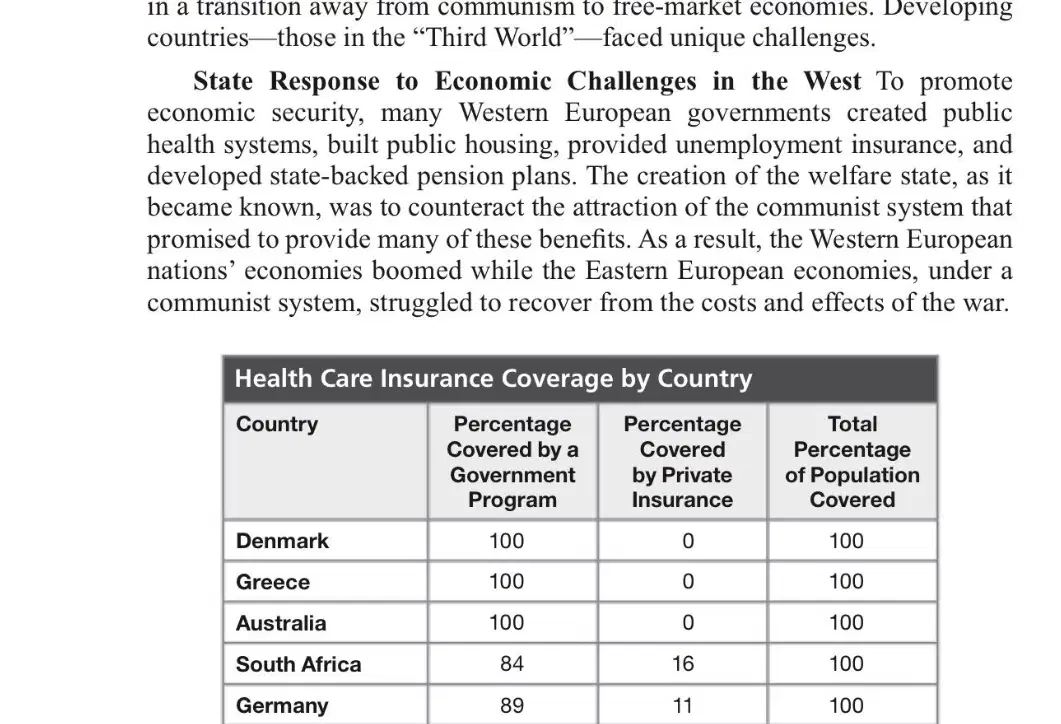
Which country had the highest percentage of its population covered by private insurance according to the table?
Denmark
United States
Germany
India
What was one of the main challenges faced by the Soviet Union during its transition to a free-market economy?
Lack of natural resources
Unemployment due to the military-industrial complex
Overpopulation in urban areas
Shortage of agricultural products
How did China approach its transition to a free-market economy compared to the Soviet Union?
More rapidly
With more government control
More gradually
With less international trade
What was a significant source of revenue for Angola after gaining independence?
Tourism
Oil exports
Textile industry
Agriculture
What was one of the social effects of the Cold War in Southeast Asia?
Increase in agricultural production
Decrease in population
Displacement of families and destruction of villages
Growth of urban areas
What fear did Americans have during the Cold War?
Fear of economic collapse
Fear of communist infiltration
Fear of losing cultural identity
Fear of environmental disasters
What cultural changes occurred in Western Europe after World War II?
Decline in scientific research
Increase in government control
Cultural rebirth with flourishing arts
Isolation from global influences
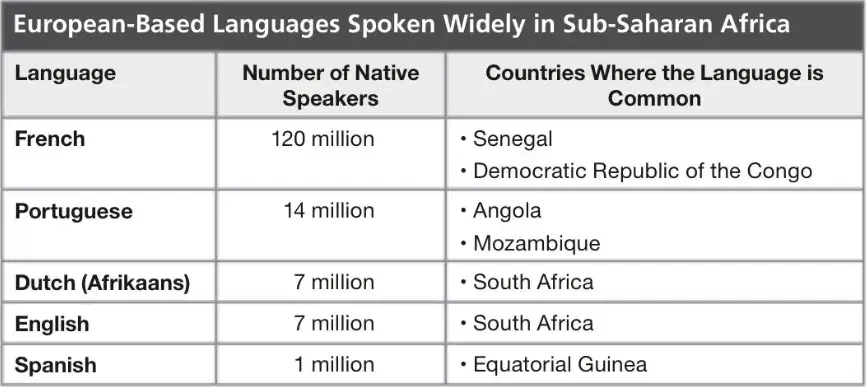
Which language has the highest number of native speakers in Sub-Saharan Africa according to the chart?
Portuguese
Dutch (Afrikaans)
English
French
What was a significant effect of the Cold War on Eastern Europe?
Increased freedom of expression
Blocked spread of Western culture
Economic prosperity
Cultural integration with the West
What was one of the outcomes of the end of the Cold War?
Decrease in global cooperation
Establishment of global organizations
Isolation of countries
Increase in military conflicts
What event marked the end of the Cold War?
The fall of the Berlin Wall
The signing of the SALT treaty
The Cuban Missile Crisis
The Bay of Pigs invasion
Who was the U.S. President that appealed to Soviet leader Mikhail Gorbachev?
Richard Nixon
Ronald Reagan
John F. Kennedy
Jimmy Carter
What was the purpose of the Strategic Arms Limitation Treaty (SALT)?
To increase the number of nuclear weapons
To freeze the number of intercontinental ballistic missiles
To end the Vietnam War
To build more military bases
What does the term "détente" refer to in the context of the Cold War?
An increase in military tensions
A relaxation of strained relations
A new arms race
A complete end to all conflicts
What was one of the economic challenges faced by the USSR in the late 1960s and 1970s?
Rapid industrial growth
Central governmental controls limiting trade
Increase in foreign investments
Expansion of agricultural exports
What event marked the end of détente between the U.S. and the Soviet Union?
The signing of a peace treaty
The Soviet invasion of Afghanistan
The fall of the Berlin Wall
The Cuban Missile Crisis
During whose presidency did tensions between the U.S. and the Soviet Union increase due to military aid to Afghanistan?
Richard Nixon
Jimmy Carter
Ronald Reagan
Gerald Ford
What was one of the reasons for the Soviet invasion of Afghanistan?
To support a democratic government
To prop up the communist government
To expand Soviet territory
To gain access to natural resources
What was the purpose of the Strategic Defense Initiative (SDI) announced by Reagan?
To promote free trade between the U.S. and the Soviet Union
To destroy Soviet nuclear missiles targeting the U.S. or its allies
To establish a peace treaty with the Soviet Union
To increase economic sanctions on the Soviet Union
What was the main goal of Mikhail Gorbachev's policy of perestroika?
To increase military spending
To restructure the Soviet economy
To expand Soviet territory
To close off Soviet society from the world
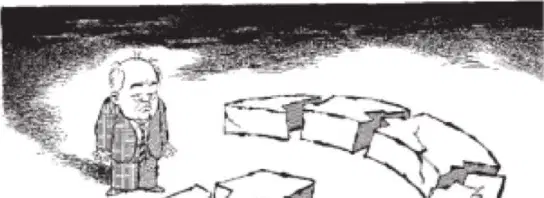
What was the significance of the Intermediate-Range Nuclear Forces Treaty (INF) signed in 1987?
It increased the number of nuclear weapons
It restricted intermediate-range nuclear weapons
It allowed for more nuclear testing
It ended the Cold War immediately
What was one aspect of Gorbachev’s reform program regarding the Soviet satellites in Eastern Europe?
Increase military support
End economic support
Expand Soviet territory
Strengthen communist regimes
What significant event happened in 1989 as a result of democratic reform movements in Eastern Europe?
The fall of the Berlin Wall
The start of World War III
The formation of the European Union
The signing of the Treaty of Versailles
Which countries were among the first to declare independence from the Soviet Union?
France and Germany
Lithuania and Georgia
China and Japan
Italy and Spain
What was the outcome of Gorbachev’s reforms for the Soviet Union?
Strengthened the Soviet Union
Led to the Soviet Union's downfall
Created a new Soviet empire
Increased Soviet military power
What was the Warsaw Pact?
A trade agreement
A military alliance
A peace treaty
A cultural exchange program
What new challenges did the world face after the Cold War?
Increased isolationism
New democracies and economic inequality
Decreased global trade
Fewer political alliances
What was one method used by Mohandas Gandhi to oppose British rule in India?
Violent protests
Nonviolent marches
Military intervention
Economic sanctions
Who was a prominent leader in the civil rights movement in the United States during the 1950s and 1960s?
Francisco Franco
Mohandas Gandhi
Martin Luther King Jr.
Dwight Eisenhower
What was a common tactic used by movements around the world to bring about political change in the 20th century?
Military coups
Nonviolent resistance
Economic boycotts
Diplomatic negotiations
What did the court decision in Brown v. Board of Education of Topeka, Kansas, achieve?
It supported racial segregation in schools
It banned forced racial segregation in schools
It allowed military intervention in schools
It promoted economic sanctions in education
What was the purpose of the year-long boycott of public buses in Montgomery, Alabama?
To promote public transportation
To end segregation in public transit
To increase bus fares
To support local businesses
Who was Nelson Mandela?
A famous musician
A South African lawyer and leader against apartheid
A Soviet leader
A Polish politician
What was the Brezhnev Doctrine?
A policy to promote free elections in Eastern Europe
A doctrine allowing Soviet intervention if socialism was threatened
A plan to increase trade with Western countries
A strategy to reduce nuclear weapons
What was the Prague Spring?
A festival celebrating Czech culture
A reform movement in Czechoslovakia in 1968
A military operation in Hungary
A peace treaty between Eastern European countries
What was one of the reasons for student protests in Yugoslavia in 1968?
Protests over religious issues
Demands for fairer treatment of workers
Marches against authoritarian government
Support for the United States in the Vietnam War
Which country experienced protests over religious issues in 1968?
Brazil
Poland
Japan
France
What was a common theme among student protests in many countries in 1968?
Support for military actions
Demand for university reforms
Increase in tuition fees
Expansion of university campuses
What significant event occurred in France as a result of the student movement in 1968?
New elections were called
University fees were reduced
Military intervention was increased
Students were given scholarships
What event led to widespread student protests in the United States in 1970?
The Vietnam War
The Civil Rights Movement
The Kent State University shooting
The Watergate Scandal
Which group used terrorist tactics to advance their political agenda in Spain?
Irish Republican Army (IRA)
Basque Homeland and Freedom (ETA)
Shining Path
Ulster Defence Association
What was the main goal of the Irish Republican Army (IRA) during the conflict in Northern Ireland?
To gain independence for Northern Ireland
To support the Protestant community
To maintain British rule in Ireland
To promote peace in the region
Who founded the Shining Path in Peru?
Francisco Franco
Abimael Guzmán
Mao Zedong
Francisco Basque
Which group was responsible for the attacks on September 11, 2001, in the United States?
Boko Haram
al-Qaeda
Taliban
Islamic State of Iraq
Who was the leader of al-Qaeda during the September 11 attacks?
Francisco Franco
Idi Amin
Osama bin Laden
Saddam Hussein
What was a significant act of terrorism in the United States before September 11, 2001?
Attack on the Pentagon
Oklahoma City bombing
Boston Marathon bombing
World Trade Center bombing in 1993

