
 Worksheets
End of Year Review
Total questions: 65
Worksheet time: 1hrs 8mins
Jackson has been using his telescope every night to observe the star patterns (constellations). He kept a journal of his observations all year. Which of the following is a correct observation?
Star patterns change as they appear to move across the sky.
Different star patterns can be seen in different seasons.
The star patterns remain in the same position every night.
The star patterns are brighter at different times of the night.
Which statement explains why stars appear to move in the same pattern across the sky when viewed from Earth?
Earth is spinning.
The stars are spinning.
Earth is moving around the stars.
The stars are moving around Earth.
Jason was in his front yard observing constellations in the night sky early in the evening. He observed that one constellation, the Big Dipper, was very easy to see from his front yard. Later the same evening, he observed that the Big Dipper could be seen better from the back yard. What caused this change?
The Big Dipper is the only constellation that moves across the night sky.
The Earth’s rotation on its axis caused a shift in the appearance of the Big Dipper.
The Big Dipper is a constellation which moves from east to west across the night sky.
The Earth’s revolution around the sun caused a shift in the appearance of the Big Dipper.
Sandy observes that he can see some star patterns during the winter, but not during the summer. Which motion causes his observations?
Earth rotating on its axis
Earth moving around the sun
The stars moving around the Earth
What is the length of one lunar month?
14 days
28 days
30 days
7 days
What is a new Moon?
When the Moon is fully visible
When the Moon cannot be seen from Earth
When the Moon is half visible
When the Moon is red
What does a waxing Moon mean?
The Moon is getting smaller
The Moon is getting larger
The Moon is not visible
The Moon is full

Which student gave the best explanation for the different Moon shapes during a month?
Student 1
Student 2
Student 3
Student 4
About once per month, the Sun, Earth, and the Moon line up so that Earth is between the Sun and the Moon. How does the Moon appear?
The Moon is a full circle.
The Moon is a half circle.
The Moon is a slim crescent.
The Moon is dark and cannot be seen.
Which statement best explains why the Moon appears to change shape in the sky?
Earth is traveling around the Sun.
Earth is traveling around the Moon.
The Moon is traveling around Earth.
The Sun is traveling around the Moon.
Imagine that you are standing on Earth, facing the moon, and behind the moon is the Sun. What phase of the moon will you see?
new moon
full moon
first quarter moon
third quarter moon
What causes the day and night cycle on Earth?
The Earth's revolution around the Sun
The Earth's rotation on its axis
The Sun's movement across the sky
The Moon's orbit around Earth
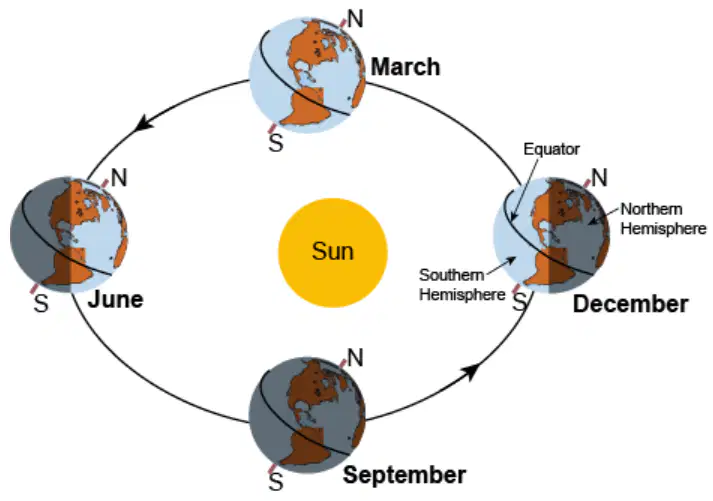
In which direction does the Sun appear to move throughout the day?
From north to south
From west to east
From east to west
From south to north
Which statement explains why Earth has day and night?
Earth rotates on its axis.
Earth is tilted on its axis.
Earth revolves around the Sun.
The Moon revolves around Earth.
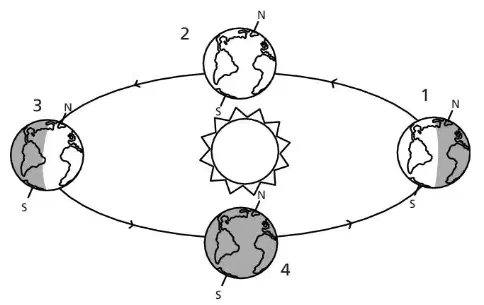
How much time does it take Earth to move around the Sun?
one day
one week
one month
one year
Which of the following processes takes one 24-hour day to complete?
Earth completes one full rotation on its axis.
Earth completes one full revolution on its axis.
Earth completes one full rotation around the Sun.
Earth completes one full revolution around the Sun.
The Sun shines brightly in the sky overhead in a city in Australia. At the same time, the Moon and stars can be seen in a city in Florida. How can such different events happen at the same time?
When it is summer in Australia, it is winter in Florida.
When the days are long in Australia, they are short in Florida.
When Australia faces the Sun, Florida is turned away from the Sun.
When Australia is tilted toward the Sun, Florida is tilted away from the Sun.
Which of these is a category that can be used to describe rock that has formed after magma cools?
fossilized
igneous
metamorphic
sedimentary
Which of these types of rocks form as a result of a very large amount of heat and pressure?
igneous rock
sedimentary rock
metamorphic rock
lava rock
Fossilized remains of plants and animals are found in which type of rock?
igneous
metamorphic
magma
sedimentary
Which statement about the rock cycle is accurate?
Weathering and erosion can cause metamorphic rock to change into igneous rock over time.
Weathering and erosion can cause igneous rock to change into metamorphic rock over time.
Heat and pressure can cause metamorphic rock to change into sedimentary rock over time.
Heat and pressure can cause sedimentary rock to change into metamorphic rock over time.
Rocks that are exposed to wind, rain, and other precipitation are starting the process of becoming what kind of rock?
igneous
metamorphic
mineral
sedimentary

Select four minerals that would scratch a copper penny with a hardness of 3.5.
moissanite
alabaster
creedite
feldspar
hematite
After rubbing quartz and calcite together, Raquel observes that the quartz scratches the calcite. Which physical characteristic is Raquel most likely trying to investigate by scratching these two minerals together?
Color
Hardness
Luster
Streak color
A teacher shows her class a mineral called serpentine. She says the mineral is greasy or shiny, but not like glass. Which property of the mineral is the teacher describing?
cleavage
color
hardness
luster
In order to help identify a mineral, the mineral can be crushed or ground to a powder. In some cases, the color of the mineral’s powder may differ from the actual color of the mineral. For identifying minerals, what word is used to refer to the color of a crushed mineral’s powder?
cleavage
luster
hardness
streak
A scientist finds a rock sample and wants to test its cleavage. Which action should the scientist do to test the cleavage?
Look closely at the sample to see if it reflects light.
Break the rock to see what shape the pieces make.
Scratch it with his fingernail to see if he can make a mark.
Scrape the rock against a hard surface to see what color it makes.
What is the main difference between weathering and erosion?
Breaking down of rocks vs. movement of rocks
Melting of ice vs. freezing of water
Formation of soil vs. formation of sand
Growth of plants vs. decay of plants
Which process involves water seeping into cracks and expanding when freezing?
Erosion
Ice wedging
Deposition
Weathering
What is deposition?
The breaking down of rocks into smaller pieces
The movement of rocks by wind and water
The dropping off of eroded soil, sand, and bits of rock
The expansion of water in cracks
Which natural resource is mined in Florida and used in building materials and toothpaste?
Silicon
Limestone
Phosphate
Coal
What are the two renewable energy resources mostly used in Florida?
Oil and gas
Solar and wind power
Coal and nuclear
Hydropower and geothermal
Silicon is one of the most common elements on Earth. Silicon is widely found within sand, dust, and much of Earth's crust.
Which of the following is a common element found in sand, dust, and Earth's crust?
silicon
phosphate
ocean water
limestone rock
Which of these resources provides the majority of freshwater for drinking and bathing in Florida?
lakes
groundwater
marshes
oceans
What is the role of the oceans in the water cycle?
Oceans create wind.
Oceans store phosphate in sediment.
Oceans are home to many fish and other organisms.
Oceans store large amounts of water before evaporation.
Which of these is NOT a way that salt water can be used by people?
for swimming
for skin care
for drinking water
for cooling down machines in factories
Which of the following does NOT contain silicon?
sand
dust
ocean water
Earth's crust
Petroleum is used in which application?
fertilizer
plastics
alternative energy
nutritional supplement
Indira accidentally drops the paper clips into a drawer containing crayons, rubber balls, and erasers. She wants to quickly separate the paper clips from the other materials. What could she use to remove the paper clips from the drawer?
wire
golf tee
batteries
bar magnet

Which of the boxes described in the table has the largest volume?
the red box
the blue box
the green box
the yellow box
Which of the following statements best describes mass?
a measure of the heat of an object
a measure of Earth's gravitational pull
a measure of the amount of matter in an object
a measure of the speed of an object
Jessica wants to tell her little brother about some of the differences between apples and oranges. Which of these properties can Jessica use to show the biggest difference?
color
mass
shape
volume

Based on their physical properties, which two minerals are most similar?
gypsum and talc
diamond and talc
quartz and pyrite
apatite and diamond
What is an example of a change in materials that results in different characteristics?
Melting ice
Burning wood
Freezing water
Mixing sand and water
Which of the following is a basic form of energy?
Light
Color
Shape
Texture
What happens when heat flows from a hot object to a cold object?
The cold object becomes colder
The hot object becomes hotter
The cold object becomes warmer
Nothing changes
What does an object in motion always do?
Stay still
Change its position
Disappear
Change color
What is the first step in the scientific method?
Do research
Make a hypothesis
Ask a question
Test your hypothesis
What is the purpose of a control group in an experiment?
To change the outcome
To keep everything the same
To make the experiment faster
To confuse the results
Students are researching snakes. They want to find out whether a ball python snake lays eggs or gives birth to live young. Which would be a reliable and trustworthy source of information to help with their research?
a textbook about reptiles
an internet article on cooking eggs
a fictional story about young snakes
a friend in the class who loves snakes
A scientist wants to know how many paper clips her magnet can attract. Which investigation would best help her to answer her question?
She could move her magnet away from many paperclips to see when they are no longer attracted.
She could hold a single paper clip to her magnet and record if it becomes attracted.
She could hold her magnet over many paperclips and record how many become attracted.
She could move her magnet toward a single paperclip to see when it becomes attracted.
A scientist wants to know how many pennies make one pound in weight. Which investigation would best help the scientist to answer this question?
The scientist could add pennies on a scale until it reads one pound and then count the pennies.
The scientist could hold pennies and add more until it felt like a pound in his or her hand.
The scientist could guess how many pennies it would take to make one pound in weight.
The scientist could ask a friend how many pennies they think it would take to make one pound.
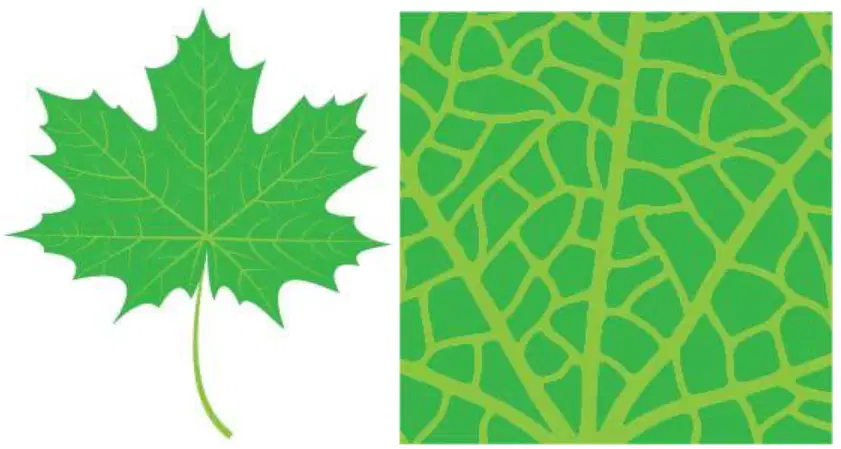
What is different about how the two students see the leaf?
The student using the microscope can see fewer lines.
The student using the microscope can see more detail.
The student using her eyes can see fewer colors.
The student using her eyes can see more shapes.
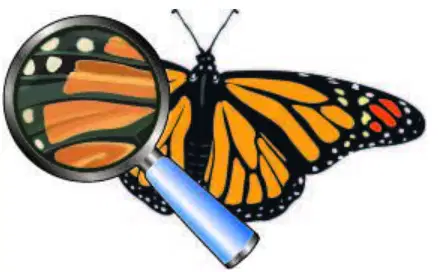
Group A: looks at a butterfly's wing using only their eyes.
Group B: looks at the same butterfly using a magnifying glass as shown below.
How will the observations of the two groups most likely compare?
Group B will see more butterfly wing details.
Group A will learn more about the butterfly wing.
Group A will see more colors on the butterfly wing.
Group B will like the butterfly wing the most.
A science class is growing bean plants. The class is split into two groups. Group 1 places their plants under a lamp that will be kept on all the time. Group 2 places their plants under a lamp that will be turned off at night. What will most likely happen next?
Group 2's plants will sprout first.
Both groups' seeds will sprout at the same time.
Group 1's seeds will sprout first.
Neither of the group's seeds will begin to sprout.

What conclusion can be made from the students' experiments about water boiling?
Water boils faster when the stovetop is at a higher heat.
Water boils slower when the stovetop is at a higher heat.
Water boils faster when it starts at a lower temperature.
Water boils slower when it starts at a higher temperature.
Why is it important to write detailed step by step directions when writing a procedure?
to help organize the data
to be creative with the experiment
to help design a better experiment
to make it possible for others to repeat the experiment
Which statement is true about an inference?
An inference is more useful than an observation.
An inference is a logical conclusion based on observation.
An inference is an observation made using one of the senses.
Which method is the least accurate way to communicate the results of Theo's experiment?
a list of the average speeds
a picture of the cars and the ramp
a table of the cars and average speeds
a graph of the cars and average speeds
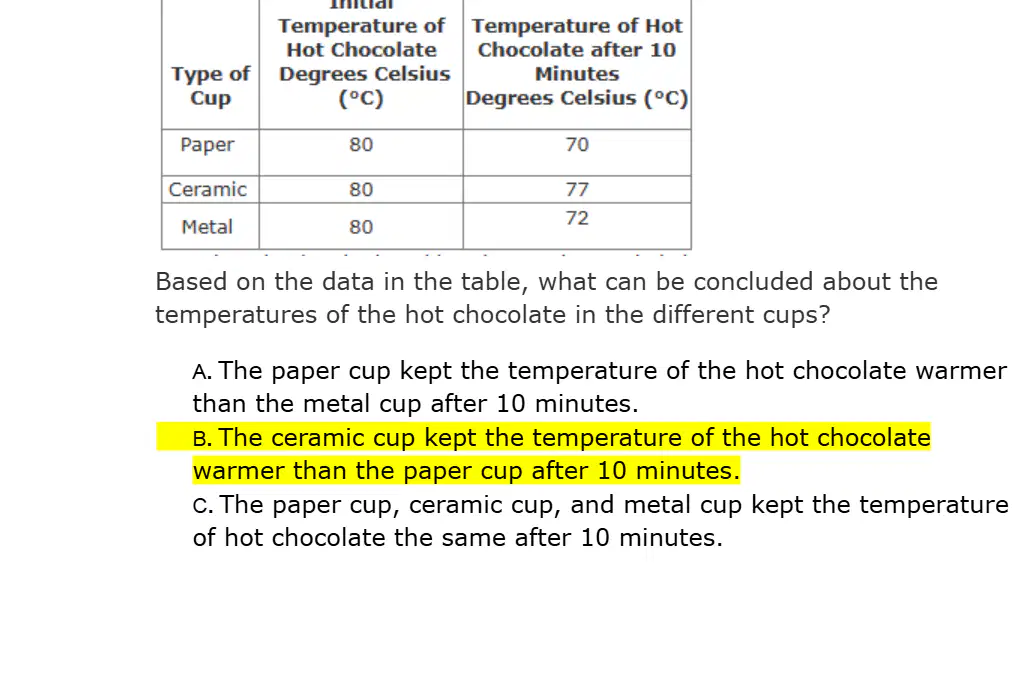
Based on the data in the table, what can be concluded about the temperatures of the hot chocolate in the different cups?
The paper cup kept the temperature of the hot chocolate warmer than the metal cup after 10 minutes.
The ceramic cup kept the temperature of the hot chocolate warmer than the paper cup after 10 minutes.
The paper cup, ceramic cup, and metal cup kept the temperature of hot chocolate the same after 10 minutes.
The metal cup kept the temperature of the hot chocolate warmer than the ceramic cup after 10 minutes.
Neil and Ken were conducting an investigation in science class. Their teacher gave them an object and told them to determine whether the object is living or not. They made some statements after observing the object for several days. Which of these statements is NOT an example of scientific evidence that Neil and Ken should use to make their determination?
The object is 2 cm taller today than it was five days ago.
The object looks like it is alive after two days of observation.
The object, when viewed under a microscope, has plant cells.
The object moved toward the light from the window after two days.
Which statement presents evidence that a scientist could use to make a conclusion?
Dogs are smarter than cats.
Popsicle sticks make the best models.
A desk is easier to move if it is on wheels.
Chocolate cake tastes better than vanilla cake.
What is the correct order of stages in complete metamorphosis for a butterfly?
Egg, nymph, adult
Egg, larva, pupa, adult
Egg, pupa, larva, adult
Egg, adult, larva, pupa
True or false? A bear must learn how to catch fish from its parents.
True
False
Which is common to the life cycles of both flowering and non-flowering plants?
Pollination to produce seeds
Germination of seeds
Photosynthesis
Growth of roots

