
 Worksheets
EOC Prep: 1.5, 1.6, 1.7, 1.8, 1.9, 1.10, 2.8
Total questions: 95
Worksheet time: 1hrs 4mins

Who was the main author of the Declaration of Independence?
Benjamin Franklin
Samuel Adams
Thomas Jefferson
Paul Revere

Why was the Declaration of Independence written?
To stop taxes from the British Empire.
To make a United States army.
To gain independence from the British Empire
To install their own king in America

The List of Grievances were the part of the Declaration that
detailed the colonists' complaints with King George.
listed a man's natural rights.
introduced the Declaration.
concluded the Declaration, declaring America a free country.

Why is July 4, 1776 an important date in U.S. history?
Common Sense was published.
The Olive Branch Petition sent to King George III.
The American Revolution ends.
The Declaration of Independence is signed.


What did the Colonists do after the Stamp Act?
Boycott British goods
Made their own goods
Decided they didn't need goods
Stopped paying all of their taxes

What are unalienable rights?
Rights that government cannot take away
Rights that government takes away
rights for aliens
Government is needed to promote equality

What are the three unalienable rights that all people have?
Food, Shelter, and Clothing
Life, Liberty and Death
Life, Liberty and the Pursuit of Happiness

Why did Great Britain tax the American colonies?
The British were in debt from buying too many weapons.
The British were in debt from fighting the French in a war.
The British were in looking for money to pave their roads.
The British owed France money for the Fur trade.
The idea that people give up some of their power and rights to the government, and government is supposed to maintain order.
Unalienable Rights
Popular Sovereignty
Social Contract
Natural Rights
“We hold these truths to be self-evident, that all men are created equal, that they are endowed by their Creator with certain unalienable Rights, that among these are Life, Liberty and the pursuit of Happiness.” What important ideas does this language express?
Popular sovereignty/social contract
Natural rights/unalienable rights
Social contract/natural rights
Unalienable rights/popular sovereignty
“Governments are instituted among Men, deriving their just powers from the consent of the governed.” What important idea does this language express?
Popular Sovereignty
Unalienable Rights
Natural Rights
Social Contract
Thomas Jefferson borrowed many of his ideas from which Enlightenment Philosopher?
John Locke
Thomas Hobbes
Thomas Paine
John Adams
“Whenever any Form of Government becomes destructive of these ends, it is the Right of the People to alter or to abolish it.” What important idea does this language express?
Popular Sovereignty
Unalienable Rights
Natural Rights
Social Contract
Which of these were "grievances" the colonists had with the British Government?
They were taxed without representation in Parliament
The British Government required colonists to house troops against their will
Not allowing the colonists to trade with other countries (Mercantilism)
Suspending the right to a trial by jury
Suspending Colonial Legislatures
To Great Britain, the signing of the Declaration of Independence was
an act of bravery
an act of treason
an act of insanity.
an act of loyalty.
Why was the Declaration of Independence written?
to start the American Revolution
to offer a peace settlement to Great Britain
to explain why the colonies were separating from Great Britain
to instruct how a country wins its freedom
Why did Thomas Jefferson say that King George III was an unfit ruler?
He was not born in Great Britain.
He lived far away from the colonies.
He denied the colonists their rights.
He was not elected by Parliament.
What did the Quartering Act require from the colonists?
To pay extra taxes on tea
To provide housing and supplies to British soldiers
To stop trading with other countries
To only use stamped paper
What was the main theme of the colonists' grievances?
Lack of educational resources
Disputes over religious freedom
Taxation without representation
Disagreements over land
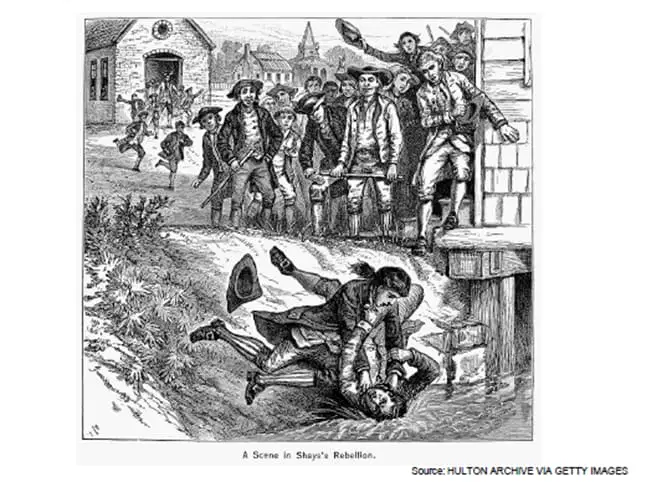
Study the image , " A Scene in Shay’s Rebellion", and answer the question that follows.
What did this rebellion reveal about the Articles of Confederation?
The Articles of Confederation could not protect the nation against invasion.
The Articles of Confederation threatened the rights of the people and the states.
The Articles of Confederation would make the federal government too powerful.
The Articles of Confederation was weak and could not adequately address the nation’s economic problems.
The Articles of Confederation did all of the following except
serve as the first plan of government for the United States
form a loose union of the states
divide power among three branches of government
give Congress power to declare war
In the 1780s, many Americans distrusted a strong central government. Which is the best evidence of this distrust?
The development of a Federal court system.
The constitutional provision for a strong President.
The plan of government set up by the Articles of Confederation.
The lack of debate over the ratification of the United States Constitution.
What was a primary weakness of the Articles of Confederation?
It called for a large army
The president had too much power
Only the central government could make money
The central government was too weak
Which can be described as a loose alliance of sovereign states with a weak central government?
the U.S. Constitution
Articles of Confederation
Continental Congress
The British monarchy

Use the table to answer the question.
How did these weaknesses impact the writing of the Constitution?
The Founding Fathers gave Congress the power to legislate.
The Founding Fathers created a government with three branches.
The Founding Fathers created the office of president to settle disputes.
The Founding Fathers gave the states the power to interpret national laws.
Under the Articles of Confederation, where was most of the power located?
The central government
The national legislature
The states
The military
What event highlighted the weaknesses of the Articles of Confederation and led to the writing of the Constitution?
The Boston Tea Party
Shays’s Rebellion
The signing of the Declaration of Independence
The War of 1812
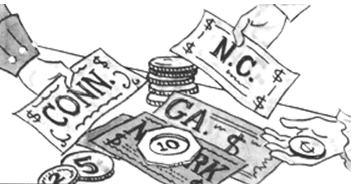

What is depicted or shown in the cartoon?
Weakness of the Articles of Confederation
Problems of the U.S. Constitution
Federalist argument for a weak central government
A colonial legislature
Weakness of the Articles of Confederation include: (a) (b) (c) (d)

The Articles of Confederation created a _________________ national government.
(a)
strong
average
powerful

America's first plan of government. Gave the states too much power and not enough to the national government.
Articles of Confederation
Constitution
Mayflower Compact
Magna Carta
What was the impact of Shays' Rebellion?
It made American leaders realize that the states needed to be more powerful.
It made American leaders realize that the states needed their own militias.
It made American leaders realize that the United States needed a confederation.
It made American leaders realize the United States needed a stronger national government.
What was a result of Shays Rebellion?
The Constitutional Convention and the creation of the US Constitution
The War of 1812
The American Revolution
The Boston Massacre
Why was the U.S. Constitution written?
To establish a monarchy
To strengthen the Articles of Confederation
To address the weaknesses of the Articles of Confederation
To dissolve the union of states
What was a key weakness of the government under the Articles of Confederation?
Strong central leadership
Lack of power to tax
Too much power to tax
Too many national courts
Why was it difficult to make changes to the Articles of Confederation?
Changes were not allowed
All changes required a simple majority
Only the president could propose changes
Any amendment required unanimous consent from all 13 states
What is the purpose of the preamble to the US Constitution?
To declare independence from Britain
To detail the laws of the United States
To outline the goals and purposes of the national government
To list the signatories of the Constitution
What phrase emphasizes the desire to establish a stronger nation?
Secure the blessings of liberty
Ensure domestic tranquility
Form a more perfect Union
Promote the general welfare
What does 'establish justice' aim to ensure?
That the nation is protected from external threats
That peace and order are maintained within the country
That all individuals are treated equally under the law
That the government promotes happiness
What is meant by 'ensure domestic tranquility'?
To unite the nation under a single government
To establish a fair legal system
To maintain peace and order within the country
To protect the nation from external threats
What does 'provide for the common defense' emphasize?
The promotion of overall welfare and happiness
The importance of a fair trial
The establishment of a more perfect union
The government's role in protecting its citizens from external threats
What does 'promote the general welfare' highlight?
The importance of peace and order
The preservation of freedoms and rights
The government's commitment to the well-being of its citizens
The need for a strong national defense
What is the significance of 'secure the blessings of liberty'?
To promote happiness and prosperity
To preserve freedoms and rights for future generations
To maintain national security
To ensure fair treatment under the law
What does the phrase 'We the People' signify in the preamble?
The nation's independence from Britain
The Constitution was written by a select few
The government's power comes from the people
The legal system's foundation
How many objectives did the founding fathers outline in the preamble?
Seven
Five
Four
Six
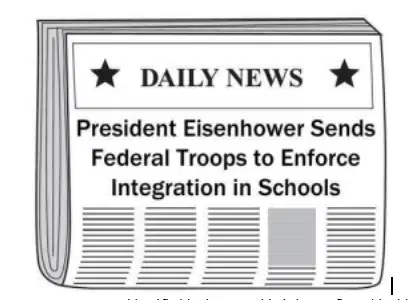
This newspaper headline describes an event in U.S. history.
Which government purpose identified in the Preamble is best reflected in this headline?
ensure domestic tranquility
promote the general welfare
secure the blessings of
liberty
provide for the common defense
In the Preamble to the U.S. Constitution, what is the meaning of the phrase “We the People”?
The people express their will through political
parties.
The people express their will by directly creating laws.
Government receives taxes from the people and exists to support them.
Government receives its power from the people and exists to serve them.
Which word means "peace"?
posterity
tranquility
welfare
justice
Which word means "to establish something by law"?
tranquility
ordain
posterity
preamble
Which word means "future generations"?
posterity
tranquility
domestic
welfare
The introduction to the U.S. Constitution is called the
Introduction
Ordinance
Union Address
Preamble
What does the U.S. Constitution aim to limit?
The number of states
The population of the country
The length of laws
The power of government
How many branches is the government divided into?
Five
Two
Three
Four
What does 'due process of law' ensure?
Citizens can make their own laws
Laws are passed quickly
Individuals are treated fairly in the legal system
Government actions are arbitrary
What does the separation of powers ensure?
That citizens can participate in all branches
That all branches have the same power
That no single branch becomes too powerful
That laws are enforced fairly

This chart is about the U.S. government.
Which constitutional principle does this chart illustrate?
due process
individual rights
checks and balances
separation of powers
Which action describes checks and balances?
participating in a
community service project
voting on a presidential nomination
speaking at a city council meeting
testifying before Congress
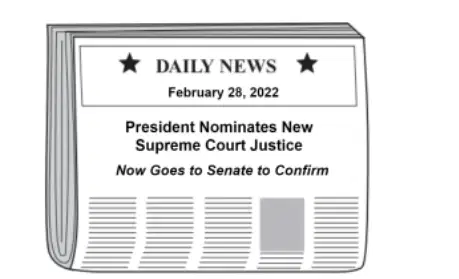
This newspaper headline details an important step in filling a vacancy on the U.S. Supreme Court.
Which constitutional principle does this headline illustrate?
rule of law
judicial review
checks and balances
separation of powers
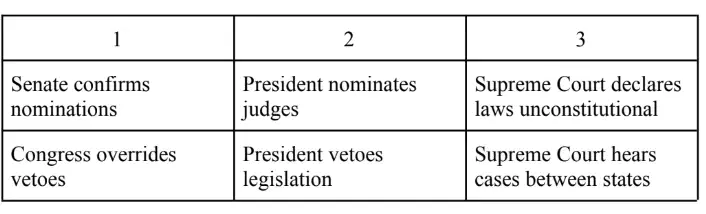
This table describes several powers of the U.S. government.
Which two principles are described in this table?
separation of powers and checks and balances
separation of powers and popular sovereignty
federalism and judicial review
federalism and
republicanism
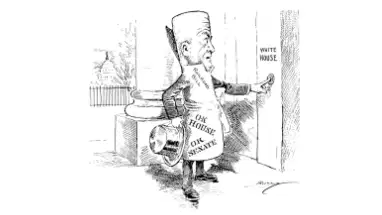
This cartoon describes a political process.
Which limit on government is suggested by this cartoon?
separation of powers
checks and balances
individual rights
rule of law
This excerpt is from the Constitution of Japan adopted in 1947.
Article 34: No person shall be arrested or detained without being at once informed of the charges against him…
Article 37: In all criminal cases the accused shall enjoy the right to a speedy and public trial by an impartial tribunal.
Article 38: No person shall be compelled to testify against himself.
Based on this excerpt, how was Japan’s government influenced by the U.S. Constitution?
They ensured the
separation of powers.
They established
protections for citizens.
They created a system of checks and balances.
They required citizens to participate in jury duty.
Which scenario is an example of governmental power being limited through due process?
The U.S. Senate confirms the attorney general of the United States.
The U.S. Supreme Court rules the accused must be informed of their rights.
The president of the United States appoints a special prosecutor to investigate corruption.
The U.S. House of Representatives’ Judiciary Committee holds hearings to investigate civil rights violations.
Who were the supporters of the U.S Constitution?
Federalists
Anti-Federalists
Republicans
Monarchists
Who were concerned about an overly powerful central government?
Monarchists
Anti-Federalists
Federalists
Republicans
What did the Anti-Federalists argue was necessary for the Constitution?
More power to the states
A Bill of Rights
A stronger army
Less freedom of speech
Which of the following was a Federalist?
Patrick Henry
Alexander Hamilton
George Mason
Thomas Jefferson
What was the main concern of the Anti-Federalists?
Too much freedom
Lack of individual rights protections
Too many taxes
Not enough military power
What did the Bill of Rights aim to protect?
The authority of the states
Individual liberties
The rights of soldiers
The power of the president
Why did the Anti-Federalists push for the addition of a Bill of Rights?
To protect the rights of the people
To increase government power
To abolish taxes
To declare war
The Constitution gives too much power to the executive branch of government. It would soon become a monarchy.
Federalists
Anti-Federalists
A bill of rights is unnecessary because the powers of government are limited by the Constitution.
Federalists
Anti-Federalists
It could not become a tyranny because of the limitations placed on it by the system of checks and balances and separation of powers.
Federalist
Anti-Federalist
A bill of rights would give the impression that the people could only expect protection of those rights that were actually listed.
Federalist
Anti-Federalist
The Constitution gives the national government too much power at the expense of the state governments
Federalist
Anti-federalist
Articles of Confederation
First government, Congresscan negotiate treaties and declare war, noe executive branch.
Unalienable Rights
Rights that all people have from birth: life, liberty, pursuit of happiness
Three Fifths Compromise
Agreement over how slaves would count for representation purposes
Great Compromise
Agreement that decided how many representatives large and small states woul.d have in Congress
How are interest groups and political action committees related?
Interest groups use political action committees to lobby corporations, and work with governments that align with their interests.
What are ways in which individuals can monitor and influence government?
Voting
Attending civic meetings
Protesting or petitioning government
All of these
What is NOT an example of media?
School
Television
Radio
Internet
What amendment gives media the right to report on what's going on in government without government interference?
1st amendment
2nd amendment
3rd amendment
9th amendment
Members of interest groups trying to influence lawmakers into making new laws and regulations is called
campaigning
monitoring
lobbying
watchdogs
A group of individuals with common interests who seek to influence public policy are called
interest groups
campaigns
representatives
jurists
The media acts as (a) by questioning government officials and holding them accountable for their actions
A group created to raise money for a candidate or cause is called a
political action committee
lobbying group
glittering generality
campaign
What is one of the key roles of the media in relation to the government?
To ignore government actions
To promote government propaganda
To provide entertainment to the public
To monitor and hold the government accountable
What does freedom of the press allow journalists to do?
To hold private meetings with government officials
To ignore any government wrongdoing
To investigate and expose government actions
To become government officials
How can individuals monitor the government?
By playing video games
By watching television all day
By staying informed and engaged
By ignoring news and politics
What is one way individuals can influence government decisions?
By not expressing their views
By avoiding voting
By running for public office
By sleeping
What do interest groups do to influence government policies?
They lobby lawmakers
They watch TV
They ignore politics
They go on vacation
Why is voting considered important for influencing the government?
It allows people to choose their favorite movie
It is not important
It allows people to choose leaders who align with their values
It is a good exercise
How does the media help citizens?
By providing biased information
By selling products
By offering entertainment only
By helping them stay informed
What is a fundamental way to participate in the democratic process?
Avoiding discussions
Following the news
Ignoring civic meetings
Staying uninformed
What role do interest groups play in democracy?
They provide entertainment
They ignore government actions
They advocate for specific causes
They distract citizens

