
 Worksheets
Q4 Review
Total questions: 58
Worksheet time: 29mins
Name
Class
Date
1.
Which strategy has proven most effective in reducing industrial air pollution?
a)
Implementing carbon capture technology
b)
Installing emission monitoring systems
c)
Enforcing strict emission standards and fines
d)
Relocating factories to rural areas
2.
How do invasive species affect local ecosystems during climate change?
a)
They always die off in new environments
b)
They help native species adapt faster
c)
They often outcompete native species as conditions change
d)
They have no impact on local biodiversity
3.
What is a key indicator of ocean acidification?
a)
Increased fish populations
b)
Rising pH levels
c)
Declining shellfish populations
d)
Higher ocean temperatures
4.
Which renewable energy source currently provides the most electricity globally?
a)
Solar power
b)
Hydroelectric power
c)
Wind power
d)
Geothermal power
5.
What is the primary cause of urban heat islands?
a)
Air conditioning units
b)
Dark surfaces absorbing heat
c)
Increased population density
d)
Industrial emissions
6.
How does deforestation contribute to climate change?
a)
By increasing oxygen production
b)
By reducing carbon dioxide absorption
c)
By cooling the Earth's surface
d)
By increasing biodiversity
7.
What adaptation strategy helps cities deal with increased flooding?
a)
Building more roads
b)
Installing more street lights
c)
Creating permeable surfaces
d)
Increasing population density
8.
Which sector produces the most greenhouse gas emissions globally?
a)
Transportation
b)
Agriculture
c)
Energy production
d)
Manufacturing
9.
What is a major effect of rising sea temperatures?
a)
Increased fish populations
b)
Stronger coral reef growth
c)
More frequent harmful algal blooms
d)
Reduced ocean currents
10.
How do wetlands help combat climate change?
a)
By storing carbon in soil and vegetation
b)
By increasing urban development
c)
By reducing biodiversity
d)
By releasing methane
11.
What role do aerosols play in climate change?
a)
They only warm the atmosphere
b)
They can both warm and cool the atmosphere
c)
They have no effect on climate
d)
They only affect air quality
12.
Which describes a positive feedback loop in climate change?
a)
Decreased temperatures leading to more ice formation
b)
Melting permafrost releasing more greenhouse gases
c)
Plants growing faster with more CO₂
d)
Oceans becoming more alkaline
13.
What is an indirect health effect of climate change?
a)
Increased UV exposure
b)
Changes in disease vector patterns
c)
Direct heat exposure
d)
Immediate storm injuries
14.
How do green roofs benefit urban areas?
a)
They increase energy costs
b)
They reduce building insulation
c)
They absorb rainwater and reduce heat
d)
They decrease property values
15.
Which describes carbon sequestration?
a)
Burning fossil fuels
b)
Releasing carbon dioxide
c)
Storing carbon long-term
d)
Increasing emissions
16.
Which pollutant is most commonly produced by coal-burning power plants?
a)
Nitrogen oxides (NOₓ)
b)
Carbon monoxide (CO)
c)
Volatile organic compounds (VOCs)
d)
Sulfur dioxide (SO₂)
17.
Which of the following describes the connection between the environment, human genes, and human health?
a)
The environment has no effect on human genes or health
b)
Environmental factors can influence gene expression, which may impact health outcomes
c)
Human genes are entirely responsible for all environmental health issues
d)
The environment only influences human behavior but not genes or health
18.

Why are dispersants used in oil spill response efforts?
a)
A. They prevent oil from sticking to marine animals.
b)
B. They break oil into smaller droplets that mix with water.
c)
C. They remove oil entirely from the ocean.
d)
D. They absorb oil and turn it into a solid waste product.
19.

Which of the following is a major cause of eutrophication in water bodies?
a)
Increased oxygen levels
b)
Excess nitrogen and phosphorus from fertilizers
c)
Decreased water temperature
d)
Removal of algae from lakes
20.
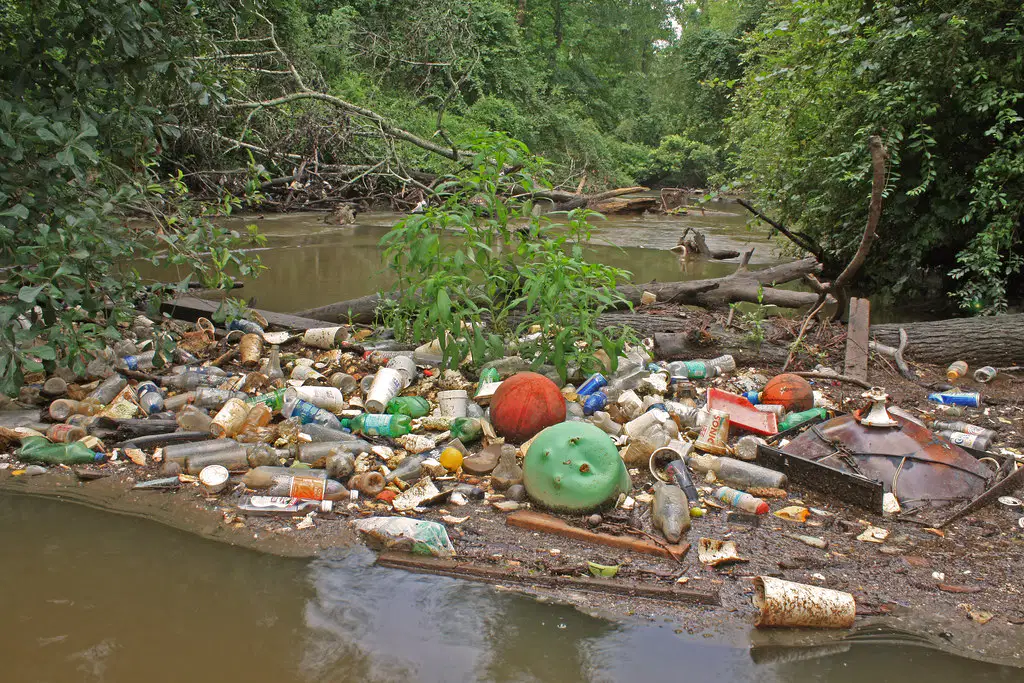
What is the main purpose of the Clean Water Act of 1972?
a)
To prevent overuse of groundwater
b)
To regulate water pollution and set water quality standards
c)
To encourage the use of plastic alternatives
d)
To increase water consumption in agriculture
21.

Which type of water pollution results from a single, identifiable source such as a pipe or a factory?
a)
Nonpoint source pollution
b)
Point source pollution
c)
Nutrient pollution
d)
Groundwater pollution
22.
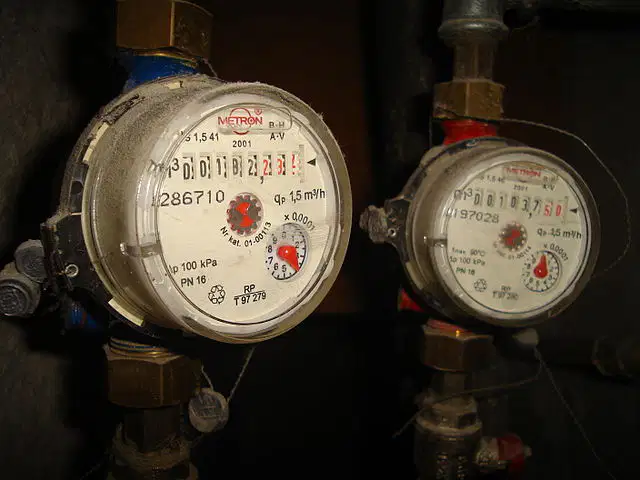
Which of the following contributes the most to global water consumption?
a)
Industrial processes
b)
Household activities
c)
Agriculture
d)
Energy production
23.

What type of pollution is caused by high water temperatures reducing oxygen levels in aquatic environments?
a)
Chemical pollution
b)
Thermal pollution
c)
Microbiological pollution
d)
Particulate pollution
24.
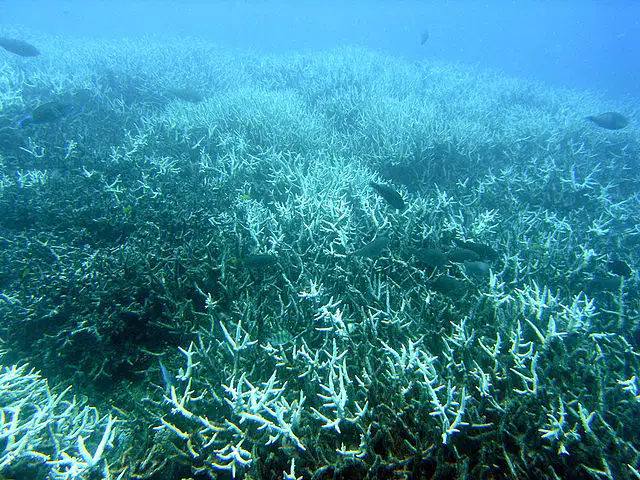
Which of the following best defines a dead zone?
a)
An area where fish populations are thriving
b)
A region in the ocean with extremely low oxygen levels, leading to marine life die-offs
c)
A section of the ocean with unusually high biodiversity
d)
A polluted lake that has turned acidic
25.

How does xeriscaping help conserve water?
a)
By reducing the need for irrigation through drought-resistant plants
b)
By increasing the use of synthetic fertilizers
c)
By encouraging the planting of water-intensive crops
d)
By promoting the use of water filtration systems
26.

What is the primary cause of groundwater depletion?
a)
Excessive use of fertilizers
b)
Over-pumping for agriculture, industry, and drinking water
c)
Increased rainfall in urban areas
d)
Natural filtration through aquifers
27.
How does the use of greywater systems help with water conservation?
a)
By filtering all drinking water before use
b)
By reusing wastewater from sinks and showers for irrigation
c)
By increasing groundwater pumping rates
d)
By reducing the need for water filtration
28.
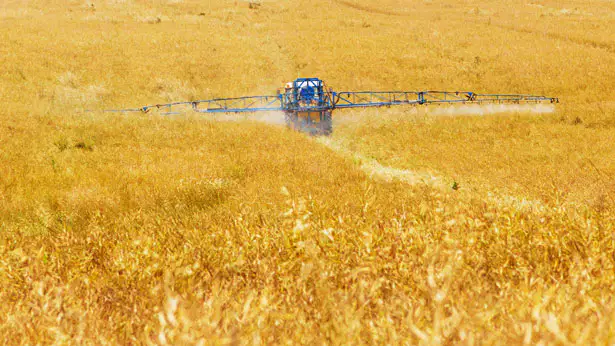
What is the biggest environmental concern associated with the use of pesticides in farming?
a)
They reduce soil erosion
b)
They break down immediately and have no lasting effects
c)
They can run off into water bodies and harm aquatic life
d)
They increase crop yields without any negative impacts
29.
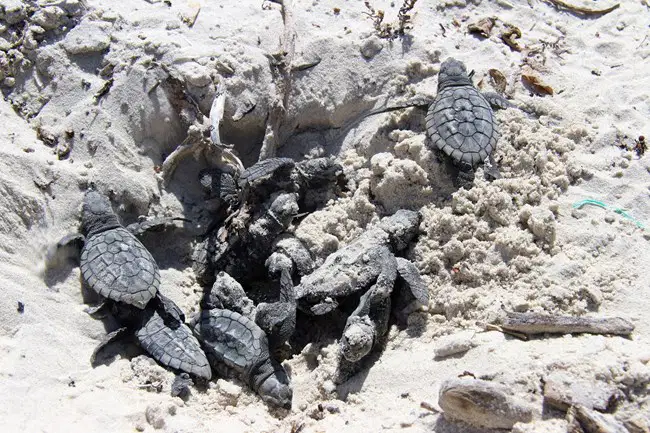
What is one possible negative consequence of relocating sea turtle nests due to an oil spill?
a)
A. The eggs may not hatch in their new environment.
b)
B. The hatchlings may return to the Gulf of Mexico to nest.
c)
C. The hatchlings may not recognize their new habitat.
d)
D. All of the above.
30.
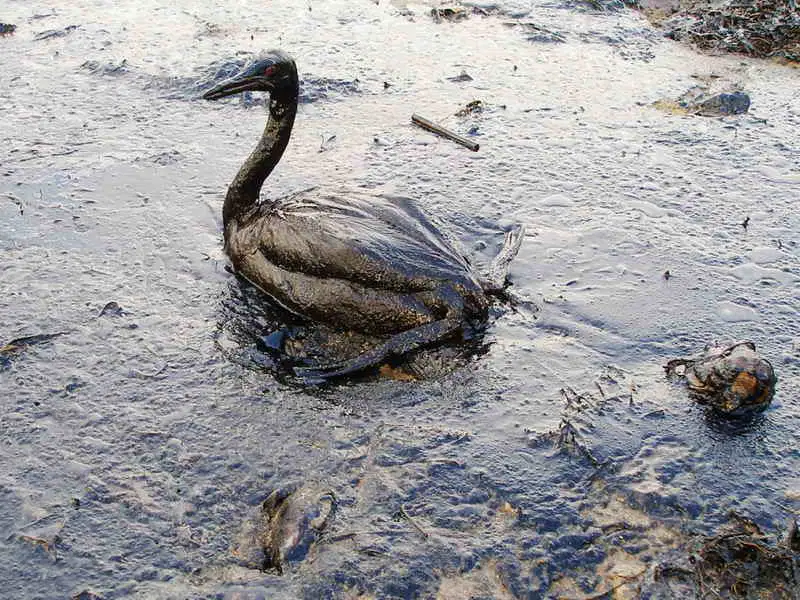
What is the primary way oil affects bird feathers?
a)
A. It makes them shinier and more waterproof.
b)
B. It weighs them down, making flight difficult.
c)
C. It helps them blend into their environment.
d)
D. It provides an extra layer of insulation against cold water.
31.

Why do wildlife rescuers use dishwashing soap to clean birds affected by oil spills?
a)
A. It is the only substance that can break down oil without harming the bird.
b)
B. It absorbs the oil and allows the birds to breathe through their feathers.
c)
C. It forms a waterproof layer on the bird’s feathers.
d)
D. It dissolves the feathers' natural oils and prevents future oil contamination.
32.

What is one possible reason that some scientists argue against rehabilitating oil-covered birds?
a)
A. Many birds do not survive after being released.
b)
B. Birds can naturally clean themselves without human intervention.
c)
C. Cleaning birds makes them more vulnerable to predators.
d)
D. Birds affected by oil spills no longer play a role in their ecosystems.
33.

Which of the following statements best explains why oil spills are harmful to marine ecosystems?
a)
A. Oil dissolves in water and changes the chemical composition of the ocean.
b)
B. Oil coats the bodies of marine organisms, disrupting their ability to move and breathe.
c)
C. Oil immediately sinks to the ocean floor, harming deep-sea ecosystems only.
d)
D. Oil quickly evaporates and has no long-term environmental impact.
34.
Malaria is transmitted by mosquitoes, and climate change is affecting its spread. Which statement is correct about climate change's impact on malaria transmission?
a)
Malaria transmission is unaffected by temperature changes
b)
Malaria cases will decrease as global temperatures rise
c)
Warmer temperatures and increased rainfall create more mosquito breeding sites, increasing transmission
d)
Malaria will remain confined to tropical regions regardless of climate change
35.
What is true about carcinogens, mutagens, and teratogens?
a)
They all have identical effects on human health
b)
Carcinogens cause genetic mutations, while teratogens cause cancer
c)
Only carcinogens are harmful to human health
d)
Carcinogens cause cancer, mutagens cause genetic mutations, and teratogens cause birth defects
36.
What does a lower LD50 value indicate about a toxic substance?
a)
The substance requires a higher dose to be lethal
b)
The substance has no toxic effects
c)
The substance is more toxic and requires a smaller lethal dose
d)
The substance only affects plants, not animals
37.
Which of the following is an example of a mutagen?
a)
A chemical that causes skin irritation
b)
Lead exposure that damages the nervous system
c)
UV radiation, which can alter DNA by forming thymine dimer
d)
Bacteria in contaminated water
38.
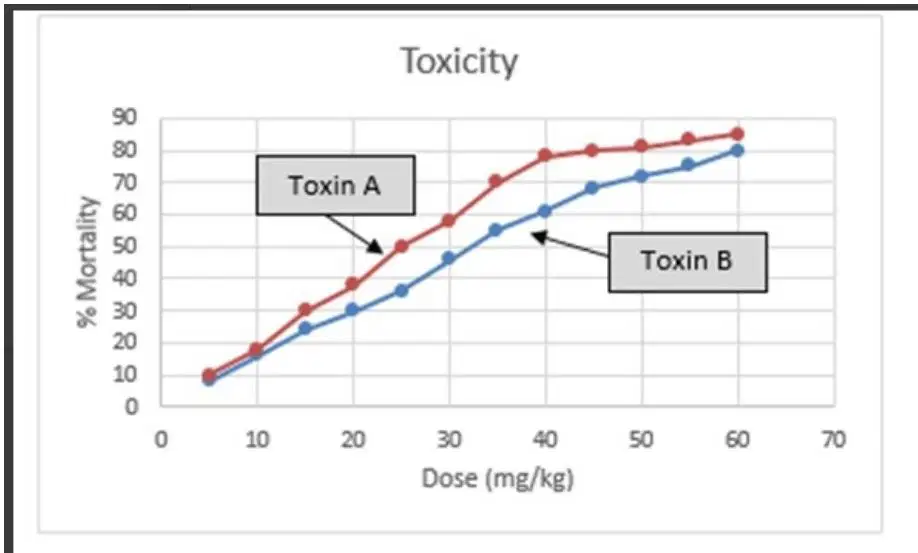
When comparing two toxins, which is considered more lethal?
a)
Toxin A, which has a lower LD50 value
b)
Toxin B, which has a higher LD50 value
c)
Both toxins are equally lethal
d)
Lethality cannot be determined by LD50 values
39.
How can the spread of malaria be prevented most effectively?
a)
By wearing sunscreen daily
b)
By using insecticide-treated bed nets and removing standing water
c)
By taking daily antibiotics
d)
By staying indoors during daylight hours
40.
What phenomenon occurs when warm air becomes trapped near the ground, preventing pollutants from dispersing?
a)
Greenhouse effect
b)
Photochemical smog
c)
Thermal inversion
d)
Acid rain formation
41.
How does acid rain affect the environment?
a)
It increases soil nutrients
b)
It neutralizes water toxins
c)
It lowers pH, harming aquatic life and plants
d)
It has no significant impact
42.
What pollutants primarily form photochemical smog?
a)
Carbon monoxide and lead
b)
Nitrogen oxides and hydrocarbons
c)
Ozone and carbon dioxide
d)
Sulphur dioxide and particulate matter
43.
Which statement about PM2.5 particles is accurate?
a)
They are larger than PM10 particles
b)
They can penetrate deep into lungs
c)
They only come from natural sources
d)
They stay in the upper respiratory tract
44.
What is a major achievement of the Clean Air Act?
a)
Banning all industrial emissions
b)
Eliminating global warming
c)
Setting pollution limits and improving air quality
d)
Removing all fossil fuel plants
45.
How do catalytic converters reduce vehicle pollution?
a)
By filtering particulate matter
b)
By preventing fuel combustion
c)
By converting harmful gases to less harmful substances
d)
By absorbing all greenhouse gases
46.
Which urban planning strategy helps reduce air pollution?
a)
Building more highways
b)
Encouraging deforestation
c)
Developing public transit and bike lanes
d)
Relocating factories to suburbs
47.
What causes increased wildfire frequency due to climate change?
a)
Reduced wind speeds
b)
Increased rainfall
c)
Cooler temperatures
d)
Drier conditions and higher temperatures
48.
What is the main greenhouse gas from fossil fuel combustion?
a)
Methane (CH₄)
b)
Carbon dioxide (CO₂)
c)
Water vapor (H₂O)
d)
Nitrous oxide (NOₓ)
49.
What primarily causes global warming?
a)
Changes in Earth's orbit
b)
Human activities increasing greenhouse gases
c)
Natural climate cycles
d)
Volcanic activity
50.
Which gas is NOT a major greenhouse gas?
a)
Methane (CH₄)
b)
Carbon dioxide (CO₂)
c)
Oxygen (O₂)
d)
Nitrous oxide (NOₓ)
51.
How does melting ice affect sea levels?
a)
By releasing greenhouse gases
b)
By adding water volume to oceans
c)
By cooling ocean temperatures
d)
By exposing darker water surfaces
52.
What best demonstrates how greenhouse gases trap heat?
a)
They reflect all sunlight back to space
b)
They absorb and re-emit infrared radiation
c)
They cool the atmosphere directly
d)
They block all solar radiation
53.
Which effect does increased CO₂ have on oceans?
a)
Makes them more alkaline
b)
Increases ocean acidity
c)
Has no effect on pH
d)
Reduces water temperature
54.
What causes coral bleaching?
a)
Increased salt levels
b)
Changes in ocean currents
c)
Higher temperatures and acidity
d)
Excessive fish populations
55.
Which represents an adaptation to climate change?
a)
Reducing vehicle emissions
b)
Building coastal flood defenses
c)
Switching to renewable energy
d)
Decreasing deforestation
56.
What does the Paris Agreement aim to achieve?
a)
Complete elimination of fossil fuels
b)
Global carbon tax implementation
c)
Limit temperature rise to 2°C
d)
Space colonization development
57.
Which personal action helps reduce carbon footprint?
a)
Increasing energy consumption
b)
Using more single-use plastics
c)
Reducing meat consumption
d)
Preferring gasoline vehicles
58.
What role do forests play in climate change?
a)
They increase global warming
b)
They absorb carbon dioxide
c)
They produce air pollution
d)
They have no significant impact
100 %

