
 Worksheets
Micro Quiz 2
Total questions: 30
Worksheet time: 15mins
What is the most important tool for observing microorganisms?
Telescope
Microscope
Binoculars
Magnifying glass
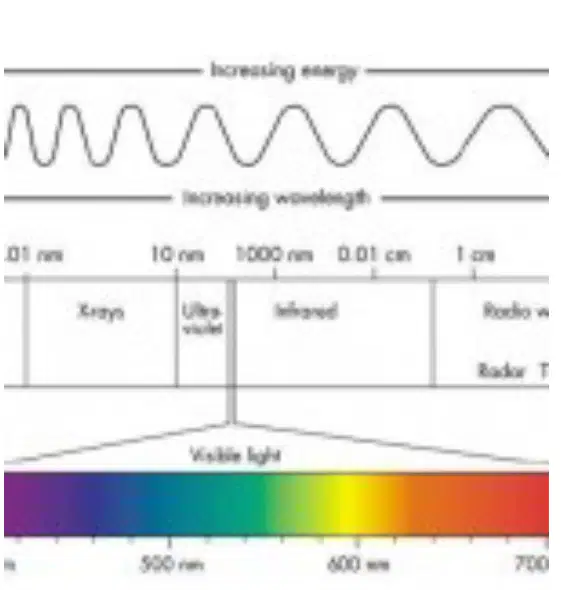
Which type of light provides the best resolution in a light microscope?
Red light
Green light
Blue light
Yellow light
What can an electron microscope (EM) be used to observe?
Intact cells
Internal cell structure and details of cell surface
Stars
Planets
What is a characteristic of a compound light microscope?
Uses a single lens
Uses a lens of short focal length followed by a longer focal length lens
Uses only natural light
Uses a prism to form images
What is the magnification level of the eyepiece (ocular lens) typically used in microscopes?
5X
10X
15X
20X
What is the purpose of the eyepiece in a microscope?
To hold the specimen
To magnify the image
To focus light on the specimen
To adjust the magnification
What is the function of the field diaphragm in a microscope?
To adjust the focus
To control the amount of light
To magnify the image
To hold the specimen
What is a challenge when using a bright-field microscope to observe microorganisms?
Microorganisms have distinctive phase contrast.
Microorganisms are easy to see without staining.
Microorganisms do not have distinctive phase contrast with the surrounding medium.
Microorganisms are naturally colorful.
What color do Gram-positive cells appear after Gram staining?
Pink to red
Blue
Purple
Colorless
What happens to Gram-negative cells after the decolorization step in Gram staining?
They remain purple.
They become colorless.
They turn blue.
They become green.
What is the role of safranin in the Gram staining process?
It acts as a primary stain.
It acts as a mordant.
It acts as a decolorizer.
It acts as a counterstain.
Which type of microscopy is best for observing motility?
Phase-contrast microscopy
Dark-field microscopy
Bright-field microscopy
Electron microscopy

What is the resulting image appearance when using a phase-contrast microscope?
Light cells on a dark background
Dark cells on a light background
Colored cells on a white background
Transparent cells on a black background
In atomic force microscopy, what is the function of the computer?
To magnify the specimen
To process the signal and generate an image
To heat the specimen
To color the specimen
What is the magnification range of a Scanning Electron Microscope (SEM)?
1X – 10,000X
15X – 100,000X
100X – 1,000,000X
10X – 50,000X
What is the primary purpose of using heavy metals in Scanning Electron Microscopy (SEM)?
To increase temperature
To coat the external surface of the specimen
To change the color of the specimen
To dissolve the specimen
What happens to the scattered electrons in a Scanning Electron Microscope (SEM)?
They are absorbed by the specimen
They are collected by a detector to produce an image
They are lost in the vacuum
They are used to heat the specimen
What is a key component of evolution?
Descent with genetic modification
Instantaneous change
Static genetic structure
Lack of variation
What process follows mutation in evolution?
Natural selection
Genetic stasis
Environmental stability
Random drift
Why is rRNA gene sequencing used to determine the domains of life?
rRNA genes mutate rapidly
rRNA genes are found only in bacteria
rRNA genes are highly conserved
rRNA genes are unique to each species
Which domain includes organisms like methanogens and extreme halophiles?
Bacteria
Eukarya
Archaea
Protists
Which of the following is a characteristic of eukaryotic cells?
Lack of nucleus
Presence of mitochondria
Single circular chromosome
Absence of organelles
Which domain includes organisms such as animals, plants, and fungi?
Bacteria
Archaea
Eukarya
Protists
What is the significance of the "root of the tree" in the diagram of life domains?
It represents the most evolved species
It indicates the common ancestor of all domains
It shows the most recent species
It highlights the most diverse domain
Which prefix describes organisms that use organic compounds as their electron source?
litho-
organo-
auto-
photo-
What pH level is typical for environments where alkaliphiles are found?
pH 2.0 or below
pH 8.6 or above
pH 5.0
pH 7.0
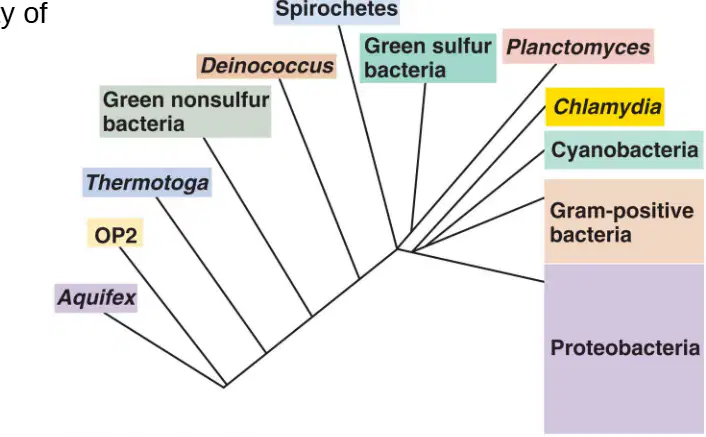
Which domain contains an enormous variety of prokaryotes?
Archaea
Eukarya
Bacteria
Protista
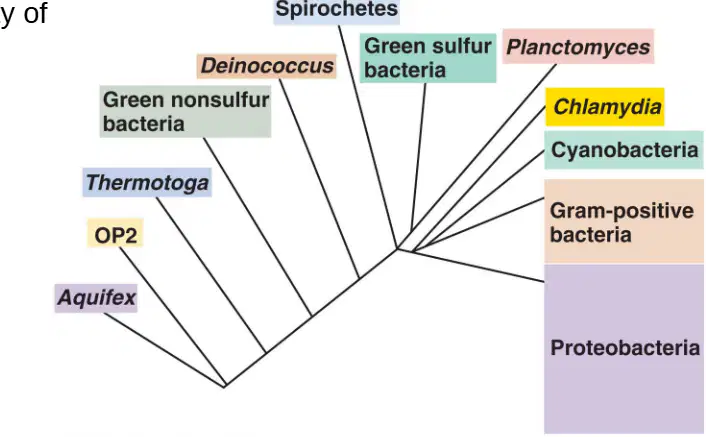
Which are key pathogens of Proteobacteria?
Bacillus, Clostridium
Salmonella, Rickettsia
Streptococcus, Lactobacillus
Thermotoga, Aquifex
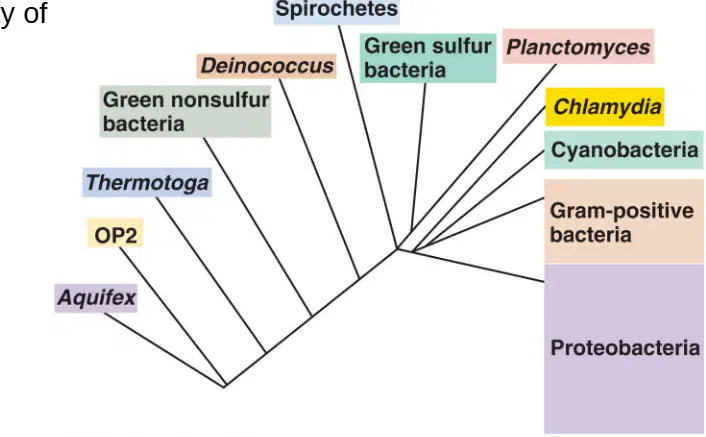
Which bacteria are known for antibiotic production?
Bacillus
Streptomyces
Lactobacillus
Thermotoga
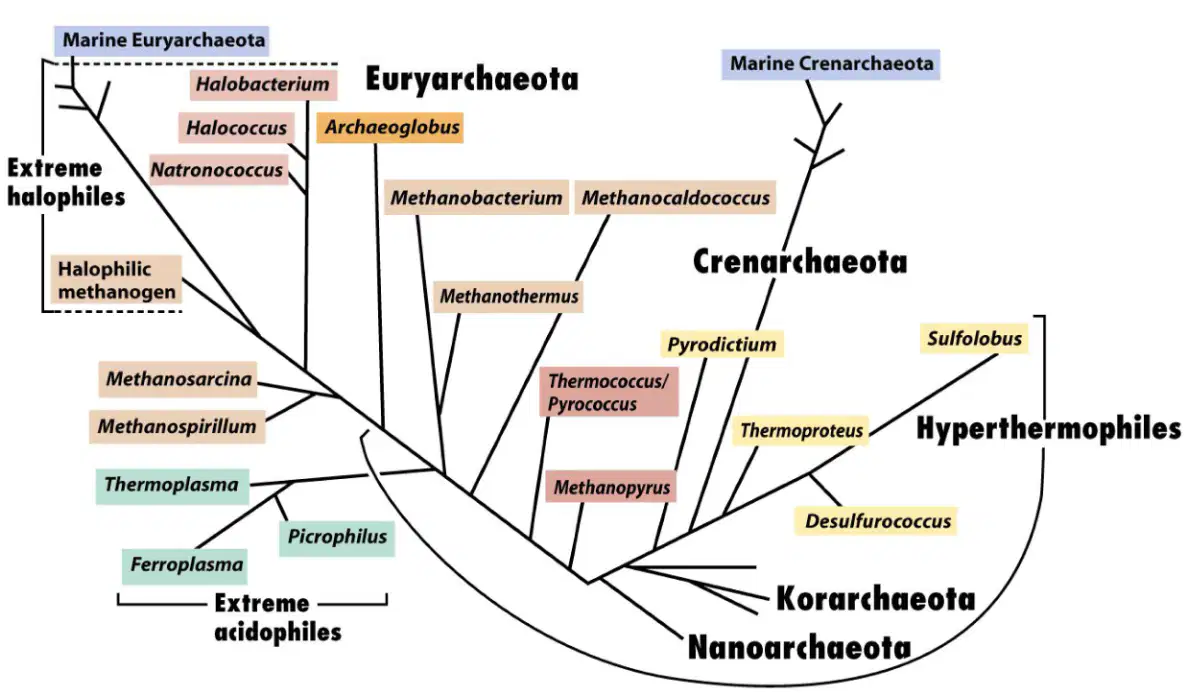
Which group in the diagram is associated with extreme acidophiles?
Thermoplasma
Halococcus
Methanospirillum
Pyrococcus

