
Font size
 Worksheets
Introduction to Atoms Test Study Guide
Total questions: 45
Worksheet time: 11hrs 15mins
Which parts make up an atom?
Nucleus and electron cloud
Protons and neutrons only
Electrons and protons only
Only the nucleus
Where are protons found in an atom and what is their charge?
Nucleus and positive charge
Nucleus and negative charge
Cloud and positive charge
Cloud and negative charge
Where are electrons found in an atom and what is their charge?
Nucleus and positive charge
Nucleus and negative charge
Cloud and positive charge
Cloud and negative charge
Where are neutrons found in an atom and what is their charge?
Nucleus and positive charge
Nucleus and no charge
Cloud and positive charge
Cloud and no charge
The number of protons in an atom is equal to the number of _________.
electrons
neutrons
atoms
molecules
For Oxygen (atomic mass 15.999, atomic number 8), how many neutrons does it have?
Oxygen has 10 neutrons.
Oxygen has 6 neutrons.
Oxygen has 8 neutrons.
Oxygen has 12 neutrons.
True or False: The electron cloud is most of the volume of the atom.
True
False
True or False: The electron cloud is most of the mass of the atom.
True
False
What do periods represent on the periodic table?
Periods are columns on the periodic table.
Periods are rows on the periodic table.
Periods are groups of similar elements.
Periods are the atomic numbers of elements.
What do groups/families represent on the periodic table?
Groups/families are columns on the periodic table.
Groups/families are rows on the periodic table.
Groups/families are groups of similar elements.
Groups/families are the atomic numbers of elements.
What happens to reactivity as you move left to right across groups/families on the periodic table?
Reactivity first increases then decreases as you move left to right across groups/families.
Reactivity increases as you move left to right across groups/families.
Reactivity remains the same as you move left to right across groups/families.
Reactivity decreases as you move left to right across groups/families.
What happens to atomic mass as you move from top to bottom down periods on the periodic table?
Atomic mass remains the same as you move from top to bottom down periods.
Atomic mass decreases as you move from top to bottom down periods.
Atomic mass increases as you move from top to bottom down periods.
Atomic mass fluctuates randomly as you move from top to bottom down periods.
An acid is:
a substance that tastes bitter
An ionic compound that dissolves in water and releases hydrogen ions (H+)
a substance that feels slippery
An ionic compound that dissolves in water and releases hydroxide ions (OH–).
A basic/alkaline substance is:
a substance that tastes sour
An ionic compound that dissolves in water and releases hydrogen ions (H+)
a substance that's corrosive to metals
An ionic compound that dissolves in water and releases hydroxide ions (OH–).
A basic/alkaline substance's pH is:
a substance with a pH less than 7
a substance with a pH equal to 7
a substance with a pH greater than 7
a substance that is neutral
pH is:
a measure of acidity or alkalinity through potential Hydrogen
a type of chemical bond
a unit of temperature
a kind of energy
What are the numbers of the pH scale?
The pH scale ranges from 0 to 14.
The pH scale ranges from 1 to 10.
The pH scale ranges from 0 to 7.
The pH scale ranges from 1 to 14.
Neutralization is:
a reaction between an acid and a base to form salt and water
a process of heating a substance to high temperature
the conversion of a solid into a gas
the process of dissolving a solute in a solvent
Which side of the zigzag line on the periodic table are metals located?
Left
Right
Touching the line
Under the line
What is the typical color of metals?
Black
Silver or gray
Yellow
Blue
Metals are usually ______ at room temperature. (only Mercury is liquid)
solids
gases
liquids
plasmas
Metals are good conductors of ______ and electricity.
heat
light
sound
magnetism
Which property describes metals being able to be bent or hammered into thin sheets without breaking?
Ductile
Brittle
Malleable
Conductive
Metals are able to be drawn into a wire. This property is called ______.
Ductile
Brittle
Malleable
Conductivity
How many total metalloids are there?
5
15
10
8
Which of the following is NOT a metalloid?
A) Boron
B) Silicon
C) Gold
Arsenic
Metalloids are difficult to describe because they have some characteristics of ______ and some of ______.
metals; nonmetals
nonmetals; metals
gases; liquids
liquids; solids
A key property specific to metalloids is that they are (a) : can transfer heat and electricity under some conditions.
To which side of the zigzag line are nonmetals located?
Left
Right
Touching the line
Under the line
Almost all properties of nonmetals are ______ of metals.
opposite
similar
identical
extensions
Most nonmetals are ______ at room temperature.
metals
liquids
gases
solids
Solid nonmetals (like carbon) are (a) , not malleable or ductile.
Which of the following is a property of nonmetals?
A) Shiny
B) Good conductors
C) Dull
High Melting Point

Who was the first to describe atoms in a modern, scientific sense?
Thomson
Dalton
Rutherford
Bohr
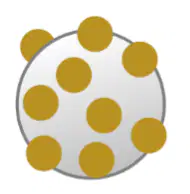
Which scientist proposed the Plum Pudding Model of the atom?
Bohr
Chadwick
Thomson
Schrödinger
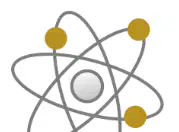
Rutherford's experiment involved shooting what type of particles through gold foil?
α-particles (alpha particles)
β-particles (beta particles)
γ-rays (gamma rays)
protons
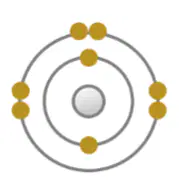
Which scientist introduced the concept of electron shells in the atomic model?
Bohr
Dalton
Thomson
Chadwick

Schrödinger's model of the atom is based on which branch of physics?
Classical mechanics
Quantum mechanics
Thermodynamics
Electromagnetism

Who discovered the neutron?
Bohr
Chadwick
Rutherford
Thomson
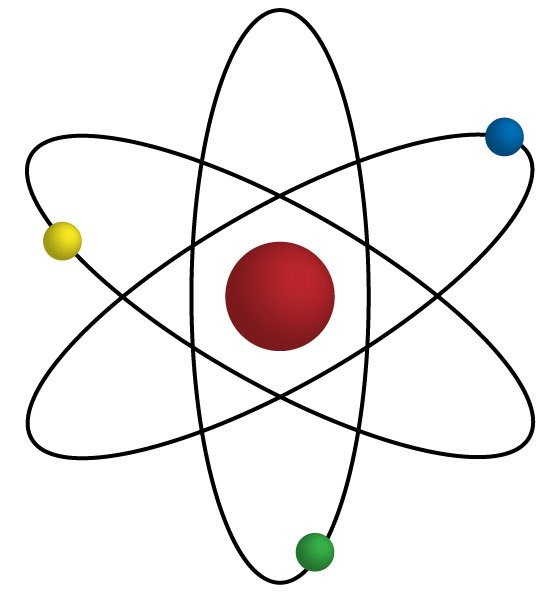


How many electrons does a Copper atom have?
63
29
92
34
Who ran the gold-foil experiment?
Rutherford
Thomson
Democritus
Dalton

1-JJ Thomson
2-Erwin Schrodinger
3-John Dalton
4-Niels Bohr
5-Ernest Rutherford

