
 Worksheets
BIO330 Chapter 1 - 3
Total questions: 60
Worksheet time: 1hrs 21mins
The study of the interactions between organisms and their environment
Biology
Ecology
Sociology
Geology
All the organisms of the same species living in the same area or community
Community
Population
Habitat
Ecosystem
The part of the earth that supports life; includes the top portion of the earth's crust.
Tropospher
Atmosphere
Biosphere
Ozone
The non-living parts of the environment such as rocks, air, temperature, sunlight, and water
Abiotic
Biotic
Habitat
Community
Which of the following is a biotic factor?
sun
temperature
soil
grass
Which of the following is an example of a situational adaptation?

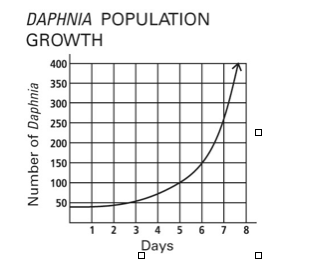
Which of the following populations is most likely to go extinct?
a very small population in an unstable environment
a moderate-sized population of r strategists
a large population with lots of genetic variability
all would be equally likely to go extinct


Where on the graph have the limiting factors began to affect the the population growth?
A
B
C
The lion is the natural predator of the zebra. If the zebra population drops, what will likely happen to the lion population?
These organisms occupy stable environments, are larger in size and have longer life expectancies. They produce, during their life spans, fewer offspring, but place a greater investment in each.
k-strategist
r-strategist
m-strategist
s-strategist
These organisms typically live in unstable, unpredictable environments & are able to reproduce rapidly (exponentially). They do not take care of their young & are subject to predation.
k-strategist
r-strategist
m-strategist
s-strategist

Which curve best describes an organism that invests a lot of energy in parenting?

Type 3 graphs show
Some death rates
Death rates through out
Death rates at older ages
High death rates at a young age

What are survivorship curves?
curves that describe the number of survivors over time
curves that tell us what the limiting factors are
curve that tells us about the carrying capacity
a curve
Why don't populations grow indefinitely?
limiting factors
only biotic factors
only abiotic factors
none of the above

parasites, disease, predators, are examples of what type of limiting factors?
density dependent
density independent
survivorship
type 1 curve
Which are the TWO methods for estimating population size?
(Choose 2)
Quadrat sampling technique
Census taking
Counting population technique
Capture-mark-release-recapture technique
Which is the correct order of steps in the capture-mark-release-recapture method?
second capture > marked > first capture > num recorded > released > marked and unmarked num recorded
first capture > marked > num recorded > released > second capture > marked and unmarked num recorded
first capture > released > second capture > marked > num recorded > marked and unmarked num recorded
second capture > marked > num recorded > released > first capture > marked and unmarked num recorded

Determine the population size of garden snail
135
120
170
200

According to the graphs, which country has the most rapid population growth?
United States
Nigeria
India
France
As a population of a species increases within a territory, which of the following most likely also increases?
Immigration
Food supply
Carrying capacity
Competition
If a population grows larger than its environmental carrying capacity, then
death rate may rise.
death rate may fall significantly.
birth rate may rise significantly.
immigration rate may increase.
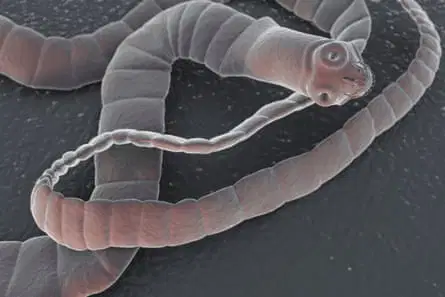



What is the difference between a community and a population?
A community is made up of populations of different species, while a population is made up of individuals of a single species
A community is a group of individuals of the same species, while a population is a group of different species
A community is a group of ecosystems, while a population is a group of communities
A community is a group of abiotic factors, while a population is a group of biotic factors
What is the difference between fundamental niche and realized niche?
Fundamental niche is the niche of a predator, while realized niche is the niche of a prey species
Fundamental niche is the niche of a keystone species, while realized niche is the niche of a dominant species
Fundamental niche is the actual niche the species occupies, while realized niche is the entire niche that a species is capable of using
Fundamental niche is the entire niche that a species is capable of using, while realized niche is the actual niche the species occupies
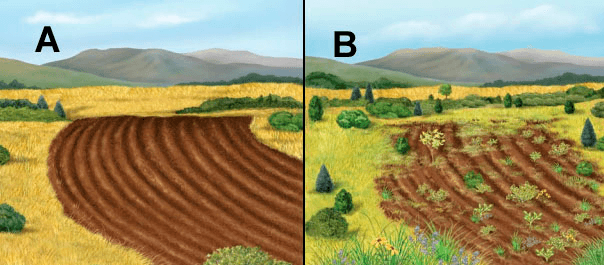
What is an example of an area that is likely to undergo primary succession?
Glaciers melt and leave exposed rock
Plants die from drought and decompose
Land is bulldozed and soil remains
All living things in a given area, living and non-living.
(a)

The shark and seal relationship is an example of which species interaction?
(a)

Many poisonous animals are brightly colored (red or orange) as a warning to predators. The special coloration is called
(a)
The type of mimicry is it where one organism is dangerous and the other is harmless?
(a)

The cuckoo bird laying eggs in a warbler nest to trick the warbler into raising the offspring is an example of (a)

This bee is pollinating the flower. this is an example of
(a)
(a) states that two species cannot exist together if they compete for the same resources. One will either die out or migrate, or they will adapt to separate resources.
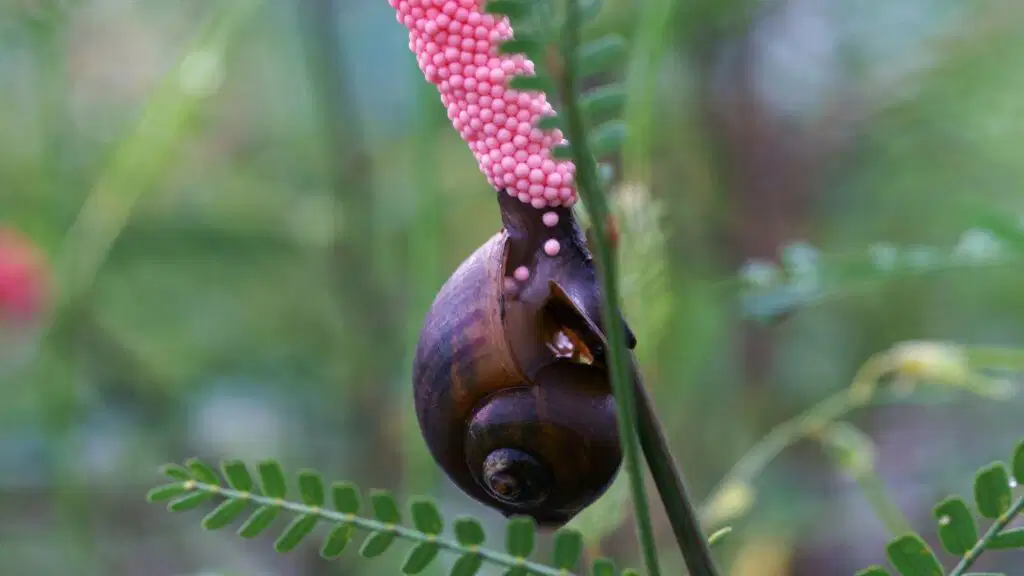
A species that does not belong in a balanced ecosystem, comes in, and changes it (usually for the worse).
(a)
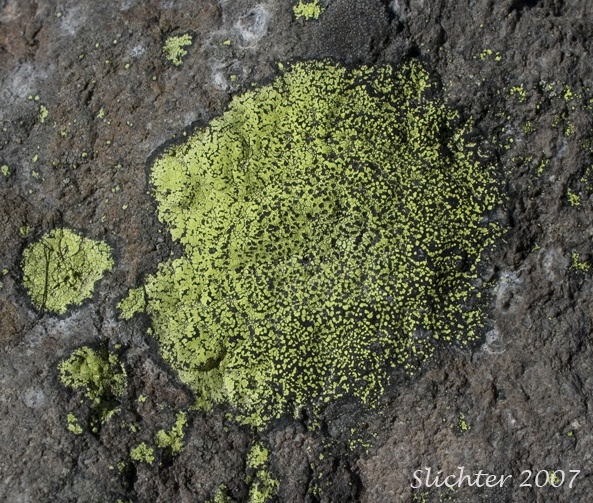
What is the name given to lichen or algae after a primary succession?
(a)
A stable ecological community that has reached equilibrium
(a)

