
 Worksheets
Credit Unit Test
Total questions: 21
Worksheet time: 2hrs 45mins
Use different colors to DRAW LINES and match the term on the right with it's correct definition on the left.

What is one benefit of borrowing money from a friend or family member instead of from the bank?
You don't have to repay your friends or family if you don't want to
You can borrow more money from a friend or family member because they have more cash than banks
Friends and family cannot legally charge you interest on the loan, but banks can
Friends and family will typically work with you to set up a repayment plan you can afford
Justin really wants to attend the 8th-grade graduation ceremony, dance, and field day, but all the tickets combined cost $75, and he doesn't have that much. Justin has no job, gets no allowance, and his birthday was just last month, so he's not expecting any gifts soon. What's a potential downside of asking his friend Kylie for a loan?
Kylie will have to give him the money, even if she doesn't want to
As soon as she lends him the money, they won't be able to be friends any more
It might cause problems in their friendship if Justin doesn't repay her on time or if he then asks for even more money
The school won't sell him tickets if they know he borrowed the money instead of earning it himself
What is a common consequence of missing multiple credit card payments?
Your credit score may increase
You will receive a reward from the credit card company
You may incur late fees and a higher interest rate
Your credit card limit will automatically increase
Which of the following is a benefit of having a high credit score?
Increased monthly credit card fees
Higher interest rates on loans
Access to better credit card offers and lower interest rates
More difficulty in obtaining credit
Pay off the full balance, on time, each month
You cannot avoid interest fees
Only use Discover
What is the key difference between a credit card and a debit card?
Credit cards allow you to borrow money to pay for things, while debit cards take money straight from your own checking account
Wealthy people use credit cards, while people with lower incomes use debit cards
Credit cards come from credit unions, while debit cards come from banks
You can only use credit cards if you are over 25, but you can use debit cards as long as you are over 18
Craig isn't sure if he should open up a credit card account or get a bank loan. What question is MOST useful in helping him decide which financial product he should get?
Are you responsible with your money?
Are you trying to make a bunch of small purchases over time or one large purchase?
Are you using the money to purchase an item that is a need or a want?
How much money do you have in your bank account?
Kervin really wants to buy a new bike because his old one is too small now. He's trying to decide if he should use his debit card or credit card. What's one reason he should be careful about using credit?
Credit will take the money straight from his checking account, lowering his bank balance
Credit will force him to pay taxes on his bike purchase
Credit will charge him interest every month until he repays his full balance
Credit will force him to buy a cheaper bike than he could with debit
Which statement about credit card interest rates is TRUE?
The more money you spend on purchases, the higher your interest rate will be
A high interest rate means you'll pay MORE money total
A high interest rate means you'll pay LESS money total
Most credit cards do not charge any interest rate
Which age group tends to have the most credit card debt?
Young adults
Middle-aged people
Senior citizens
Credit card debt is evenly distributed among all age groups
What is the best way to avoid going into large debt on your credit card?
Avoid paying the bill every month so your bank account stays high
Pay the minimum monthly payment on time every month
Pay half your balance every month
Pay your full balance every month
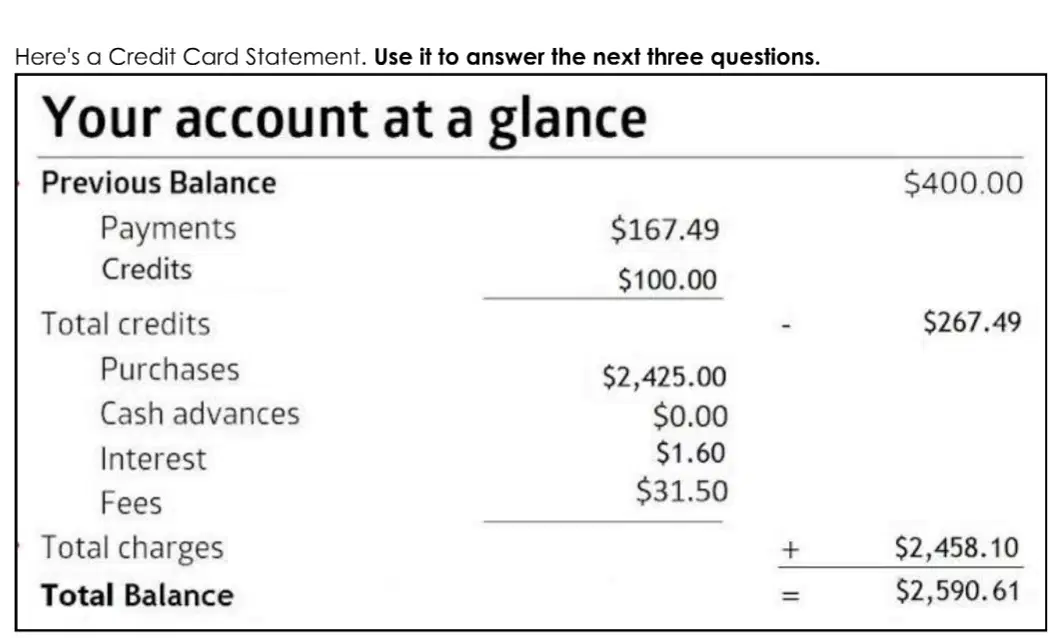
Using this portion of a credit card statement, how much did the credit card holder pay in payments?
$167.49
$200.00
$120.75
$89.99

According to this portion of a credit card statement, how much did the cardholder pay in total interest this billing cycle?
$1.60
$31.50
$33.10
$2,458.10
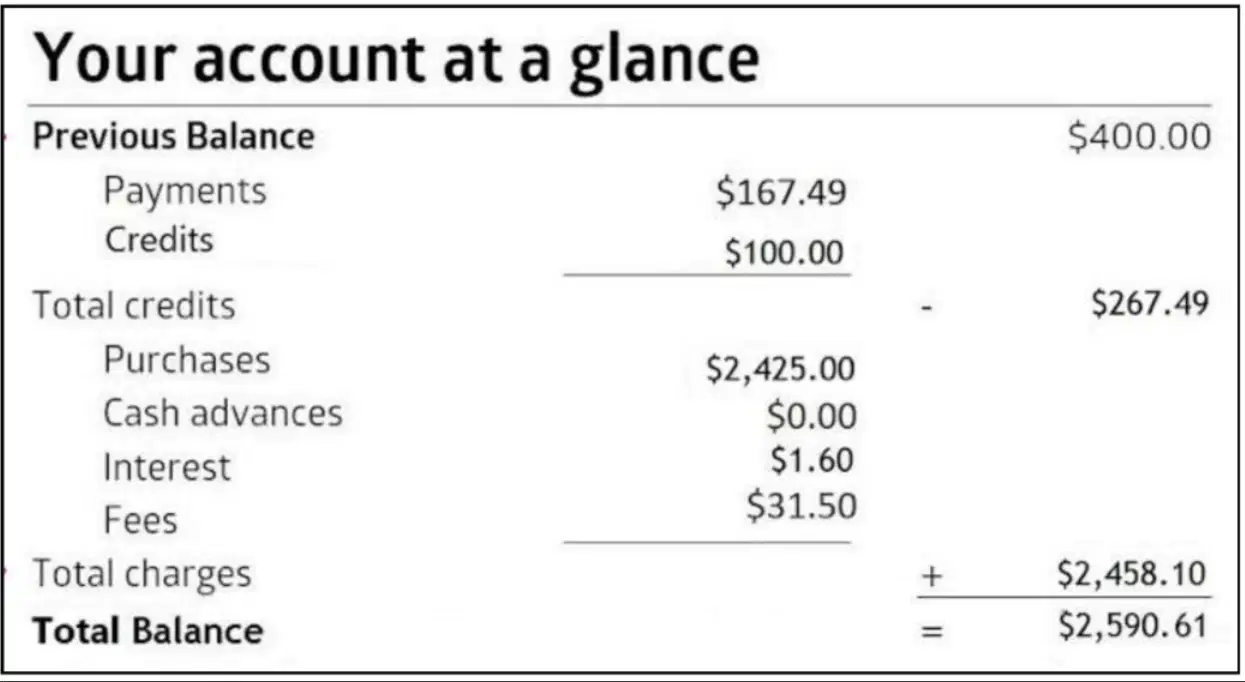
What is the minimum amount this cardholder must pay on this month's statement?
$167.49
$400
$2,590.61
You can't tell from this portion of the statement
What is a 'Credit Score'?
The maximum amount of credit a borrower can use
A yearly charge for credit card usage
A measurement of someone's creditworthiness
An initial cash payment for a large purchase
Each of the following factors impact your credit score, EXCEPT...
Payment history
Checking account balance
Mix of credit types
Length of credit history
Katherine has been using her credit card very responsibly in hopes of raising her credit score. Which of the following scores would indicate that Katherine now has a PRIME score?
450
600
720
500
Miguel's parents keep telling him he should worry about his credit score. He says, "Why bother?" Why should Miguel care?
A high credit score will make it easier for him to get loans or credit cards with better interest rates
A low credit score will make it easier for him to get loans or credit cards with better interest rates
If his credit score is positive, lenders will allow him to pay back only a portion of his loan instead of the whole balance
Miguel will not be able to apply for colleges if he doesn't have a strong credit score
When discussing a loan, such as a college loan or auto loan, what does the word "principal" mean?
The total amount you borrowed
The amount of interest you pay over the whole length of the loan
The total amount of money you owe
The total number of months you will have to repay the loan
(Using at least 2 SENTENCES) Explain why it is important to have a Repayment Plan, and even a signed Promissory Note if you are going to loan money to a friend or family member?

