
 Worksheets
Objectives - Cold Water System Requirements
Total questions: 55
Worksheet time: 45mins

By the end of the session, learners will be able to: ________ (Fill in the blank with the session objective)
calculate cold water system requirements used in dwellings.
identify different types of electrical wiring systems.
describe the process of painting interior walls.
explain the principles of air conditioning systems.
Modern plumbing systems have seen an increase in the use of direct cold water systems, whereby all the outlets within the building are supplied with water directly from a ________ supply. (Fill in the blank)
water undertaker’s
rainwater
well
storage tank
Why is the use of cold water storage cisterns sometimes unavoidable?
Because they are cheaper
Because the mains pressure is low
Because they are easier to install
Because they look better
Storing cold water has the advantage of a reserve supply of water being available should the ________ be isolated for any period of time.
mains
pipes
valves
tanks
According to the calculation of system capacity, what is the recommended storage capacity for cisterns supplying cold water outlets only in small dwellings?
50 litres to 100 litres
100 litres to 150 litres
200 litres to 300 litres
80 litres per person
According to the calculation of system capacity, what is the recommended storage capacity for cisterns supplying hot and cold water outlets in small dwellings?
100 litres to 150 litres
80 litres per person
200 litres to 300 litres
130 litres
According to British Standard 6700, what is the minimum recommended storage capacity for systems supplying cold water to both cold and hot water systems in domestic dwellings?
100 litres
150 litres
230 litres
300 litres
For large dwellings, what is the recommended storage capacity per person?
100 litres
80 litres
200 litres
230 litres
For large dwellings, what is the recommended storage capacity where the cistern fills only at night?
80 litres
100 litres
130 litres
230 litres
In large dwellings, the amount of cold water storage for supplying cold water to a hot water storage vessel should equal the storage capacity of the hot water storage vessel.
True
False
For larger buildings, the capacity of any cistern supplying cold water depends on several factors. Which of the following is NOT one of those factors?
The type and number of the appliances
The number of occupants
The type and use of the building
The frequency of use
The color of the building
Most capacities are calculated to provide a _______ supply should mains failure occur.
24-hour
6-hour
12-hour
48-hour
The table on the next slide provides a reference for cistern capacities, based on the type of building and number of occupants.
True
False

According to the table, what is the minimum cold water storage (in litres) required per bed space in a hotel?
200 per bed space
100 per bed space
300 per bed space
50 per bed space
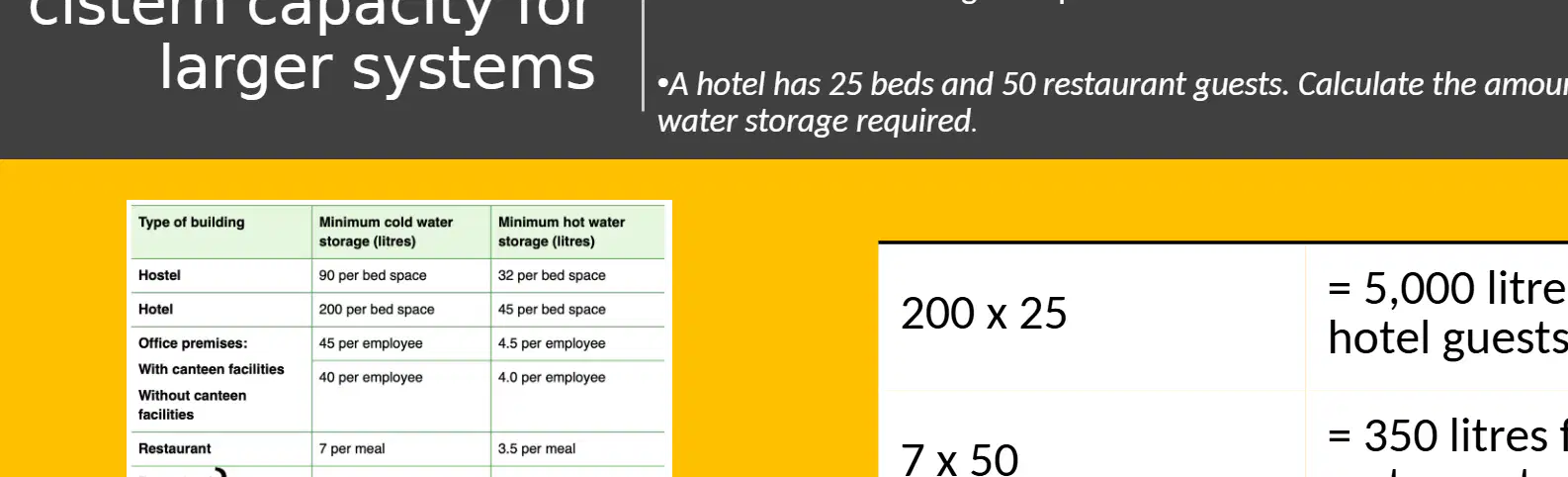
According to the table, what is the minimum hot water storage (in litres) required per employee in an office premises with canteen facilities?
4.5 per employee
2.0 per employee
6.0 per employee
10.0 per employee
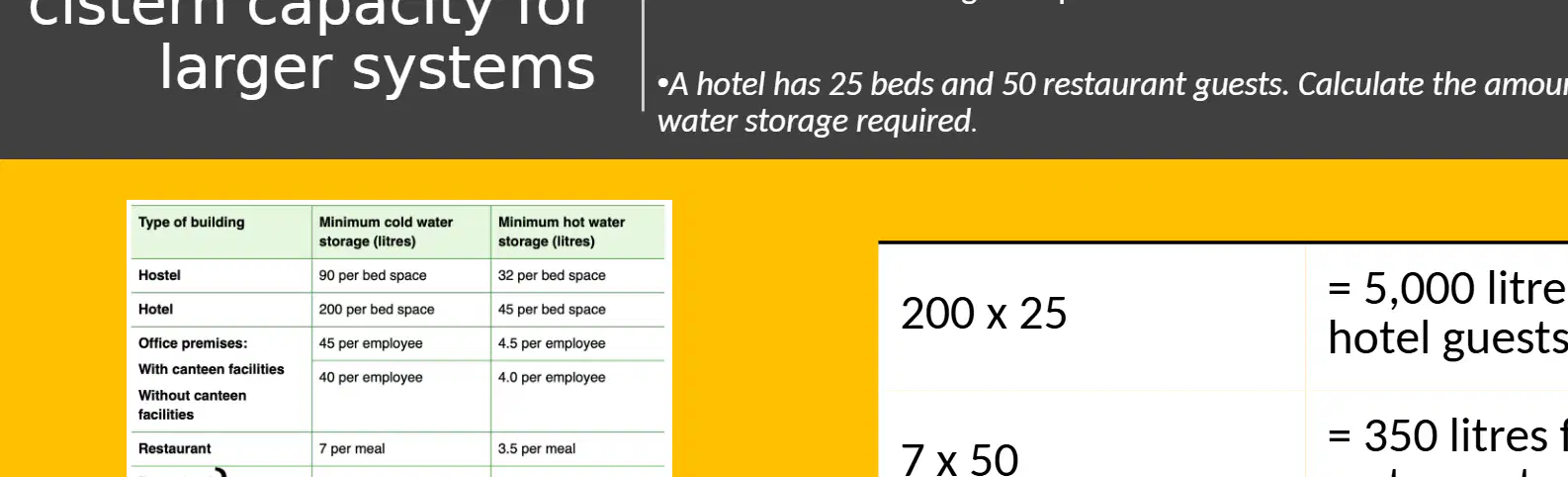
According to the table, what is the minimum cold water storage (in litres) required per meal in a restaurant?
7 per meal
10 per meal
5 per meal
3 per meal
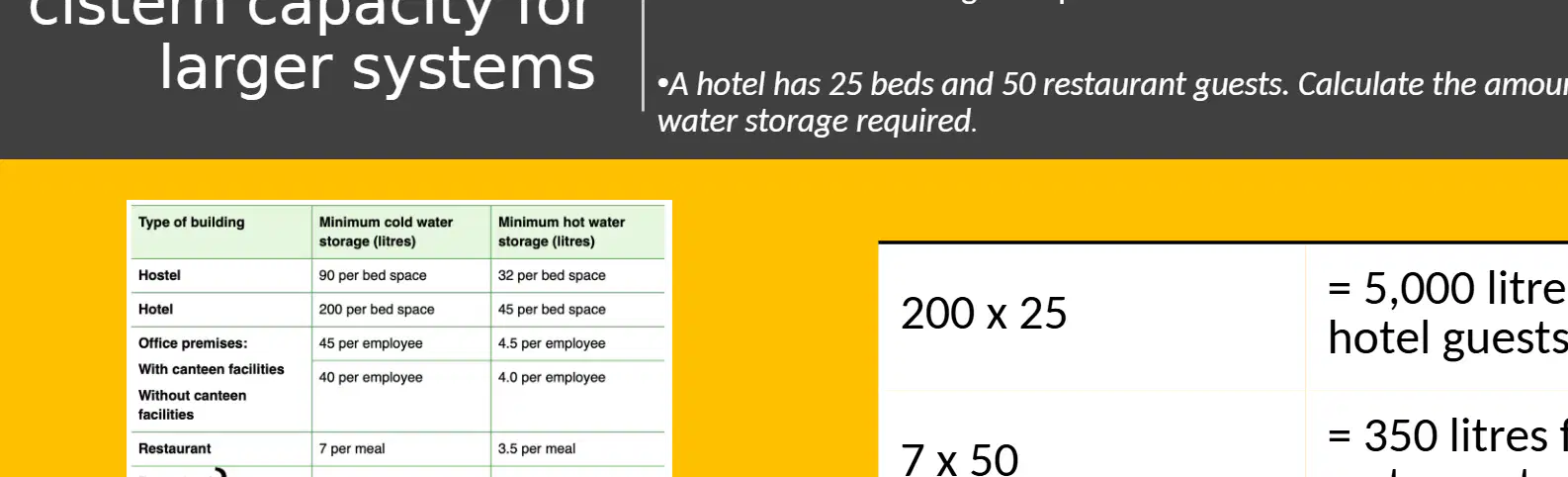
According to the table, what is the minimum hot water storage (in litres) required per pupil in a primary school?
5.0 per pupil
2.0 per pupil
10.0 per pupil
7.5 per pupil
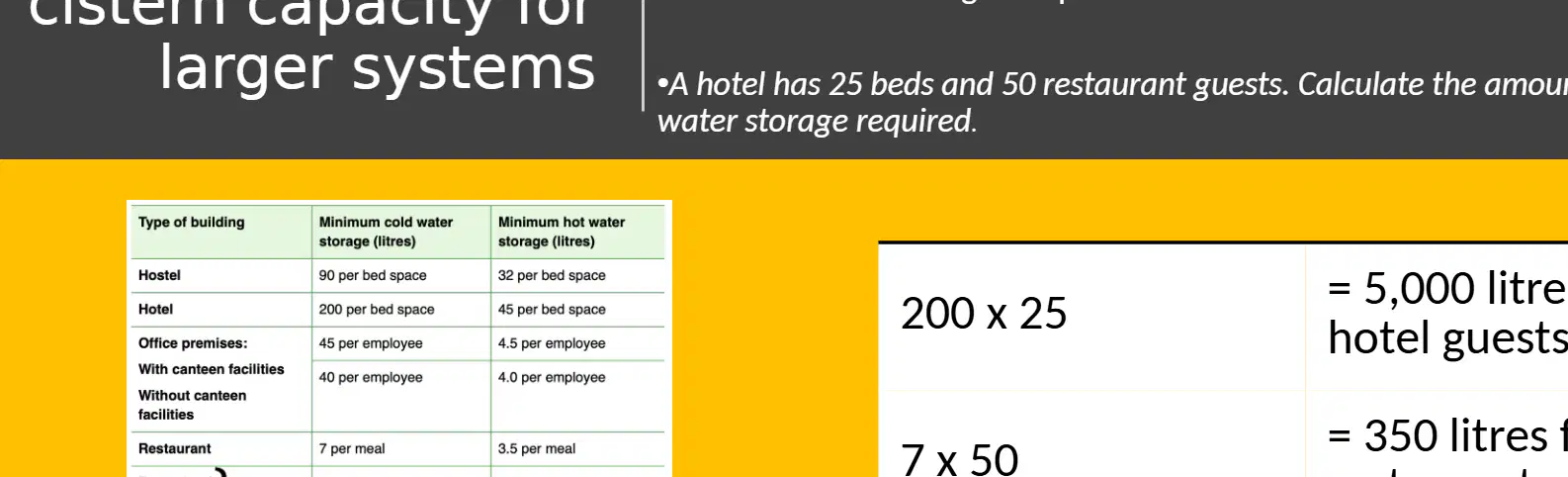
A hotel has 25 beds and 50 restaurant guests. Calculate the amount of cold water storage required.
5,000 litres
350 litres
5,350 litres
4,500 litres

According to the table, which type of building requires the highest minimum cold water storage per bed space?
Hostel
Hotel
Children's home/residential nursery
Boarding school
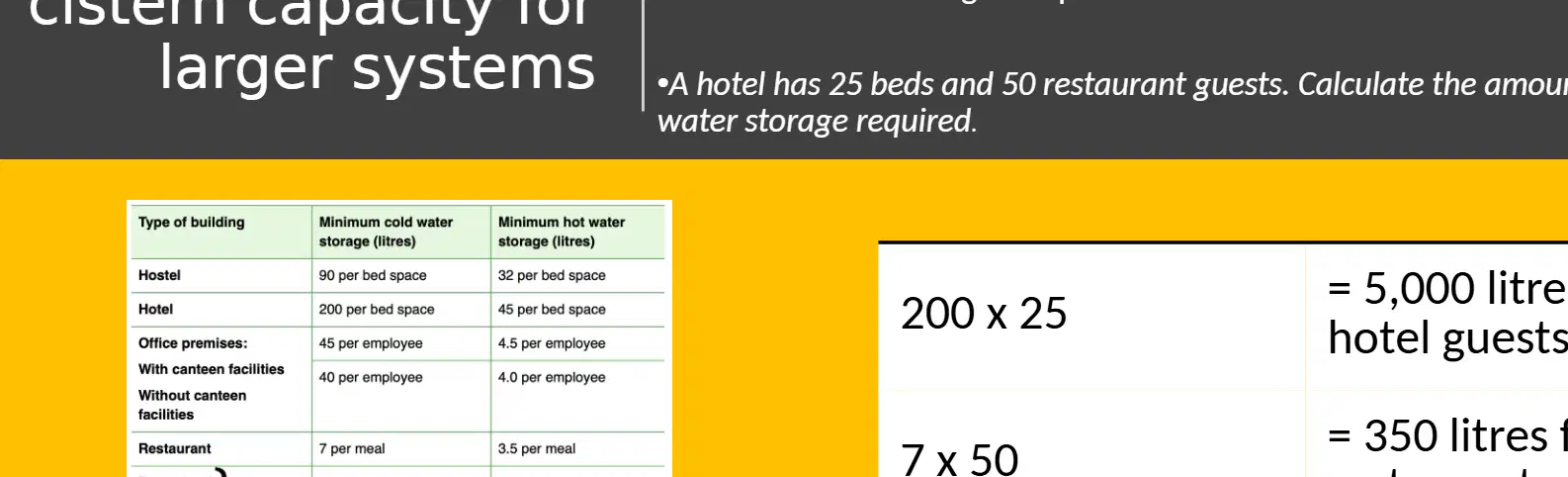
According to the table, what is the minimum hot water storage (in litres) required per bed space in a hostel?
32 per bed space
20 per bed space
50 per bed space
10 per bed space
Manufacturers, such as Grundfos, offer apps and technical support to help size and select suitable pumps; however, understanding the theory is useful in the field.
True
False
What does a pump need to be able to achieve according to the text?
Move a required quantity of water whilst overcoming the static head or resistance offered by gravity and friction
Only provide technical support
Only move water without resistance
Only overcome gravity
A pump needs to be able to move a required quantity of water (kg/s or l/s) whilst overcoming the ________ (pressure in kPa) or resistance offered by gravity and friction.
static head
dynamic pressure
flow rate
velocity head
What is the unit of measurement for work done when 1 Newton force acts through 1 metre distance?
joule
watt
newton
pascal
Fill in the blank: 1 joule = ___ x ___
1N x 1m
1kg x 1m
1W x 1s
1C x 1V
What is the formula for Force in Newtons?
What is the formula for Power (watts) as given in the image?
Power (watts) = (mass x 9.81 x distance) ÷ time
Power (watts) = (mass x distance) ÷ 9.81 x time
Power (watts) = (mass x time) ÷ 9.81 x distance
Power (watts) = (distance x 9.81) ÷ (mass x time)
1 joule per second (1J/s) is equal to 1 watt.
True
False
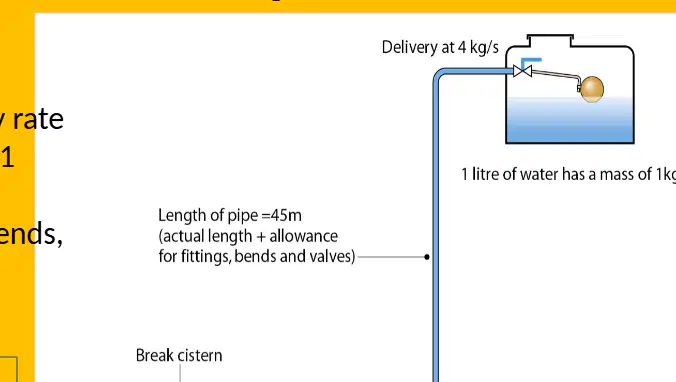
According to the example, what is the delivery rate required to fill the cistern?
(a)
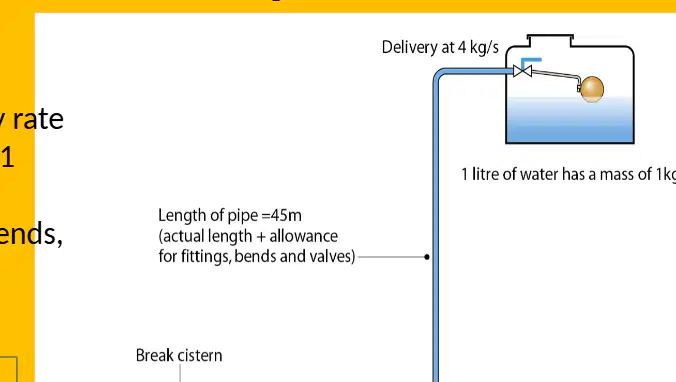
What is the total length of pipework including all bends, valves, and fittings in the example?
(a)
What is the formula used to calculate the power required for the pump in the example?
Power = (mass x 9.81 x distance) ÷ time
Power = (mass x distance) ÷ 9.81
Power = (distance x 9.81) ÷ mass
Power = (mass x time) ÷ 9.81
What is the allowance for pump efficiency in the example?
(a)
What is the final pump rating (including 75% efficiency allowance) as calculated in the example?
1,800W
2,000W
2,500W
3,000W
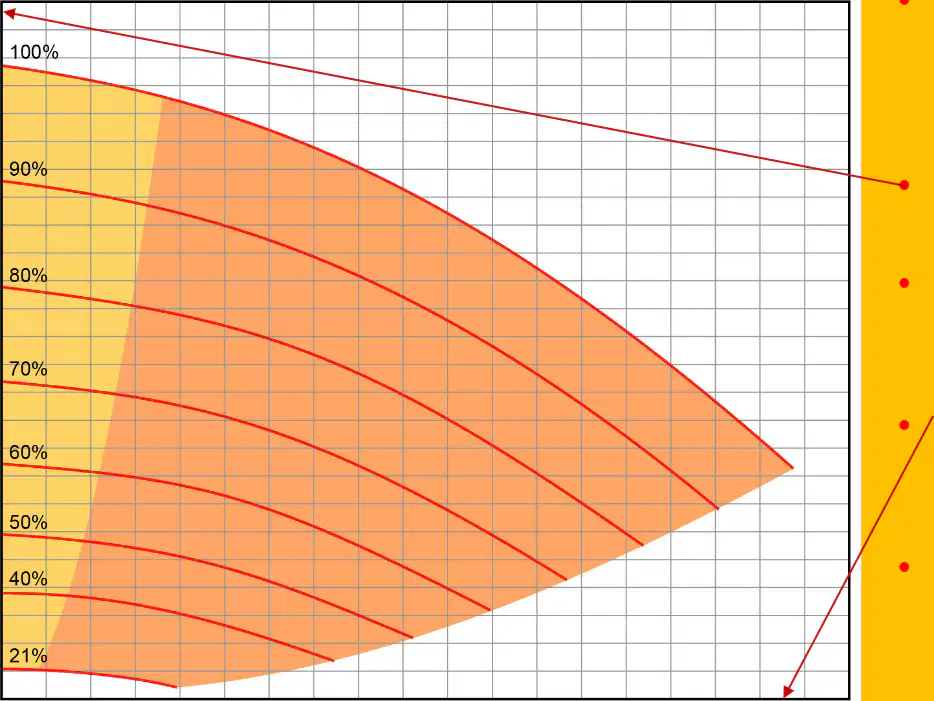
What do manufacturers' pump curves help designers to do?
Select a suitable pump relevant to their duty
Increase the flow rate
Decrease the head
Measure temperature
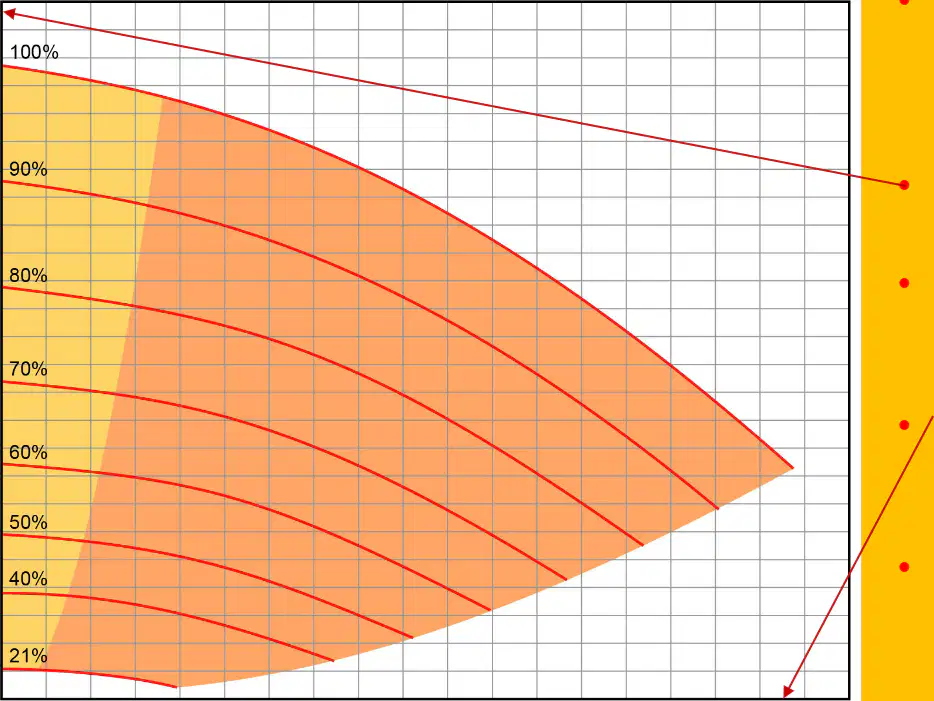
What does the vertical axis of the pump performance graph show?
Flow rate in l/s
Head in meters (m)
Temperature in °C
Pressure in Pa
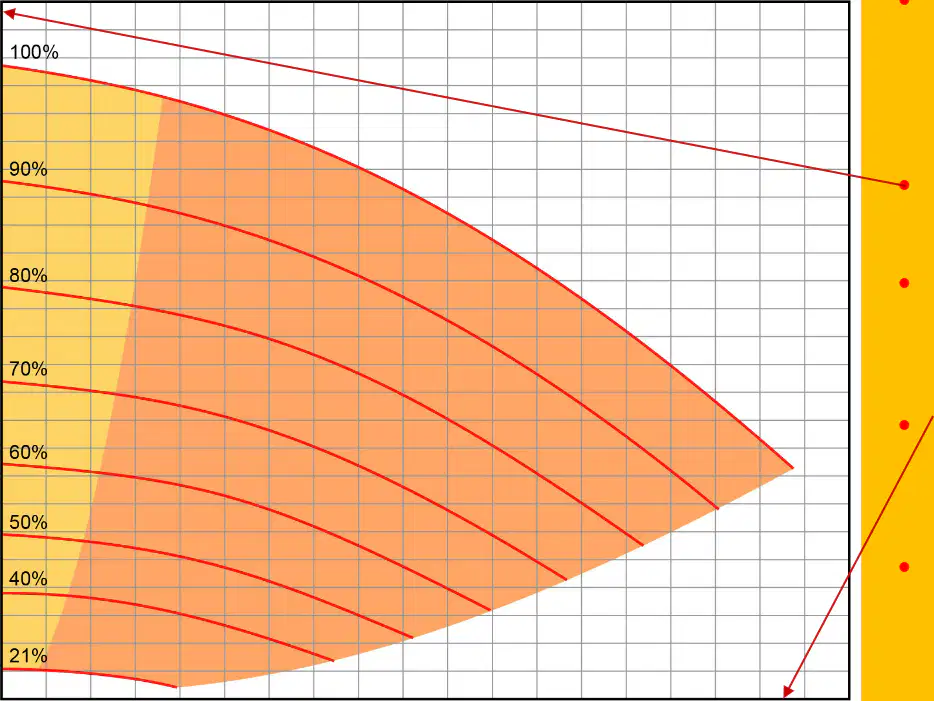
What does the horizontal axis of the pump performance graph show?
Head in meters (m)
Flow rate in l/s (Q)
Temperature in °C
Pressure in Pa
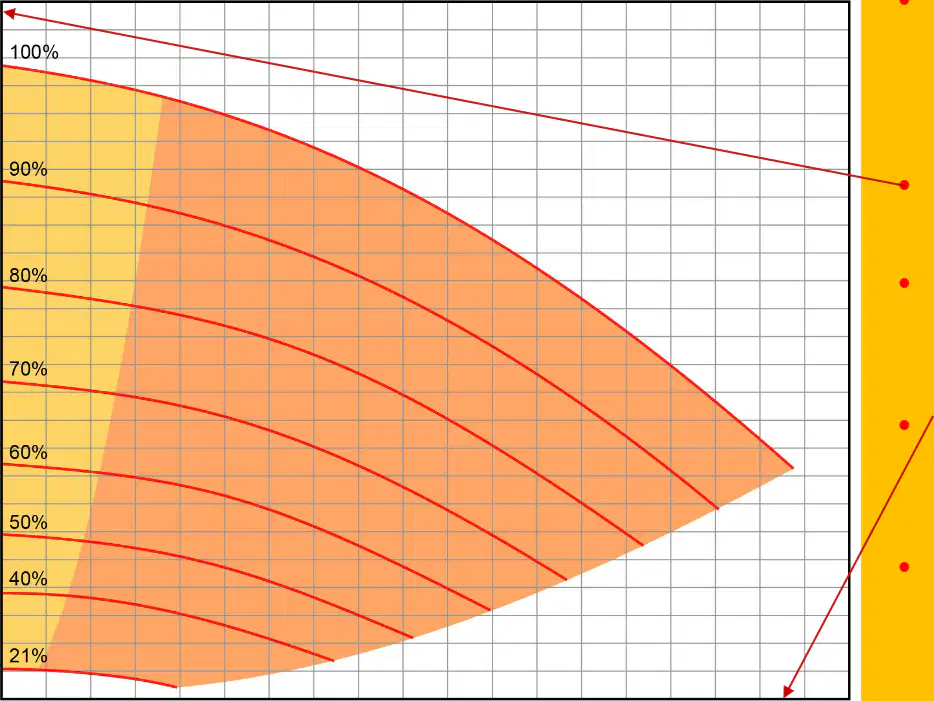
The curve on the pump performance graph shows the ________ of the pump. (Fill in the blank)
operating limit
temperature range
fluid color
pipe diameter
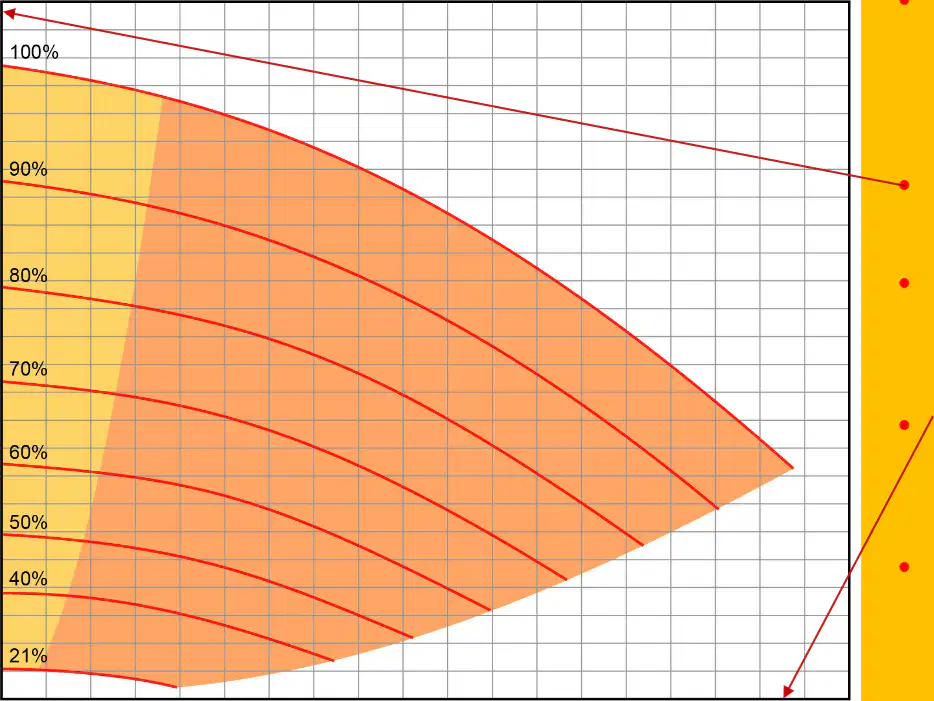
The flow rate reduces as the head increases in the pump performance graph.
True
False
What does Q₂ and Q₁ represent in pump laws?
Discharge of water delivered (l/s)
Pressure head (m)
Pump efficiency (%)
Rotational speed (rpm)
What does N₂ and N₁ represent in pump laws?
What does P₂ and P₁ represent in pump laws?
What does W₂ and W₁ represent in pump laws?
Power required (watts)
Water flow rate (liters/second)
Weight of the pump (kg)
Width of the impeller (mm)
According to pump laws, the quantity of water delivered (Q) will vary according to the rotational speed of the impeller (N). This is expressed as: (Q₂ ÷ Q₁) = (N₂ ÷ N₁).
True
False
In the context of pump laws, if Q₁ is the start quantity and Q₂ is the target quantity, what does N₁ and N₂ represent?
What does Q2 and Q1 represent in the context of pump laws?
Discharge of water delivered (l/s)
Power consumed by the pump (kW)
Height of water column (m)
Speed of the pump (rpm)
What does N2 and N1 represent in the context of pump laws?
Rotational speed of impeller (rpm or rps)
Discharge pressure of the pump
Diameter of the pump casing
Flow rate through the pump
What does P2 and P1 represent in the context of pump laws?
Pressure produced (kPa or kN/m²)
Power input and output
Pump speed and flow rate
Pipe diameter and length
What does W2 and W1 represent in the context of pump laws?
Fill in the blank: According to pump laws, pressure produced (P) will vary with the (a) of rotational speed of impeller (N).
What does the formula (W₂ ÷ W₁) = (N₂)³ ÷ (N₁)³ express in the context of pump laws?
Q₂ and Q₁ represent the ________ of water delivered (l/s).
discharge
velocity
pressure
temperature
N₂ and N₁ represent the ________ of the impeller (rpm or rps).
P₂ and P₁ represent the (a) produced (kPa or kN/m²).
W₂ and W₁ represent the ________ required (watts).
power
energy
voltage
current
If a 3kW pump discharges 4kg/s at 2,800rpm, what will happen to the power required, pressure produced, and water delivered if the impeller speed is increased to 3,000rpm?
All three (power, pressure, and water delivered) will increase.
Only the power required will increase, pressure and water delivered remain the same.
Power required and pressure produced will increase, but water delivered will decrease.
Only the water delivered will increase, power and pressure remain the same.

