
 Worksheets
Historical Events and Movements Quiz
Total questions: 55
Worksheet time: 28mins
What was a major characteristic of the Ming Dynasty?
Expansion of Chinese commerce into East Africa, the Middle East, and Southeast Asia
The beginning of the Industrial Revolution
The fall of the Roman Empire
The signing of the Magna Carta

What was the Columbian Exchange?
The trade of spices between Europe and Asia
The exchange of plants, animals, diseases, and technologies between the Americas and the rest of the world
The migration of people from Europe to the Americas
The spread of the Black Death in Europe
What did the Renaissance signify?
The beginning of the Industrial Revolution
The rebirth of Greek & Roman culture and critical thinking
The start of the Cold War
The fall of the Byzantine Empire

What was the Enlightenment?
A movement advocating the use of reason in the reappraisal of accepted ideas and social institutions
The beginning of the Renaissance
The spread of the Black Death
The signing of the Magna Carta
What was a key outcome of the Scientific Revolution?
The fall of the Roman Empire
People began to believe everything could be explained through science
The signing of the Magna Carta
The spread of the Black Death
What was the Glorious Revolution known for?
Violent overthrow of the English king
Nonviolent overthrow of the English king
Establishment of absolute monarchy
Abolition of the English Bill of Rights

Which philosopher asserted that people have a natural right to life, liberty, and property?
Thomas Hobbes
Montesquieu
John Locke
Jean-Jacques Rousseau

Who believed in absolute monarchy?
John Locke
Thomas Hobbes
Montesquieu
Voltaire
What did Montesquieu advocate for in his political philosophy?
Divine Right of Kings
Separation of executive and legislative and judicial powers
Absolute monarchy
Nonviolent revolution
Who was the British feminist of the eighteenth century who argued for women's equality with men, even in voting, in her 1792 work "Vindication of the Rights of Women"?
Mary Wollstonecraft
Susan B. Anthony
Emmeline Pankhurst
Sojourner Truth

What was the main cause of the French Revolution that began in 1789?
Overthrow of the absolute monarchy and aristocratic privileges
Taxation without representation
Industrial Revolution
Colonization of Africa

What was a primary cause of the American Revolution?
Taxation without representation
Industrialization
Religious freedom
Expansion of territory
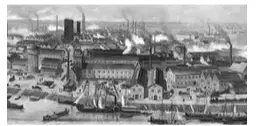
What was the Industrial Revolution?
A period of rapid growth in the use of machines in manufacturing and production that began in the mid-1700s
The movement of people from rural areas to cities
A time when new inventions made farming easier and faster
The invention of the seed drill
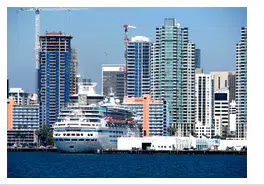
What does urbanization refer to?
The invention of the steam engine
Movement of people from rural areas to cities
A period of rapid growth in manufacturing
The design of the first steamboat
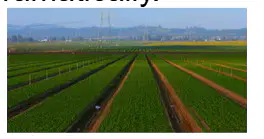
What was a significant impact of the Agricultural Revolution?
The invention of the steam engine
The movement of people to cities
The dramatic increase in food production
The design of the first steam warship
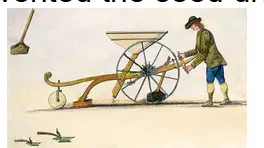
Who invented the seed drill?
James Watt
Jethro Tull
Robert Fulton
Eli Whitney
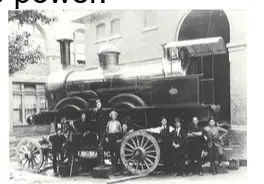
What is a steam engine?
An engine that uses the expansion or rapid condensation of steam to generate power
A device for planting seeds
A type of warship
A method of urban planning
Who designed the first commercially successful steamboat?
James Watt
Jethro Tull
Robert Fulton
Eli Whitney

Who was Robert Fulton?
An inventor known for developing the steamboat
A military leader in World War I
A famous artist from the Renaissance
A political figure in the French Revolution

What was World War I?
A conflict between the Allies and Central Powers from 1914 to 1918
A civil war in the United States
A war between France and Germany in the 1800s
A global conflict that started in 1939

What is militarism?
A policy of glorifying military power and keeping a standing army prepared for war
A strategy to promote peace through diplomacy
A method of economic development through trade
A cultural movement focused on the arts
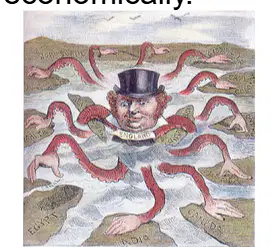
What does imperialism refer to?
A policy where a strong nation seeks to dominate other countries politically, socially, and economically
A movement to promote cultural exchange between nations
A strategy to reduce military spending
A form of government where power is shared equally
What is nationalism?
A strong feeling of pride in and devotion to one's country
A belief in the superiority of one race over others
A political system where power is held by a single ruler
A movement to promote global unity and peace

What was the primary purpose of the League of Nations when it was formed in 1920?
To promote economic growth among nations
To establish a global military alliance
To promote cooperation and peace among nations
To create a new world currency

What were some of the causes of the Global Depression/Great Depression?
High employment and economic equality
Large debts after WWI and collapse of stock markets
Increase in global trade and prosperity
Technological advancements and industrial growth
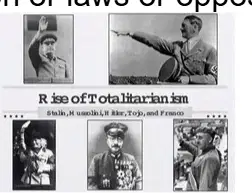
Which form of government is characterized by a ruler who is an absolute dictator?
Democracy
Monarchy
Totalitarianism
Oligarchy
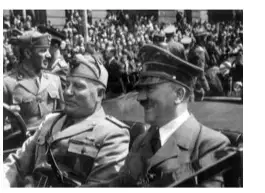
Who was the Fascist Dictator of Italy who initially used bullying to gain power but never had full power?
Benito Mussolini
Joseph Stalin
Adolf Hitler
Winston Churchill
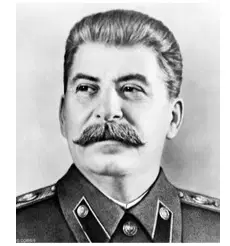
Who was the Communist dictator of the Soviet Union during World War II?
Vladimir Lenin
Joseph Stalin
Nikita Khrushchev
Leon Trotsky

What event caused America to enter World War II in 1941?
Invasion of Poland
Attack on Pearl Harbor
Battle of Britain
D-Day Invasion
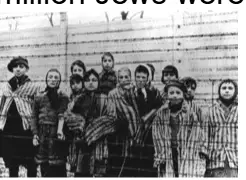
What was Hitler's plan to ensure German supremacy called?
The Final Solution
Operation Barbarossa
Blitzkrieg
Lebensraum
What is the book "Night" by Elie Wiesel about?
The American Civil War
The horrors of the Holocaust
The French Revolution
The Industrial Revolution

What was a significant reason for Japanese Imperialism in the early 20th century?
Abundance of natural resources
Growing population and limited resources
Desire for cultural exchange
Expansion of democratic ideals
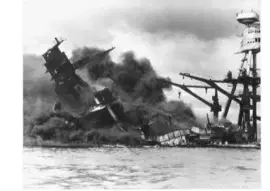
What was the outcome of the Japanese attack on Pearl Harbor on December 7, 1941?
The U.S. declared war on Japan and Germany
Japan gained control of Hawaii
The U.S. signed a peace treaty with Japan
The attack was repelled with no losses
When did American and Allied troops land in German-occupied France during World War II?
June 6, 1944
December 7, 1941
May 8, 1945
September 1, 1939

What event marked the beginning of the liberation of Western Europe from Hitler during WWII?
Battle of the Bulge
Normandy Landings (D-Day)
Pearl Harbor Attack
Battle of Stalingrad

Which Japanese cities were atomic bombs dropped on during WWII?
Tokyo and Osaka
Nagasaki and Hiroshima
Kyoto and Yokohama
Sapporo and Fukuoka
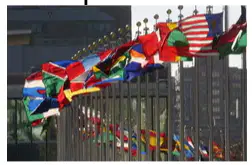
What was the primary purpose of forming the United Nations after WWII?
To promote international trade
To establish a global currency
To promote international peace, security, and cooperation
To create a new world government

What was the Cold War primarily about?
A direct military conflict between the US and USSR
A struggle for technological supremacy
A power struggle between communism and capitalism
A race to colonize the moon
Which conflict involved Communist North Korea and Non-Communist South Korea, with the United Nations aiding South Korea?
Vietnam War
Korean War
Gulf War
Falklands War
What was the Soviet Union (USSR)?
A Communist nation consisting of Russia and 14 other states from 1922 to 1991.
A democratic nation in Europe from 1922 to 1991.
A coalition of Western European countries during World War II.
A neutral country during the Cold War.

What was the Arms Race during the Cold War?
A competition between the U.S. and Soviet Union to build up their armed forces and weapons.
A race to the moon between the U.S. and Soviet Union.
A trade war between the U.S. and Soviet Union.
A diplomatic negotiation to reduce nuclear weapons.
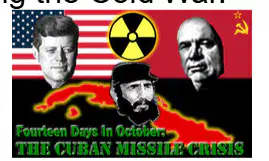
What was the Cuban Missile Crisis of 1962?
A confrontation among the Soviet Union, Cuba, and the United States during the Cold War.
A peace treaty signed between Cuba and the United States.
A trade agreement between the Soviet Union and Cuba.
A cultural exchange program between the U.S. and Cuba.
What was the Vietnam War?
A prolonged war between the communist armies of North Vietnam and the non-communist armies of South Vietnam.
A civil war in China between 1954 and 1975.
A conflict between the Soviet Union and the United States in Vietnam.
A brief military skirmish between North and South Korea.
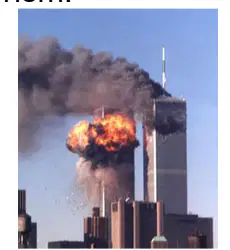
What event led to a focus on eliminating terrorism in the United States?
The Gulf War
The Vietnam War
9/11
The Cold War
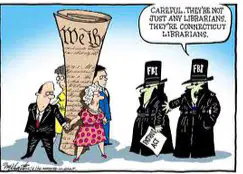
What was the purpose of the Patriot Act passed after 9/11?
To reduce taxes
To expand tools to fight terrorism
To promote environmental protection
To increase trade tariffs
What were the objectives of the Iraq and Afghanistan Wars?
To promote global trade
To end the safe haven for Al Qaeda and the Taliban's reign
To establish new trade routes
To reduce global warming

Who is the Scottish economist known for writing "The Wealth of Nations," a precursor to modern capitalism?
Adam Smith
Karl Marx
John Maynard Keynes
David Ricardo

What is the economic system called where private business operates in competition and is largely free of state control?
Socialism
Free enterprise
Communism
Feudalism
Who is known as the Father of Communism and wrote "The Communist Manifesto"?
Vladimir Lenin
Friedrich Engels
Karl Marx
Joseph Stalin
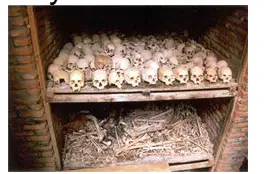
When did the Rwandan Genocide begin, during which the Hutus began slaughtering the Tutsis?
April 6, 1994
March 15, 1993
July 20, 1995
January 1, 1990
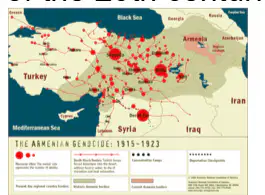
What was the Armenian Genocide?
The Turkish government organized the department of the Armenians in the Ottoman Empire, leading to over a million being murdered or starved.
The systematic extermination of Jews during World War II.
The forced relocation of Native Americans in the United States.
The mass killing of Tutsis in Rwanda.
What is globalization?
The process by which businesses or other organizations develop international influence or start operating on an international scale.
The isolation of countries to protect local industries.
The creation of a single global government.
The division of countries into smaller, independent states.
What was the Balkan Genocide?
Bosnian Christian Serbs murdering Muslim civilians, calling it ethnic cleansing to exterminate people.
The mass killing of Armenians by the Ottoman Empire.
The genocide of Tutsis by Hutus in Rwanda.
The Holocaust during World War II.

What is Sharia law based on?
The system of Islamic law, based on varying degrees of interpretation of the Qu'ran
A set of secular laws governing trade
A collection of ancient Greek philosophies
A modern legal system based on international treaties

What does telecommunications involve?
Communication over a distance by cable, telegraph, telephone, or broadcasting
Face-to-face communication in a local area
The study of ancient communication methods
A system of laws governing media content

