
 Worksheets
P4 Science Term Test 2 QUIZ
Total questions: 66
Worksheet time: 3hrs 32mins
The human body is made up of one system.
True
False
The nose, lungs and heart are parts of the respiratory system.
True
False
Digested food is carried to different parts of our body by the circulatory system.
True
False
The skeletal and muscular systems work together to help our body parts move.
True
False
Digestion starts in our mouth.
True
False
No digestion occurs in the gullet.
True
False

Study the classification table of the organ systems in a human body.
Which organ is placed in a wrong group?
heart
skull
lungs
muscles
Which one of the following is not an example of a matter?
air
jelly
music
water

The syringe below contains 200 cm3 of substance X and its nozzle is sealed tightly. Melody is not able to push the plunger inwards no matter how hard she tried.
Which of the following is correct about substance X?
1
2
3
4
Matter is anything that has ______________ and _______________.
weight ... occupy space
mass ... weight
mass ... occupy space
volume and occupy space
Which of the following is NOT considered as matter? (You may select more than one answer)
Shadow
Spoon
Heat
Cup
What is mass?
Mass is the (a) of matter in an object.
What is volume?
Volume is the space (a) by an object.

If you want to measure the mass of an object accurately. Which object would you use?
Object A
Object B

If you had to measure 56ml of water, which object would give you the most accurate measurement?
Object M
Object L
What are the three states of matter?

Which one of these image, A, B or C shows the particles in a solid?
A
B
C
What are the properties of solids?
Has definite shape
Has no definite shape
Has no definite volume
Cannot be compressed
What are the properties of liquids?
Has definite shape
Has no definite shape
Cannot be compressed
Has no definite volume
What are the properties of gas?
Has definite shape
Has no definite shape
Has definite volume
Can be compressed

What does the two set-up above tell us about ball A and ball B?
Ball A is heavier than ball B
Ball A is lighter than ball B
Ball A occupies more space than ball B
Ball A occupies less space than ball B

The volume of object P is (a) cm3.

The volume of object Q is (a) cm3.

Do you think the sponge gets wet?
Yes
No

What do you think is stopping the water from reaching the sponge?
The cup is too big so the water cannot fill the whole cup
There is not enough water in the basin to reach the sponge
The water has a definite shape so it cannot go into the glass.
Air occupies the space in the cup so the water cannot enter.


The diagram showed how a syringe with air in it was pushed. This shows that air ____________________.
has mass
can be compressed
has no definite shape
has a definite volume

Jonathan balanced two objects, P and Q, as shown.
Objects P and Q have the same mass.
Objects P and Q have the same shape.
Object P occupies more space than Object Q.
Objects P and Q are made of the same material.

The diagram shows a syringe containing some water and air. What will happen to the volume of water when the plunger is pushed in?
Remains the same
Becomes smaller
The diagram shows a syringe containing some water and air. What will happen to the volume of air when the plunger is pushed in?
Remains the same
Becomes smaller

Two syringes, P and Q, contain substances X and Y respectively.
The plunger in syringe P could not be pushed in while plunger in syringe Q could be pushed in slightly as shown in the diagram.
Which of the following substances are most likely to be X and Y?
X -- air
Y -- water
X -- carbon dioxide
Y -- oxygen
X -- oil
Y -- air
X -- water
Y -- oil


What does your skull protect?
heart
lungs
ribs
brain
Carries materials like energy from food and oxygen to the cells in the body
Circulatory System
Digestive System
Respiratory System
Skeletal System
The (a) system brings oxygen for the body to use and takes away carbon dioxide.
The body has several organ systems. Which organ system is pictured here?
skeletal system
circulatory system
respiratory system
Which system in the human body includes the heart, blood, arteries, and veins? (a)
The body has several organ systems. Which organ system is pictured here?
skeletal system
circulatory system
respiratory system
nervous system
Label the organs
What do the muscular system and skeletal system have in common?
Both systems protect the brain.
Both systems pump blood to the body.
Both systems are made up of soft material.
Both systems assist the body with movement.
Which best explains the effects of exercise on the respiratory system?
Exercise increases breathing rate which makes the lungs stronger.
Exercise increases breathing rate which makes the bones stronger.
Exercise decreases breathing rate which sends more oxygen to the
brain.
Exercise decreases breathing rate which produces more wastes for the
kidneys to process.
Which best explains how the muscular system relies on the respiratory
system?
The respiratory system cools the muscular system.
The respiratory system acts as the support system for the muscular
system.
The respiratory system brings oxygen into the body for the muscular
system to use.
Which major body system breaks down food to release nutrients needed
for energy production?
digestive
muscular
respiratory
cardiovascular
Which best describes the role of the respiratory system?
It helps people stand upright.
It helps people eat and digest different foods.
It helps people transport blood throughout their bodies.
It helps people breathe in oxygen and breathe out carbon dioxide.
In what way are the digestive and circulatory systems alike?
Both protect organs in the body.
Both control movement of the body.
Both absorb gases or nutrients into the body
Both provide structural support for the body
What functions do leaves perform?
Leaves perform transpiration and photosynthesis
Leaves give shade
Leaves do not function

Which part, (1), (2), (3) or (4), makes food for the plant?
(1)
(2)
(3)
(4)

Which human system is shown in the diagram?
skeletal system
muscular system
respiratory system
circulatory system

The following parts X, Y, and Z can be found in the human digestive system.
Which one of the following shows the correct order in which food moves through these parts?
X -> Y -> Z
Y -> X -> Z
Y -> Z -> X
Z -> Y -> X

The graph below shows how the amount of digested food changes as it moves along the parts of the human digestive system.
Based on the information given, which of the following statements are true?
A Part R digests the most amount of food.
B The digested food is absorbed at Organ T.
C Parts Q and T do not produce digestive juice.
D Parts P, R and S are able to produce digestive juice.
A and B
C and D
B, C and D
A, B, C and D

Which part, A, B, C or D, takes in water and minerals for the plant?
A
B
C
D
Which of the following is a correct function of the roots?
keeps the plant upright
takes in air for the plant
makes food for the plant
holds plant firmly to the ground

Raj wanted to investigate if the number of leaves affects the amount of water taken in by a plant. He had four set-ups below.
Which set-ups should he use for his experiment?
A,B
A,C
B,C
C,D

The following statements describe an organ system.
Which of the following statements correctly describes a function of This system takes air into the body.
this organ system?
This system takes air into the body.
This system helps to break down food.
This system gives shape to the body and protects important parts of the body.
This system carries substances like digested food to different parts of the body.

Parts A, B, C, D, and E are organs of the digestive system. The graph below shows the amount of undigested food leaving each organ after a meal.
Which of the following correctly represents the parts of the digestive system?
Mouth: B
Gullet: C
Small Intestine: A
Large Intestine: D
Mouth: B
Gullet: E
Small Intestine: D
Large Intestine: A
Mouth: A
Gullet: E
Small Intestine: D
Large Intestine: C
Mouth: A
Gullet: D
Small Intestine: E
Large Intestine: C
What is the function of the small intestine in the human digestive system?
Passes food from the mouth to the stomach.
Absorbs digested food into the blood.
Absorbs water from undigested food.
Cuts food into smaller pieces.

Natalie carried out an experiment using four identical plants, P, Q, R and S. She removed certain parts from each plant as shown in the table below.
Then, she placed the plants in her garden and watered them daily with the same amount of water.
Which plant would most likely survive the longest?
P
Q
R
S
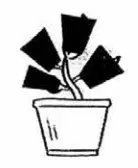
The leaves of a plant were covered completely by black paper. It was then placed under the sun and watered daily.
After two weeks, the plant died.
Which of the following correctly explained why the plant died?
The black paper prevented the leaves from getting sunlight to make food.
The black paper prevented the leaves from absorbing water.
The black paper prevented the leaves from absorbing mineral salts.
The black paper prevented the tiny openings under the leaves from taking in air.

During a thunderstorm, a tree can be uprooted.
When this happens, the plant will not be able to __________.
make food
supports the leaves and branches
absorb water and minerals
get sunlight

The diagram shows how the leaves of plant X are arranged.
The leaves are arranged in this way so that they can _______________________.
collect more rainwater for the plant
give more shade to the rest of the plant
trap more sunlight to make food
transfer water to the stem of the plant
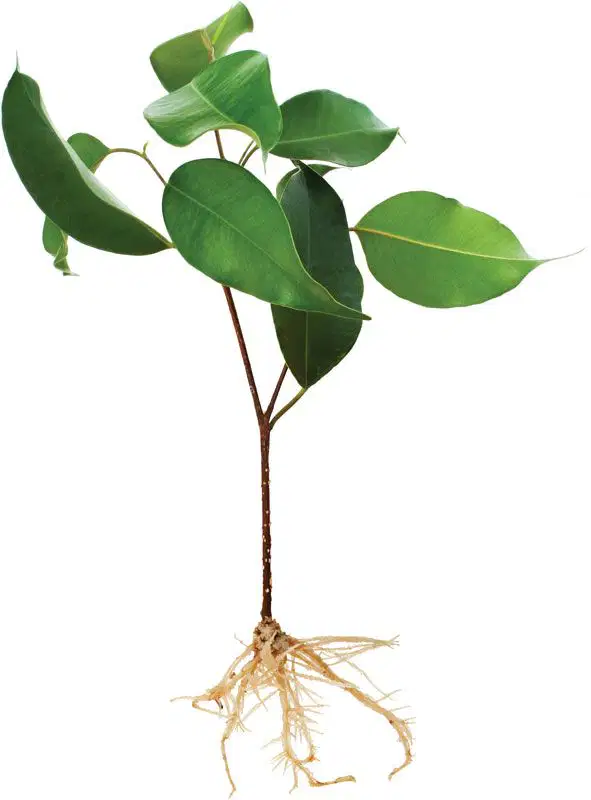
What are the functions of the stem?
(Select all correct answers)
To hold the leaves up so they can get light to make food.
To absorb water and minerals.
To support the plant.
To help the plant to take in and give out gases.

