
 Worksheets
Food Webs
Total questions: 62
Worksheet time: 8hrs 7mins

An organism that uses sunlight to make its own food for energy
Carbon Dioxide
Producer
Flow
Energy
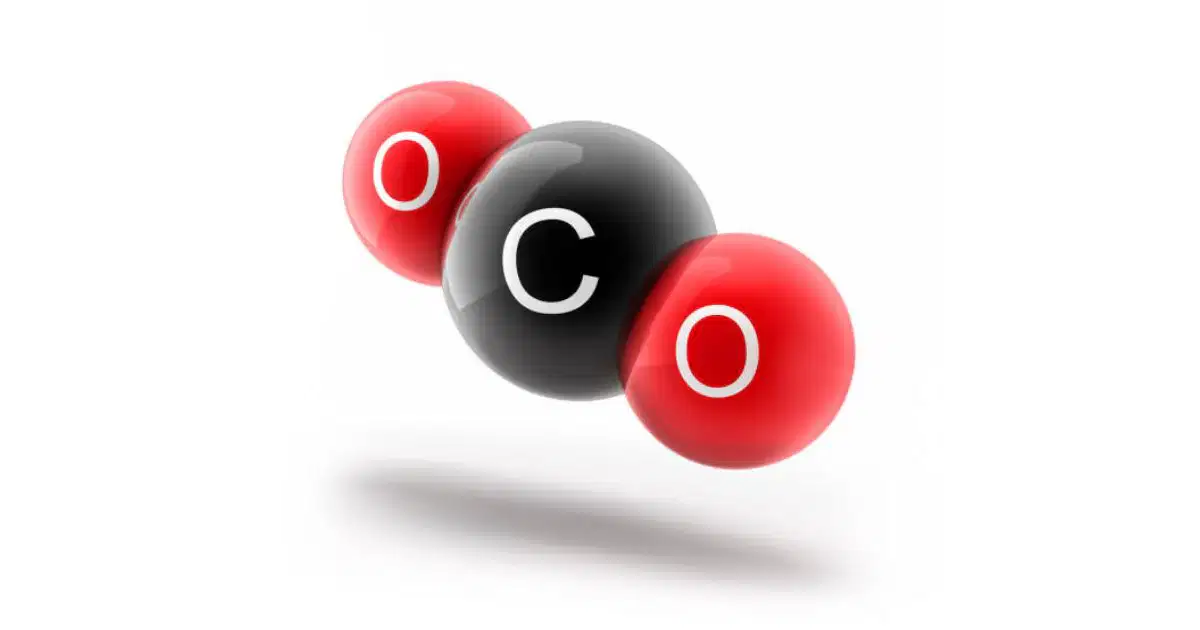
A gas produced by cells during respiration; used in photosynthesis to produce sugars
Carbon Dioxide
Producer
Flow
Energy

To move or travel smoothly in a certain direction
Carbon Dioxide
Producer
Flow
Energy

What is needed to do work or cause change
Carbon Dioxide
Producer
Flow
Energy
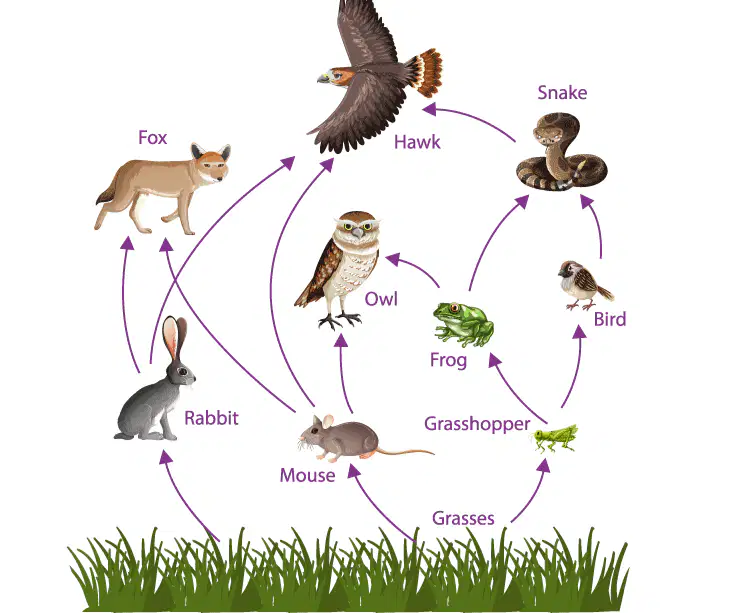
An interconnected set of food chains
Consumer
Producer
Food Web
Sun

The star at the center of the solar system that supplies heat and light to Earth; its enormous gravity keeps the solar system in orbit
Consumer
Producer
moon
Sun

An organism that gets energy from eating plants or animals
photosynthesizer
Producer
Consumer
Decomposer

An organism that breaks down the remains of dead plants or animals without need for internal digestion
Consumer
Producer
photosynthesizer
Decomposer

A sequence of events that repeats itself
Food web
Cycle
Food Chain
Flow
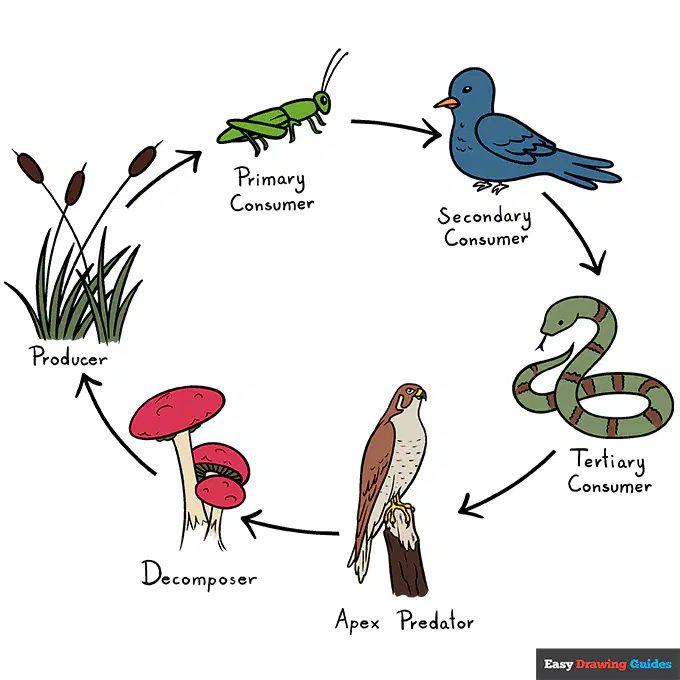
The path of food energy from one organism to another in an ecosystem
Food web
Cycle
Food Chain
Flow
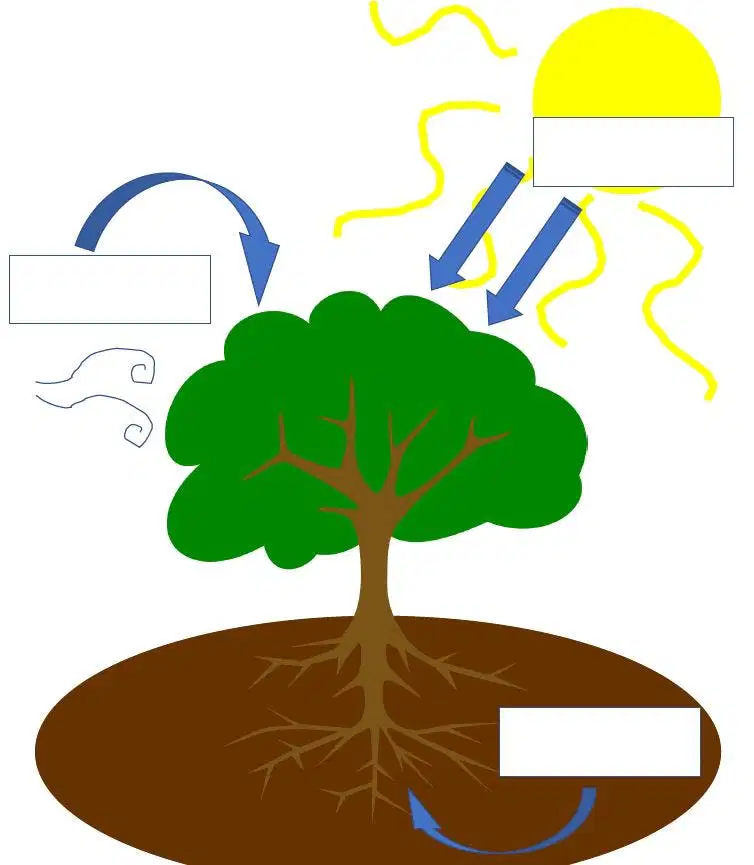
What do plants use to make their own food?
Soil, air, and rocks
Sunlight, water, and carbon dioxide
Wind, water, and soil
Sugar, water, and oxygen
What is the name of the process that plants use to make food?
Photosynthesis
Condensation
Evaporation
Precipitation
Which part of the plant absorbs sunlight for photosynthesis?
Stems
Roots
Leaves
Flowers
During photosynthesis, what gas do plants take in from the air?
Oxygen
Carbon Dioxide
Nitrogen
Hydrogen
What is the main purpose of photosynthesis?
To produce oxygen for humans
To create soil nutrients
To make food (sugar) for the plant
To absorb water from the soil
What is a product of photosynthesis that is released into the air?
Hydrogen
Nitrogen
Carbon Dioxide
Oxygen
What happens to the energy from sunlight during photosynthesis?
It is stored in the plant as food (sugar)
It is released back into the air
It is used to break down the plant’s roots
It makes the leaves turn brown
Which of the following is an example of a producer?
A mushroom
A rabbit
Grass
A lion
What is the main source of energy for all living things in a food web?
Air
Soil
Water
Sun
What do consumers eat in a food web?
Only other consumers
Only decomposers
Producers and/or other consumers
Only rocks and soil
Which of the following is a decomposer?
A mushroom
A tree
A rabbit
A summer
What is the role of decomposers in the food web?
They produce their own food using sunlight
They break down dead plants and animals, returning nutrients to the soil
They hunt and eat other animals
They absorb energy directly from the Sun
What happens to energy as it moves through a food web?
It gets recycled back into the Sun
It disappears completely
It moves only in a straight line from one animal to another
It flows from the Sun to producers, then to consumers, and finally to decomposers
Which of these is an example of a primary consumer?
A snake that eats mice
A rabbit that eats grass
A hawk that eats snakes
A mushroom that decomposes a log
In a food web, which of these organisms would be at the top of the energy pyramid?
Grass
A deer
A mushroom
A wolf
What would most likely happen if all the decomposers in an ecosystem disappeared?
Dead plants and animals would pile up, and nutrients wouldn’t return to the soil
Plants would grow faster because they don’t need decomposers
Consumers would start producing their own food
Nothing would change
Which of the following correctly shows the flow of energy in a food chain?
Consumer → Producer → Decomposer → Sun
Decomposer → Consumer → Producer → Sun
Sun → Producer → Consumer → Decomposer
Sun → Consumer → Producer → Decomposer

In ______________, plants use sunlight and carbon dioxide to make glucose and oxygen
Combustion
Respiration
Decomposition
Photosynthesis
Why are producers important in an ecosystem?
They help decompose dead animals
They provide food for consumers
They eat other animals
They hunt decomposers

Which of these organisms is the producer?
Owl
Mouse
Grasshopper
Grass

Luna and Arjun went on a field trip to a local park. They were asked to identify the two producers in the ecosystem they observed. What did they identify?
wildflowers and grass
a rabbit and a mouse
a hawk and a snake
they said there is only 1 producer - grass


True
False
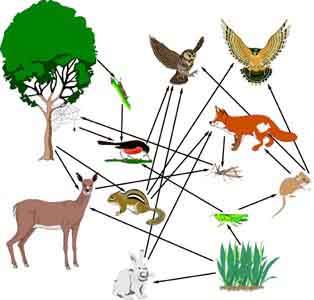

producer
consumer
decomposer

Several linked food chains
ecosystem
consumer
food web
Tundra

In the energy pyramid below, which organism has the least amount of energy available?
Producers
Herbivores
Carnivores
Top Predator
In the energy pyramid below, which organism has the most amount of energy available?
Producers
Herbivores
Carnivores
Top Predator


Sandra plants a vegetable garden in her backyard. She plants yellow squash and red peppers. Unfortunately, slugs begin eating the vegetables while squash bugs begin drinking the sap from the squash vines. The slugs and the squash bugs are both
plants
consumers
decomposers
producers

Look at the food web of a pond ecosystem.
Which food chain shows the correct flow of energy in the pond
of the food web?


Which of the following statements describes how consumers get food?
Consumers are able to make
their own food.
Consumers must get food
from other organisms.
Consumers make food or get food
from other organisms.
Consumers use sunlight and
carbon dioxide for food.

Look at the desert food web.
What organism will possibly die out if the feather grass were removed from the desert?
Jackrabbit
Grasshopper
Desert tortoise
Desert fox

Look at the table.
Based on the Properties of Aquatic Organisms table, which organism is a producer?
Grass Shrimp
Phytoplankton
Water Snail
Zooplankton

The table lists some characteristics of producers and consumers.
Which example would best replace the “X” in the table?
Plants
Trees
Shrubs
Goats


Click on the image to make it larger-- Choose all that apply: The hawk gets energy from...
mouse
rabbit
wildflowers
snake

Click on the image to make it larger-- Choose the living things that are producers...
wildflowers
rabbit
snake
grass

Click on the image to make it larger--The rabbit gets energy from the ....
hawk
mouse
wildflowers
grass

Click on the imgae to make it larger-- Choose the herbivores in the food web....
hawk
mouse
rabbit
snake
A ____________________ shows how energy is passed from one living thing to another...
ecosystem
food chain
habitat
A cow eats grass found in its habitat. A cow is a
producer
carnivore
herbivore
A shark eats mostly fish and smaller ocean animals. A shark is a ...
herbivore
carnviore
decomposer
Bears eat berries and salmon. Bears are ...
producers
carnivores
omnivores


