
 Worksheets
Logic Gates and Dual Core Processors Quiz
Total questions: 41
Worksheet time: 21mins
What condition must be met for the output of an AND gate to be true?
Both inputs need to be on (true)
Only one input needs to be on (true)
Both inputs need to be off (false)
The input is changed to the opposite
Which logic gate produces a true output if at least one input is true?
OR gate
AND gate
NOT gate
Dual core
What does a NOT gate do to its input?
Changes the input to the opposite
Requires both inputs to be true
Requires one input to be true
Multiplies the input by two
What does "dual core" mean in computing?
It has 2 cores and can do 2 instructions at the same time
It has 2 memory chips
It can only do one instruction at a time
It has 2 power supplies
If you want a logic gate to output true only when both inputs are true, which gate should you use?
AND gate
OR gate
NOT gate
Dual core
Explain how a dual core processor can improve computer performance compared to a single core processor.
It can process two instructions at the same time, increasing efficiency.
It uses less electricity.
It stores more data.
It makes the computer lighter.
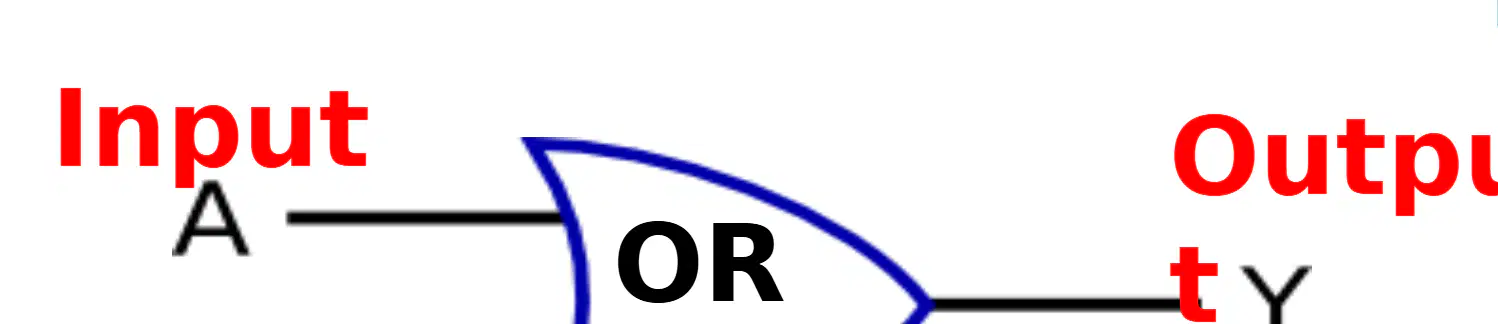
What is the name of the logic gate shown in the diagram?
OR Gate
AND Gate
NOT Gate
NAND Gate
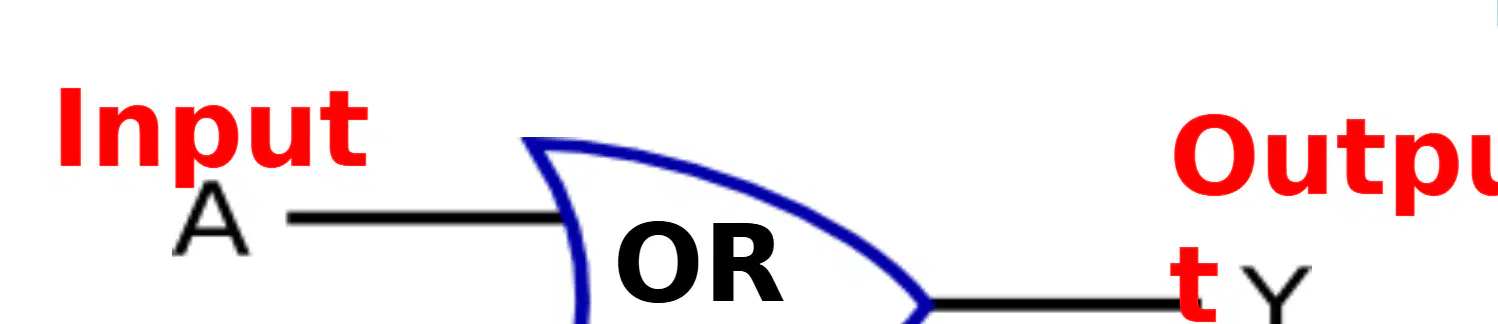
How many inputs does the OR gate in the diagram have?
One
Two
Three
Four
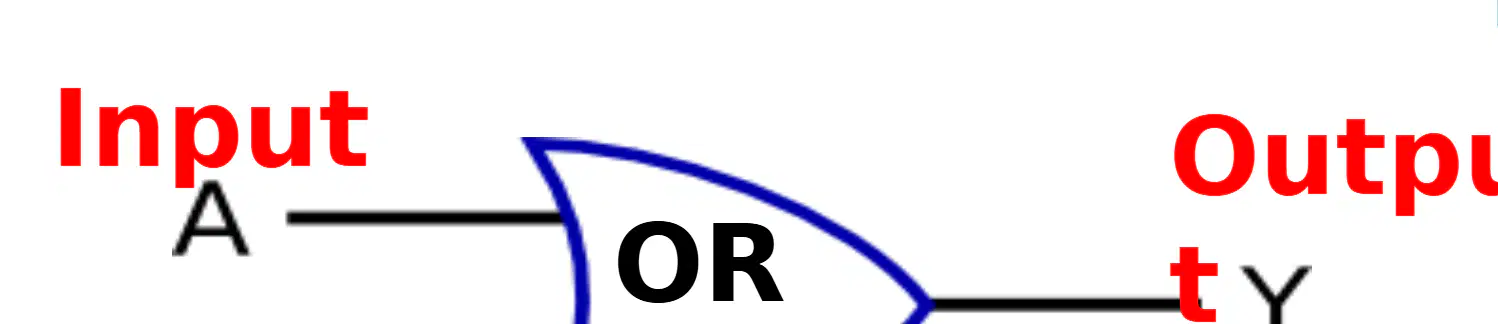
What is the label given to the output of the OR gate in the diagram?
X
Z
Y
W
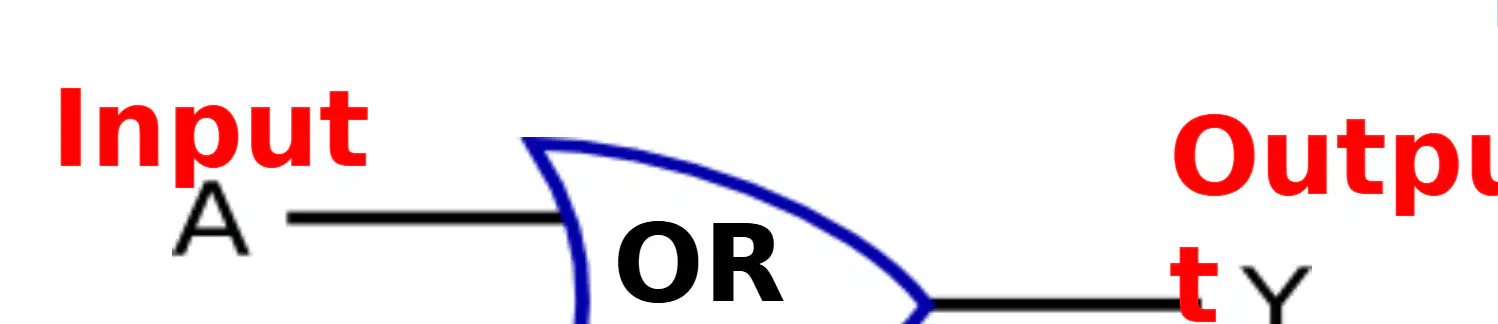
If input A is 1 and input B is 0, what will be the output Y of the OR gate?
0
1
2
Cannot be determined

What is the name of the logic gate shown in the diagram?
AND Gate
OR Gate
NOT Gate
NAND Gate
How many inputs does the AND gate in the diagram have?
One
Two
Three
Four
What is the output of an AND gate if both inputs A and B are 1?
0
1
2
Cannot be determined
If input A is 1 and input B is 0, what will be the output Y of the AND gate?
1
0
2
Cannot be determined
Which of the following best describes the function of an AND gate?
The output is 1 only if both inputs are 1.
The output is 1 if at least one input is 1.
The output is always 0.
The output is the opposite of the input.
What is the function of a NOT gate in digital electronics?
It inverts the input signal.
It adds two input signals.
It multiplies two input signals.
It stores the input signal.
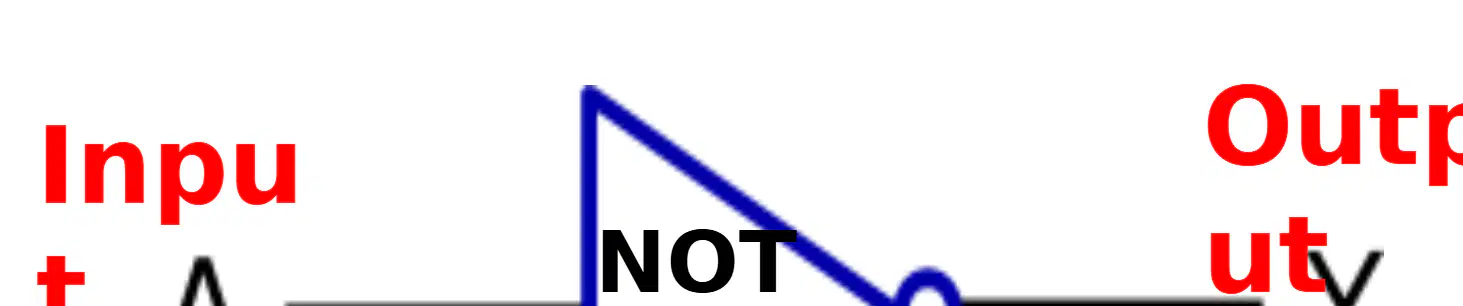
In the diagram, if the input A to the NOT gate is 1, what will be the output Y?
1
0
2
Cannot be determined
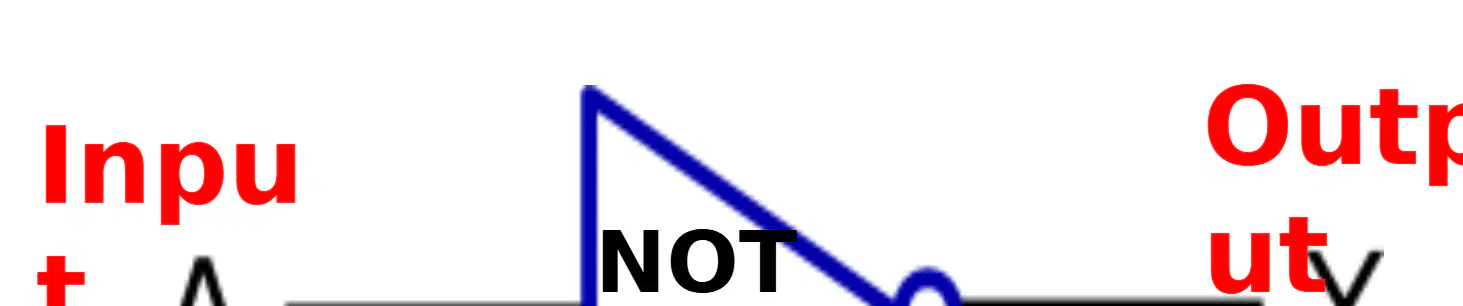
Which of the following best describes the symbol used for a NOT gate in circuit diagrams?
A triangle with a small circle at the output
A rectangle with two inputs
A circle with a plus sign inside
A square with a minus sign inside
Which of the following is the correct output for the logical AND operation when both inputs A and B are false?
true
false
1
Cannot be determined
According to the truth table, what is the result of A AND B when A is true and B is false?
true
false
1
Both true and false
If both A and B are true, what will be the output of the AND gate?
false
0
true
Cannot be determined
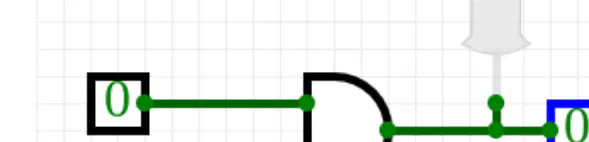
Based on the diagram, what logic gate is being represented and what is its output when both inputs are 0?
OR gate, output is 1
AND gate, output is 0
NOT gate, output is 1
NAND gate, output is 1
Using the truth table, which input combinations will result in a true output for the AND operation?
Only when both A and B are true
When either A or B is true
When both A and B are false
When A is false and B is true
What does "decomposition" mean?
Breaking something into smaller parts, making it easier to understand
Putting things together to make something bigger
Ignoring the details and looking at the whole picture
Painting or decorating objects
Which of the following is an example of decomposition?
Breaking a complex problem into smaller, manageable steps
Memorizing a list of words
Drawing a picture of a tree
Reading a story out loud
Why is decomposition useful when trying to solve a difficult problem?
It makes the problem easier to understand and solve
It makes the problem more confusing
It helps you ignore important details
It allows you to finish faster without thinking
What are the basic elements we usually assume a house will have when we picture it?
Walls, windows, a door, and a roof
Garage, fence, and chimney
Swimming pool and garden
Balcony and basement
In computational thinking, what are the recognisable characteristics that help us identify a house called?
Variables
Patterns
Algorithms
Functions
Which of the following is NOT considered an essential element when picturing a basic house, according to the text?
Roof
Door
Garage
Walls
Why are problems easier to solve when they share patterns?
Because they are always simple
Because we can use the same problem-solving solution wherever the pattern exists
Because they do not require any thinking
Because they are unrelated to each other
How does finding more patterns affect the overall task of problem solving?
It makes the task more difficult
It has no effect on the task
It makes the task easier and quicker
It makes the task impossible
Which of the following pieces of information will NOT help someone who is trying to draw a house?
There are houses in London
A house has windows
A house has walls
A house has a door
Which of the following is an example of a general pattern about houses?
All houses have windows
Some houses have a garage attached
Some houses have red front doors
There are houses in London
Which of the following is a specific detail about houses?
All houses have walls
All houses have a door
Some houses have a garage attached
All houses have windows
Why is it useful to identify general patterns, such as "all houses have windows," when studying a group of objects?
It helps to find similarities and make broad conclusions.
It only focuses on unique features.
It ignores important information.
It makes things more complicated.
Which computational thinking term is defined as "Breaking something down into smaller parts to make it easier to understand"?
Pattern Recognition
Abstraction
Decomposition
Algorithm
What does "Pattern Recognition" mean in computational thinking?
Writing down, step-by-step instructions
Grouping the items into similar categories
Ignoring irrelevant information and only focusing on the main thing
Breaking something down into smaller parts to make it easier to understand
Which of the following best describes "Abstraction" in computational thinking?
Ignoring irrelevant information and only focusing on the main thing
Writing down, step-by-step instructions
Grouping the items into similar categories
Breaking something down into smaller parts to make it easier to understand
If you are "writing down, step-by-step instructions" to solve a problem, which computational thinking term are you using?
Algorithm
Decomposition
Pattern Recognition
Abstraction
A student is given a complex math problem and decides to solve it by breaking it into smaller, more manageable parts. Which computational thinking skill is the student using?
Abstraction
Decomposition
Algorithm
Pattern Recognition
Why is abstraction important in computational thinking?
It helps to break down problems into smaller parts.
It allows us to ignore irrelevant information and focus on the main thing.
It helps us write step-by-step instructions.
It groups items into similar categories.

